
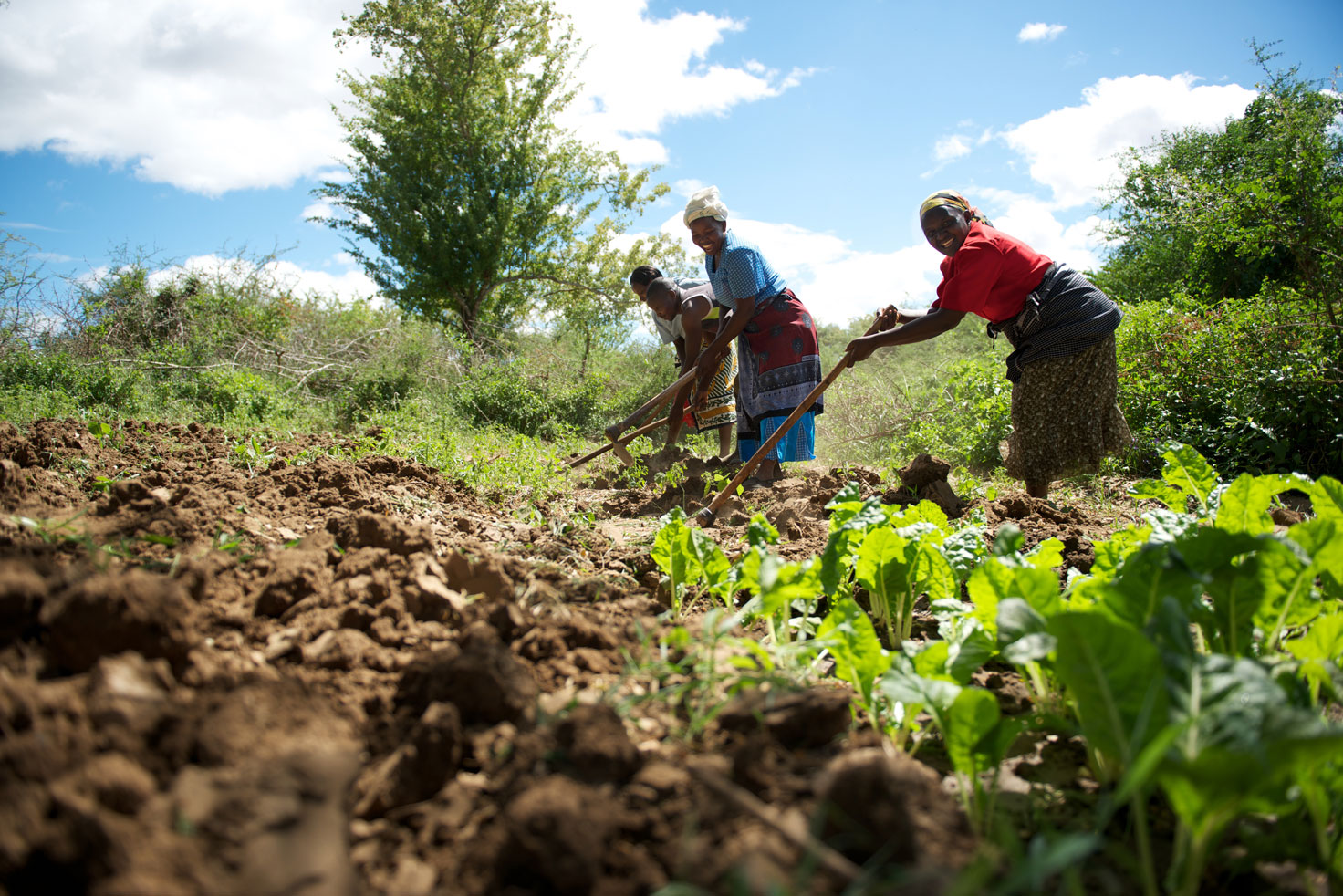
To be fair, the African leadership and its so-called “development partners” (donor countries) have not been idle while the masses go hungry. Agriculture has been a target of many expert visions, analyses and policies but these are yet to bring real, tangible solutions. Recent statistics may have shown some improvements, but by and large, Africa’s food situation remains embarrassingly dire.
Ten years ago, at the AU Summit in Maputo, Mozambique, African leaders adopted the Comprehensive Africa Agriculture Development Programme (CAADP), and pledged, as they often do, to plug all holes that suck away agricultural development on the continent. The leaders committed to reverse under-investment by promising to allocate at least 10% of their national budgets to agriculture, while aiming to achieve at least 6% agricultural growth annually. But only 8 of Africa’s 54 countries have kept the 10% promise, and as such the sector remains dismally underdeveloped, leading to continued food insecurity across the continent.
Some NGOs, such as ONE, founded by the Irish singer Bono, which compiled the info graphics on page 13, are now using the support of African celebrities to drive home the importance of agriculture to resolving many of Africa’s developmental problems. On the sidelines of the AU Summit in Addis Ababa in January, they launched the report Do Agric, It Pays, to highlight the importance of the sector.
To make agriculture more attractive and win over one of Africa’ unemployed youth, the campaign is using popular faces such as Nigerian musician D’Banj and African Footballer of the Year and Ivorian international, Yaya Touré, as its celebrity ambassadors.
Touré, who plays for the English Premiership side, Manchester City tells New African: “Agriculture is probably the area that has the greatest potential for the development of our countries. The numbers are there to prove it. Investing in agriculture has an impact on poverty reduction 11 times greater than other sectors. When you know that we have 50% of all unexploited arable land in the world, it is quite easy to imagine the benefits of good investments. Africa could perhaps become the breadbasket of the world in a few years.”
Touré, however, voiced concern at the slow pace at which the African leadership has gone in making agriculture and food security viable: “While other African leaders have made statements of goodwill, currently only 8 countries have kept their promise. It is therefore essential to do more, to go further.”
And indeed, everyone concurs that Africa should not only be able to feed itself but should be the food vessel which the rest of the world digs into for survival. “Feeding Africa and the world” is the ambitious title the AU Commission chairperson Dr Nkosazana Dlamini-Zuma gave to her foreword in the AU’s latest publication: Agriculture in Africa – Transformation and Outlook, produced in partnership with Nepad, which sets out the continent’s leadership’s new agri-vision for the next 50 years.
She says: “Africa will have a population of 2 billion people by 2050, the majority being women and the youth. This prediction alone summarises the scale of our agricultural challenges: to feed Africans, create wealth for them, and to conserve resources for future generations.”
Africa has indeed never been short on advice or “solutions on paper” on how to realise such ambitious programmes and solutions, as proved by the AU’s new vision on agriculture.
However, a lot other “solutions” brought to Africa’s food security table, despite some being laudable, are increasingly raising eyebrows. Additionally, questions are being raised as to why African policies on food security and the impetus of agriculture have remained stagnant or not yielded much in 50 years of African independence.
Most recently, the African leadership has come under pressure, particularly from civil society groups, to explain how and why, in the name of private investment, they are allowing multinational corporations to take the lead in Africa’s much-needed agricultural revolution. The civil society groups fear that corporate greed for profits will come first, before any help reaches the hungry Africans.








