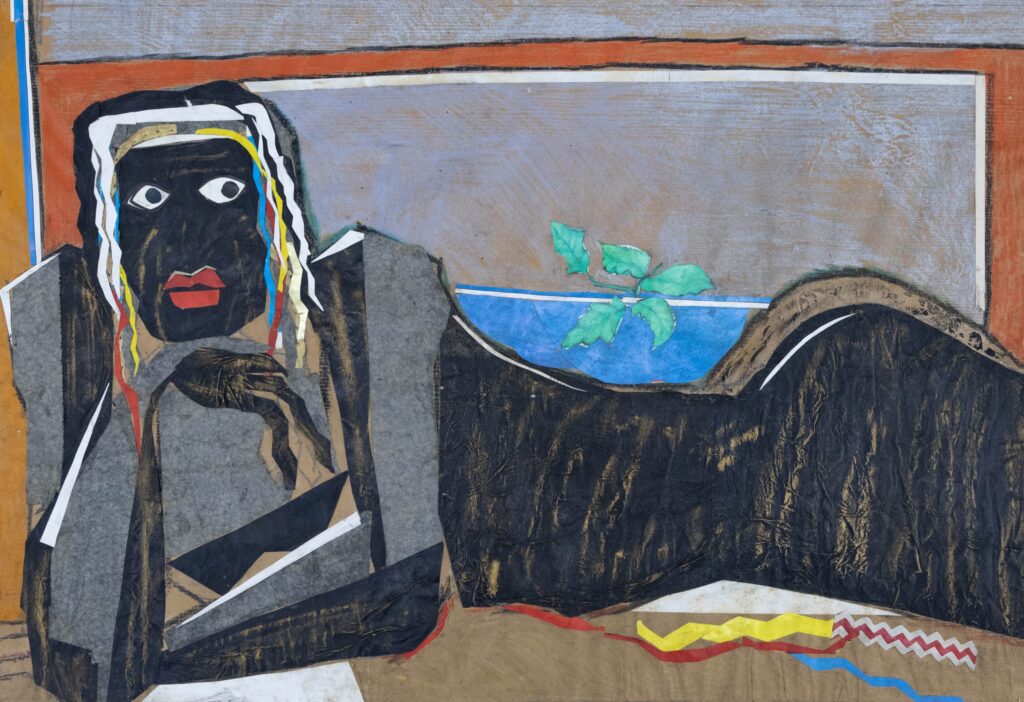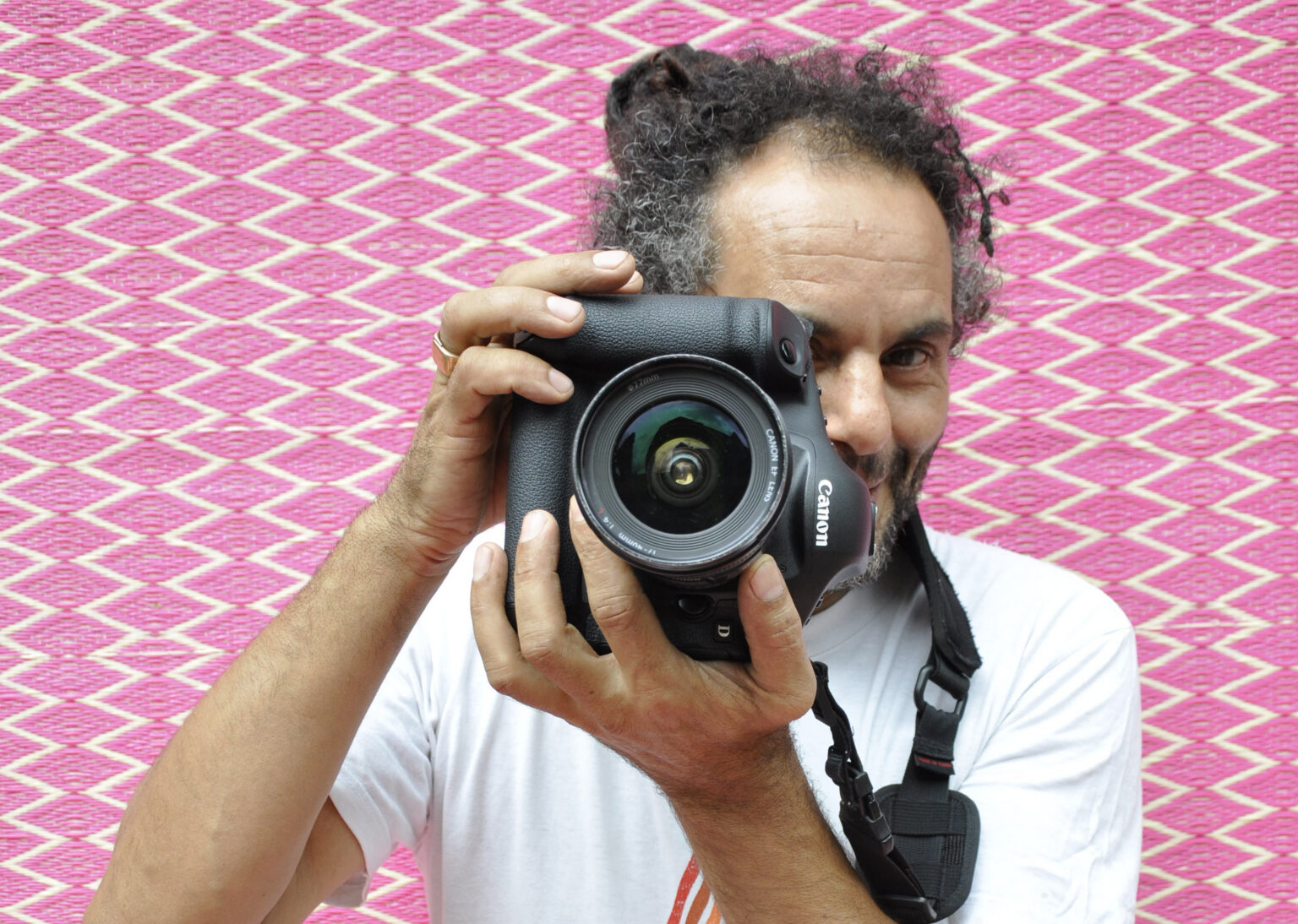
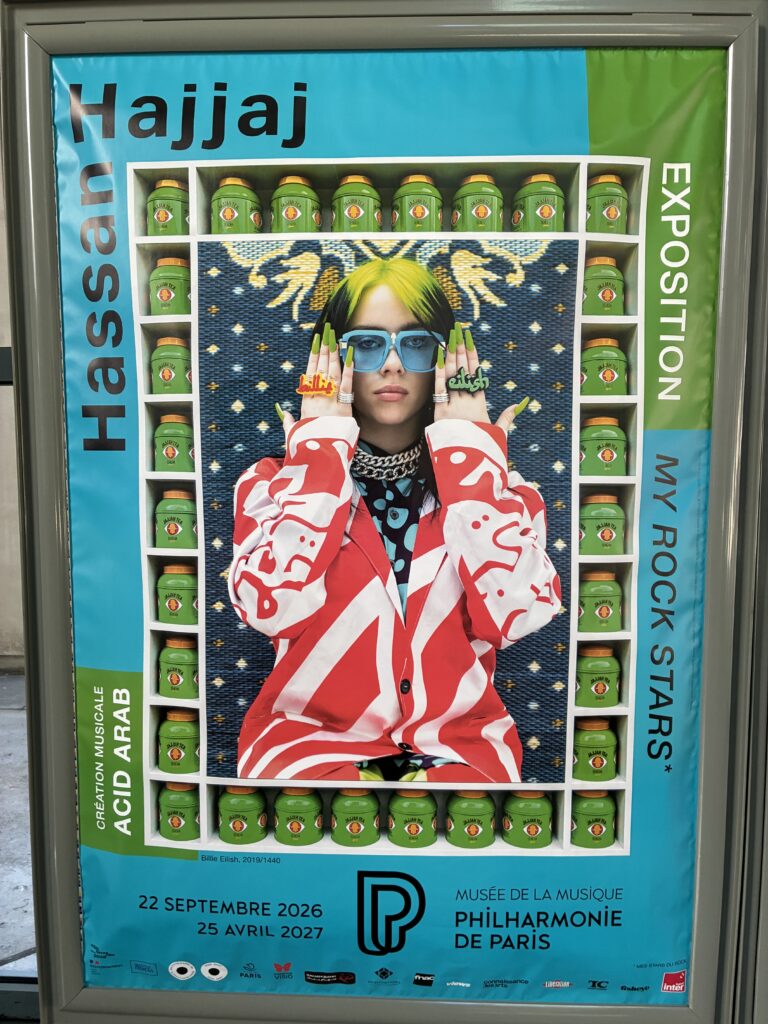
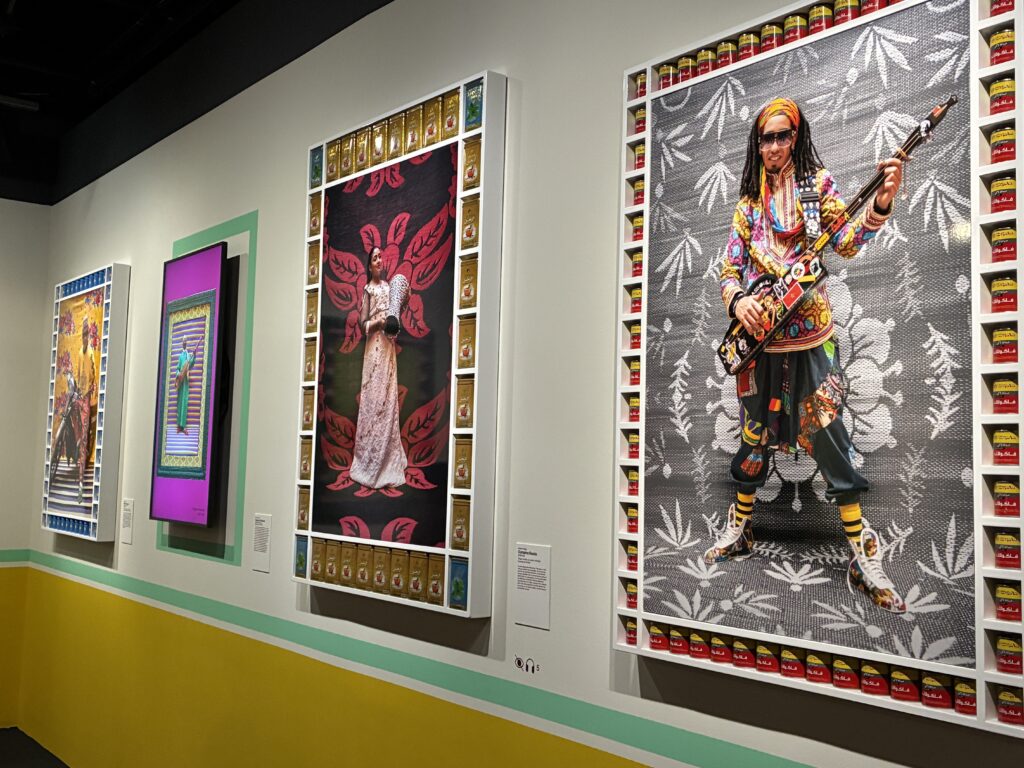
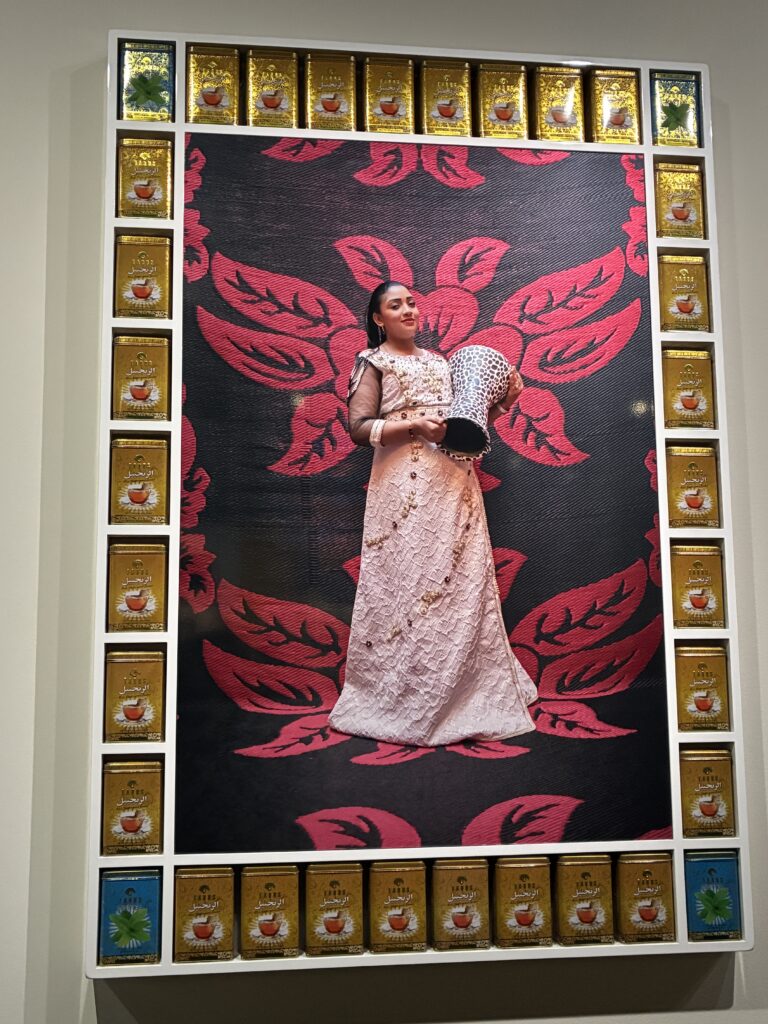
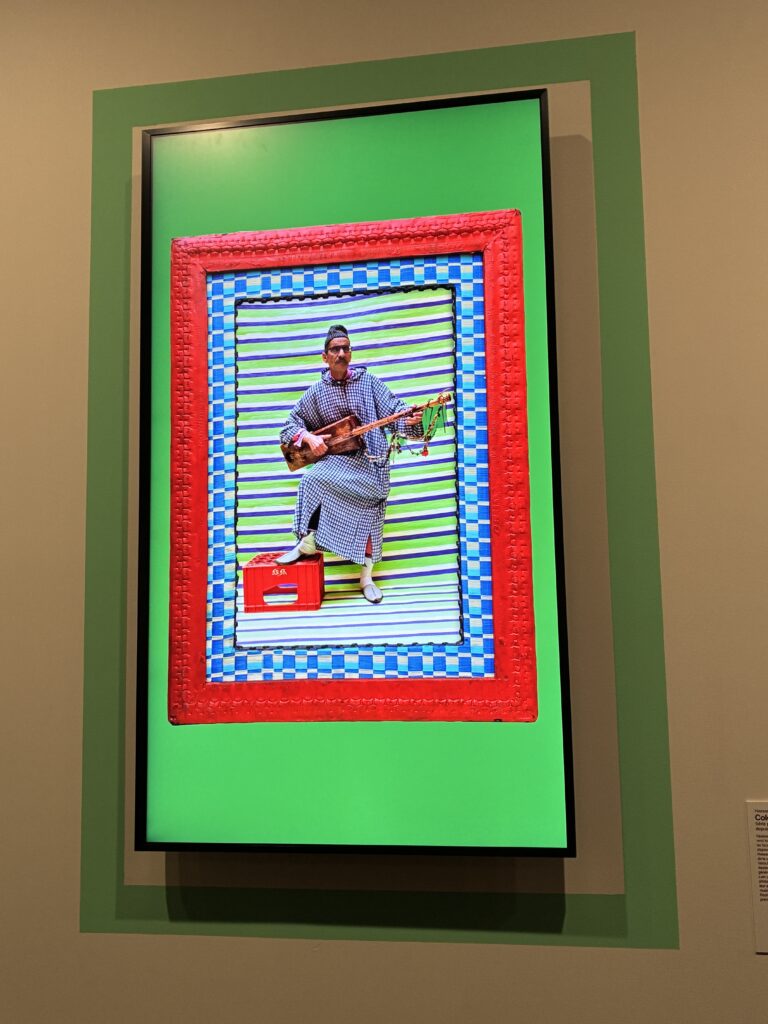
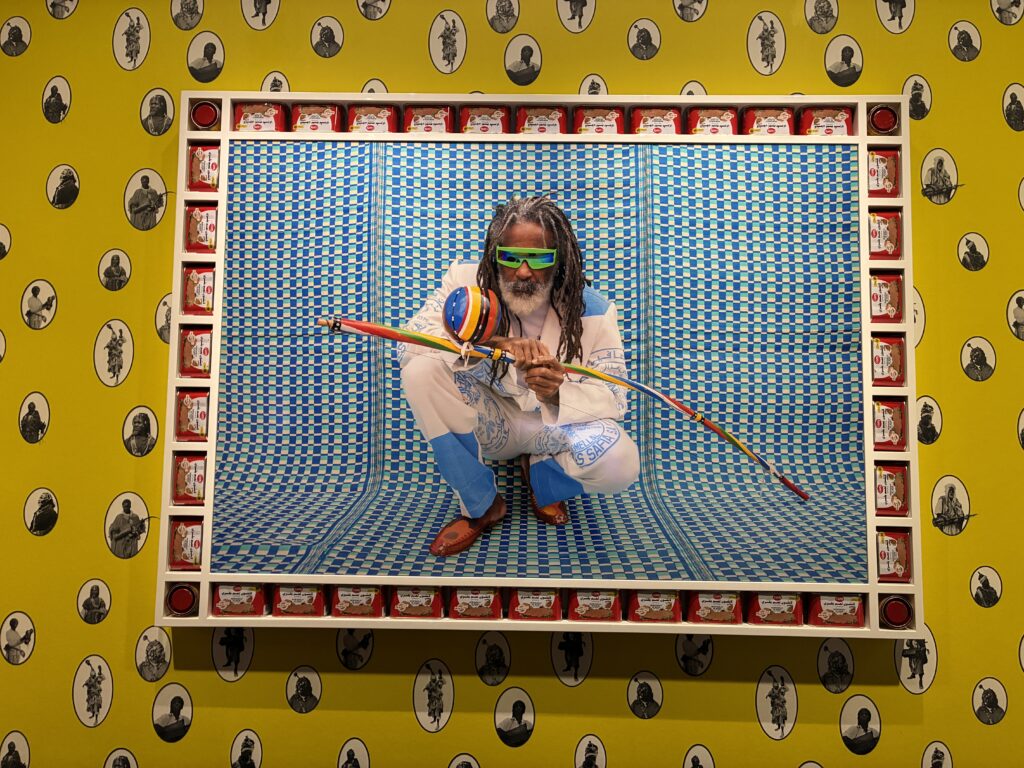
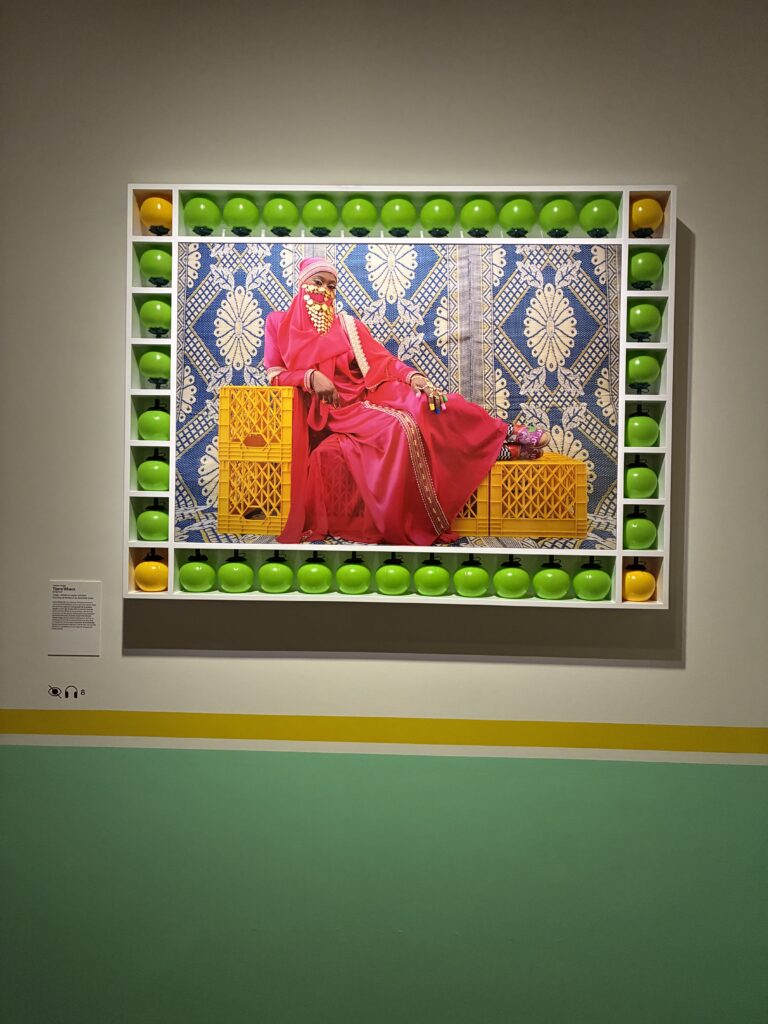
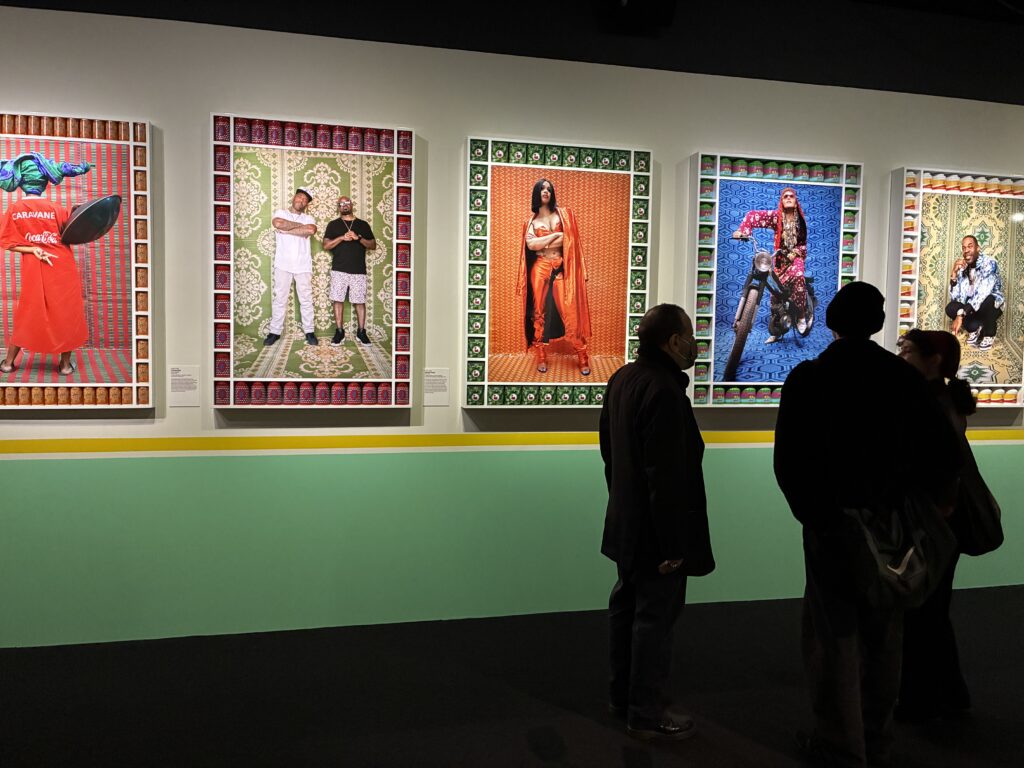
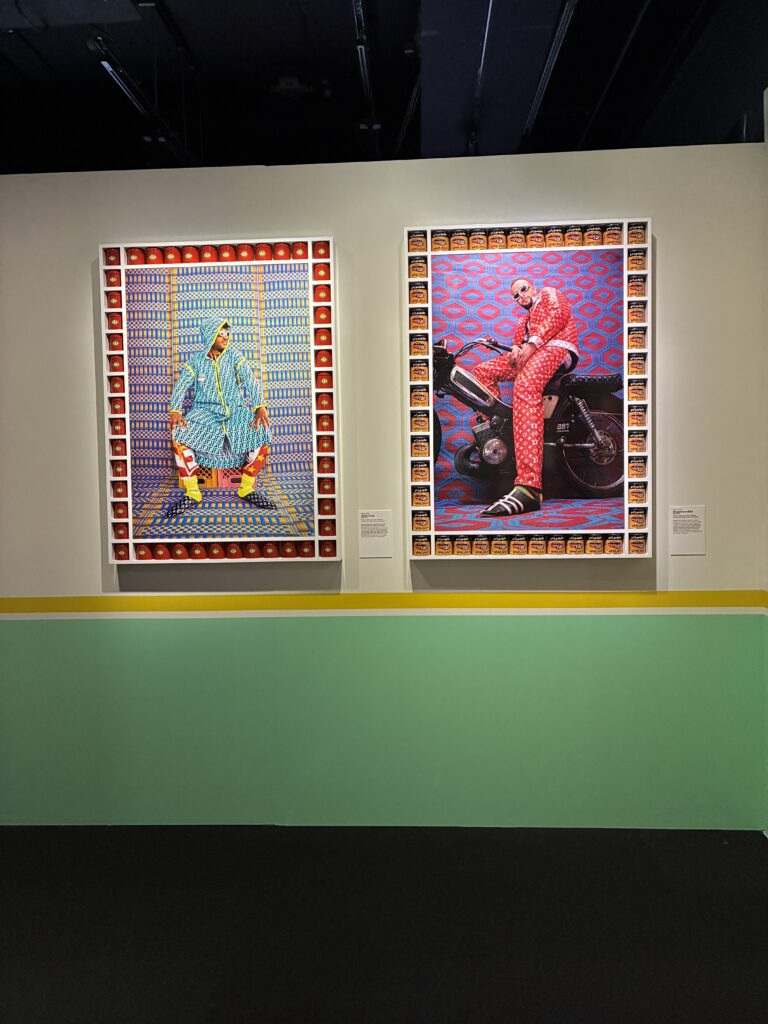
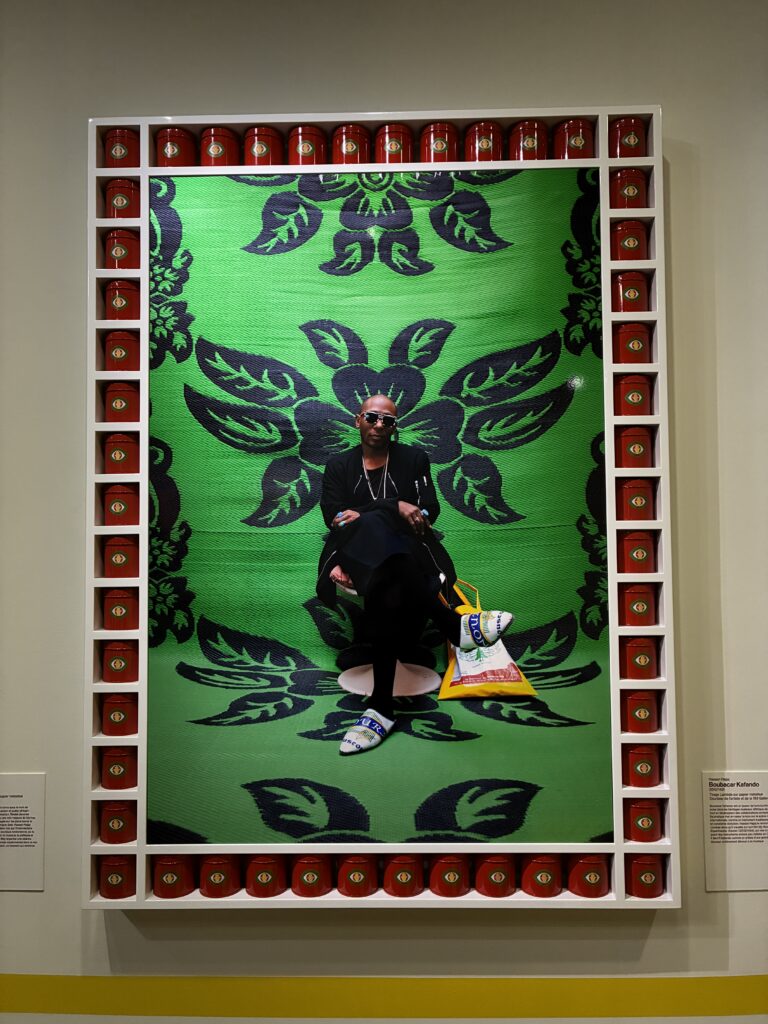
Hassan Hajjaj’s ‘My Rock Stars’ presents nearly 40 vibrant portraits of iconic musical figures with a colourful, pop-inspired sensibility that blends Moroccan culture with a London aesthetic.
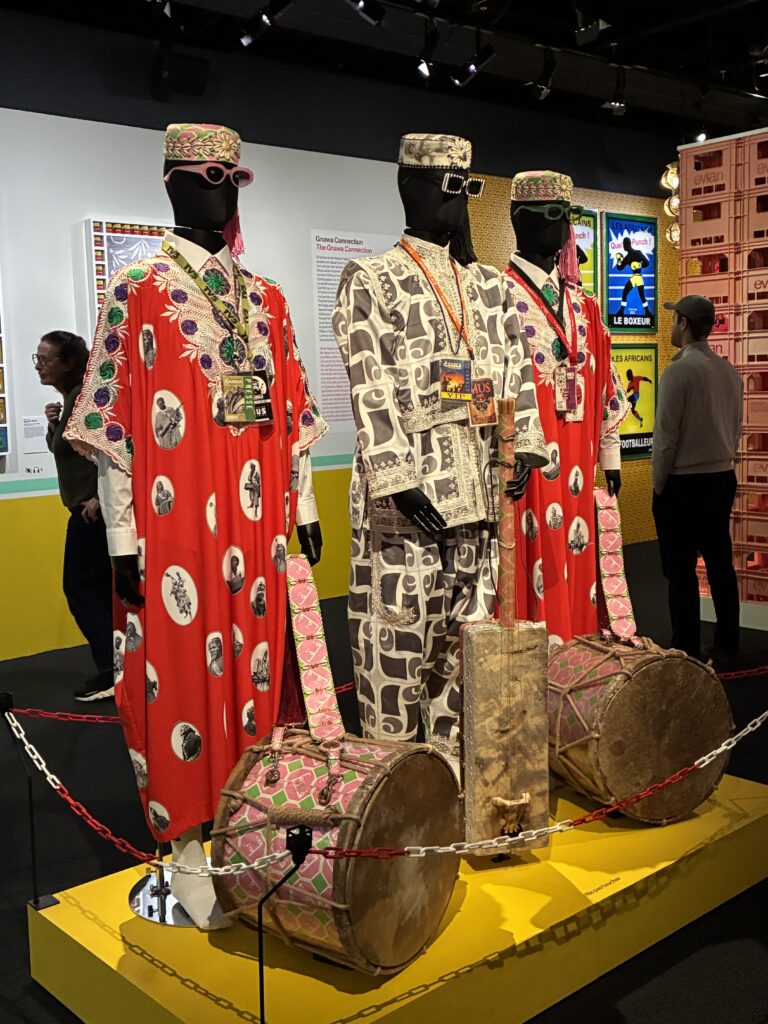
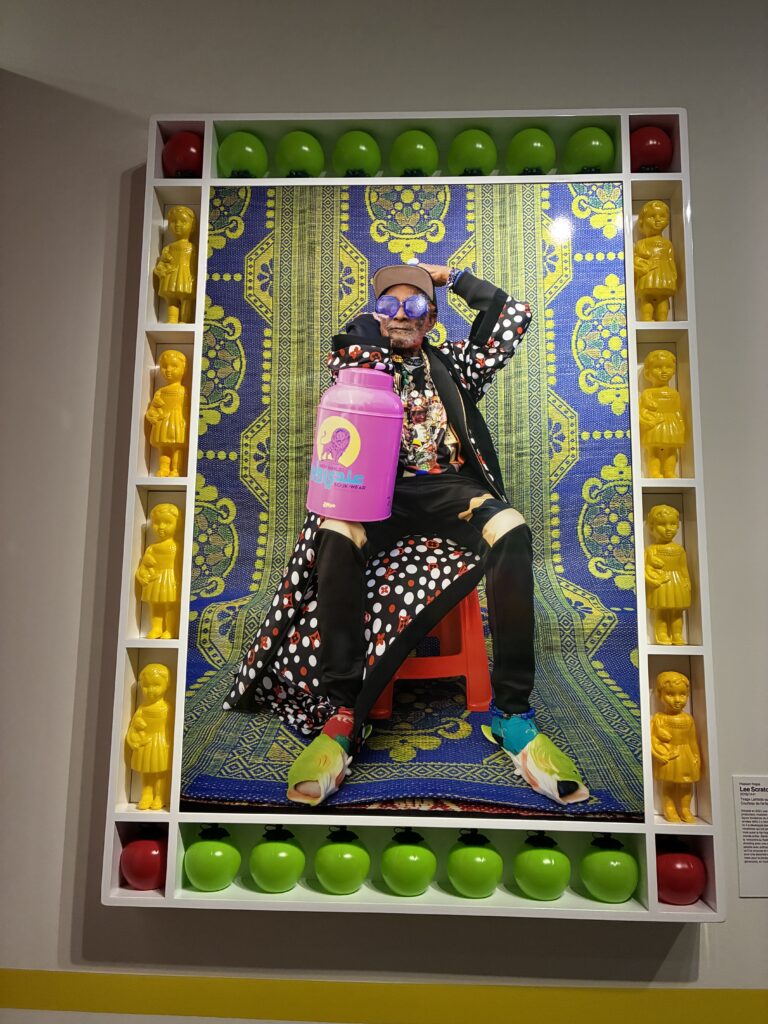
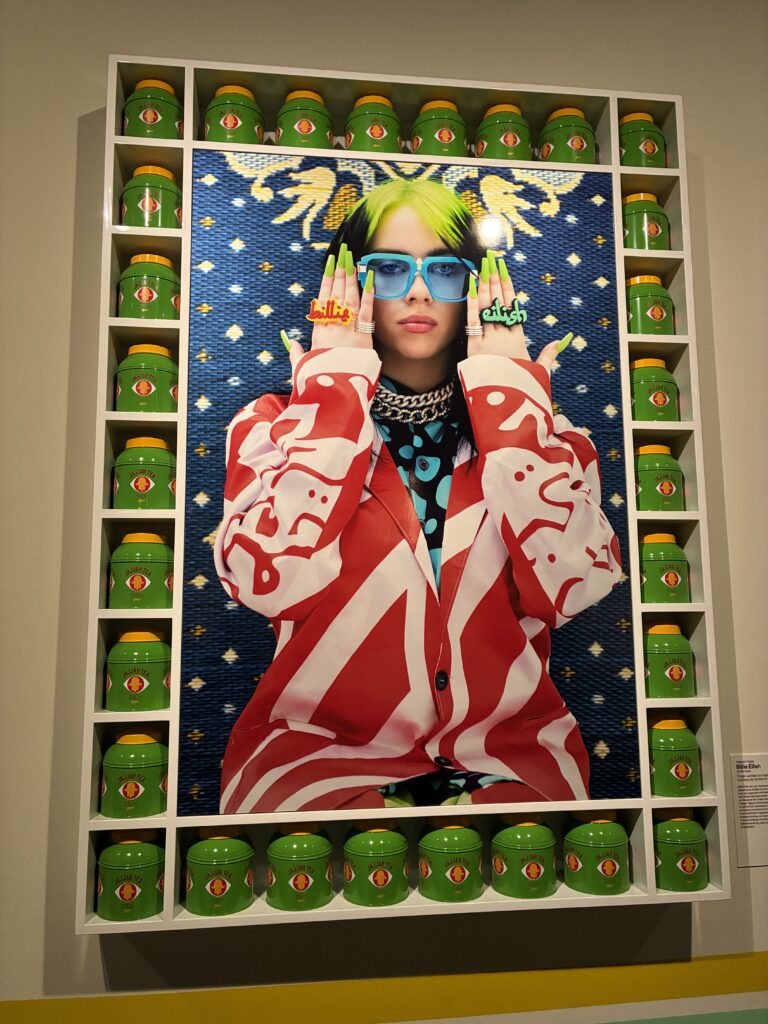
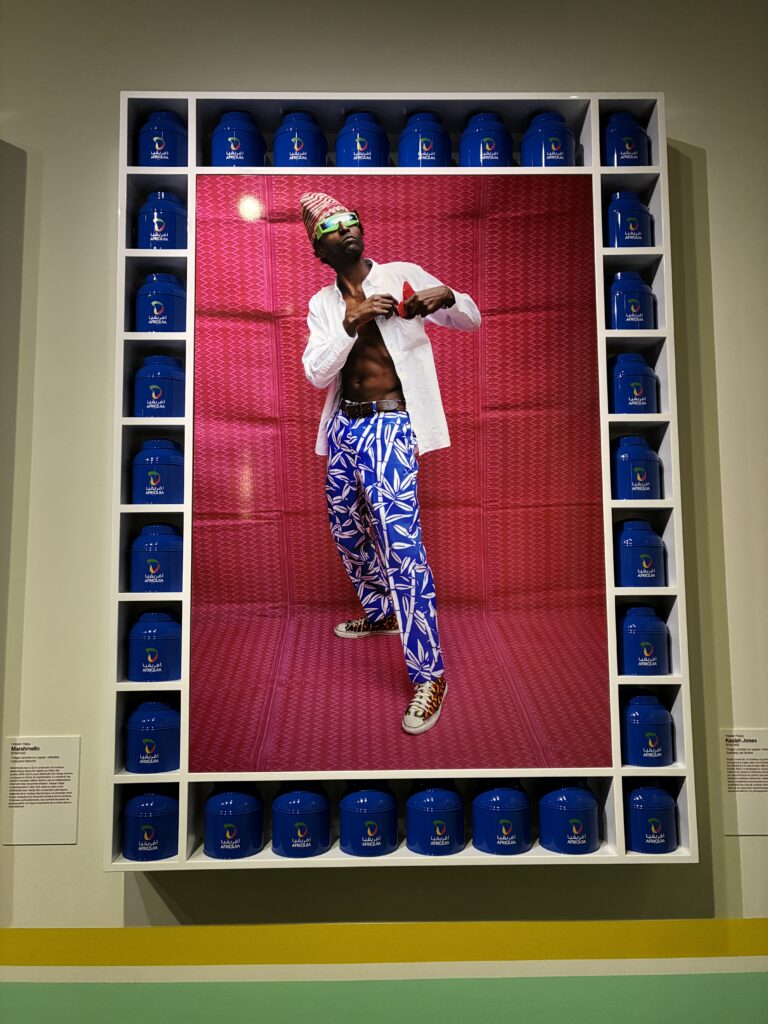
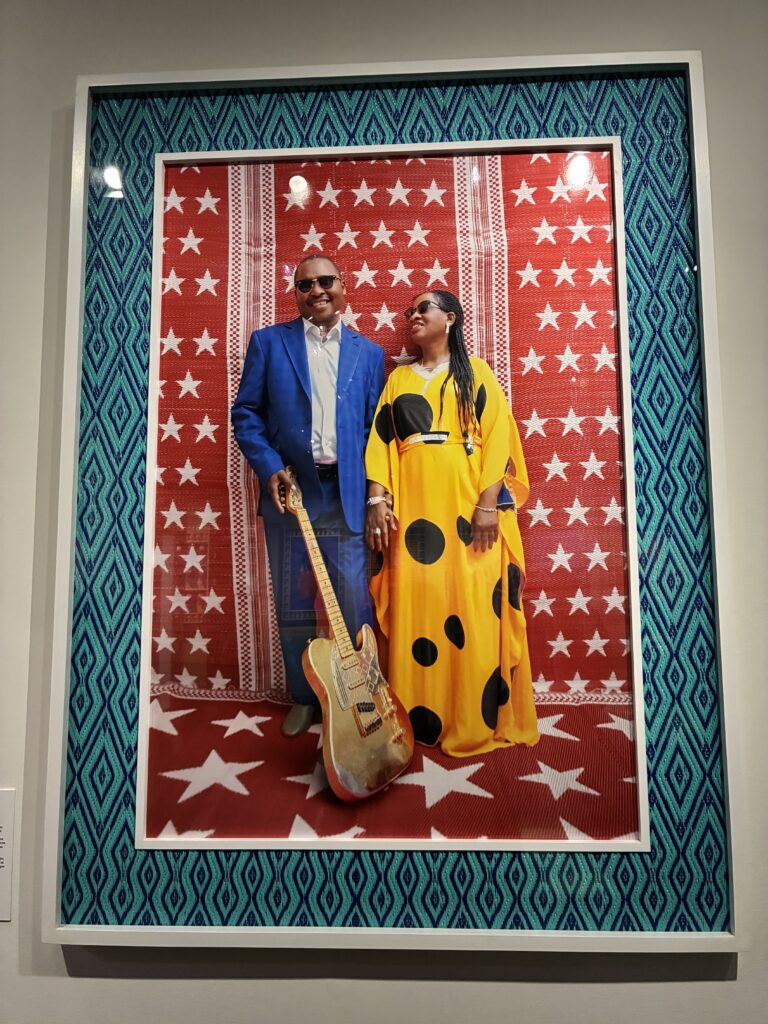
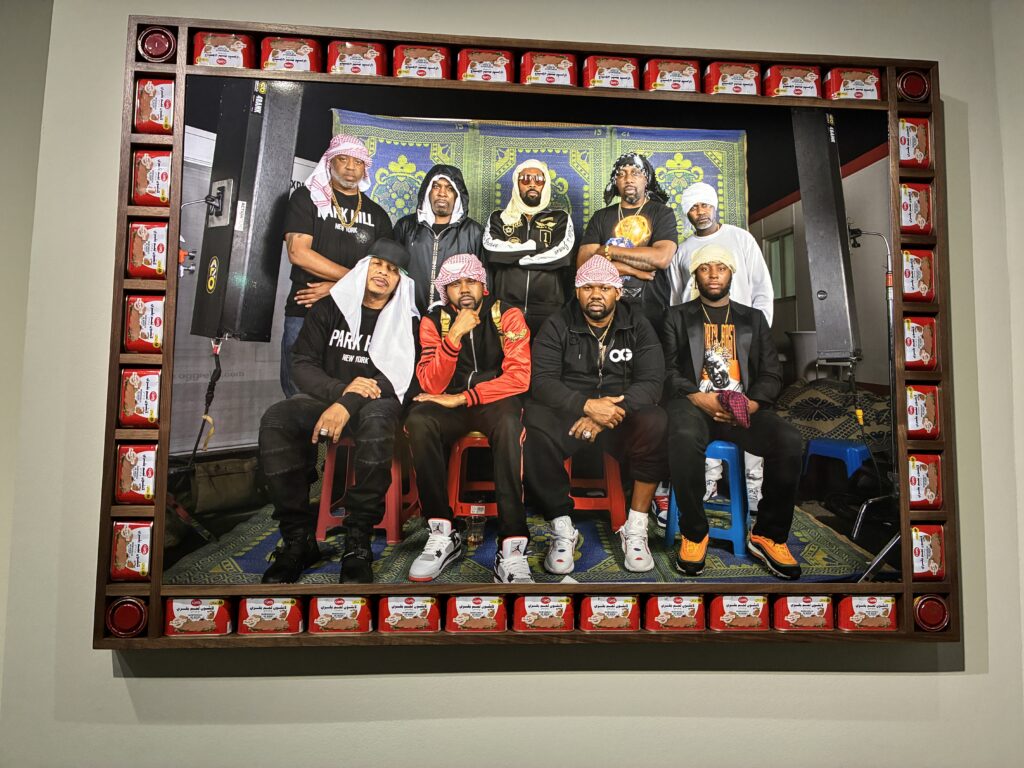
These include American pop star Billie Eilish, Rachid Taha and Souad Massi (both from Algeria), the Jamaican legend of the dub movement Lee Scratch Perry, pop stars like Alicia Keys and even Madonna, hip hop heroes like Wu-Tang Clan, Gnawa musicians, fellow Moroccan singer Hindi Zahra, the beloved Malian duo Amadou & Mariam, and Nigeria’s star Keziah Jones.
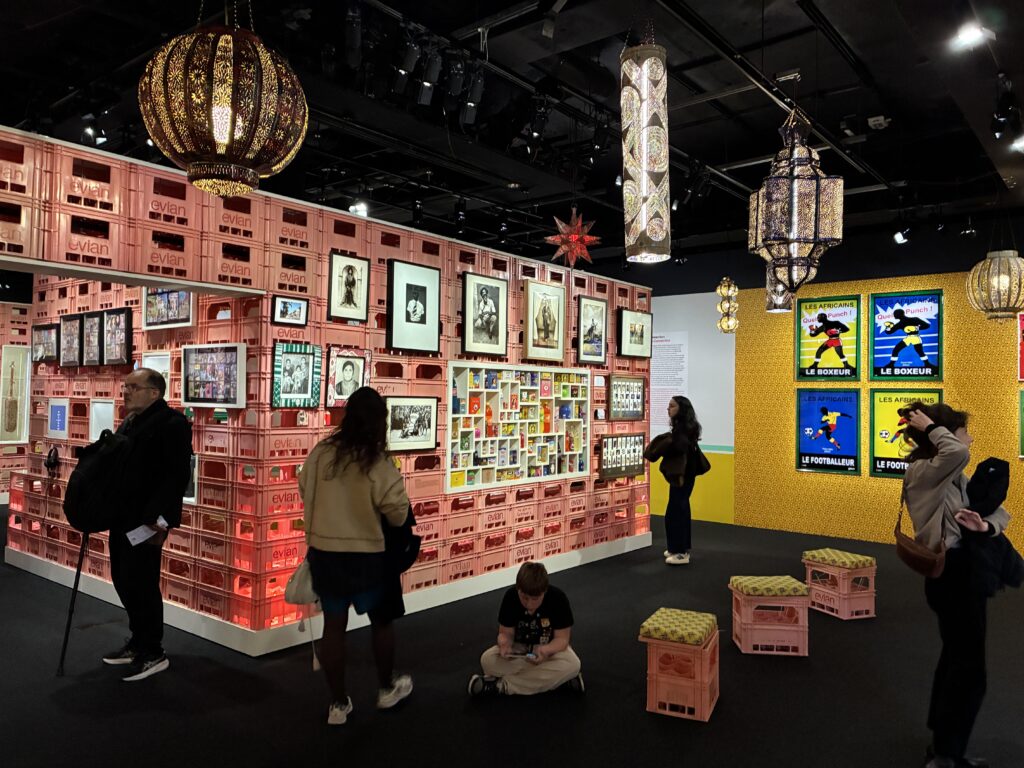
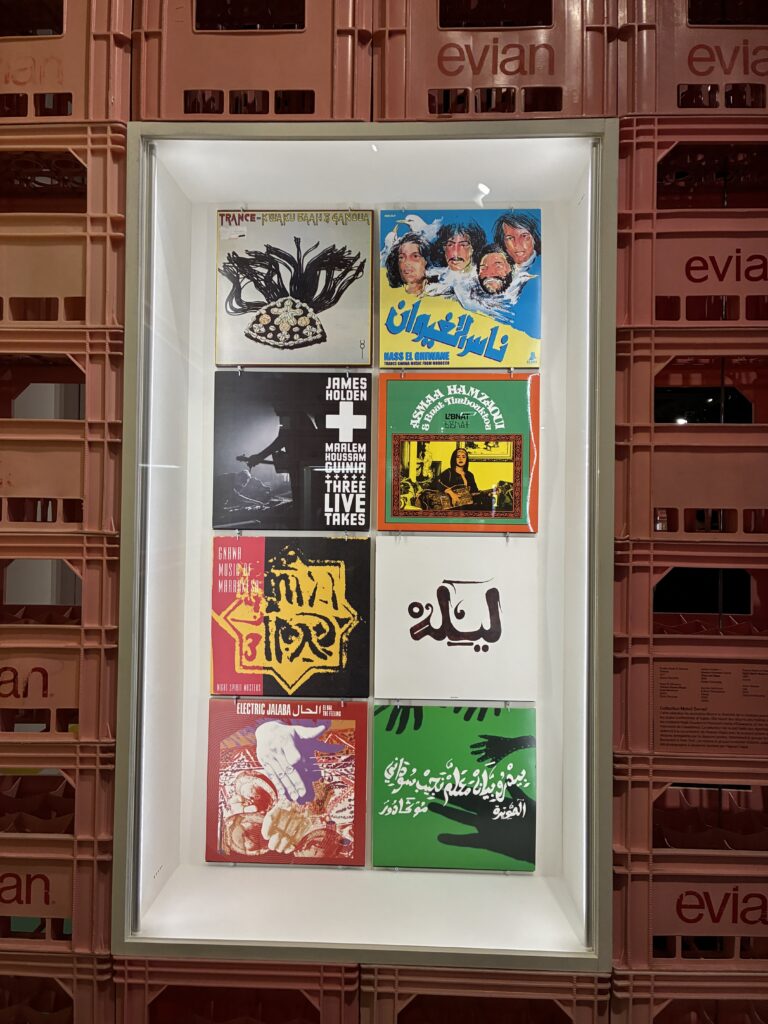
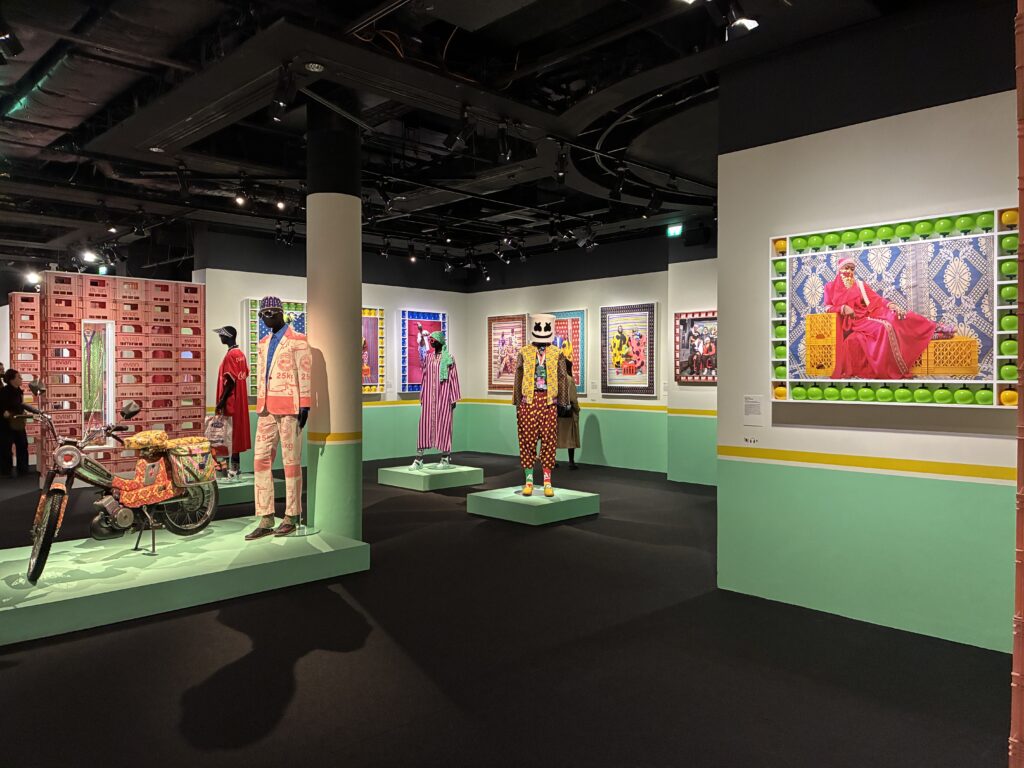
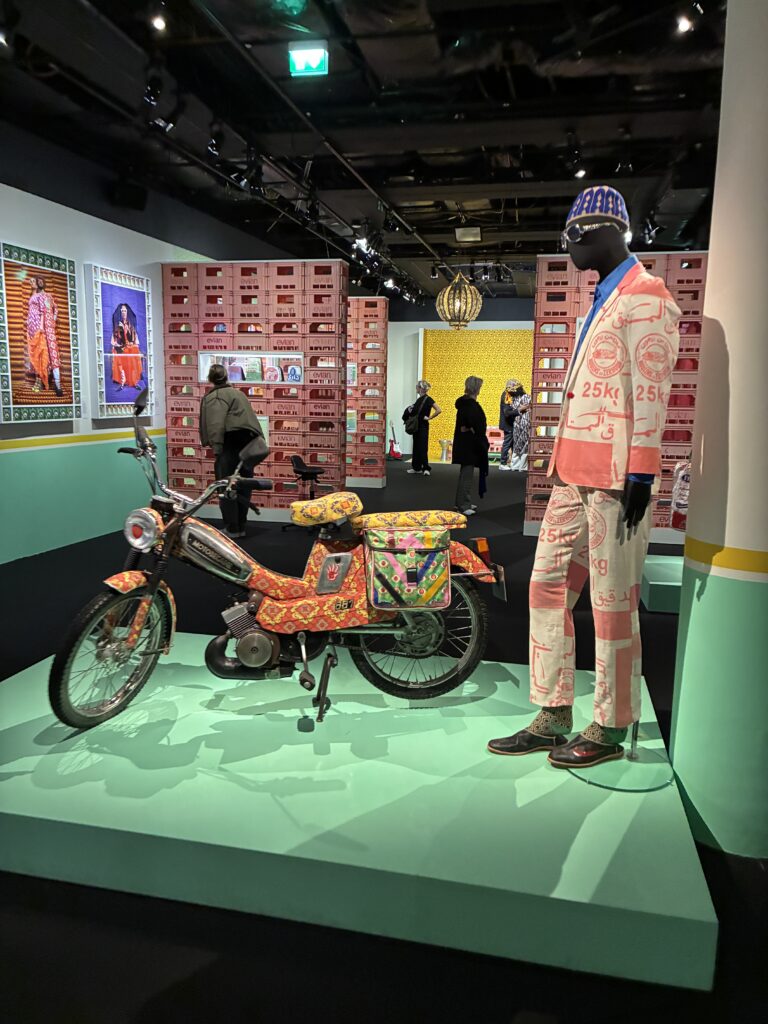
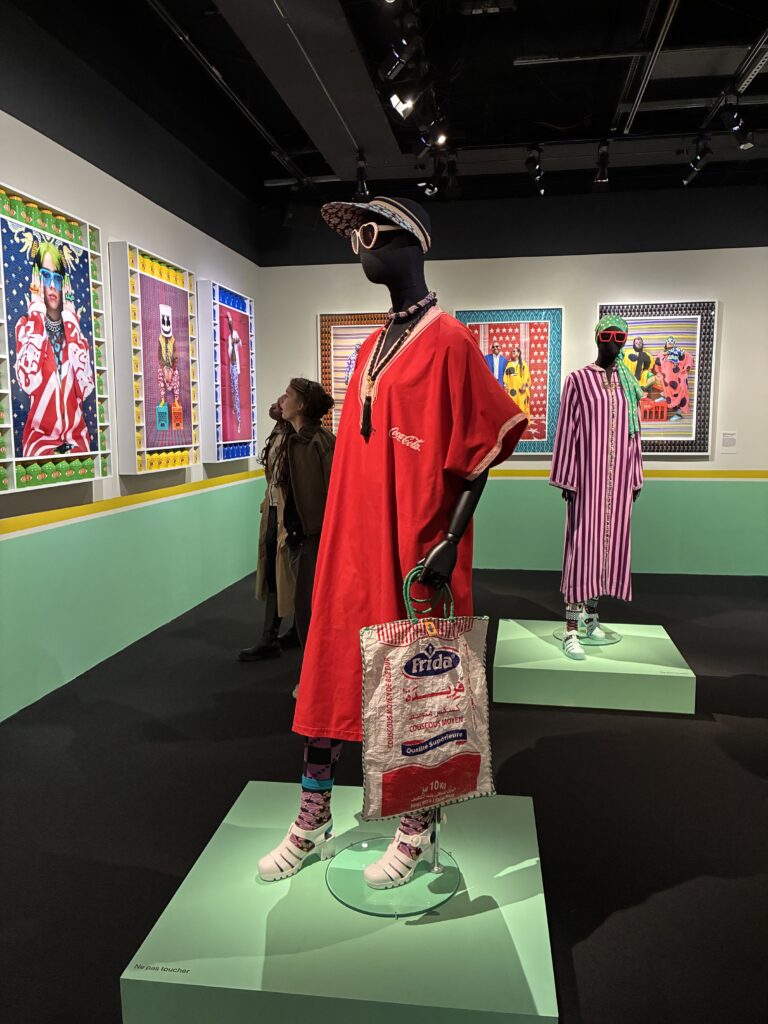
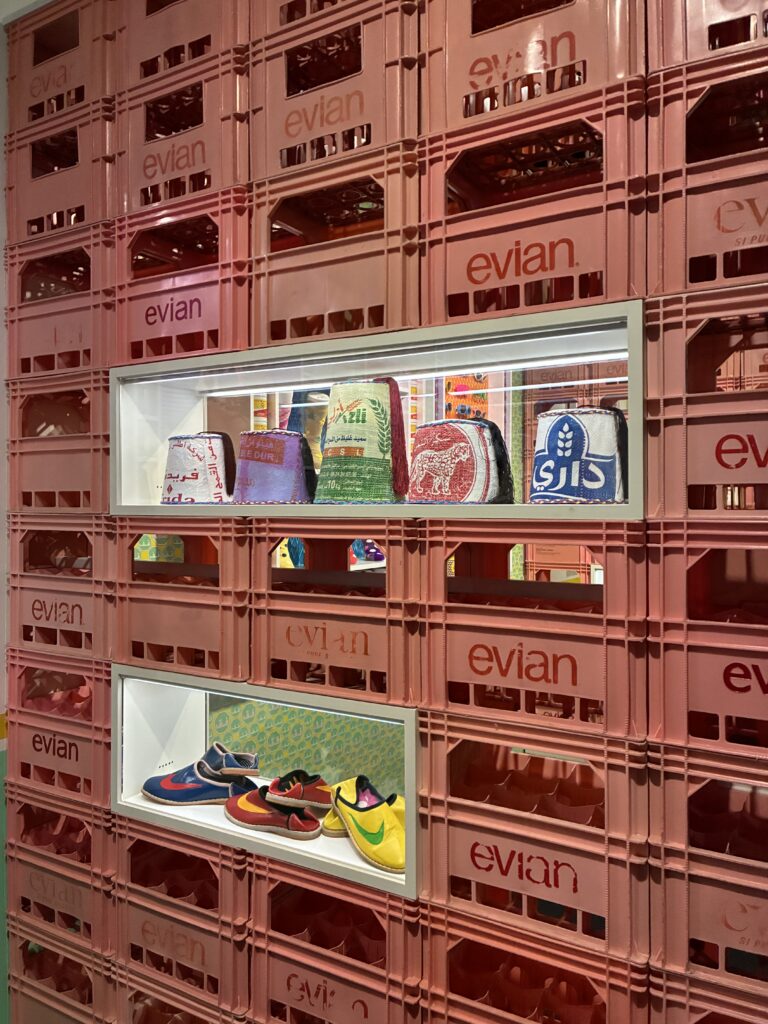
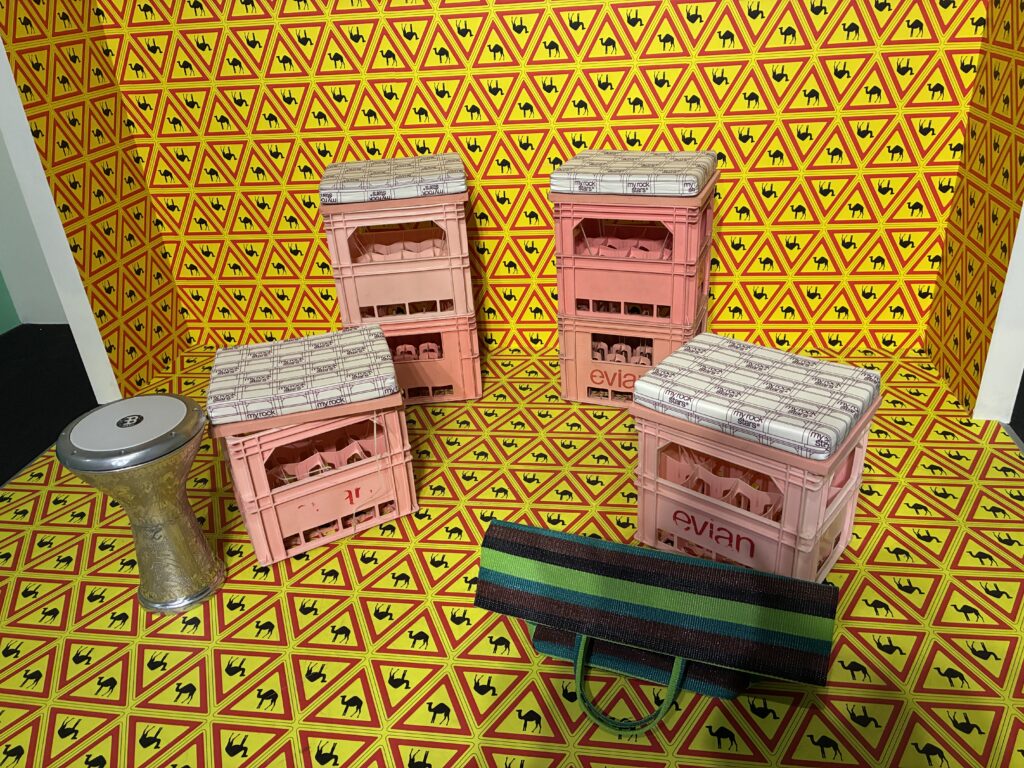
Previously seen in New York in a special exhibition, in London at 1-54 Contemporary African Art Fair, and in Bristol, England at Arnolfini, among other places, the photographs are presented in Paris in a new installation featuring music, design objects, clothes, shoes, glasses, lamps, pieces of furniture, even tea and food.
For Hassan Hajjaj, this display brings a different feel to what he’s been trying to achieve.
Sonic and visual synergies
The electronic music collective Acid Arab, pioneers of “Oriental electro” in France, have composed an original score to accompany the exhibition and extend its energy. Formed in 2012 by two DJs, Guido Minisky and Hervé Carvalho, their style blends sounds from the Arab world with Western rhythms.
It features techno pulses, punk energy, disco, and rap, celebrating the diverse musical heritages of North Africa and the Middle East.
“When I start to do a show, I normally have a playlist, so this was easy for me, and because the series is all about musicians,” Hajjaj says. “I was going to put the music as a playlist, but Marion (Challier, one of the curators of this show) had the idea to do something fresh with Acid Arab.
And soon she mentioned that I jumped on it because I’m a big fan; I met them years ago. So it was easy, and it was nice to create something fresh with it. I now can’t imagine it without the music. It’s become part of the show, really.”
This choice gives the show a completely new dimension, offering a welcoming Moroccan invitation to party and experience a sense of togetherness.
“I wanted people to come in and have an experience with the space as well,” Hajjaj explains. “So they have something visual, then a frequency for your ears, which is the music.”
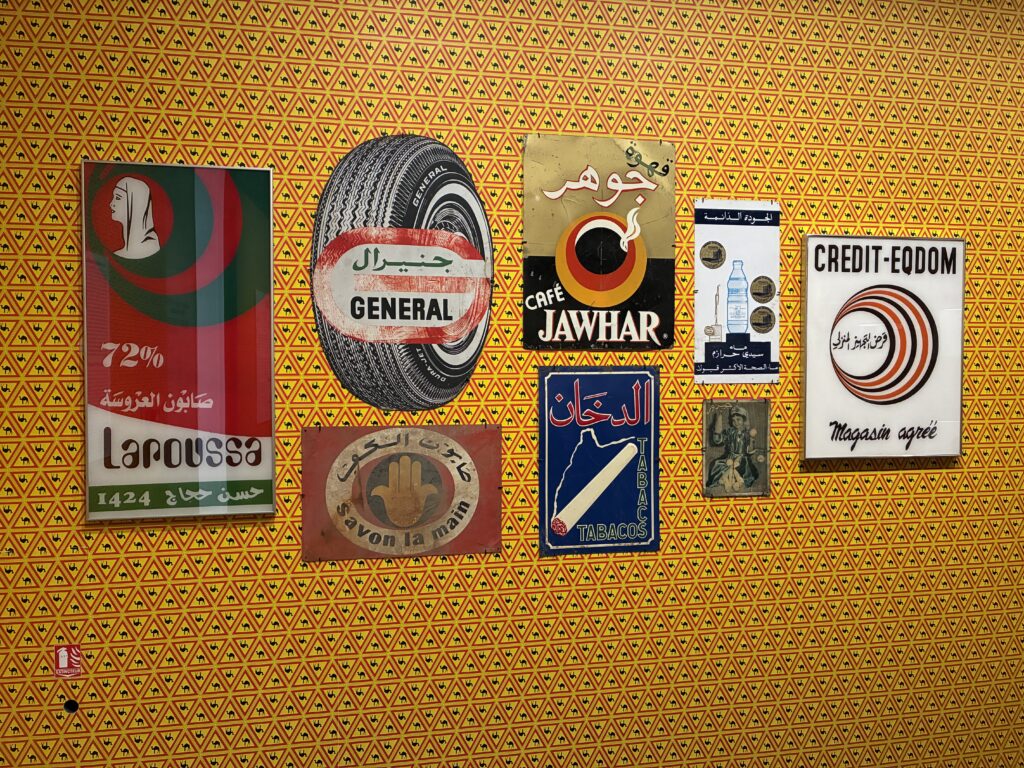
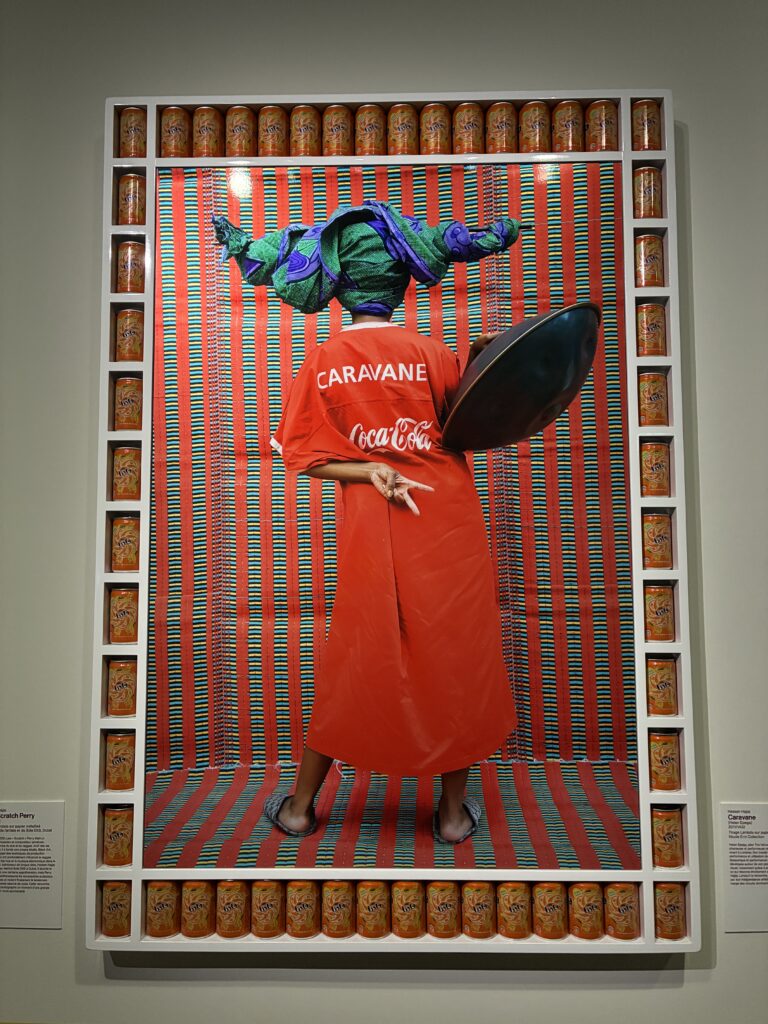
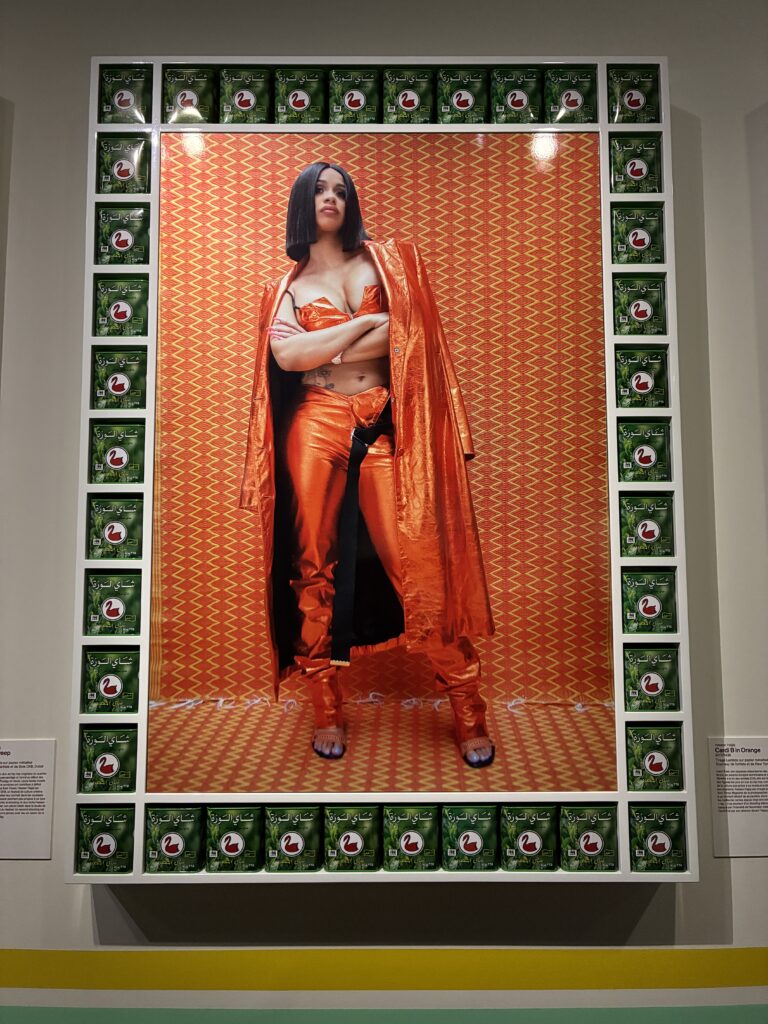
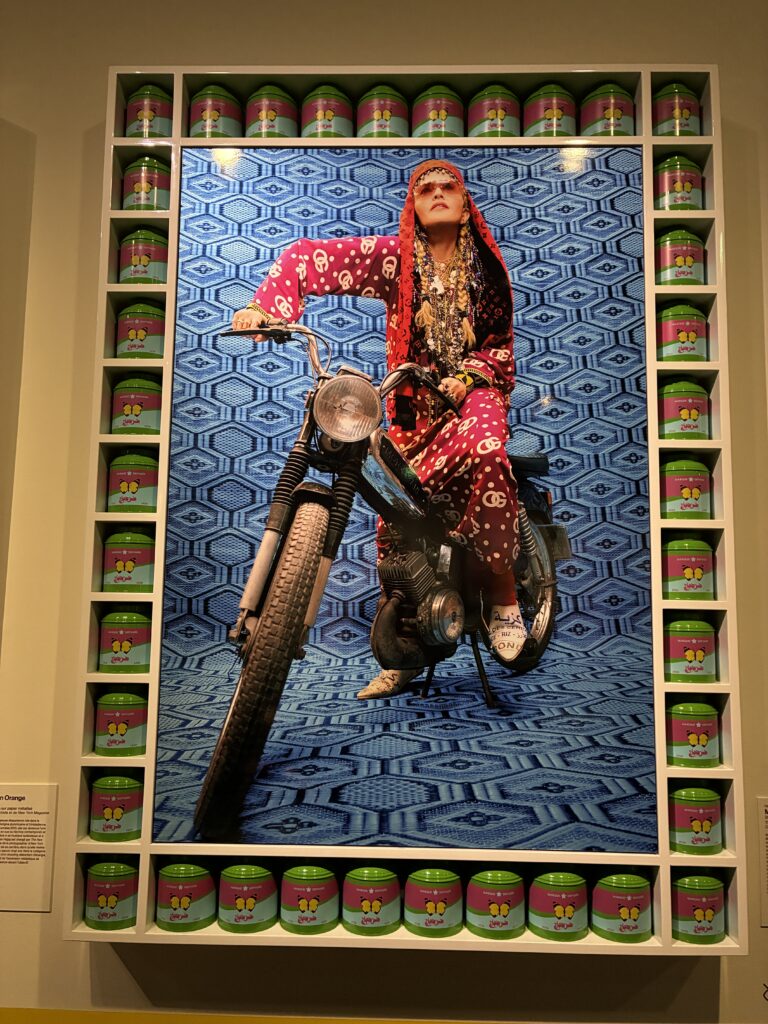
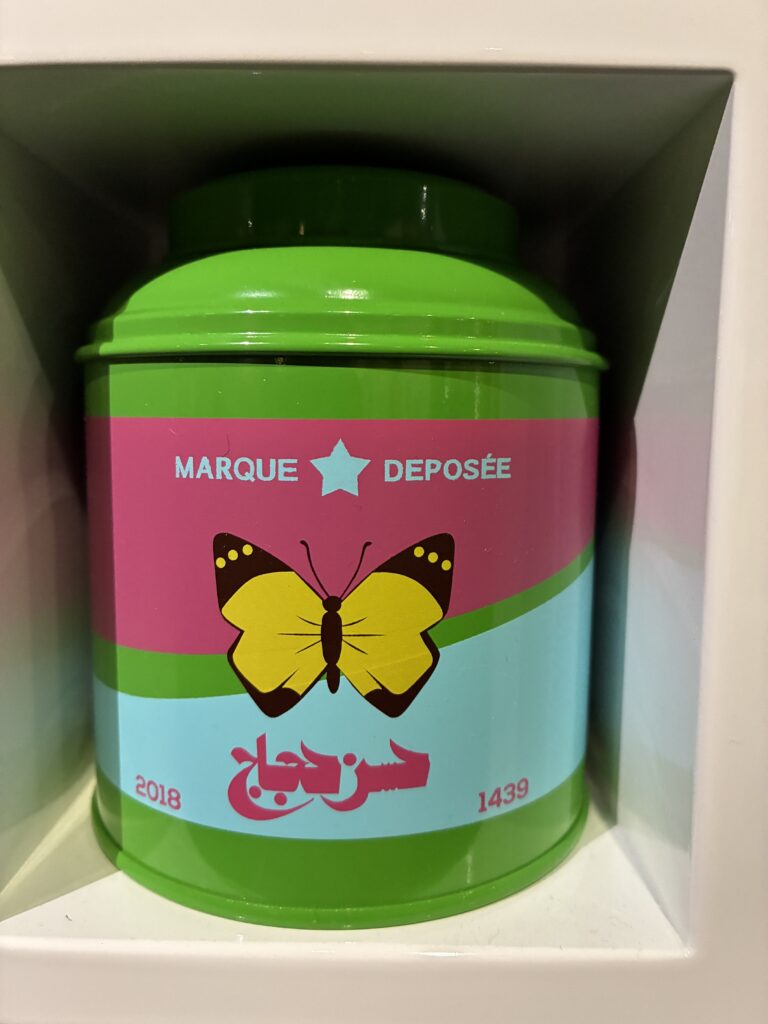
The exhibition also incorporates design, fashion and graphics. And the photographs themselves are always framed by a variety of tins, cans, and pop culture items, in the spirit of recuperation and recycling, including repurposed everyday items.
His friend, the French-Algerian singer Rachid Taha, had nicknamed Hajjaj “Andy Wahloo” – “Andy Nothing” in Arabic; and the joke gave a name to his brand.
In Paris, the British-Moroccan artist has crafted a unique visual identity that evokes Andy Warhol but also incorporates a distinct fusion of Western pop art with the folk traditions of the Maghreb.
For Hajjaj, stardom isn’t necessarily about famous musicians; it is a way of living… It can include any agent of beauty, cultural exchange and joy.
The photographer has shot all these people over the last 30 years. He has had the opportunity to shoot celebrities, but his work has been about energy more than success.
“I shot Madonna because she had a special energy. And Cardi B 100%, and Billie Eilish definitely,” Hassan says.
Normally, he doesn’t show only celebrity pictures, because “it takes away from the rest of the work,” but this show is about the connection to music. “There’s a lot of layers there; hopefully lots of people can connect to and, through that, find new links as well.”
The curators also decided to introduce Hassan’s figures and photographs into the fabric of the multiple floors of this museum of music.
“I was a little bit unsure about this at first, but then it really made sense,” Hajjaj reckons. “And when we started to install them, it added another layer, and I thought it really took my work somewhere else, you know. There’s hidden messages there, like next to a big painting or all these elaborate pianos and instruments, there is a stool of mine or a black mannequin with my outfits, so we had fun with it.”
Diasporic journeys linked by music
Hassan Hajjaj’s world is truly an homage to London’s multiculturalism and to cross-pollination around the world, with a strong focus on Morocco but also West Africa and beyond.
Born in 1961 in Larache, a fishing town on Morocco’s northwest coast, Hajjaj moved to London as a teenager with his parents and grew up in East London, in a neighbourhood full of Jamaican, Pakistani, Indian, Bangladeshi, and other African youth.
The photographer, designer, and visual artist formed many friendships there that remain a tight community, all of them driven by a desire to be a part of the London scene. They didn’t want to go to university, so one became a cook, another friend a video maker, another a fashion designer, and many others worked in music.
“Morocco looks like a world in technicolour compared to England,” Hajjaj told me the first time we met a few years ago, “so when I arrived in London at the age of 13, I felt like I had landed in a film noir.”
He left school at 15 with no qualifications, but soon started documenting the scene around him and his friends, and its “otherness,” as he now describes it.
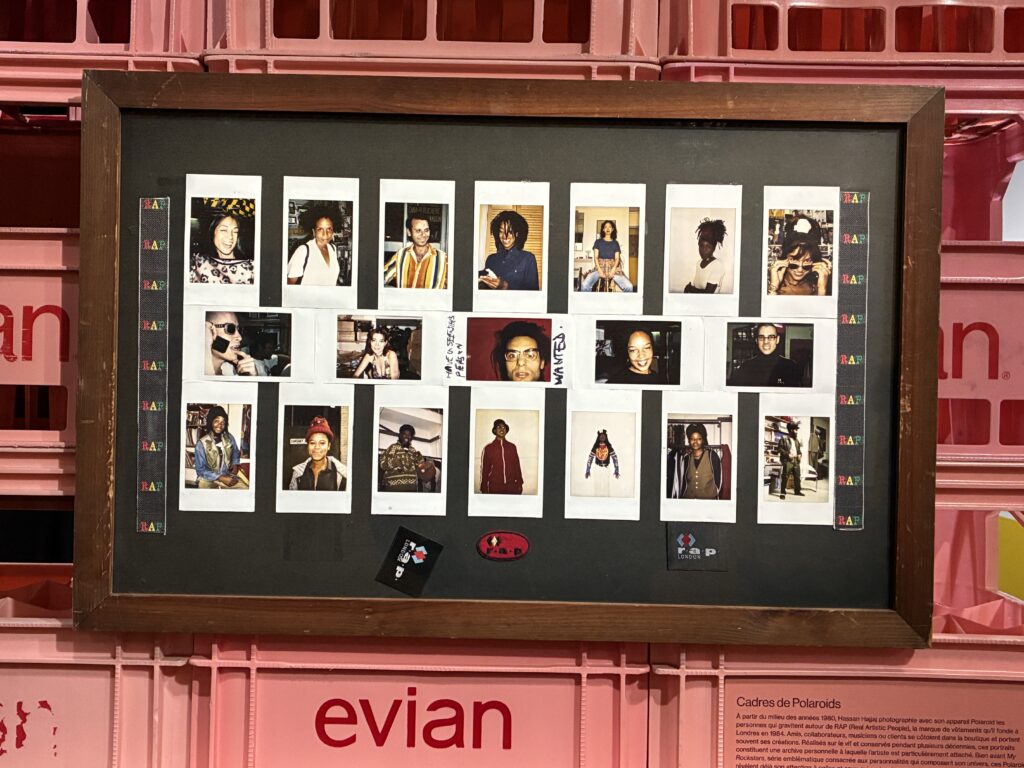
His friends and he felt uncomfortable in museums or galleries; their world was far away from them. Instead, they hosted parties, and Hassan’s job was to find the DJs, etc. He soon had a small boutique for streetwear, called RAP, which became a meeting point for many underground DJs and other untrained artists. That led to a multicoloured journey through multiculturalism that reflects a world beyond London, and beyond Hassan’s native Morocco.
“I’m Moroccan, so I’m always going to be the Moroccan artist wherever I go, even if my work has nothing to do in Morocco!” he laughs. “But really, the show is hardly Moroccan at all. There’s a touch of Morocco there. There are lots of elements of it and a lot of design made in Morocco as well. But really, it’s about my journey, the people I met. And I wanted to show the diversity of these people. There’s a big London influence there as well.”
Hassan was, however, worried it would not resonate with locals in Paris, especially as the exhibition’s opening in September coincided with widespread school pupils’ protests in France.
“I then thought, the show is going to be a dead event, you know? But I was surprised it was the opposite”, he admits. “Maybe it’s escapism for some people, as well. And it’s nice to be able to see a togetherness, people from Nigeria, from New York, from Morocco, from different parts, but they become like a tribe, like a village of people that can connect somehow. Which happens with music on this one.”