The development prospects of Africa are intrinsically linked to the performance of the agricultural sector, and therefore, contrary to the prescriptions of the economic orthodoxy once called the “Washington Consensus”, African governments should get more actively involved in the agricultural sector, if the continent is to achieve overall development.
In an unintended attack on the “Washington Consensus” – the economic orthodoxy that held sway in the last decade, propagated by the IMF, World Bank, the US Treasury and the Washington-based political class, a “consensus” which, among other things, asked for deregulation and the withdrawal of the state from most economic and utility services – the African Capacity Building Foundation (ACBF), the continent’s premier capacity building institution, is urging African governments to get more involved in development issues.
“In the post-industrial world, development was thought to reside in the market – through structural adjustment in the 1990s leading to the ‘Washington Consensus’ model of very recent times. Now
the world is beginning to realise that the State does have a crucial role to play, and must exert responsibility in many different areas in order for development to take place,” the ACBF says in this year’s Africa Capacity Indicators Report (ACIR), its flagship document, which was launched in London on 3 April.
“In developmental states, such as China,” the ACBF continues, “the world has seen rapid growth, which has resulted from the State playing a controlling role in development while permitting private
ownership and entrepreneurship at the same time. An active state is not necessarily a repressive one,” the ACBF continues.
“The world is also beginning to real ise that so-called ‘free market’ governments [mostly in the West] also exercise a tremendous amount of control through protectionist measures – and these
are primarily to do with agricultural trade.”
Driving home the point even harder, the ACBF points out that “the economies of most African countries are agricultural [and] agricultural labour comprises 59% of the total labour force in Africa [this in fact is the figure quoted in 2011 by the UN Food and Agricultural Organisation] and 13% of value added to GDP in 2009 [World Bank Report, 2011]. Thus, agricultural growth holds the key to overall growth and development in Africa.”
Usually a shy and taciturn institution, the ACBF, this year, decided not to mince its words in the ACI Report, whose theme, “Capacity Development for Agricultural Transformation and Food Security”, was chosen to highlight the importance of agriculture to overall development in Africa and why African governments should play an active role in the sector.
“A core message of this Report is that improving the productivity and economic returns of agriculture has immediate effects on poverty and hunger in at least three important ways: it increases the productivity and incomes of the majority of Africa’s poor who work primarily in agriculture; it reduces food prices which affect real incomes and poverty in urban areas; and it generates important spillovers to the rest of the economy.”
Therefore, “the Report starts from the basis that agriculture (and therefore the growth of it) is part of the key to Africa’s development” – and it is a sector that governments cannot withdraw from or leave to the private sector and peasants alone. In fact, countries need to move beyond strategy, the ACBF urges, and focus on implementation, with infrastructure development as a key pillar.
This point was re-echoed by Mo Ibrahim, founder and chair of the Mo Ibrahim Foundation, in the keynote speech at the launch of the ACI Report. “Africa,” he said, “is a rich continent. Our poverty is self-inflicted.” He could not understand how agriculture provided 59% of the total labour force in Africa and yet “we don’t have the political will to improve the sector; it’s really a problem”.
Mo Ibrahim continued: “Agriculture is not backward, it can be an engine for growth. All developed economies have powerful agricultural sectors… In fact, food production is more strategic than oil; and food is going to be a very important and strategic factor in development in the future. So African governments had better have their act together.”
The ACI Report
Overall, the main aim of the ACI Report is to measure and empirically assess capacity in relation to the development agenda in African countries.
This year’s Report, which focuses on capacity development for agricultural transformation and food security in 42 countries, seeks to bring political, policy, research, investment, and capacity development attention to the implementation, monitoring and tracking of issues thatimpact agricultural transformation and food security.
While growth in African agriculture has been relatively strong in recent decades, the Report says the food security situation on the continent is worsening. This is partly because land productivity has not increased, only the extent of cultivated land has. There is therefore the need for sustainable intensification of agriculture by governments so that more output can be obtained from the same area. The Report shows that African agricultural productivity is constrained by endemic diseases such as malaria and HIV-Aids, which have weakened the labour force. Livestock diseases have also played a part.
“Furthermore, agricultural producers are marginalised in society, and young people no longer wish to farm, preferring to live their lives in urban areas.” As a result, says the ACBF, “rural areas can become depopulated, with agriculture being carried out largely by the old or the very young”.
Interestingly, all this is happening at a time when Africa has become the fastest urbanising region in the world. And though the continent currently has some of the world’s fastest growing economies, the ACBF urges that “the way in which farming is done will have to adapt in order to feed the urban poor. Green belts and urban agriculture should be encouraged, where today such activities are marginal and even illegal in some countries”.
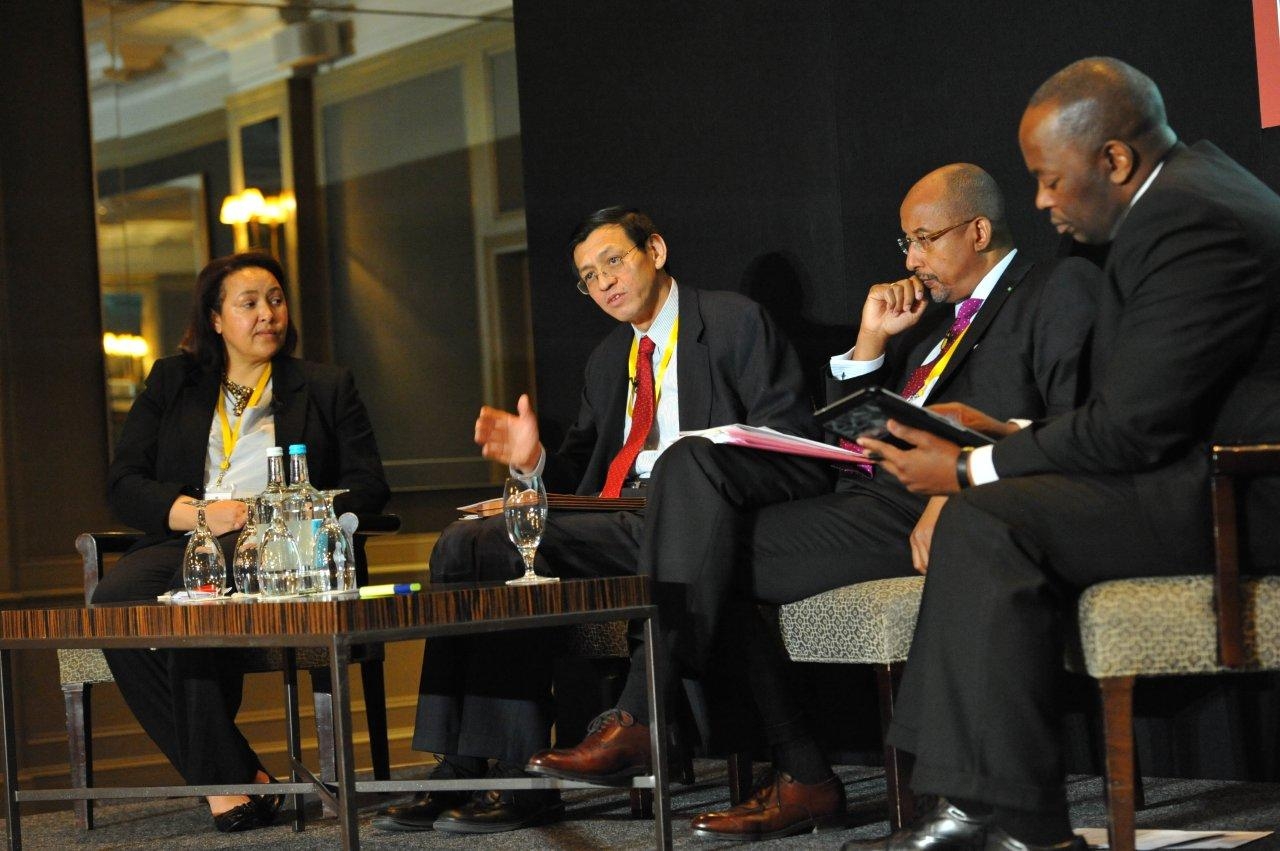
Speaking at the launch of the Report in London, the ACBF executive secretary Dr Frannie Léautier said one main aim of the Report was to provide credible, and empirically-tested information about Africa as “a lot of the things said about Africa have no basis in fact”.
She said the research leading to the Report uncovered critical factors in the political economy of change, including the long-term commitment of decisionmakers to national development goals, accountability, food security, and good governance.
“This is the ACBF’s second Africa Capacity Indicators Report, aimed at examining the key capacity development issues and challenges facing countries,” Dr Léautier said. “The issue of agricultural transformation and food security in Africa is strongly linked to capacity development, labour and growth.
“Now in its second year, the ACI Report has become a definitive knowledge product targeting policymakers, public sector officials, the private sector and civil society, guiding the development of their priorities by providing practical recommendations,” Dr Léautier added.
African Capacity Index
The Report comes with a composite index (officially called the African Capacity Index) that ranks countries according to how far they have implemented their capacity building strategies. This year Ghana became the sole country in Africa to be ranked in the “high” category for capacity building.
In summary, the African Capacity Index (ACI) measures the policy environment, the processes for implementation, the development results at country level, and the capacity development outcomes. It is a very rigorous ranking system that includes figures from the World Bank and the African Development Bank (AfDB).
“Ghana’s achievement is a marked improvement from 2011 when no countries were classified in the “high” category,” says the ACBF. “The majority of countries have now moved from “low” to “medium” in the development results category, while the number of countries classed in the lowest category has also decreased.”
Coming eight months before crucial national elections in Ghana (in December 2012), the ACI results will gladden the hearts of President John Atta Mills and his ministers. Mills is running for a second term in December, and Ghana’s No. 1 position in a prestigious international ranking system focusing on human and institutional capacity development, is a major shot in the arm.
Ghana was at No. 5 in last year’s rankings (which were based on 2009-10 performance) but did so well in 2011 as to jump to No. 1 in the 2012 rankings, with 60.2 value points.
The breakdown
The year’s Index shows Kenya in second place (58.2 index values), Burkina Faso in third (53.4 index values), and Ethiopia fourth (52.8 values).
The Top 10 countries in Africa for capacity building now stand as: Ghana, Kenya, Burkina Faso, Ethiopia, Rwanda (51.9 values), Nigeria (50.5 values), Mali (50.3 values), Zambia (49.7 values), Zimbabwe (48.6 values), and Uganda (45.2 values). The countries were ranked in five categories and assigned index values. Those who got 0 to 20 were categorised as “very low”, 20 to less than 40 “low”, 40 to less than 60 “medium”, 60 to less than 80 “high”, and 80 and above “very high”.
No country got the “very high” grade. Only one (Ghana) got the “high” grade, while 13 others (Benin, Burkina Faso, Cape Verde, Ethiopia, Gabon, Kenya, Mali, Nigeria, Rwanda, Senegal, Uganda, Zambia, Zimbabwe) got a “medium” grade ranking. Twenty-two countries, (Burundi, Cameroon, Central African Republic, Chad, DRCongo, Congo Brazzaville, Côte d’Ivoire, Gambia, Guinea Bissau, Lesotho, Liberia, Malawi, Morocco, Mozambique, Namibia, Niger, Sierra Leone, South Africa, Swaziland, Tanzania, Togo), got a “low” category ranking; while six countries (Angola, Djibouti, Guinea, Madagascar, Mauritania, Mauritius), were put in the “very low” category.
The North African countries that were convulsed by revolution in 2011 – Tunisia, Libya, Egypt, Algeria, Morocco – and others such as Sudan, Eritrea, Somalia, Comoros, and Seychelles were not surveyed and ranked.
The ACBF’s strength is in its credibility as an institution for Africa, run by Africa, with Africans taking greater leadership in proactively addressing the continent’s challenges. The Foundation, with headquarters in the Zimbabwean capital, Harare, is staffed entirely by African professionals. Its current executive director, Dr Frannie Léautier, is Tanzanian.
The Foundation now has 51 full members, made up of four international development institutions – the African Development Bank, the United Nations Development Programme (UNDP), the World Bank, and the International Monetary Fund (IMF). With South Africa joining recently, the ACBF now has 47 African and non-African member countries.
Ghana
So what did Ghana do to stand out as a “high” category country for capacity building? Dr Léautier explained that she and the Foundation were in fact “pleasantly surprised” that Ghana “barely slipped” into the “high” category group. She attributed this partly to Ghana’s determination to implement its capacity building strategies.
Besides, she said, going a long way back, Ghana had invested heavily in capacity development and even though a lot of well-trained people (like doctors, nurses, bureaucrats, etc) left the country, some did stay. And even those who left do come back from time to time to help, and in recent years a lot of them have come to stay for good and are helping the country to move forward.
“Ghana has done two things right: It has invested in capacity building and is using it; and it is also implementing its policies,” Dr Léautier added.
That should be music to the ears of the government in Accra.