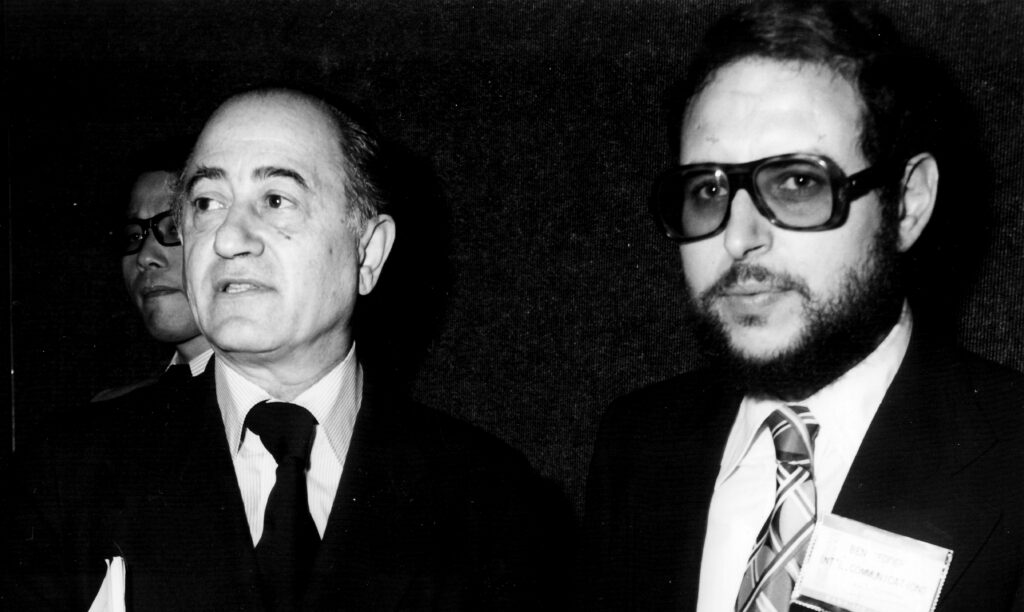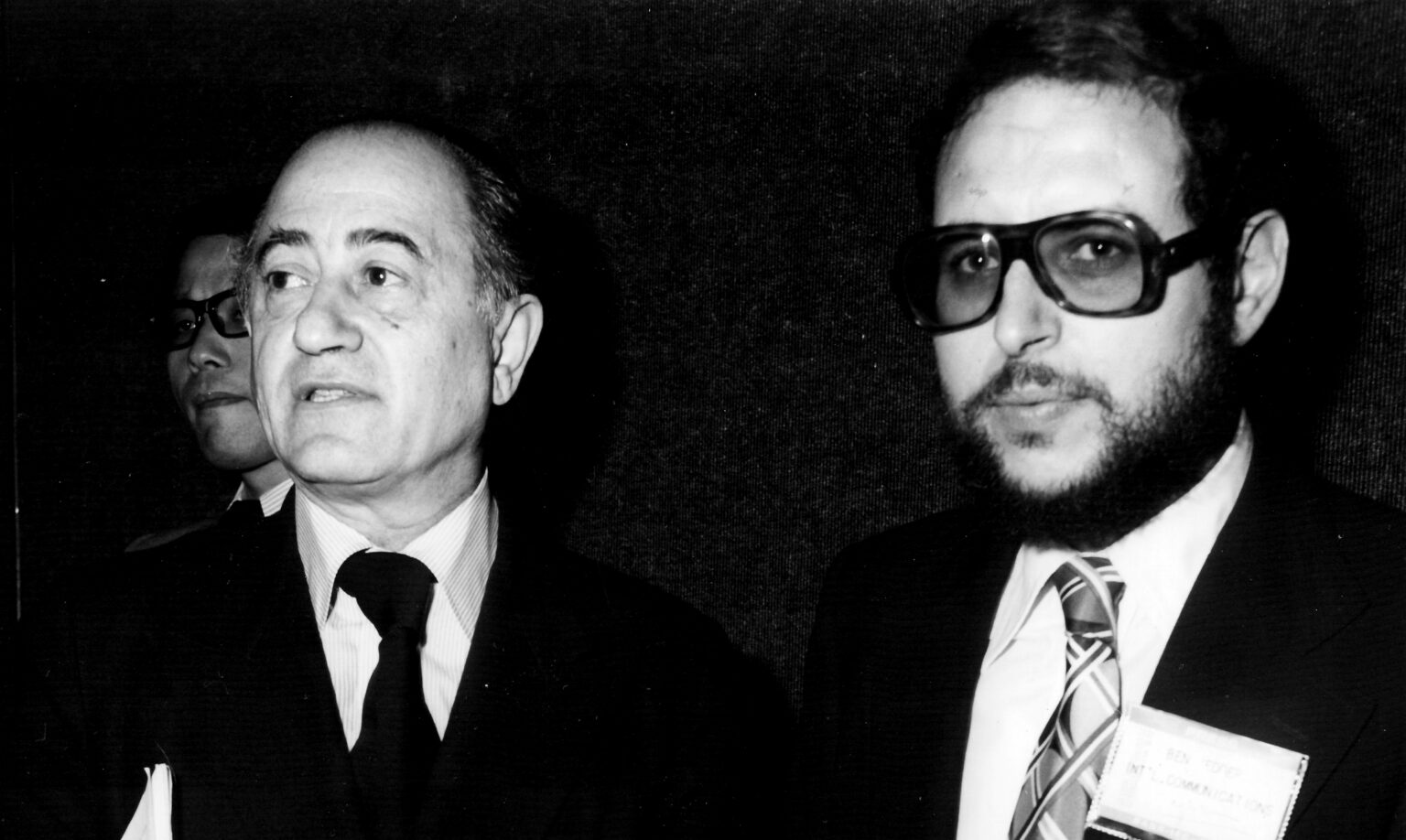
In 1971, Ben Yedder entered the Anglophone market when he established Africa magazine in London. The late, great Alan Rake, who edited New African for 21 years, took up the story in an article,
He writes that Afif sold his interests in Africa magazine to his Nigerian colleague Ralph Uwechwe, to set up in 1974 his own publishing organisation, IC Publications, with The Middle East magazine as its flagship. Ralph was later to publish Africa Journal, a highly influential monthly, from London.
“He (Afif) was doing well, but his ambition was to get back to his first love–Africa.” Rake, who was then the editor of African Development, recalls, “African Development was a slim volume produced mainly for British exporters to Africa. The two editors at that time had never travelled to Africa in their lives. No African was associated with the magazine or appeared as a contributor in the early editions. Very few copies were printed, and those that were were circulated on a giveaway basis”.
“Ben Yedder bought African Development, split it two; the business and economic side was called African Business and the other, New African, was turned into a general interest, mass circulation magazine.”
They were not alone to ride this new wave of demand for information and analysis. Ralph Uwechwe’s Africa Journal, with healthy financial support from individuals in Nigeria and elsewhere, set the standard with world-class journalism and production values.
Even earlier in 1951, Jim Bailey, an RAF pilot and son of a South African mining tycoon, took over Drum magazine and aimed it directly at the urban Black majority in the towns and townships. Taking its inspiration directly from the US-based Life magazine, Bailey set about training ambitious Blacks to become photographers and writers. Its editorial was a cross between racy UK tabloids and hard-bitten American style.
Pictures, often run on full pages, depicted both the joy and dangers of township life, but they highlighted some of the most talented artists, people like Hugh Masekela, who went on to become an international musical star and Miriam Makeba. The cover illustration was always a picture of “the most beautiful and sexy young lady you have ever set your eyes on”, as the eccentric Bailey instructed his photographers.
Drum was hugely popular and changed the way that Blacks in Apartheid South Africa viewed themselves. It was so popular that Bailey produced East African and a separate West African version.
He recruited me to work on a freelance basis on the East African Drum when I was also working for the Nation Newspapers in Kenya. It was an exhilarating experience, and when I moved to the UK, I succeeded Patrick Smith (currently the editor-in-chief of Africa Confidential and The Africa Report) as editor of Drum West Africa. It was so popular that new issues sold out within hours of hitting the stands in Nigeria, Ghana, Sierra Leone and other Anglophone countries.
But Drum was sub-regional and focused on human-interest and sensational stories. New African, Africa Journal and later Africa Now, edited by the Nigerian Peter Enahoro, concentrated on politics, economics and the higher reaches of culture such as book reviews and essays.
Making it happen
All the foreign-based pan-African magazines depended on a wide network of local correspondents who worked in the national media to identify likely stories and write them up – mostly on rickety typewriters or sometimes in longhand and mail the copy to us in London. We would edit the copy and send it up to typesetters and finally to printers.
Describing the process, Alan Rake, whose deputy I was, made some very generous remarks about me. “I was the journeyman editor,” he wrote, “who took a whole month grinding out the magazine, putting everything together line by line and getting it all ready for production. Anver, on the other hand, was the near genius, who would come into the office the night before the deadline and put together a bumper edition overnight. He produced the whole thing like magic out of a hat!
“Of course there were dozens of writers, correspondents and contacts who had produced the raw material. But Anver was the magician who made a magazine of it in a single night when the rest of us thought he could not possibly do it because he had left everything too late. Time after time he surprised us!”
Of course the truth was that everybody on the small teams we had worked very hard – I had had the advantage of professional production training at the Nation, whilst most of my colleagues had taught themselves the rudiments of writing and production.
It was a learning exercise for all of us – as even those who had worked professionally on national papers had to adapt to covering the whole of Africa for a very diverse readership. Some good journalists were never able to adapt and reverted to their national outlook.
But the net result was that we all began to learn about the Africa we were not familiar with. Each country became like a new book to open and explore, and what fascinating stories we uncovered. We started each day with a sense of excitement and adventure.
London was like a cross-section of the whole of Africa. You could meet a Mauritanian, a Cabo Verdean, a Malawian and a Mauritian on the same day. The Africa Centre in Covent Garden was a wonderful meeting place for all Africans, and discussions and debates would go on until well past closing time.
We reflected this in our coverage and columns and thus took our readers on our journeys of discovery. Letters from our readers expressed their pleasant surprise, even astonishment, about the lives and politics of different African nations. In time, readers in Kenya became as familiar with events in Ghana as readers in Zimbabwe were with the goings-on in Tanzania.
We found that there was a healthy audience among diaspora Africans in Europe, the US and Canada. As an increasing number of Africans left their homes due to political pressure or human rights abuses or to get a better education, they found our publications the perfect link to their former homelands. They followed events with great passion and wrote sacksfuls of Letters to the Editor.
If the magazines were slightly late to hit newsstands in places like Brixton or Kings Cross, readers called at our offices and demanded the latest issue. We even found a very appreciative audience among African Americans in the US, and I formed lifelong friendships with some of them, for example, the late ‘Buzz’ Palmer, who, with his wife Alice, had been a major force in the Democratic Party.
We also received considerable correspondence from non-Africans who had links with the continent either in administration or who simply found the continent fascinating and wanted to find out more about it beyond the myopic coverage in their media.
Institutions like the School of Oriental and African Studies (SOAS) in London stocked copies of the magazine and over time, you could find copies in virtually all major universities not only in the UK and the Americas but also in Germany, Italy, Holland and even Scandinavia.
A Dutch radio journalist called Peter van Akker was so inspired by New African that he persuaded his station to give a slot to African and diaspora issues. He also became a lifelong friend and, when I was invited to tour the United States in the 1990s, gave me state-of-the-art recording equipment to chart my travels. He turned it into a 10-part series, which he said had been very popular.
Squaring the financial circle
Although we were succeeding beyond all expectations in terms of our editorial coverage and reach and, in our way, creating the bonds of African unity by exposing Africa to Africans and frankly and fearlessly discussing all the major issues, we always had to look over our shoulders at the financial bottom line.
Finance was always a problem. Staff and production costs were high, and distribution, which involved airfreighting to scores of countries and then transporting them to retail outlets, was also crippling. To make matters worse, our costs were in pounds sterling, but our sales revenue came in shillings, kwacha, naira and other weak non-convertible currencies. We depended on international advertising for our real revenue.
It took genius and a massive degree of innovation to square the financial circle – and this is where Afif came into his own. “When we started,” he says, “we knew we were not in it for the money, but money is essential for it to survive. The secret of our longevity was that we never spent more money than we were earning. When we had good years, we did not spend money left, right and centre; we kept it for the bad years.”
The good years were when companies around the world were trying to establish footholds in independent Africa, a vast new market that had been opened up. African countries were making up time by going on a growth splurge, expanding towns and cities and installing new infrastructure. In some countries, there was a lot of petrodollars swirling around and a consumer bonanza ensued.
Also, once the colonial strictures had been removed, many new countries, including those from Asia, could now move into Africa. They needed to sell their products and services, and the best vehicle for their sales pitches was our publications.
Progressive African countries also realised that they had to advertise their economic attractions to persuade investors to set up shop in their nations, and they too saw our publications as the ideal vehicles to make their pitch.
But advertisers were very skittish, and many were worried that if the magazines took a critical line on some governments, they would be associated with the views expressed and might lose contracts. Whenever the continent went into an economic dip, which happened far too frequently, advertisers also tended to back off. These were the lean years Afif referred to; but come hell or high water, we continued publishing even if it meant having to cut the staff to the bone.
By 1994, Afif moved me from New African to edit African Business, which had been launched in 1982. It had been chugging along, concentrating on ‘development’ stories, the IMF and World Bank activities and coverage of international corporations and banks in Africa.
While at New African, I had the opportunity to travel all over the continent, and eventually I visited every single African country. As a journalist, I was able to discuss issues with heads of state as well as the roadside vendors.
What I saw on my travels was often the opposite of the usual fare we got in the media in the West, which only covered Africa if there was a conflict, a coup or famine. The image of Africa that emerged was of a dismal continent with a totally passive population lurching from crisis to crisis and terrorised by demonic and totally corrupt leaders. The Economist summed up the continent with their now infamous headline: ‘A hopeless continent’.
What I saw, even in countries riven by conflict or poverty, was an exhilaration of spirit. The people were ever hopeful and they lived life to the full. They were also immensely innovative, turning discarded everyday objects into tools, utensils, toys and deriving huge pleasure from their creations.
They were also the most entrepreneurial people I had ever come across. Everybody was ‘in business’ whatever their day job might or might not be. The markets were always bustling and good-humoured. By the time you finished a bus ride, you had made friends with everybody. They had wonderful, often cheeky senses of humour and satire and were great mimics.
I also met the ‘big bosses’, those who had worked their way up to become leaders of sizable companies. They came in all shapes and sizes and temperaments, but what characterised them all was boundless energy, a thirst for learning and no fear of failure.
They took all shortcomings and obstacles in their stride, confident they could overcome them. I had never seen so much optimism – sometimes in the teeth of adversity as I saw on my travels. I found them and their stories fascinating and irresistible.
I decided that the approach we had taken for African Business until then was outdated. Henceforth, the African entrepreneur would be our hero – we would feature them prominently, turn them into stars, profile them, report on their activities, share their success stories with others and take the analysis of African economics to a new level.
But we would not turn a blind eye to what was wrong on the continent – especially the corrupting influence of power and the often ruthless scramble to gain and keep it at the cost of the ordinary people. Africa has shrugged off the clamp of colonialism, but many countries now found themselves in the grip of tyrannies.
They regarded the independent press as an enemy and often treated journalists and publishers as such. Based in London, we were free to report on both the good and the ugly in Africa without the threat of being shut down. We were often banned from various countries, only for the ban to be lifted once the situation changed. Apartheid South Africa was a case in point.
Afif backed me up to the hilt, although we were taking a new departure that could have flopped badly. We decided to redesign African Business and do away with what was then considered the accepted look of a ‘business magazine ’, which was full of dull bulletins and tiny black and white photos. We would glamourise African Business.
The birth of African Banker
It worked perfectly. The business community, particularly in Nigeria initially, embraced the idea, and we found doors being opened for us for interviews and discussions.
But the whole business superstructure in Africa’s strongest economies was undergoing a major convulsion as it moved away from dependence on Western models and connections to its home-driven priorities. It was very much work in progress, and there was as much destruction as there was construction.
In the year 2000, for example, Nigeria’s banking industry was near total collapse – banks were being set up and folding almost by the month; confidence in the system was eroding fast. In 2008, the then Governor of the Central Bank, Charles Chukwuma Soludo, decided to lob a metaphorical grenade into the superstructure – he raised the minimum capital requirement for banks by several factors. This whittled out all the weaker banks and left only the best capitalised and best managed banks standing.
We were very much involved in many of the processes that led to this and immediately focused our attention on the CEOs of the surviving banks. Saludo also advised us to launch a magazine dedicated to the African banking industry because he correctly foresaw that strong banks would point the way towards strong national economies.
This gave birth to African Banker magazine, for which I had the honour of being the founder editor, and I continue to edit the publication to this day.
Omar Ben Yedder, who is currently the CEO of the IC Publications Group Omar who had taken over the running of the group from his father was faced with serious existential issues. The spread of the internet and later the digital-based social media had a near-catastrophic impact on all print publications – across the world. A very large number of them folded, unable to survive the loss of advertising revenues, which had been their lifeblood.
Others, the financially strong and established newspapers and magazines, went through a series of adaptations, embracing the digital revolution and also producing hard copies. They went on massive marketing campaigns to raise subscriptions and invented the ‘paywall’ to entice readers to become subscribers.
With IC’s market in far less affluent Africa, Omar had to think outside the box to keep the group afloat and the publications relevant in the new age of instant news transmission. How he did so would take another chapter on its own, but he managed to eventually find an even keel.
We would continue to be relevant by producing the sort of in-depth analysis which was unavailable on digital media and also take our readers into the highways and byways of high finance and the mechanics of economic structures – but do so in clear, understandable, lucid language.
Omar was also always a strong believer in the power of conferences to bring diverse people together to find solutions or strategies for growth, but many Africa-oriented conferences were dominated by academics reading out long, boring studies which no one paid any attention to.
However, the intervals between sessions were very lively as people used the opportunities the coming together had provided to discuss business, make deals, give interviews and so on.
Omar realised that the old format was now dead in the water. He set up a dynamic Events team and started turning out conferences that were engaging, lively and actually produced results. The proceedings were also circulated well beyond the narrow confines of the conference halls through reviews and interviews in African Business, African Banker and on the websites.
He turned conferences from secretive conclaves for a few into public fora in which everybody interested could participate. The response was extraordinary – people now felt they were part of the important decision-making process that affected their lives and organisations, and businesses found a ready and intelligent audience for their messages. He has grown the events section of the group into perhaps Africa’s most successful such organisation.
The crown in the jewel is still the annual African Banker Awards, organised around the annual African Development Bank AGM. It rewards the best and brightest in the continent’s banking and finance industry, and the awards are deeply treasured by recipients. It also serves as a model for others to follow, and one can say with confidence that today, the once chaotic banking industry has evolved into one of the world’s best regulated and most profitable ones.
African Banker, which regularly features incisive interviews and profiles with the continent’s progressive financial leaders, has made them familiar personalities across the continent. It is gratifying to find that during conferences, people from across the continent recognise each other because of features and profiles in African Business and African Banker.
I also believe that the familiarity with brands from across the continent has made it easier for Africa’s growing band of multinational banks, which have subsidiaries and branches in third countries – including the UK, US, UAE and even China.
More recently, under Omar’s leadership, the group has forged strong relations with Africa’s Multilateral Finance Organisations such as the African Development Bank, the Africa Export-Import Bank (Afreximbank), among others, as well as multinational banking groups such as Ecobank Transnational.
With the ratification of the African Continental Free Trade Agreement (AfCFTA), the world’s largest single market, the continent has now come much closer to Kwame Nkrumah’s dream of a united, powerful force in the world.
When we look back to our beginnings in the 1960s, we feel a sense of achievement and some pride that, in our own way, we have helped the continent we so love to evolve and continue its course to fulfil its destiny as a world leader.
But much still needs to be done, and we and the generation that follows us are rolling up our sleeves and getting down to the hard nitty-gritty.