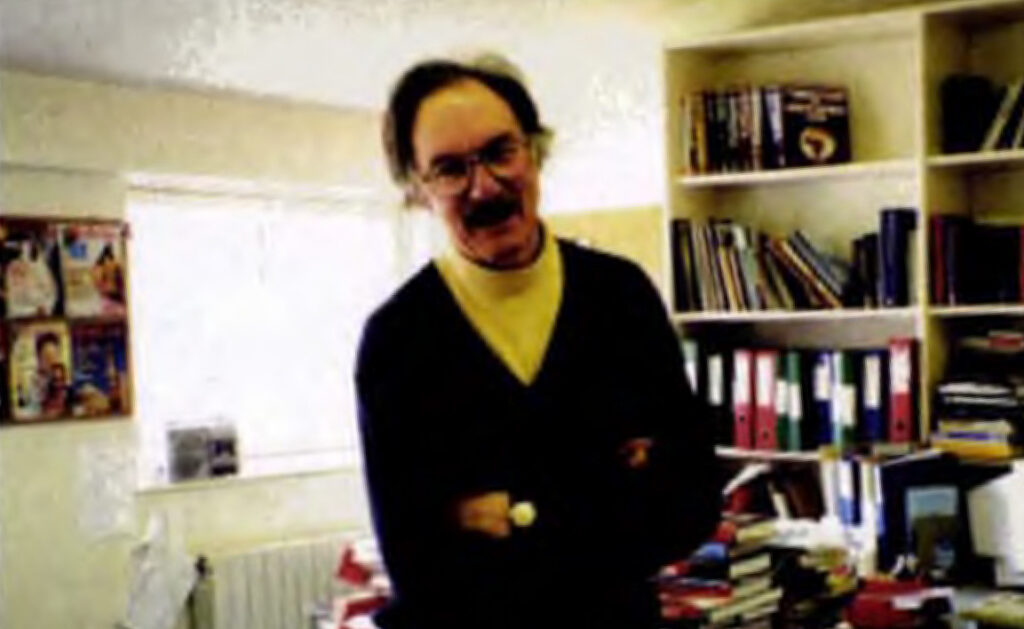
After the eloquent expositions by my elders on the preceding pages, it is now my turn, as the current editor of New African, to introduce my team and perhaps say a few words about what drives us.
First of all, my thanks go to my team and all our contributors, advertisers and loyal readers who have stood by us especially in the last seven difficult years. Without you, we would have no magazine.
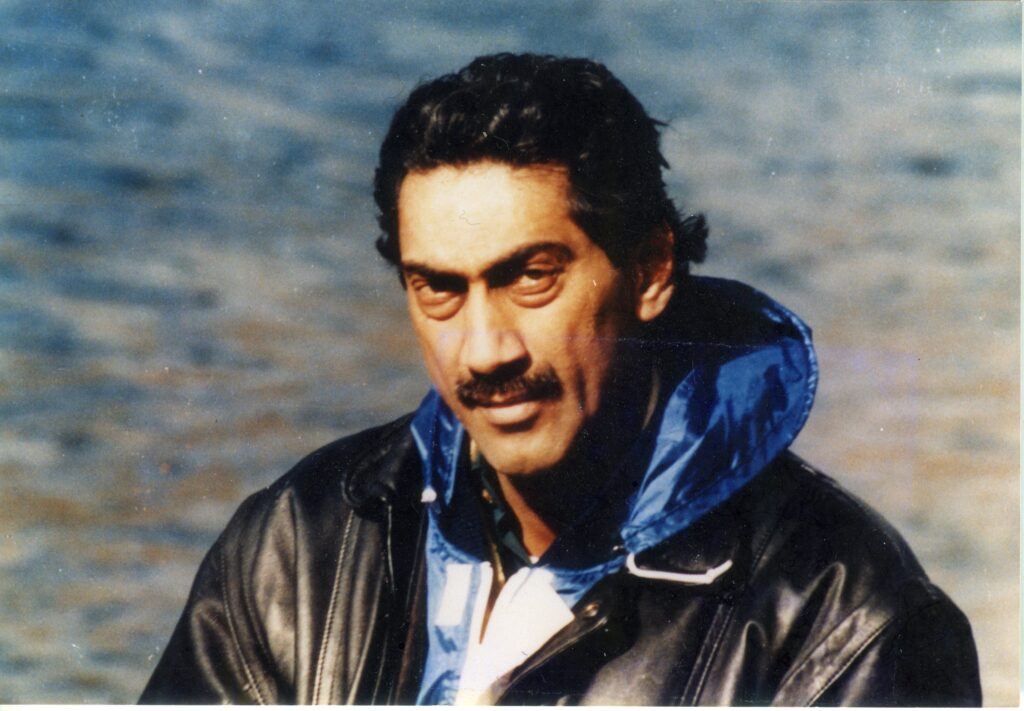
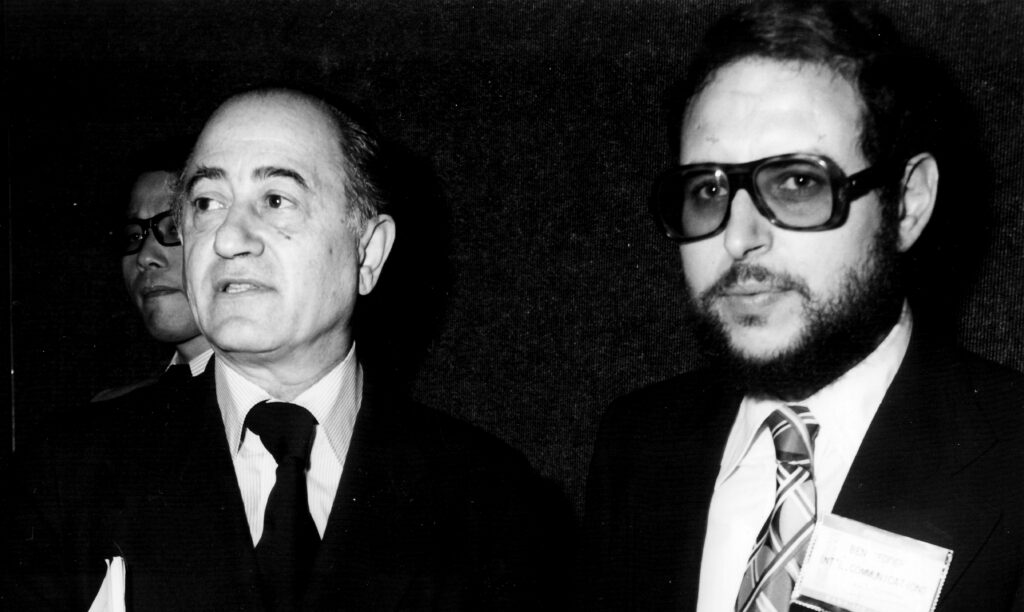
My thanks also go to a special person, Afif Ben Yedder, our now grey-haired, suffering publisher who, like St Paul of the Bible, has fought a good fight, stayed the course, and despite all the odds and the pain of having an African address in a world where Africa is supposed not to exist, is still going strong after 40 years of hard struggle and sheer commitment to Africa and its people.
This is no flattery. Afif is a remarkable man (though he blames me for the grey hair) and deserves his place in the pantheon of African heroes. Shame that when we organised our “100 Greatest Africans Of All Time” poll in 2004, no reader remembered to vote for him.
His favourite word is Bastard, which he liberally distributes especially when our articles, in his estimation, hit too hard on some chins. Now, shall we do the honours by importing a shipload of Bastard for him, for he is running dangerously out of his stock?
Looking back, Afif’s vision for the magazine when he bought it in late 1977 was far ahead of its time. After tweaking the name from African Development to New African Development, his first issue in January 1978 carried a sweet message from the man from Tunisia:
“New African Development,” he wrote, “is at once a continuation and a beginning… We are determined to produce a publication which is more informative and of far greater scope and which identifies itself with the interests of Africa as a whole… We are embarking on an ambitious development programme which reflects the greater importance of Africa’s place in the world today. And we, therefore, dedicate New African (by which shortened title we daily refer to our magazine) to the post-independence generations of New Africans with whom we hope to make the voice of Africa better heard.”
Now, can you see why he needs more shiploads of Bastard?
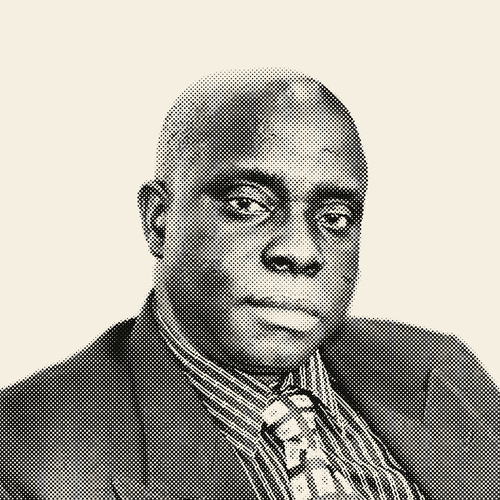
There are some latter-day readers who think New African is synonymous with Baffour. While I find it an honour, they are mistaken. I have been here for only 18 of the 40 years. But don’t worry, like a veritable relay runner, I will one day (soon) hand over the baton to the next runner who will bring the gold home.
Yes, 18 years may appear to some as a long time at one place. It is, in a sense. Which reminds me of my now 11-year-old daughter (she was seven at the time) going through the family album and seeing one of my old photos, shouting excitedly to her mother: “Daddy had hair!” I said, “Thank you, my dear. Did you think my mum gave birth to me like this, with no hair?”
However, her use of the past tense – had – brutally brought home the point of how much time I had spent at one place, at New African. When I joined the magazine in July 1988, after fleeing from a second arrest in my native Ghana, I had such lovely hair and a moustache that, in these days of vanity, would have earned me a place on the Face of Africa Pageant. (By popular request in the office, I am reproducing the self-portrait of 1988 that ran on top of my first-generation Baffour’s Beefs).
So what drives us? It is summed up in one paragraph of the editorial guidelines titled The Shape of Things to Come, which I sent to our correspondents in June 1999 when I became editor:
“Africa has always been portrayed by the world media as a basket case, a place of woes, wars, crises, Aids, corruption, famine, crime, collapsing economies, etc,” I wrote. “In fact, in the past, New African has been guilty of it ourselves. At times we have concentrated too much on the negative side of Africa without balancing it with the positive side.
“Every country or continent has a positive and negative side. And as we all know, Africa is more than the wars. Africa has its good side too. And we ought to reflect this in our reporting… We have to give good news a chance. We should stop behaving like the Western media, which, while putting their own countries’ best leg forward, paint Africa in the worst possible light…
“In fact, our publisher, Afif Ben Yedder, has always been reminding us at the London HQ that Africa is a continent of colour, of life, of joie de vivre, and we must portray this in our reporting. We haven’t done enough of it in the past; we are going to do it now, dear colleagues. So, let’s get on our bikes!”
Looking back over the last seven years, I think we have largely achieved the target we set for ourselves. So much done, so far to go; but we will get there.
Now, what have I learned at New African? A lot! The magazine is a university in itself. Reading some of my first Beefs recently, it hit me how much my worldview has grown from the starry-eyed days of 1988. My grasp of geopolitics then was not as profound as today, and the machinations that keep Africa at the bottom of the world pie were not quite apparent to me in those days. Now I know, thanks to New African.
I have also learned how deceived we all are in Africa about the so-called “free press” in the West. It is a myth! It doesn’t exist. Sorry, it exists only in textbooks. So when you next meet journalists from the BBC or CNN or The New York Times or Le Monde, Newsweek, The Economist, The Guardian, and the rest of them, don’t let them bamboozle you ever again with any highfalutin claims of their “freedom” to publish whatever is the truth without fear or favour. They have no such freedom!
They all serve various agendas dressed up as freedom and objectivity. The New York Times even put the icing on the cake by priding itself on being “the paper of record” that “prints all the news fit to print”. So, some news is not fit to print.
After all, the Western media accept that they are the “Fourth Estate of the Realm”, which means they are the fourth arm of the State or Establishment (the three others being the Executive, Legislature and Judiciary). You, therefore, want to ask yourself what role has the State or Establishment assigned to the Fourth Estate? We all know the roles assigned to the three other estates. Or are they saying the Fourth Estate is an estate without a role? You bet!
In fact, I like the sound of it – Fourth Estate and Establishment. Remember the Queen telling Princess Diana’s butler, Paul Burrell: “Be careful, Paul; nobody has ever been as close to a member of my family as you were to Diana. There are powers at work in this country about which we have no knowledge.”
Since the Daily Mirror published this extraordinary admission on 6 November 2002, I have often told myself that if the Queen has no knowledge of the powers at work in her own country, of which she is head of state and supposedly the supreme being in the land, then God save the Queen and us all, including the media!
What else have I learned in these past 18 years at New African? That the Western media have a cosy relationship with their governments. Governments make the most news in the West, and without them the media cannot survive.
Some time back, Piers Morgan, the sacked editor of the Daily Mirror, published his diaries, in which he made another extraordinary revelation: that in the eight years (1996-2004) that he was editor, he met the Labour Prime Minister Tony Blair, more than 58 times.
If a Ghanaian or Zimbabwean editor meets his president 58 times in seven years (not counting the “numerous phone calls”), they would say ‘he has been bought’. But it happens in Britain, and nobody bats an eyelid – because, as Piers Morgan says, it is “perfectly normal”.
Sorry, I don’t intend to bore you with another Beef here. So let me concentrate on the other things I have learned being here: Readers’ appreciation. Some readers never cease to talk about the “new” New African. When I became editor in June 1999 (my first issue, July/August 1999, carried the headline, A New Dawn?, heralding the coming of Presidents Thabo Mbeki in South Africa and Olusegun Obasanjo in Nigeria – in fact, in a way it was a “new dawn” for all three of us, we came into office at the same time, though theirs were much higher and exalted than mine), my team and I resolved to take the magazine a notch higher and make Afif’s vision of 1978 – “we are determined to produce a publication of far greater scope and which identifies itself with the interests of Africa as a whole” – even more poignant and realisable.
There is another lesson I have learned, and brutally so – the power of advertisers (“international advertisers” we call them at New African). They didn’t like our attempt to bat for Africa, and they left in droves, which seriously hurt the magazine’s finances and curtailed our ability to expand.
It is only because of the huge investment we made during the last few years in improving the visibility and readership of our magazines that we succeeded in convincing the advertisers to return.
Well, we are still here, and celebrating our 40 years of existence. We have another 40 years ahead of us. The press may be free in the West and elsewhere by then, but I won’t be here to see it. In the prevailing circumstances, my team and I will do the best we can to provide our readers with a better magazine than we’ve known these past 40 years. Our love for Africa and our commitment to its causes will not be dimmed.
This article was originally published in New African in December 2006. It is republished as part of our 60th anniversary archive series. The views and perspectives expressed reflect the context and circumstances at the time of original publication.