Well, here we are celebrating our 40th birthday. Yes, it is the 457th issue since our forerunner, African Development, first made its appearance in October 1966. Here we are 40 years further on. We have spanned most of Africa’s five independence decades and have identified with the struggles, the successes and failures of the most momentous time in the continent’s history.
Since the magazine started, there have been three changes of ownership, three changes of title and five moves of office. As I was editor most of the time, it fell upon me to write the New African story.
The old African Development was a slim volume produced mainly for British exporters to Africa. The two editors at that time had never travelled to Africa in their lives. No African was associated with the magazine or appeared as a contributor in the early editions. Very few copies were printed and those that were, were circulated on a giveaway basis.
Then two old Africa hands in Gemini News Service took over the magazine from Don Taylor, who founded it. The very name of Oliver Carruthers was a clue to his colonial service origins, while Derek Ingram was already well established in a brilliant journalistic career.
He was a former deputy editor of the Daily Mail (based in London). Both men wanted a magazine that would care for the problems of the newly emerging African continent. In character, they were like chalk and cheese, but between them they gave African Development a flying start.
The late Richard Hall, an old Zambia hand, ex-Financial Times, ex-Observer, and later publisher of the Africa Analysis newsletter, was the editor of African Development, but as he moved to higher things, I found myself gradually taking charge.
Our objective was to build up a magazine that was thoroughly in touch with African affairs, relying mainly on the reports from numerous stringers scattered throughout the continent. We concentrated on economic news, though the dividing line between politics and economics in Africa is wafer-thin.
I took over as editor in March 1970. We were still in financial difficulties, so we began to do special supplements on different countries or themes. Both advertising and editorial staff, travelling together, would visit a country for weeks at a time until all advertising and editorial opportunities had been exhausted.
The magazine continued to grow in the 1970s and regularly ran 72 pages, sometimes more than 100, as the supplements became larger and larger.
But after the oil crisis of 1973, African economies became increasingly strapped for cash, and though local advertisers were prepared to pay in kwachas, cedis, leones and shillings, they found it more and more difficult to provide us with foreign exchange to meet the costs of printing and running the head office in London.
The debts expanded and the magazine never quite managed to make a profit, certainly not in sterling terms. At the end of the 1970s, the staff was restive and dissatisfied with the lack of financial success, though the magazine had established itself editorially and was highly thought of. Oliver Carruthers, who had ploughed money first into Gemini News Service and then African Development, was unhappy and unable to subsidise it indefinitely.
Under new ownership
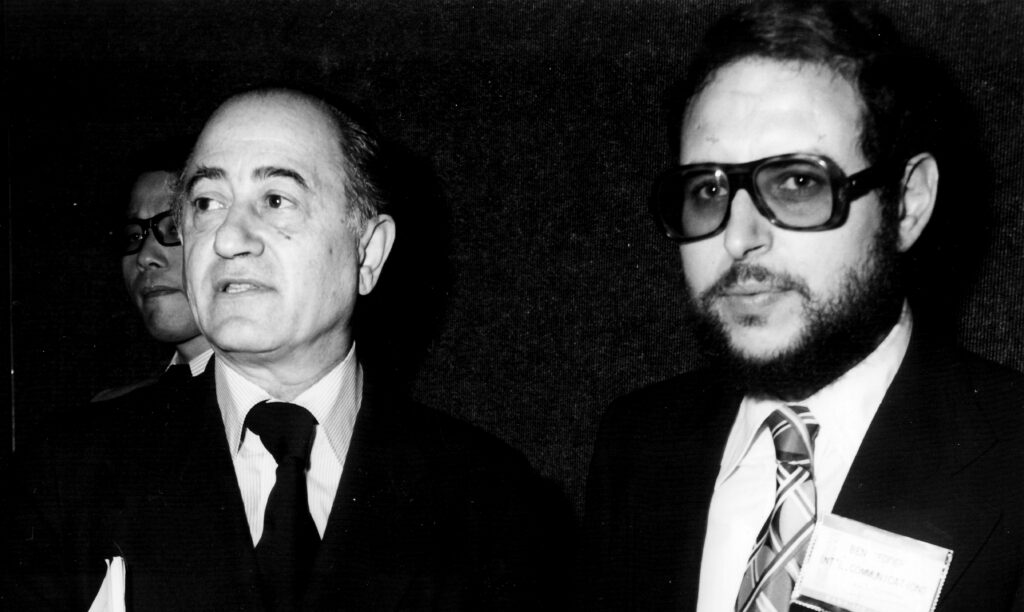
Eventually, a sale became imperative, and several publishers expressed an interest. After much negotiation with British and American companies, the prize of a going magazine and publishing team went to Afif Ben Yedder.
Trained at L’école des Hautes Études Commerciales in Paris and Harvard Business School, he had his early publishing experience with Jeune Afrique, the Paris-based weekly for Africa. Later he came to Britain to publish the English monthly offshoot from the Jeune Afrique stable, Africa magazine.
He had sold his interests in Africa to an African consortium led by Raph Uwechue and set up his own publishing organisation, IC Publications, with The Middle East magazine as its flagship.
He was doing well, but his ambition was to get back to his first love – Africa. He bought African Development, broke it into two – one part, the business and economic side, was called African Business (for which I was editor), and the other, African Development, was turned into a general interest, mass circulation magazine – called New African Development.
The first problem, however, was the name. The word ‘development ’, which had taken on a specialised meaning concerning the evolution of the Third World, was no longer suitable.
So we decided to change the name. First we called it New African Development, but gradually we would phase out the word ‘development’, leaving the name you all know today – New African [which, interestingly, was the name of the newspaper published in London in the 1940s by Kwame Nkrumah as the mouthpiece of the African liberation struggle].
Meanwhile, we created a bright, wide-ranging, general-interest magazine. The first of the new-style New African emerged in May 1978 with a new logo in the normal A4 format with a brand new design style.
We also recruited an African editor. The man chosen was Peter Enahoro, a Nigerian journalist who had earned an early reputation editing his Peter Pan column in the Nigerian Daily Times.
New African soon acquired an African flavour, but the strong political line did not find favour with most advertisers, who withheld their support. And expenditure on editorial soared, bringing conflicts between management and the editorial team, which was determined to compete with Africa magazine in an all-out circulation war, regardless of cost.
Eventually, Enahoro left in early 1981, taking part of the editorial team with him. Afif Ben Yedder then searched for another editor and signed up Kofi Buenor Hadjor, the former press aide to Kwame Nkrumah and director of the Tanzanian School of Journalism in Dar es Salaam.
He was determined to adopt a radical stance from the first issue. Quoting Nkrumah, he proclaimed: “We (African journalists) should not believe there are necessarily two sides to every question.” He did not believe in the “media-created myth of objectivity”.
Unfortunately, this approach did not boost circulation, while it terrified advertisers. Kofi’s eclectic leadership lasted only three issues until June 1981, while internal wrangles grew and revenue plummeted.
The next editor was Mark August, a young journalist from South Africa who was not enjoying his job with the South African Press Association in Harare, Zimbabwe. He came to London and soon found himself thrust into the editorial chair. He had friends all over the world and was particularly strong on Black contacts in the USA.
The production of a monthly magazine with a small, hardworking staff demanded sustained effort and technical ability. He found the task a heavy grind and, at the end of 1982, he also left and found a niche as an ace columnist on the leading newspaper in Tampa Bay, Florida.
My journalism journey
This brought me back to the editorial hot seat. I switched from African Business to New African in January 1983. I inherited a good team.
My deputy editor was Anver Versi, an experienced journalist from Kenya, who had made his mark with the Daily Nation before coming to England. He was yet another Drum man, working in the London office.
I had been editor of Drum’s East African edition in Kenya – that was the beginning of my African journalism. I arrived in Nairobi on 27 August 1957. I hadn’t a clue what I was expected to do. Kenya was still in the last stages of the Mau Mau rebellion. The British still ruled. The Africans were pressing for independence. The White settlers were determined to stay and defend their privileged lifestyle.
While in East Africa, I was sending back stories to be substituted in the South African edition of Drum. Soon enough, pages were changed to make it a genuinely East African edition.
Later, Jim Bailey, publisher of Drum, withdrew me from East Africa to cut costs, and sent me to South Africa. A senior manager in Johannesburg had defrauded the company of a vast sum of money, so Jim was forced to make economies elsewhere in Africa.
Though I was desperately sorry to say goodbye to East Africa where I had made friends who have lasted a lifetime, South Africa presented another great opportunity. Drum was in the middle of the great struggle against Apartheid.
My job in South Africa was as a sub-editor under the newly arrived Tom Hopkinson, who had achieved fame as Britain’s greatest picture editor during World War II with the trend-setting magazine, Picture Post. Drum was already established as Africa’s leading picture magazine, but it was far more. It was a pulsating, new magazine, staffed by the most brilliant young journalists on the continent.
Hardly had I arrived in Johannesburg when I was sent out with the up-and-coming British photographer, Ian Berry, to a suburb called Sharpeville where trouble had been reported. It was a quiet morning on 21 March 1960. Demonstrators were burning their passbooks at the local police station in protest against apartheid.
We spent the morning waiting around. Nothing much was happening, though a small crowd was gradually collecting outside the police station. At lunchtime, our chief sub-editor, Humphrey Tyler, arrived and suggested that I should go off and have a bite. I did, and missed the biggest story of my career.
When I finally made my way back to the Drum offices, I was told there had been a shootout at Sharpeville. The police had opened fire. Sixty-nine Africans had died, mostly shot in the back as they fled. Ian Berry’s pictures, taken facing the police bullets as the crowd rushed towards him, became world famous. Humphrey Tyler’s story made the headlines in almost every serious newspaper in the West.
I was moved from South Africa to Nigeria in 1961. As we already had a Nigerian editor, I was sent in as a managing editor, really to keep an eye on expenditure and ensure Drum’s survival in the shifting sands of post-independence politics.
I had only been in Nigeria for six months when the opportunity arose to move to Ghana. Accra was cooler, less crowded, less pushy and like a village compared with Lagos.
I was still general manager for both the Nigerian and the Ghanaian editions of Drum, but (no offence to my Nigerian friends) I had no hesitation in choosing Ghana to live in.
The Ghana editor of Drum was Cameron Duodu, who wrote regularly for New African as a columnist (Under the Neem Tree) and associate editor. Cameron was an enthusiastic young writer and journalist who soon came out with his first novel, The Gab Boys. When I left Ghana in 1963, I was glad to let him take over from me as the correspondent of the Financial Times (of London).
Cameron was to have an illustrious editorial career after he left Drum, ending with the editorship of the Daily Graphic in Accra until he crossed swords with Prime Minister Kofi Busia over rapprochement with apartheid South Africa. He left for London when Rawlings came to power in 1982, where he started writing regularly for The Observer and other world media.
Back to the UK
Back in the UK in 1963, I became editor (briefly) of the newsletter Africa Confidential and then joined the London Office of Drum, from where I moved on to African Development, then owned by the Gemini News Service and later by the colourful character and eccentric Afrophile, Oliver Carruthers.
So entered Anver Versi, ex-Drum office, London. He was an ideas man, improviser, and talented writer who lived dangerously with deadlines, production schedules and other office minutiae.
He was soon to publish a major series of essays in the book, Africa in World Politics, entitled The Search for an African Philosophy. This was followed by the work for which he is now well known, Football in Africa, the first major work on African football to emerge in the English language. Even these well-researched works concealed the novelist and short story writer waiting to emerge.
Anver soon developed the sport and cultural pages of New African to a high level and ultimately launched New African Life, the sister magazine of New African, which was to break entirely fresh ground as a magazine of style, high living, art, culture, sport and star personalities.
It was hoped that when the advertising built up, it would launch forth on its own into the sophisticated, trendy, fashionable market that it had already created for itself. But it was not to be. New African Life worked for a while and stopped. (Inside rumour was that our main advertisers preferred the full-colour pull-out and this was threatening the main magazine).
I also inherited Julie Kitchener, a meticulous sub-editor who brought some order and clarity to the most undisciplined copy, when she was not doing her remarkable investigative stories.
Then there was Richard Walker, a donnish, bespectacled wraith who emerged slimmer than ever from two years of teaching in a remote corner of Sudan.
In those days we even had the luxury of an Art Department run by Gary Frost and later Karen Douglas, both from the best British art schools.
Then, in January 1988, a lovely lady called Carole Lambert arrived and soon became the mistress of all those activities that journalists do badly – correspondence, filing photographs, filing letters, and, most importantly, paying correspondents. Her sweet and helpful nature soon endeared her to everyone, both inside the office and in Africa at large.
My philosophy as editor has always been to allow everyone to use their talents to the ultimate in fields that really enthralled
them. Over the years, the permanent staff had generally gravitated towards those areas where they had a passionate interest.
When Baffour Ankomah arrived in the UK as an exile from Ghana in August 1987, with the editorship of the Ghanaian Pioneer behind him, he soon proved that he was a natural columnist, hitting out at injustice and inhumanity all over the continent.
We decided to call his column Baffour’s Beefs when he joined the permanent staff in July 1988. He soon attracted attention, not only in Africa but throughout the world.
Baffour’s Beefs were the scourge of bad governments and the standard bearer for democratic change. Many old-fashioned journalists amongst our competitors complained that Baffour’s style was too direct, too pungent. It upset the established power structure and the old way of doing things, but it was remarkably prescient.
Baffour’s beefing was ahead of its time. It heralded the totally unexpected wave of change that was to sweep the African continent in 1990-91 when people everywhere demanded an end to corrupt, authoritarian rule and a move to the type of democracy enjoyed by other countries in the world. Africa was coming of age. Baffour was the product and the prophet of the new thinking.
I did not always agree with every Beef, but I think I can say that I never interfered with what he expressed. It was his column, and his instructions were to “suck it to them”. And the readers loved it. Every month dozens of letters praised or lambasted Baffour. And governments groaned.
We also devised other ways in which readers could express themselves. We rapidly developed the Readers’ Letters pages into one of the most controversial for African opinion. Also, the Guest Column, where readers with a more complex message to put across could express themselves freely without editorial interference – my only stipulation was that the whole essay should not be more than one page long.
I strove hard not to impose my own opinions on New African. I never wrote editorials except in times of real urgency, such as when we suggested ways in which the violence in South Africa could be stopped.
Backbone of the magazine
The backbone of the magazine has always been provided by our editors, correspondents and stringers scattered all over the world and particularly in Africa itself.
New African is primarily a magazine by Africans for Africans – written by those hardworking, professional journalists based in almost all African countries. Their brief is to choose and write the story of the month, whether it be political, economic, cultural, sporting or just a gossipy personality piece. Our job in London was simply to process what we received in a professional way.
New African has been a mirror to several decades of African evolution. There have been many scoops, big investigations, and trend-setting issues. We have computerised and streamlined our organisation. While others fail all around us, we celebrate our 40th year. Yes, 40 and still not out.
Here’s to our next 40 years.
This article was originally published in New African in December 2006. It is republished as part of our 60th anniversary archive series. The views and perspectives expressed reflect the context and circumstances at the time of original publication.