Abraham Byandala, Uganda’s Minister of Works and Transport, had a large undertaking when tackling the infrastructure and construction challenges of Uganda. Today, just over a year into his position, he speaks frankly to Darren Moore about the support, new initiatives and even some of the legal framework he has had to overhaul in order to streamline the activities of the ministry.
Q: What were the major challenges you inherited when you were appointed the Minister of Works and Transport?
A: The major problems were that we had slipped behind with maintenance. We identified that funding was inadequate, basically we required around UGX600bn (US$238m), but we only had 280bn so there was a 300bn deficit. The second problem we encountered was having a lack of local capacity, and we are trying to address this by participating in a programme called “Crossroads” with the UK’s development agency DfID, which aims to build competency and capacity within Ugandan society.
We are also planning to form a construction industry commission here in Uganda, and that too will also help in creating construction industry skills and even with funding. Thirdly, we identified that our workers, while they may have technical competency, lacked technical confidence. This fundamentally affects our decision-making process as nobody wants the responsibility to take a decision and this ultimately causes delays that have financial costs and can end up as contractual disputes.
The lack of confidence goes right into the execution of works as they do not have the courage to challenge the consultants, which can lead to future problems in the client/contractor relationship. Finally we identified problems with our procurement process, which was fraught with difficulties and ethical inconsistences.
Q: What programmes and initiatives did you then put in place to mitigate some of these challenges?
A: With the procurement process and with organisations such as the Uganda National Roads Authority (UNRA), we decided to work with our development partners on evaluation programmes such as parallel evaluation, in conjunction with an independent consultant. This way we can see if there are any major discrepancies in the evaluation process.
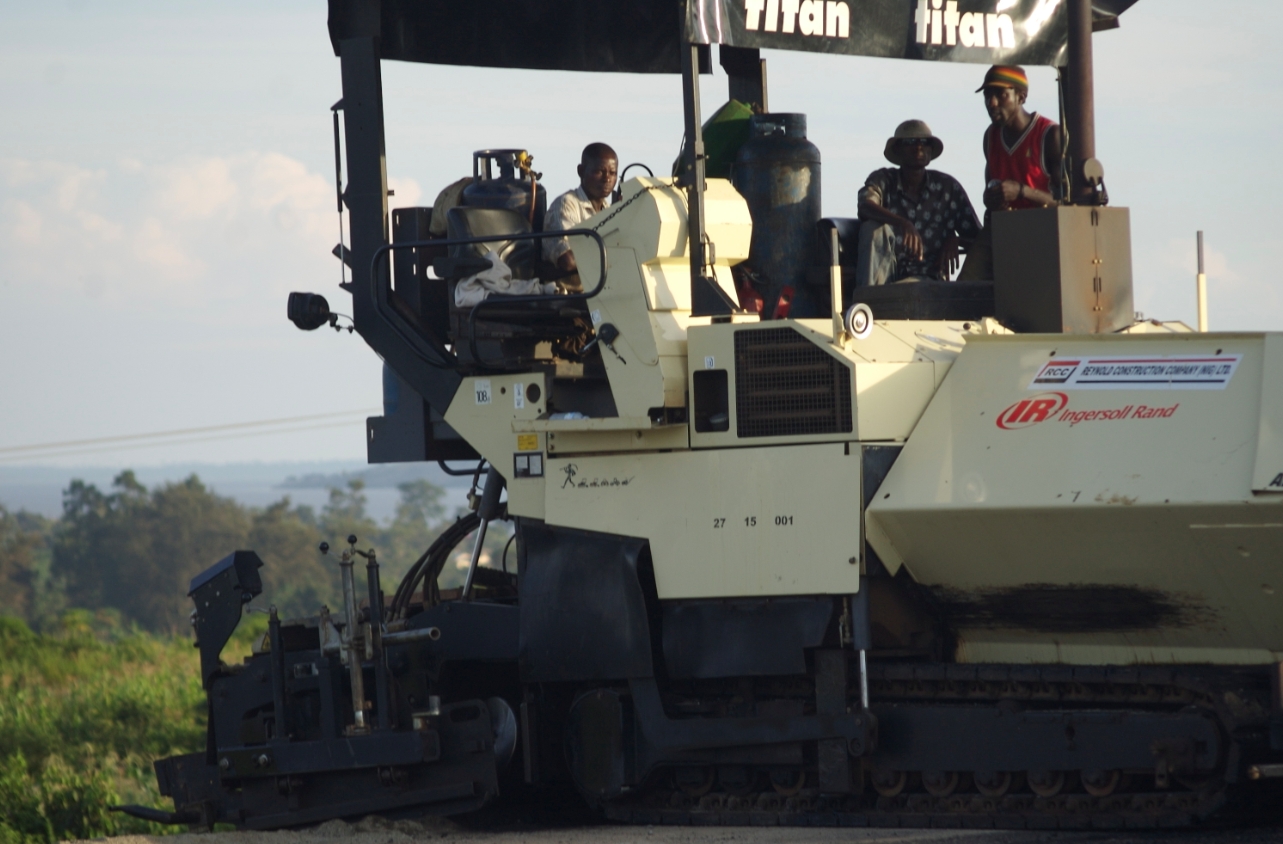
This has helped in a major way and we also elevated the procurement section to a top management team at UNRA. As for the maintenance aspect, we have established what are called second-generation funds, and set up the Uganda Road Fund. This fund is built with a levy on every litre of fuel purchased. It operates by collecting and banking this levy and dividends are remitted monthly.
We are currently assessing how these funds are banked, due to our current laws – where specific legislation is in need of amendment – to ensure that the Uganda Road Fund operates in an efficient manner and this will hopefully make the contentious issue of attaining funding for road maintenance a thing of the past.
In the area of capacity building we are working with our development partners on technical assistance and providing our people with opportunities for advanced training and relevant further studies.
Q: In what ways are you looking for private capital to play a role within the infrastructure renaissance in Uganda?
A: We are informing contractors who have the ability to mobilise funds that we are open to discussions. We hope to attract contractors and investors, as we are committed to providing good infrastructure for the tourism sector, while also focusing on some of the urban areas and also large-scale projects in the agro-productive areas. We have prioritised these, including the areas of oil production, so as to raise significant revenues out of these investments.
Q: What plans do you have to improve the aviation sector?
A: We plan to upgrade some of our airports, firstly by building a second runway on Entebbe, the country’s international gateway, and upgrading airports in Gulu, and Kasase by the DRCongo border. We have plans for a new airport in the oil extraction areas, specifically to transport the equipment for the oil industry. We are also debating the re-introduction of a flag carrier national airline for Uganda.
Q: The Ministry of Works and Transport encompasses a wide range of areas that interact with other areas of government. How do you ensure you can work effectively with other crucial sectors and ministerial departments?
A: Well actually my biggest asset in this area is President Museveni. He is 100% committed to improving road infrastructure, the railways and the power sector, and has allocated throughout the financial year a substantial budget for my ministry. The president supports this significant budgetary allocation for our activities even if there is some opposition from others in the cabinet.
This funding commitment helps my ministry to collaborate in other areas with my cabinet colleagues, so we can all work for the common good – rather than just competing for financial resources. This has all been made possible with the support of the president.
Q: In your time in office what have been some of your own personal achievements and endeavours in the ministry?
A: Well, in just one year, it is actually difficult to ascertain achievements, but within my time in office the feedback I get is that I have managed to get people moving and incentivised to work effectively. I have many informal contacts with my workers and spend considerable time talking to them about certain areas related to my ministry that need to be amended or updated. I have amended one act that is now in parliament and I have another four that are with the parliamentary council.So I think there have been significant achievements in reviewing legislation to make our construction and infrastructure industries congruent with today’s developments in the industry. The other endeavour is that we have been trying to source an alternative route from the Indian Ocean to here. This is something that was started over 20 years ago, but ministers had come and gone with no significant plans or contribution to this area. So when I came in, I went to Tanzania and met my counterpart there in the Ministry of Transport and we held discussions and eventually signed an MOU to upgrade firstly the Tanga port, then a railway line from Tanga to Musoma on Lake Victoria. We also will construct a port at Bukasa on our side of the lake.
We intend to establish a secretariat to ensure that this can be a viable alternative route to Mombasa, to provide access to the Indian Ocean. This is crucial, especially the capacity to export our oil to world markets.
Q: What do you hope will have changed in the next five years, in terms of your ministry’s responsibilities?
A: I truly think that we will have transformed Uganda’s road network by upgrading a number of key roads and keeping to our maintenance schedules. As I mentioned earlier, we should have sufficient funding in place from the Uganda Road Fund. I also foresee progress in constructing more standard gauge railway lines and as a priority to build the railway from Uganda to Southern Sudan. I shall be concentrating on that, and the inland port at Bukasa. I hope by then the railway will be in place to capitalise upon a close relationship with our South Sudanese partners.