
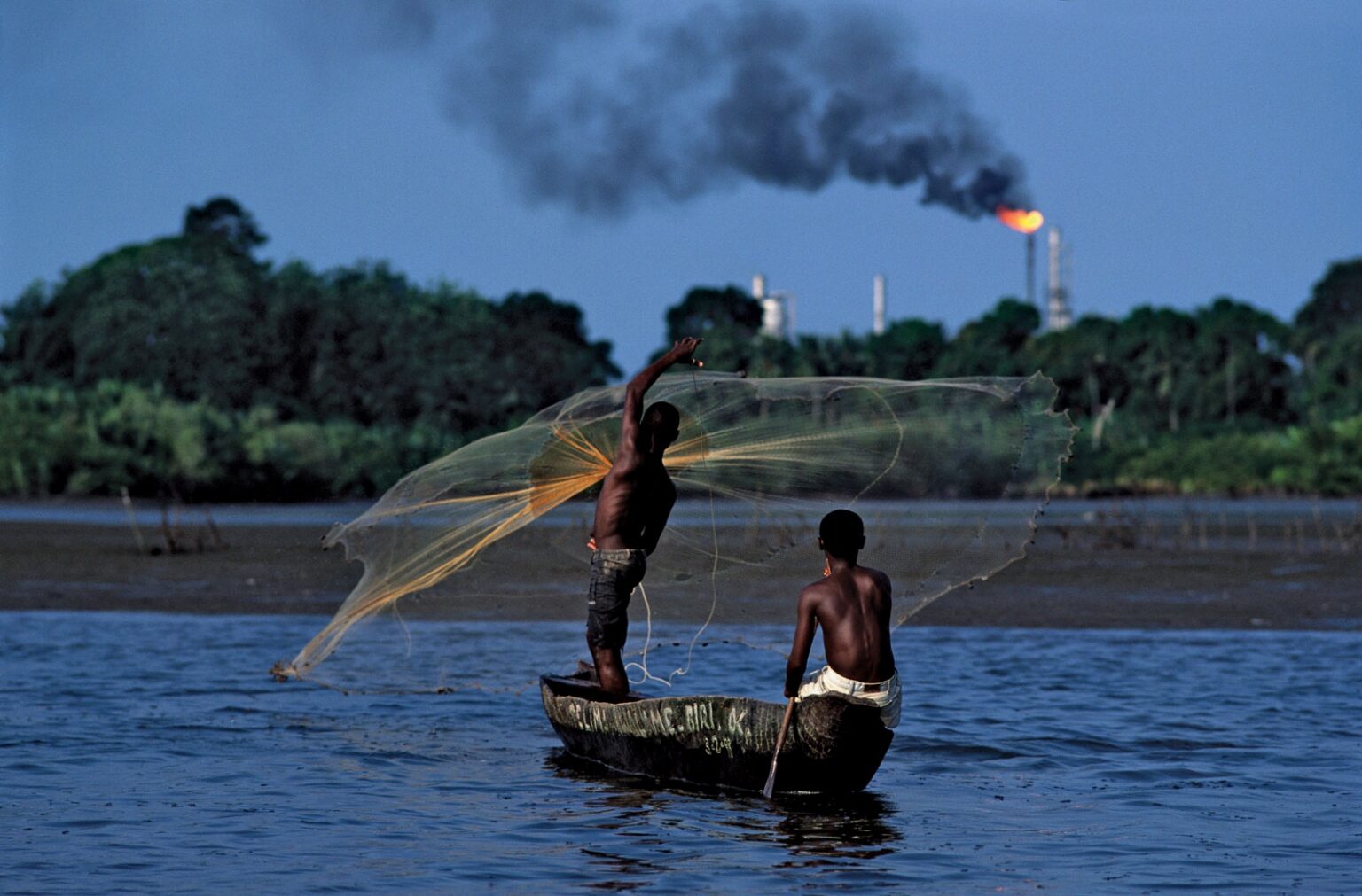
A bold new initiative is taking shape in Nigeria to devise an economic masterplan that will collectively boost the six states of the Niger Delta and the country itself. It has already won the approval of all six state governors and the initiative is now moving from formulation to execution.
Starting nationhood with a simple regional structure – Northern, Western and Eastern, on attaining independence from British rule in 1960, Africa’s most populous and ethnically diverse country has, 52 years later, become a federation of 36 states.
Whilst the plurality of federating units has offered, in principle, a limited degree of political autonomy to the marginalised nationalities within Nigeria, it has, conversely, reduced the scope of the resources available for developing each federating state.
Depending largely, if not solely, on their monthly share of the oil export proceeds disbursed by the federal government, most states, including the oil-producing ones, have failed, until very recently, to devise strategies for self-sustaining economic development.
But for the group of six that make up the BRACED acronym – Bayelsa, Rivers, Akwa Ibom, Cross River, Edo and Delta States, all located in the Niger Delta, the existing economic model is unsustainable and a new course must be charted if they are to survive and flourish.
“The concept of the BRACED Commission came from an interaction that we had as governors, where we felt we would be stronger if we worked together, towards realising our shared vision for the development of the South-South economy,” Cross River State Governor Liyel Imoke, who doubles as the Commission’s chairman, told New African in Uyo, the capital of Akwa Ibom State.
“It’s about being able to appreciate the size of the economy that we have and to realise its full potential… we, as the governors, are part of the BRACED council. But the day-to-day running of the Commission is left in the hands of the Director-General and his officials.”
Contributing close to 90% of Nigeria’s foreign exchange income, primarily from the region’s oil and gas resources, the implementation of a national budget is impossible without the resources of the BRACED states.
Economic analysts opine that with this year’s budget benchmark at $72 per barrel of oil, for which exports to Europe and the continental US are unimpeded, peace in the region will determine whether Nigeria’s projected income estimates are realised.
But despite the critical importance of their resources to the economic survival of Nigeria, Emmanuel Uduaghan, governor of Delta State, is acutely aware that the region which lays the proverbial golden eggs must prepare for a life beyond this extremely valuable – but finite – resource.
“Readying ourselves for a life, after the petroleum resources run out, is one of the main drivers for what we are doing now,” Uduaghan told New African.
“The activities of the BRACED Commission are geared towards this. We hope that building a vibrant agricultural industry will secure the future of our region.
“There must be further development in the region. And to have that development, there is a need for regional integration. We have resources, material and human, common to us all,” he observed.
Ambassador Joe Keshi, tasked with managing the BRACED Commission, as the director-general, aligns with Uduaghan’s position. “I think we can make an immediate impact on the agricultural industry, as well as on improving the state of the environment… In agriculture, we will identify the strengths of each state, in terms of the key products they’re able to produce, with the intention of ensuring they reap the maximum advantage by getting the financial benefits obtainable through the whole production chain,” Keshi told New African.
It was in 2008 that the sitting governors of the BRACED states took the bold step of devising an alternative economic strategy for the South-South region, subsequently appointing a 24-man committee, headed by Professor Pat Utomi, the renowned economist, to articulate an agenda for hosting an economic and infrastructural summit, as well as fashion a long-term development plan. The work of that committee laid the foundation for the hosting of the first South-South Economic Summit, which took place two years ago at the Tinapa Business Resort in Calabar, Cross River State.
With “Positioning South-South Nigeria for Global Competitiveness” as the theme of the maiden conference, papers and discussions focused on improving the quality of governance in the region, as well as how the agricultural, manufacturing and tourism industries could be vital for its post-hydrocarbons future.
“Planning the right strategies for investment, security and sustainable development is vital,” Uduaghan poignantly observed. We need to let the outside world know that we are open for business.”
A consequence of the maiden South-South Economic Summit was the realisation that only a structured organisation, taking day-to-day responsibility for co-ordinating economic integration between the six states, could ensure that a deliverable roadmap for regional integration was implemented.
With that in mind, the BRACED Commission was born at a 2010 conference in Benin City, the capital of Edo State. Chuks Ofulue, BRACED’s chief economist and an alumnus of the prestigious London School of Economics, has the hard task of providing political leaders with the unimpeachable information required to make astute, long-term planning decisions. Ofulue willingly admitted that gathering the needed data and statistics is a Herculean task in a country where the lack of accurate planning data is acute. “We are prepared to go to the creeks and into the villages, just to get the information we need to make the right planning projections. If you’re putting together a policy, you want to know how many people it will touch, you want to know at what stage it directly affects them and you want to know how the policy needs to be altered, as a target group is growing.
“But if you don’t have any information, you can’t do that. It’s a huge problem but we’ll get there. Again, the enormity of this job is a justification for the existence of the Commission.” Delta governor Uduaghan agreed: “The greatest challenge, whether it is at the federal, state or local government level, is getting accurate data and statistics.
“In my state, for instance, we have some acceptable data, with regards to health issues. But with regards to other economic data, it has been very difficult.”
BRACED chairman Imoke recalled that improving the quality of economic intelligence was one of the first things he tackled on assuming office. “When I came in as governor, I asked my economic adviser to determine my state’s Gross Domestic Product (GDP), which is distinct and separate from the GDP of Nigeria. That was the beginning of a process. Every state must determine its GDP, which will provide us with the needed development data.
“We understand the need to do, independently of the centre, developmental planning. Having strong data and statistics is critical to the realisation of our plans… The lack of this information, over the years, is a consequence of the years of military rule. We, as a country, are still in a transition phase… During the military era, things were done by executive fiat but that is changing now, as we need to have long-term planning that can bring about sustainable development. Completed projects are the public yardstick by which our performance, as governors, is measured by the electorate. But developing the human component, the people’s standard of living, is just as important. Our country’s ranking on the Human Development Index tells us where we are… Projects, however, are clearly the sexier PR option,” Imoke admitted.
“One such project, “ according to Ofulue, “is the creation of special tax-free trade zones, across the six states; to attract international investment. What we are pushing for is Public-Private-Partnership (PPP) projects. There are free zones being established in all the states now – that’s one of the pieces of advice that we gave – where investors can come in tax-free, the land is free and they can partner with the state government. We say, just bring in your technology and your expertise and the rest is left for the government to fund.
“We also suggested that the states should set up business parks (such as the one to be set up in the Delta State town of Warri) because if you look at the development of countries like Thailand and China, they started with small industrial parks.
“What those parks do is to open so many small businesses and then subsidiary and allied businesses can be developed around them… The important thing is that people make the journey to come and actually look at what we are talking about and they can see the potential that’s there,” Ofulue said.
The 2nd South-South Economic Summit, that took place in Asaba, the Delta State capital, further strengthened BRACED’s regional strategy. “We reflected on the first summit that took place two years ago,” Imoke said. But no agenda, no matter how well articulated, can be transformed into a practical working model without the basic ingredient of development – a reliable and uninterrupted electrical power supply.
As Nigeria’s power minister during the government led by Olusegun Obasanjo, the Cross River State governor has an understanding of the intractable problem that is, undoubtedly, a major impediment to Nigeria’s overall industrial development.
“I think it is unfortunate that the previous power reform plans and the required investment were interrupted… public-private partnerships must be allowed and individual states have to be involved in power generation. We do have the capacity to get out of the problems and I am confident that, with the right attitude, we will get there.”
A 15MW electricity plant completed in the Lagos Business District, as part of the state’s Independent Power Project (LIPP), could serve as a good template for the BRACED states. The ensuing half-decade will be crucial in setting the pace for the Commission, as it transits from developing a grand plan to delivering on its key targets.
“In the next five years, we should have developed the infrastructure within the region and an economy that is growing at double-digit rates,” said the BRACED chairman.








