
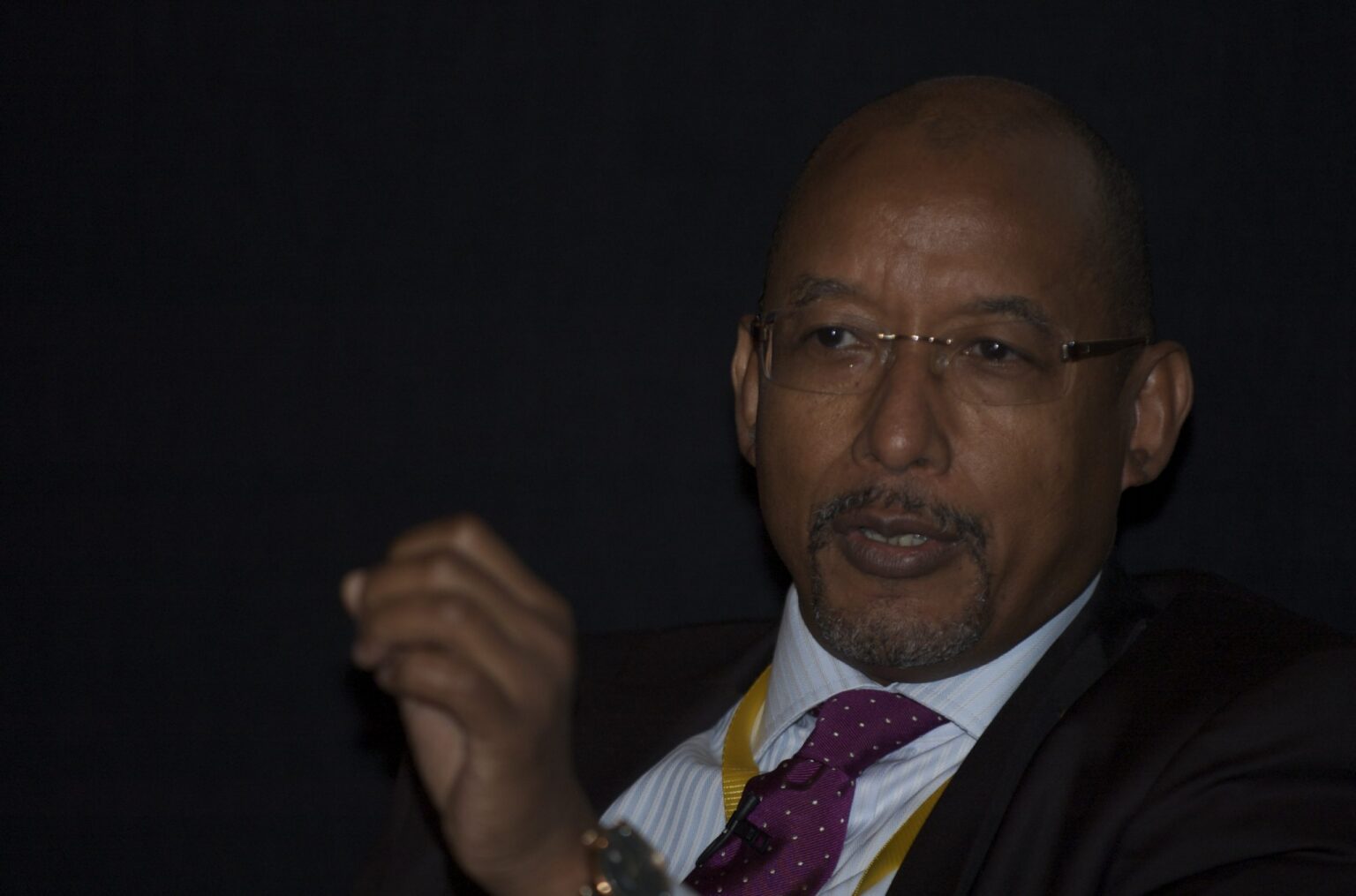
Dr Ibrahim Assane Mayaki (pictured right) is a former prime minister of Niger and currently serves as the chief executive of the New Partnership for Africa’s Development (Nepad) Planning and Coordinating Agency (previously known as the Nepad Secretariat).
Speaking on the fringes of the African Capacity Building Foundation’s Capacity Indicators Report launch (see page 58), Dr Ibrahim Assane Mayaki made it very clear that the Nepad initiative, in its first decade, has successfully established very solid foundations.
While three heads of state that initiated and spearheaded the initiative – South Africa’s Thabo Mbeki, Nigeria’s Olusegun Obasanjo and Senegal’s Abdoulaye Wade – have since relinquished power, the tacit political support from Africa’s leaders remains in place.
“At its launch, Nepad needed that political support in order to become firmly established,” Mayaki told New African, “but now, 10 years later, Nepad has transformed itself into a development agency and become institutionalised within the African Union setting, so the need for that political support is now for our delivery of Nepad’s agriculture and infrastructure programmes and so on.”
The Nepad Heads of State and Government Committee, composed of 20 African leaders, meets every six months, which clearly helps to keep Nepad’s development trajectory moving forward. Significantly, Mayaki had pledged at Nepad’s 10th Anniversary Colloquium in Addis Ababa in late March that Nepad would aim to reach all strata of African society so that they are aware of the essence and vision of Nepad, as well as to demonstrate to key stakeholders the achievements and successes of the last decade.
He also said he wanted to clearly highlight the future of the Nepad programme and the work of the Nepad agency. The 10th Anniversary Colloquium had heard calls urging African journalists to not only take responsibility for analysing the continent’s development issues, but to embrace ownership of the development story, which could guide international media towards a more authentic portrayal of the complexity of African development challenges.Responding to two questions that are commonly raised in discussing Nepad, namely what the organisation had achieved in its first decade and the efficacy of the African Peer Review Mechanism, Mayaki described its achievements in four sectors.“First of all,” he said, “in the agriculture sector we have designed the Comprehensive Africa Agriculture Development Plan (CAADP), which all African countries have now joined”.
CAADP has many goals, but chief among them is to promote African agriculture to eliminate hunger, enhance economic development and reduce poverty. To do this, African governments have agreed to increase public investment in agriculture to a minimum of 10% of their national budgets and aim to raise agricultural productivity by at least 6%. Not for the first time did Mayaki acknowledge the invaluable work of the African Capacity Building Foundation (ACBF). Describing the ACBF as “a sister organisation to Nepad”, he commended the ACBF’s 2012 Capacity Indicators Report: Capacity Development for Agricultural Transformation and Food Security.
Mayaki told the delegates to the report launch that it was, in his opinion a “truly extraordinary” piece of work. “We at the AU and Nepad will use this report thoroughly, and it will help us be more intelligent in our implementation processes for CAADP,” Mayaki said. “It is also a wonderful opportunity to recognise how the capacity development agenda is being tackled on a very concrete basis … it is an African document, and this lends it credibility.”
As for the second sector, Mayaki cited progress in developing Africa’s transport infrastructure. “In cooperation with the African Development Bank (AfDB), we implemented the Short Term Action Plan, and regional projects throughout Africa have already received more than $30bn in investment,” the chief executive explained.
“That was a huge achievement and this has now underpinned Nepad’s Programme for Infrastructure Development in Africa (PIDA),” Mayaki said. Again, PIDA is being implemented in cooperation with the AfDB, which acts as the execution agency.
“We are backing up PIDA with a technical team to help the regional economic communities develop feasibility studies and gather the data to monitor progress as well as develop regional capacity, because the implementers are the regional bodies – the projects belong to the regional economic communities,” Mayaki added.
The third sector is Nepad’s environment initiative and action plan, designed to ensure sustainable development and poverty alleviation. “This is a reference framework for adaptation strategies,” Mayaki clarified.
The environment initiative includes eight sub-themes: combating desertification, wetland conservation, controlling invasive alien species, coastal management, meeting the challenges posed by global warming, and promoting cross-border conservation areas as well as environmental governance and financing. The fourth sector that Mayaki drew attention to was the area of health in general, but specifically the African Medicines Regulatory Harmonisation (AMRH) Programmme. “We have worked very closely with the ACBF to develop capacity in the health sector, promoting capacity building opportunities and promoting an African agenda for health. And we have taken very concrete actions to harmonise Africa’s regulatory systems with regard to medicines.”
The final question put to Mayaki concerned the African Peer Review Mechanism. Mayaki observes: “It’s a unique exercise in the world. More and more African countries are adhering to it on a voluntary basis. The conclusions of the exercise are shared by the Head of State of the country that is being analysed and his or her peers. It is a frank and transparent exercise, and now the challenge is to find the way to move forward, to implement the findings. Once again, this calls for capacity and that’s why the interaction between Nepad and the ACBF is so absolutely critical.”








