
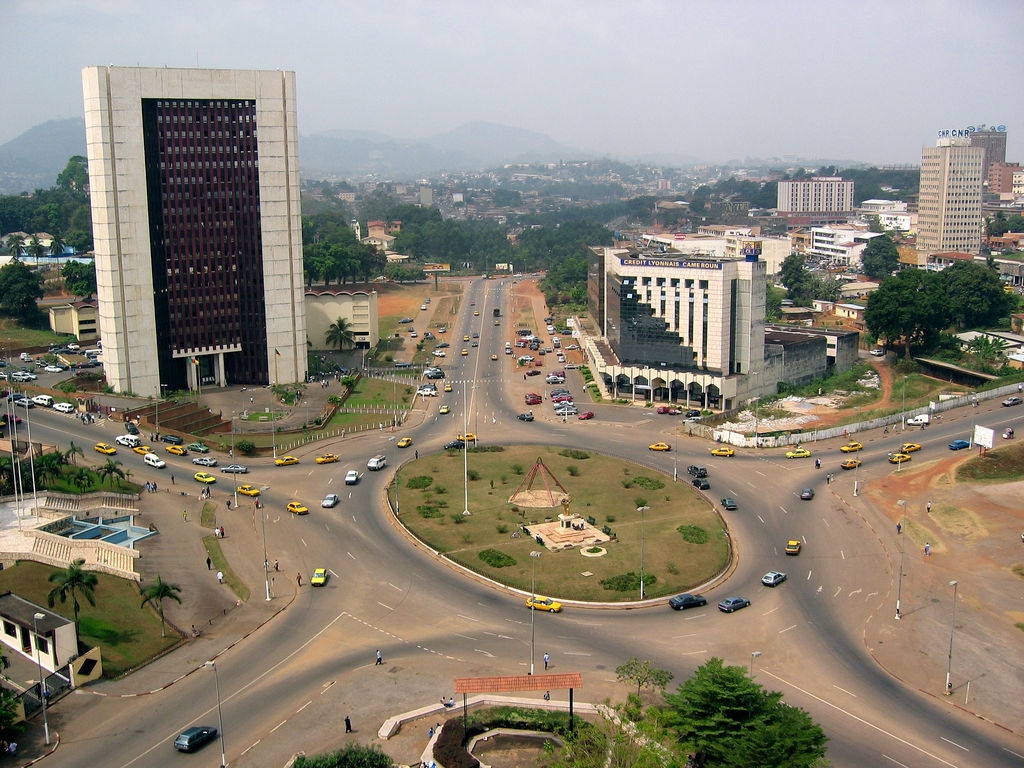
Cameroon lies in a pivotal position between West and Central Africa with its shoreline in the hydrocarbon-rich Gulf of Guinea and the Atlantic Ocean. This important African oil producer is also one of the continent’s major exporters of cocoa, timber, coffee, rubber and processed agricultural products.
Under the presidency of Paul Biya, the country has enjoyed a long period of political and social stability and steady economic growth. Growth projection for 2013 is in the region of 6% (5% in 2012) and inflation is less than 3%.
Cameroon, which is described as “all of Africa in one country” because of the extraordinary diversity of its topography and language groups, has embarked on an ambitious programme to achieve emerging market status by 2035.
To sustain the required growth rate of 6% or over to reach its target, the country has initiated several large-scale energy projects and is upgrading its road, rail and port infrastructure to tap into its hitherto underexploited mineral and agricultural potential.
Cameroon has one of the largest gas reserves in Africa, estimated at over 3.5 trillion cubic metres. Plans to commercialise this resource, for which there is now a ready market within the region and beyond, are already advanced.
In addition to a proposed Liquified Natural Gas (LNG) plant, other hydrocarbon options include the production of fertiliser, methanol, converting gas to power, small-scale LNG, gas re-injection and the supply of gas direct to industrial users.
The country also has a huge reservoir of virtually untapped mineral resources. The government has already granted over 160 exploration licences. Mining rights have been granted to international companies to exploit iron ore, bauxite, diamonds, gold, cobalt, nickel and manganese. One of the most exciting developments has been the recently concluded deal with Cam Iron, a subsidiary of Sundance Resources, the Australian mining company, which has been granted the right to exploit the potentially 200bn tons of iron over a site of 783km2. The deal, which took seven years to negotiate, will provide the government a free 15% stake in Cam Iron SA as well as royalties of 2.5%, which will represent CFA6,000bn ($12.2bn) over the next 25 years.
Local companies will provide 30 to 50% of the supplies needed by Cam Iron. Any damage to the environment will incur penalties. The project will involve building the mine, a 510km railway and the terminal at the port of Kribi.
Cameroon is truly bilingual, with both English and French as official national languages. Regionally, its workforce is known for being hardworking and enterprising and the country is seeing the emergence of a rapidly expanding middle class.
The country expects the private sector, both local and international, to provide the drive for the accelerated economic growth. Recent reforms have vastly improved the ease of doing business in the country and bureaucracy is being slashed.
It plays a vital trading role with its neighbouring countries, including providing access to the ocean for the Chad-Cameroon oil pipeline. With its expanded road and rail network, Cameroon is expected to become the central transport artery serving the hinterlands of these countries.
The Limbe deepwater seaport (70km from the commercial capital Douala) which is expected to be operational by 2014, will play a central role in increasing the pace and volume of trade not only within Cameroon itself but for the entire sub-region. The French magnate with a large interest in the logistics business, Vincent Bolloré, was in Cameroon recently to look at opportunities which the new port upgrades could offer. The Limbe deep seaport will cost €650m and will provide 20,000 jobs. It will consist of four terminals for commercial and industrial activities, a coastal shipping facility, container handling and an oil bunkering terminal.
The country has a relatively small but dynamic industrial base mainly involved in the processing of agricultural produce, but with plans to increase its oil refining capacity beyond the refinery in Limbe, it is set to become a major producer and exporter of downstream hydrocarbon products.
Cameroon is a prime example of the global investment-source swing from the North to the South. Brazil, Russia, India, China and South Africa (BRICS) have been quick to see the excellent investment potential that Cameroon offers. The BRICS nations invested CFA710bn ($1.45bn) on development projects in Cameroon in 2012. By comparison, European investment reached only CFA306bn ($620m). The main investment areas were in housing, infrastructure, ports, energy, agriculture and mining.
As the international rush to invest in emerging Africa continues apace, Cameroon is without doubt one of the most investible countries in the southern hemisphere, offering a massive regional market and some of the best returns on capital in Africa.








