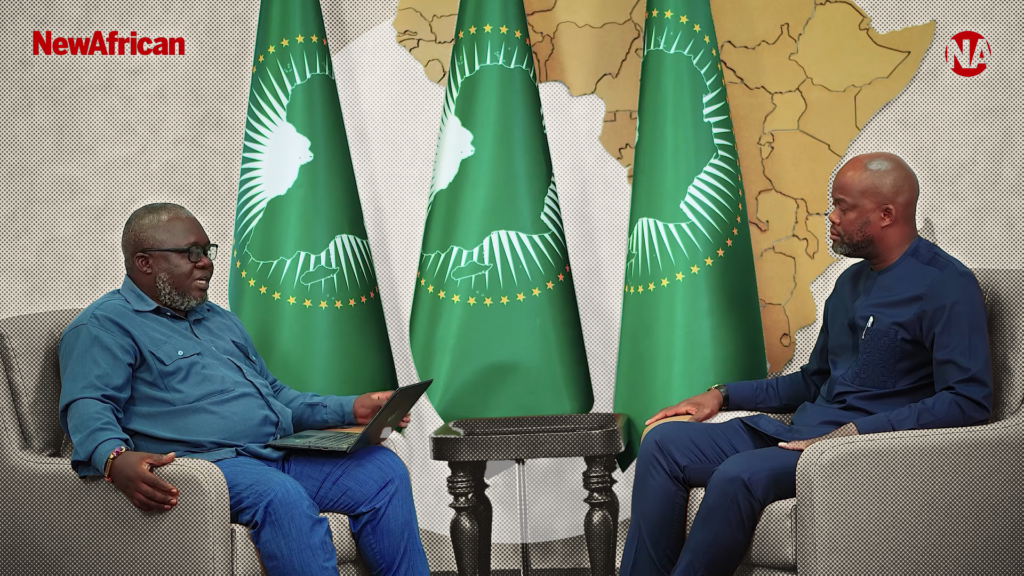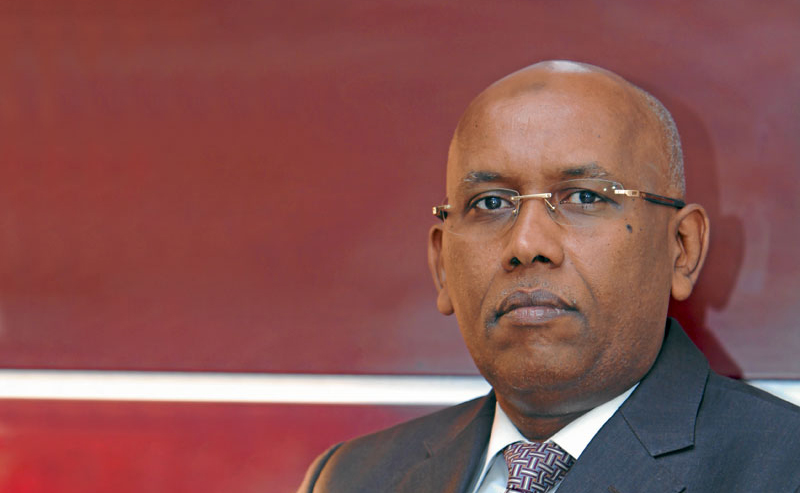
For Djibouti’s Minister of Economy and Finance, Ilyas Moussa Dawaleh, the need for forward planning is imperative. In this interview with New African, he describes Vision 2035 and the challenges and opportunities that now confront the country.
Q: Would you outline Djibouti’s Vision 2035 concept and its objectives?
A: We used to formulate very short-term national policies, sometimes on an annual basis but we realised that there were a lot of challenges ahead and risks on the way. For this reason we needed to plan over a longer period. We accept that we will probably not be able to achieve all our objectives during the current administration, but Vision 2035 clearly sets out the aspirations of the President and his government. We also want to encourage Djiboutian citizens to take ownership of this vision themselves, as they have a key role to play. We believe that with this initiative we are encouraging Djiboutians to achieve their own success in what is now a fast-paced and very competitive new world. The Vision 2035 is also based on the key pillars of encouraging economic integration, good governance and human development. This all means increased communication with the people to inform them of the wider opportunities that are available to them.
Q: Djibouti’s economic success is intrinsically linked to the wider region. How would you characterise the relationship with your development partners at this time?
A: Djibouti has limited resources and a relatively small population. However, Djibouti’s location has a key strategic geographic position. As one of our colleagues from the IMF mentioned: “The geo-strategic position of Djibouti means the same thing that oil means to Saudi Arabia.”
Of course, this unique location means that we must sustain the momentum regionally to facilitate greater trade and integrate our economies, making sure our neighbours are able to take advantage of our logistics and related services.
For example, Ethiopia has, over the last 15 years, experienced a high rate of growth, and needless to say, the more Ethiopia grows the more the Djibouti economy follows suit.
Djibouti’s GDP is linked specifically to the port and other logistical services, which in tandem is connected to the growth of the Ethiopian economy. This is why we are working with the Ethiopians on a long-term vision to ensure Djibouti remains stable, competitive and has access to international markets. This will ensure our relations with Ethiopia continue to flourish as it embarks on its industrialisation drive. One of the key points to their industrial development is that the whole process must be integrated, meaning competitive logistics must be in place, and this is where Djibouti will play a key role.
We are also planning a cross-border industrialisation programme, to add value to our exports. We need to create a cross-border duty-free zone to integrate Djibouti’s economy with Ethiopia’s and provide a gateway to other economies in the region of commercial interest, such as South Sudan.
Q: Internally there are some challenges to growth and investment in Djibouti, namely high energy costs and water stress issues. What initiatives does the ministry have in place to combat these problems?
A: These are two major concerns regarding Djibouti’s economic development, and we are actively seeking strategies to address them. The geothermal electricity generating programme is the number one priority of Djibouti’s government and our geothermal potential is acknowledged as one of the largest in the world. We plan to couple this potential with other renewable energy projects such as solar and wind energy. By tapping into these assets with the assistance of our development partners being led by the World Bank, we are confident of resolving our energy problems in the next three years and we may even be in a position to export energy. Already we have embarked on the first salt lake geothermal development plan.
We are also looking at solutions to our water supply constraints and have an EU desalination project and other public-private partnership programmes. We also bring water from Ethiopia for some areas of the south of Djibouti, and at the same time we are conducting our own research and development with highly skilled engineers. We anticipate that the challenge of water will, like our energy sector, be tackled successfully in less than three years.
Q: What message would you like to get across to our readers about Djibouti today and the country’s investment opportunities?
A: Djibouti certainly has the potential to become another Singapore, Hong Kong or Dubai and there are myriad investment opportunities here related to our unique geostrategic location. Equally importantly there are many untapped business sectors such as tourism. I believe we have the possibility of becoming one of the top marine tourism attractions in the world, if the requisite infrastructure and facilities are put in place. We welcome international investors to come and take advantage of these opportunities.
We are already working hard with our partners and neighbouring countries to create critical infrastructure such as roads, airports and dry ports to serve as a gateway not just to the rest of Africa but also to the Gulf region as a whole.
Another area of investment potential is telecommunications and our telecommunications ministry is inviting major international players to Djibouti to make use of the most advanced sub-sea fibre-optic cable facilities in Africa. This is just a snapshot of some of the opportunities available in Djibouti today, and there are many more!