There was a time when the New Partnership for Africa’s Development (Nepad) was believed to be the elixir that would transform Africa from poverty to wealth. Now a little over 10 years old, Nepad is still soldiering on, but how many Africans know what Nepad has achieved in its first 10 years?
At its adoption in July 2001 by the 37th Summit of the Organisation of African Unity (OAU), the New Partnership for Africa’s Development (Nepad) was thought to be the elixir that, working in unity with the soon-to-be-launched African Union (a metamorphosis of the then dying OAU), would transform Africa from poverty to wealth and rid the continent of the subservient status it had acquired since the Europeans balkanised the continent at the Berlin Conference of 1884-85.
There was such hope in Nepad’s ability to move Africa forward that the thought of two strong continental institutions (the African Union and Nepad) working together struck real fear into the hearts of the powerbrokers of the world. Soon pressure was brought to bear on the key African leaders who were at the forefront of the AU and Nepad projects.
It was the old “divide and rule” tactics at play all over again. The aim this time was to sever Nepad from the AU or vice versa. Working alone, neither Nepad nor the AU, it was calculated, would accumulate enough power to offer Africa much in terms of real economic and political independence from the orbit of the West. To achieve genuine economic and political freedom for the continent, the two institutions had to work together!
But that was a problem for the masters of the world, so much so that on 1 November 2003, the then prime minister of Canada, Jean Chrétien, had the effrontery to write to the then South African president and chairperson of the AU, Thabo Mbeki, asking that the continent supplant the then nascent AU with Nepad.
Mbeki was outraged, as one would expect, by Chrétien’s suggestion, and taking great diplomatic pains, effectively told the Canadian prime minister and his ilk to shove off.
In a reply which was widely circulated to the G8, EU, the UN secretary general, the Nordic countries, members of the Nepad Implementation Committee, and heads of multilateral organisations, Mbeki told Chrétien in unambiguous terms: “As Africans, like any other people in the world, we have the capacity to determine what is in our best interest, the determination to promote this interest to the best of our ability, and the resolve honestly to confront any tendency that is inimical to the advancement of these interests.”
The South African president went on: “The AU is the primary organisation of Africa. Nepad is its socio-economic development programme. Accordingly, Nepad is not an organisation separate from, and independent of, the AU. It has been authorised by the AU in all its elements, including the Peer Review Mechanism.
“There is no way in which there can be a Nepad independent of, and outside, the AU in as much as there can be no socio-economic development programme covering the member countries of the European Union (EU) independent of the EU…
“Certainly, it would be intolerable that we, the current chairperson of the AU, should consciously engage in any attempt effectively to nullify the existence of the very statutory bodies we are charged to help strengthen or bring into being, and recognised in our own legal system as African statutory bodies.”
Mbeki saved the best for the last: “It would be fundamentally wrong and illegal,” the South African president reminded Chrétien, “for Nepad to ignore these institutions and thus place itself above African continental law… One of the dangers to us, posed by the assertion that the Nepad Peer Review process should displace all related AU legal organs, is that this seeks to encourage us to ignore decisions related to the AU, adopted by our parliaments as law.
“Another is that we are being encouraged to hold the AU in contempt, by treating its decisions and institutions as being inimical to ‘the logical and vision that underlie Nepad’.
“In short, we are invited to treat the AU, the parent of Nepad, as a dangerous irrelevance with regard to its Nepad offspring, whose connection with the latter may lead to the ‘unravelling’ of our external partners as you warn.
“As you can see, this creates what, to us, is a false dichotomy between Nepad and the AU, which seeks to oblige us to either abandon or dissolve the Union and replace it with Nepad. I am certain this is not the result you seek.”
10 years on
It is almost 10 years since Mbeki wrote that letter to Chrétien, but not many Africans can genuinely tell what has happened to Nepad in the intervening years. Did it appear? Has it grown into the institution that struck fear into Western leaders? What has it done concretely in the last 10 years in furtherance of the African agenda?
These are difficult questions for an outsider to answer. But for insiders, such as Dr Ibrahim Mayaki, Nepad’s current CEO, “since its launching, Nepad has recorded numerous policy frameworks and programmes for the continent such as the Comprehensive Africa Agriculture Development Programme (CAADP), the Programme for Infrastructure Development in Africa (PIDA), and the Presidential Infrastructure Champion Initiative (PICI) under which African governments have agreed to prioritise the implementation of regional infrastructure projects.”
According to Dr Mayaki (speaking at the Nepad 10th Anniversary Colloquium in Addis Ababa in early April): “Nepad puts [a] premium on supporting country-led and region-supported actions. The Regional Economic Communities [such as Ecowas and SADC] have taken on the responsibility for transforming the [Nepad-initiated] frameworks into practice at country and sub-regional levels. At continental-level, therefore the AU Commission is working closely with Nepad towards enhancing international legitimacy for defined national programmes.”
In an apparent answer to the question of what Nepad has concretely achieved in the past 10 years, Mayaki said: “During the past 10 years, Nepad has played a critical role in promoting democracy and good governance through one of its flagship programmes, the African Peer Review Mechanism. Currently, 30 African countries have acceded to this programme and more countries are ascribing to it. Of the 30 countries, 14 have already had their policies and practices on democracy, political governance, economic governance, and corporate governance reviewed.”
The problem with Nepad is bad communications and many of its projects over the past 10 years have not been communicated to the people of Africa, the beneficiaries, and as such, people don’t know what Nepad has been doing. It may be a road in your locality or some such project, was supported, initiated or led by Nepad, but because it is not communicated clearly to the people that Nepad is behind it, it is assumed that Nepad just disappeared or has been sleeping ever since. Nepad knows that communication is one of its major shortfalls. As such, on the fringes of the 10th Anniversary Colloquium, it organised a one-day pre-conference media workshop for selected African journalists at which a solid strategy for fuelling improved media coverage of African development issues was produced.
Both Nepad and the participating journalists agreed that there was a dire need for the creation of a formal journalists’ support network to report Nepad activities to the people.
The big headache
Nepad’s weakest point is that it was a socio-economic programme designed for Africans by Africans who expected the bulk of the funding to come from “external partners”, particularly in the West. And when the “partners” did not get their way in supplanting the AU with Nepad, they refused, as Chrétien had warned.
Funding is still a big problem for Nepad, and Dr Mayaki touched on it at the 10th Anniversary Colloquium. “Africa’s own limited financial resources,” he told the assembled dignitaries, “the difficulties and unpredictability of external support, have inevitably affected the pace at which Nepad’s ambitious programmes have been implemented. Despite all these challenges, Nepad still stresses self-reliance, with the Nepad founding documents recognising the importance of domestic resources in accelerating the socio-economic transformation of Africa.”
Mayaki continued: “Indeed, domestic revenue is now the major source of development finance in Africa, accounting for about 84% of all total sources of financing for Africa, increasing four-fold between 2002 and 2008… We are confident that increasing domestic resources for financing regional programmes will shape our continent for the better. We are committed to move Africa towards a double digit growth, inclusive and sustainable.”
Whatever that meant, Dr Mayaki was supported by the deputy chairperson of the AU Commission, Erastus O. Mwencha. He told the Colloquium that since Nepad’s inception, as a response to the problems of poverty, underdevelopment and marginalisation of Africa in a global context, it has matured as an integral programme of the African Union.
“To give Nepad a fresh impetus, the 14th AU Summit held in February 2010, decided to transform [what used to be known as] the Nepad Secretariat into the Nepad Planning and Coordinating Agency, and integrate it into the structures and processes of the AU.
“Today, the process of transforming and integrating the Nepad Agency is almost complete. The Agency has a legal status that endows it with some autonomy. It applies AU rules, regulations, and operating procedures in the areas of human resources, administration and finance… Henceforth, all decisions regarding the implementation of Nepad programmes and projects follow the rules and procedures of AU policy organs.”
A Coordination Unit has been established within the Commission to strengthen synergy of action between departments of the AU Commission and the Nepad Agency.” Standing in for the absent AU Commission chairperson, Jean Ping, Mwencha could not fail to touch on the vexing problem of funding. “Today, one of the key development challenges facing Africa is the issue of project financing and the sustainability of such financing,” he said. “This issue affects all development institutions. Indeed, we have a sound vision and strategy as well as a set of viable programmes and projects, such as CAADP, PIDA, CARMMA, whose implementation would radically transform Africa. Regrettably their implementation is contingent upon goodwill outside our continent. This is no longer sustainable in the light of global developments.”
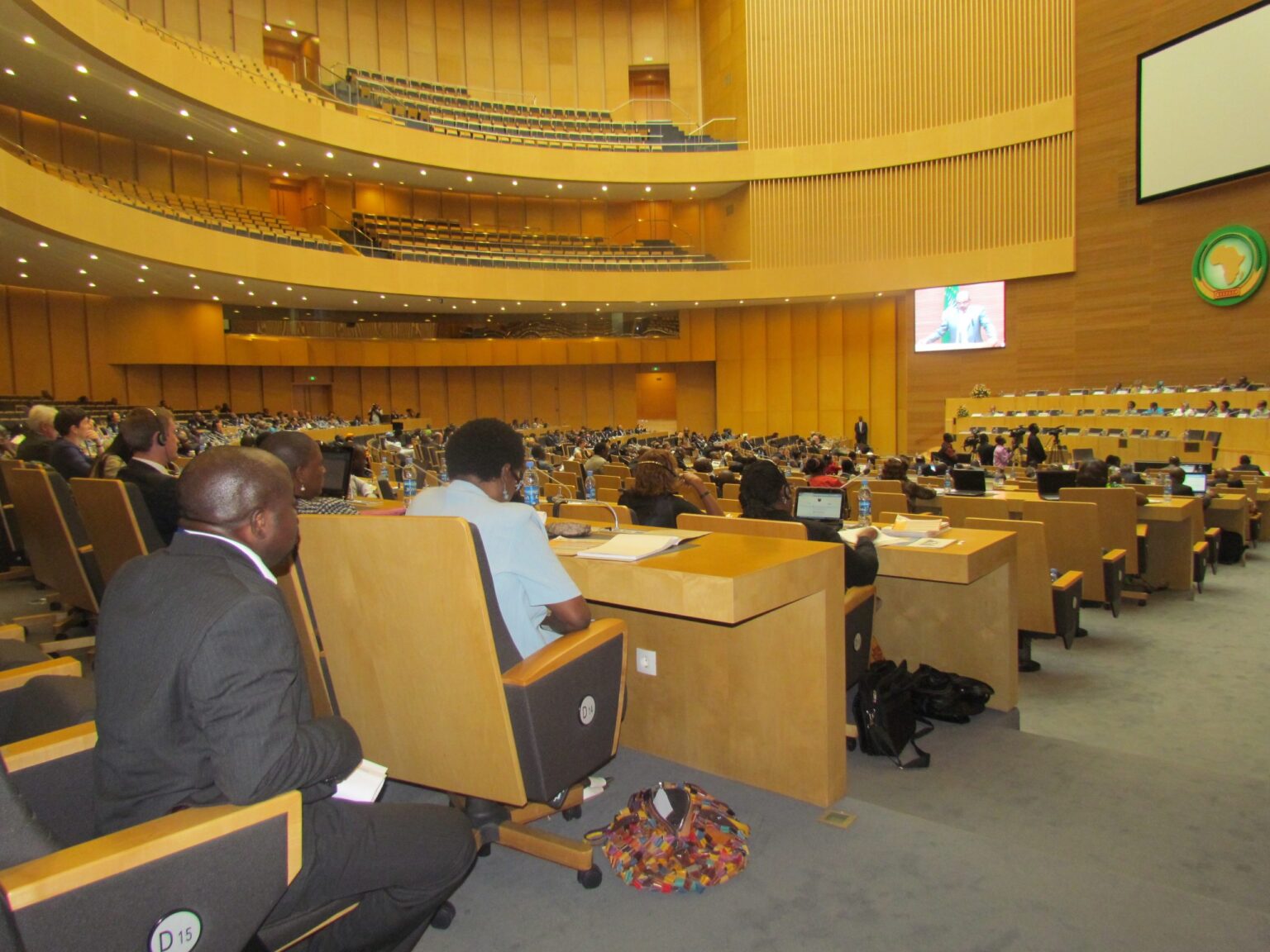
But how can Africa – a continent of 54 countries – always expect “external partners” to fund its programmes and projects? For nearly 50 years, the 53 countries of Africa (now 54, with South Sudan coming on board) could not build themselves a dignified headquarters for their Union. It took one country, China, not a continent, just three years (from 2009 to 2012) to donate, sorry build, a magnificent headquarters for the AU in Addis Ababa!
Some Africans are justifiably outraged that Africa has taken the “begging-bowl mentality” a tad too far in allowing China to donate the AU headquarters, but whatever one thinks about it, the headquarters that China has built is an impressive one. The next relevant question is: Can Africa maintain it? Or are the Chinese going to stay forever and thus take the maintenance problem off Africa’s head?
But, perhaps, that is a question for the future. For now, as Nepad tries to find its feet after 10 years in existence, one has to give the last word to Dr Abdoulie Janneh, the executive secretary of the UN Economic Commission for Africa. He was quite on song, when he told the 10th Anniversary Colloquium: “I stand before you today as one of the earliest believers in the Nepad which you initiated a little more than 10 years ago. The indicators are all around us that the Nepad idea is working and that our leaders were correct in fashioning out this distinct framework… Only 10 years ago, The Economist reported that Africa was a hopeless continent. Ten years later, 10 years after Nepad, the same journal is screaming ‘Africa rising’. Permit me to surmise that Nepad played a role in this reversal…”
So Nepad is working. For all those cynics who think Nepad changed to “Knee-pad” and disappeared into the Indian Ocean, this comes as a huge disappointment.