Hidden in Somaliland, a country that technically doesn’t exist, is a hoard of ancient attractions which could form the basis of a much-needed tourism industry. But these timeless artefacts are in danger of disappearing as a result of this non-country’s political seclusion. James Jeffrey reports from the capital, Hargeisa.
Ancient and sprite-like etchings of humans and cattle blanket the cave wall as the guide points to outlines of giraffes that once roamed verdant plains but which now, like the former grasslands, are long gone from the Horn of Africa.
The collection of caves at Las Geel, deep in the Somaliland scrubland, features one of the most impressive collections of ancient rock art on the African continent. But some of the 5,000–10,000 year-old renditions of primordial life are now unrecognisable smears due to lack of protection from the elements and animal activity.
“There isn’t money to look after the site better, our tourism department is tiny,” says Abdisalam Mohamed who works for the department operating out of a few ramshackle offices in the centre of Somaliland’s capital, Hargeisa.
Still unrecognised by the international community since declaring independence more than 25 years ago, after a civil war when it was part of Somalia, Somaliland’s government has a tiny budget, relying on diaspora remittances to bolster the economy.
Supporting tourism infrastructure simply isn’t a priority in such circumstances. Hence many of Somaliland’s historical highlights risk ruin due to lack of funds, or because of simply remaining lost, never having been found.
Somali archaeologist Sada Mire has recorded ancient rock art at about 100 places in Somaliland, while more than 1,000 such sites, she estimates, await discovery.
Time running out
About 100km east of Las Geel on the Somaliland coast is the ancient maritime trade post of Berbera, its sun-baked streets and waterline steeped in history. The town’s old quarter is a wealth of crumbling pre-20th century Ottoman architectural gems and old neighbourhoods where Arab, Indian and Jewish trading communities once thrived, which would make it, like Las Geel, a shoo-in candidate as a UNESCO World Heritage Site, were it not for Somaliland’s political limbo.
A UNESCO team visited Somaliland, but as the country is not recognised by the UN, and hence, still viewed as part of Somalia, which hasn’t ratified the 1972 World Heritage Convention, world heritage status for its sites remains elusive. But at the rate Berbera’s Ottoman heritage is crumbling, with many buildings already lost, the fear is that soon there won’t be anything left for UNESCO to even consider.
“Although Berbera was not directly affected by the 1980s civil war, the consequences of that long war are part of the reason why Berbera’s historical buildings are being lost,” says Jama Musse, director of the Red Sea Culture Centre in Hargeisa. “Neglect and lack of awareness among Somalilanders is making the problem worse. I have not heard of any restoration schemes, and we have to act very soon if we are to save it from disappearing.”
In addition to inadequate maintenance of historical sites, lack of funding means another of Somaliland’s potential tourism assets barely registers on the radar: its 850 km of beaches, which are almost entirely undeveloped.
“There’s very little at the beaches in terms of infrastructure – there needs to be more,” says Georgina Jamieson, who works with the tourism consultancy service Dunira Strategy, which conducted a feasibility study of tourism as a driver of sustainable economic growth in Somaliland. “Though that’s part of the beauty, it’s very untouched. Some say it’s what Egypt looked like prior to its tourist boom.”
But the prelapsarian state of Somaliland’s coastline at Berbera is far from idyllic: a rickety and crumbling façade with teeming refuse and unsavoury seaside smells along the waterline. As well as inadequate infrastructure dissuading more mainstream tourists, the strict Islamic culture means women bathe fully clothed and there’s no cold beer at sundown.
“We concluded that over the short term, Somaliland’s historical sites are its strongest assets,” Jamieson says.
Leveraging tourism to greater ends
Somaliland can also offer tourists exposure to nomadic and pastoralist traditions; Islamic history, such as the Masjid al-Qiblatayn ruins at the seaside village of Zeila, one of the few ancient mosques featuring two mihrabs indicating the direction of Mecca; and then, scenes like the camel market in Hargeisa, or further afield the escarpment around the Daallo Forest, home to magnificent birdlife and hallucinogenic panoramas.
Creating a tourist industry based on the country’s beaches, history and cultural sites offers one means to help boost the livestock export-dependent economy and change global perspectives, such as risk assessments on the country.
“I don’t see tourist numbers increasing while Western governments have travel advisories in place,” says Jim Louth of adventure travel company Undiscovered Destinations, which sends groups of tourists to Somaliland. “Poor old Somaliland is placed with Syria and Yemen, and that means you won’t get hotel groups interested or foreign investment in infrastructure either.”
The root of the problem, as with many of the country’s burdens, is Somaliland’s continuing lack of statehood.
“The only way we can sell the country’s assets is to have international recognition,” Musse says. “Tourism will not grow without that recognition. The world does not know about us.”
As a result, he explains, foreigners don’t know who to contact, no one takes responsibility and the types of institutions normally operating abroad to protect tourists’ interests don’t exist, which presents the danger of anyone offering advice without accountability.
There is, however, one potential tourist boost for Somaliland that is less dependent on Western travel advisories reforming.
“Ethiopia is our neighbour and with its large population offers a big market,” says Mohammed Abdirizak, who runs the Hargeisa-based Safari Travel Tour and Culture travel agency, of the country with one of the world’s fastest-developing economies and a rapidly growing population. “Many of its middle class are going to Kenya and Djibouti for holidays when they could be coming here.”
Somaliland could also benefit from becoming an onward destination for the increasing numbers of foreign tourists lured to Ethiopia as its tourism industry takes off, says Mark Rowlatt, a 56-year-old habitual traveller planning his Somaliland itinerary from Hargeisa’s Oriental Hotel after visiting Ethiopia.
On the walls of the city’s oldest hotel were posters depicting Somaliland’s beaches and historic sites under the hopeful banner of what might be: “Wonderful Somaliland – the Newest Tourist Destination in Africa”.
Government indecisiveness
Some of those rooting for Somaliland tourism say the government isn’t doing enough, while using its constrained budget as an excuse not to be more proactive, and failing to appreciate how tourism is a means to tackle poverty and chronic unemployment rates that leave swathes of young men lounging on the streets.
“These young men represent an army-in-waiting for ambitious politicians to use for personal gain, and are a ready-made pool of rudderless youth from which militant extremists with an agenda can recruit,” said Rakiya Omaar, a Somali lawyer and Chair of Horizon Institute, a Somaliland consultancy firm helping communities transition from underdevelopment to resilience and stability.
For now, Somaliland’s peace holds, and those foreign tourists choosing to take their governments’ travel advisories with a pinch of salt can visit in relative safety. Depending on where one travels in the country, an armed escort is often mandated. But many say that has more to do with the government fearing how even one tourist-related incident would undermine efforts towards international recognition than with actual danger.
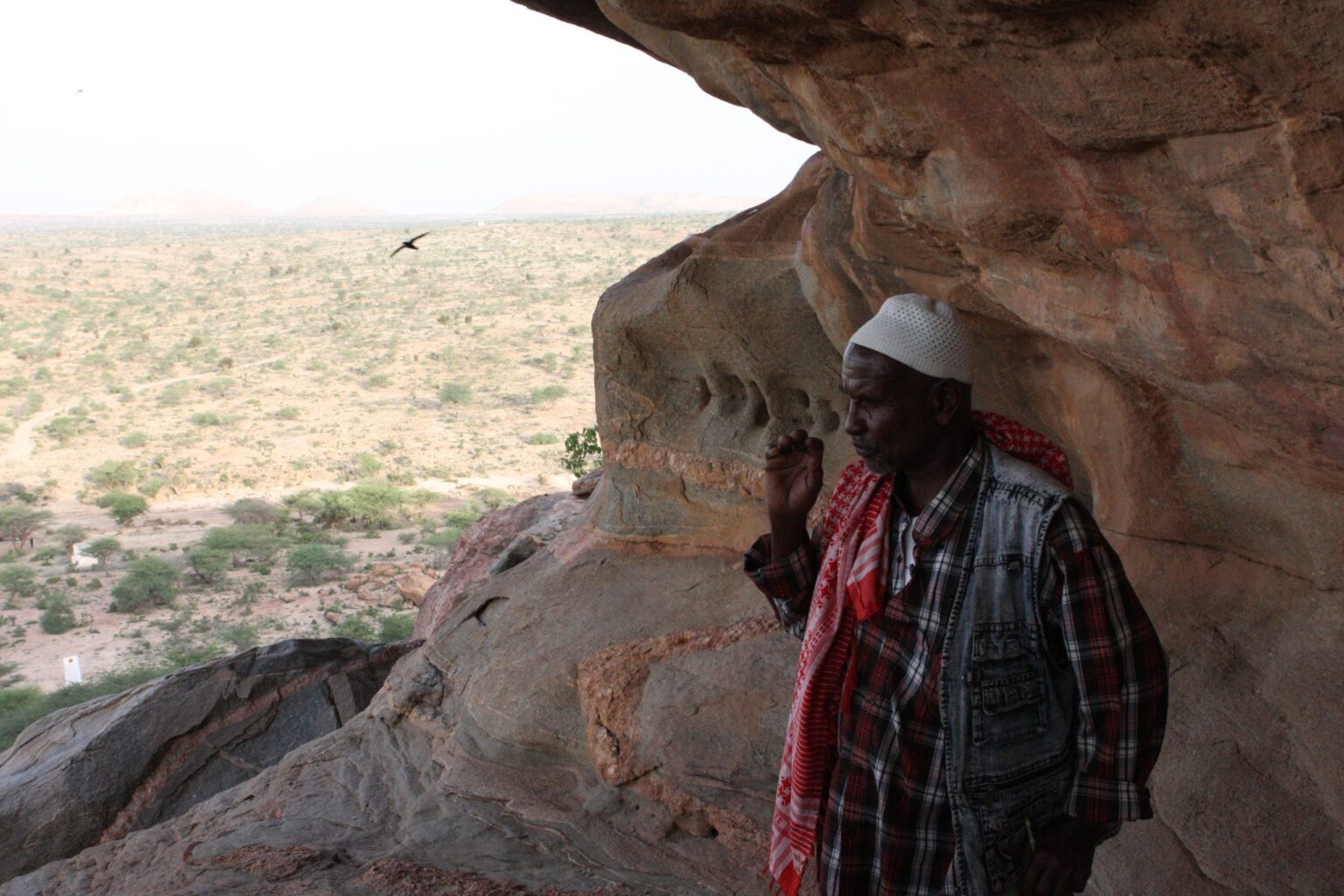
There certainly seemed little need for the armed escort while my group visited Las Geel. The main challenge was the heat, until the sun began to set on the landscape surrounding Las Geel and its mysteries. No one knows for sure what the intent of its creators was. Some speculate the paintings represent art for art’s sake, others that they are proto-religious works of ritual significance. After thousands of years, we will never know for sure. But at least tourists can admire the mystery, for now.
“When I was a boy we thought these pictures had some sort of devilish connection,” says 57-year-old Musa Abdi, a local who grew up around Las Geel and now helps look after the site. “Now I have learnt about them, they have become part of my blood. If this place becomes better known it can help Somaliland become a recognised country.” NA