
Having been in the shipping business for 30 years, mostly in the Port of Djibouti but also spending three years in Lagos, Nigeria, last year Aboubaker Omar Hadi returned to his country to head the country’s all-important ports and free zones authority. He talked to New African about his responsibilities and his vision.
Q: The ports represent the lifeblood of the Djibouti economy; can you outline the expansion projects that are being undertaken at the moment?
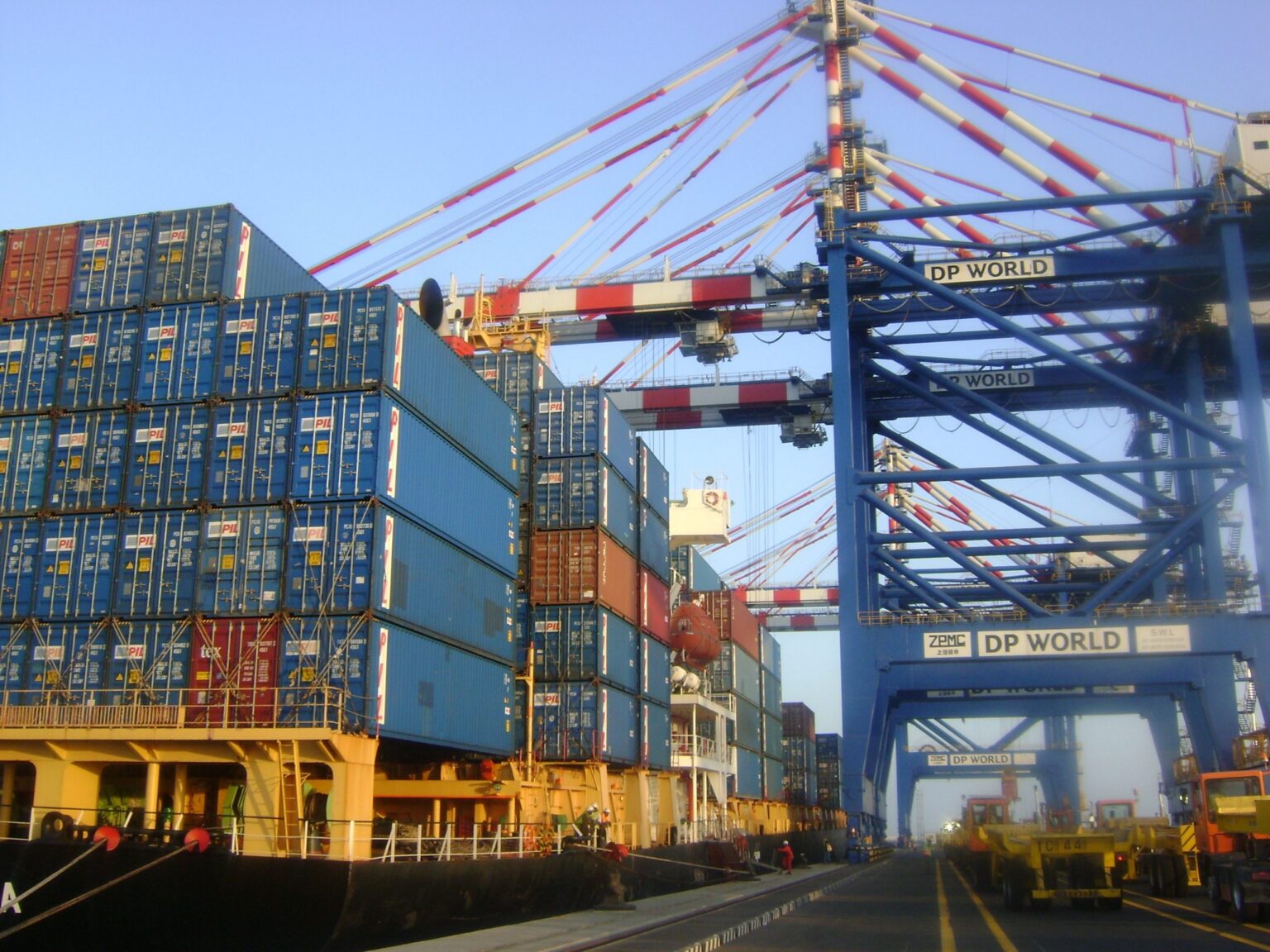
A: We are currently investing $4.4bn in our development projects, including expanding the capacity of our current ports and the airport extension programme. We have extensive experience in running ports successfully, both for oil and containers. Indeed, our container port is one of the biggest in the world and certainly the biggest in Africa.
We built these two ports very quickly, taking a total of 23 months from the start of the project to the first ship arriving at the port. We know how to build these ports: we have the right partners, and we also know what to look for in the selection of contractors to build our infrastructure.
Q: The DPFZA is heavily dependent upon external economies and other factors for its success – short and long term. How does the DPFZA prepare itself for some of the challenges that may affect its foreign clientele, and in turn affect the income of the port itself?
A: There are a lot of external factors that affect the profitability of the ports and our activities but to reduce external risks we are diversifying. We are not only working in partnership with Ethiopia, our main customer, but also working with South Sudan. That country’s foreign trade is now taking off and over the last few months’ transit traffic has been moving from Djibouti to South Sudan in increasing volumes.
In addition to this we are also receiving trans-shipment traffic – that is, shipments for the other coastal states in the region, not just for landlocked countries. This traffic constitutes 55% of our revenue, transiting to Red Sea and Indian Ocean ports and even all the way down to Durban, South Africa.
So, it is evident that we are using our strategic location on one of the most important and busiest sea routes in the world, and we believe that by targeting the port’s trans-shipment volume it can grow by 100% in the coming years. Currently, this amounts to three million containers a year, but we anticipate this to rise to six million and we intend to capture at least 50% of this market.
Q: The ports obviously have a linkage to other areas of Djibouti’s economy. Where do you see the synergies to further enhance the economy?
A: There are many other areas of the economy that can benefit from our efficient ports. The basic business of the ports is in handling goods. We see huge opportunities for our clients to manufacture in the Free Zones that are being established and then re-export their goods. The ports are the only hub that can efficiently handle this flow of huge quantities of goods.
Q: Another key component of the DPFZA’s continued success is the stability of the country and the security of the services provided. In what ways are you ensuring that both these will be maintained for the future?
A: The security and stability in our country is our main asset. We certainly have the security measures in place, and we also have very high productivity. In fact, that level of productivity is world-class, unmatched even outside Africa. Our cranes are currently handling 34 containers an hour. This represents a highly efficient service that reduces the turnaround time for ships. This productivity would not be possible without our staff. We have also sent 120 of our most gifted students to a maritime academy in India. They will become the future managers of the three ports we currently operate and the five others we are planning. There are of course other related marine businesses that require qualified personnel, and this annual training programme represents an investment in our future.
Q: Where do you see the potential for growth and partner projects for the DPFZA?
A: We expect trade growth beyond South Sudan. We can reach the other East African landlocked countries and the heart of the continent where much of Africa’s resources are located. These cannot be capitalised upon without the port, rail and road connections.
As development and peace come to the region, we will capitalise from the increased movement of traffic.
In addition, competition between ports is not only based on the tariffs. Some ports may be cheaper in terms of their tariffs but when you look at their productivity, clients will choose Djibouti, because the cost of other ports’ inefficiency is higher.
Another measure that would be hugely positive to ourselves and our partners in East Africa would be the creation of a customs treaty or agreement. That would greatly enhance harmonisation and the movement of goods. We currently have a customs agreement between Ethiopia and Djibouti, a system of single documentation, and that has proved very successful.
Q: Do you have a personal vision for the ports and what the next five years hold?
A: Well for our ports and transportation, we see this development as demand-driven. When there is a trade there is a need for ports and transportation. But a port cannot work in isolation, without the rail and road connections reaching deep into the heart of the continent and perhaps even extending from the Red Sea to the Atlantic. At the moment we cannot cross the continent and we must transport goods around Africa which is vastly more expensive. So the future ports we are going to make will be integral to Africa’s future growth and inter-trade development, to connect the one billion African population. This is where we need to have vision and commitment.








