It has been about farmers planting, harvesting and selling their crop. It has been about yields, prices, seed and pests. And when production declined, the conversation became one of how to get farmers back into the fields.
But there is another part of the story that is often overlooked.
What happens after the cotton leaves the farmer?
For Hesborn Olweny, the Cotton Development Lead at Thika Cloth Mills ltd that is where the real economic opportunity begins. “Cotton is not just an agricultural commodity,” he says. “The strategy is what happens after the farm.”
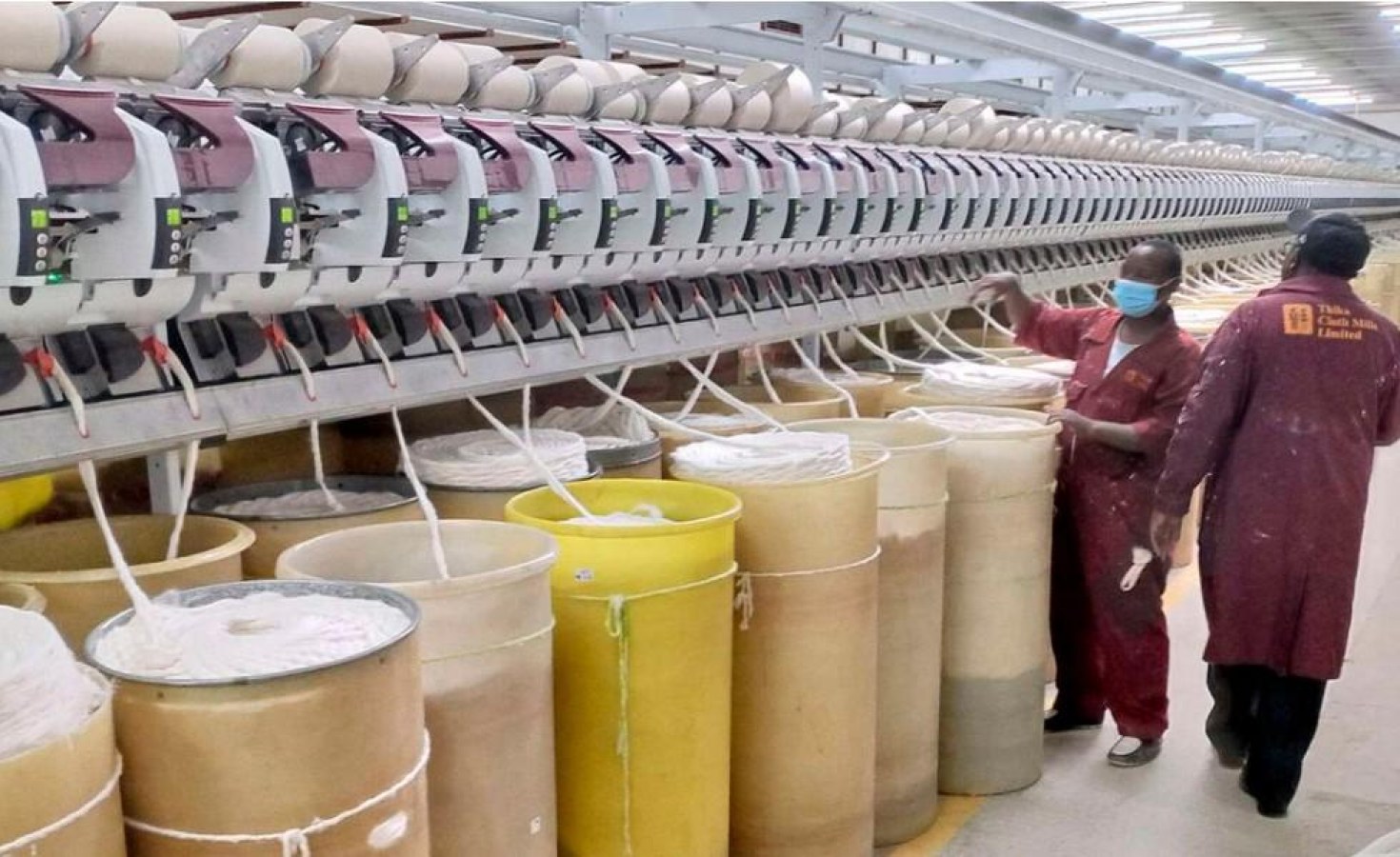
The journey of cotton does not end when it is harvested. It moves from the farm to a ginnery, where the lint is separated from the cotton seed. The lint is then spun into yarn, the yarn woven or knitted into fabric, and the fabric eventually transformed into garments, home textiles and other industrial products.
Every stage represents another opportunity to create jobs, build businesses and keep money circulating within the economy. And that is the opportunity Kenya is now trying to reclaim.
Kenya’s renewed interest in cotton production, particularly with farmers in Lamu embracing Bt cotton, has created a fresh supply of raw material for processors. But for a textile manufacturer, Olweny says, simply having cotton available is not enough. “We need predictable volumes and consistent quality through the year,” he says.
That is why Thika Cloth Mills is increasingly working directly with farmers and cooperatives and investing further upstream in the cotton-producing regions. The company sees the revival of cotton farming in Lamu as fitting into a wider strategy to develop a stronger cotton-to-textile market.
Last season, Thika Cloth Mills purchased slightly more than two million kilogrammes of seed cotton from Lamu, where total production was about 3.5 million kilogrammes. Other ginners also bought part of the crop, but TCM secured the largest share of the purchases.
The company expects volumes to rise as more farmers return to cotton production and productivity improves. Its ambition is bigger than simply buying cotton.
Olweny says the company wants Lamu to become one of Kenya’s important cotton-producing and processing centres, particularly in ginning, while hoping the model can eventually be replicated in other cotton-producing counties.
That investment is important because cotton is bulky. Moving unprocessed seed cotton over long distances before it reaches a ginnery adds logistical costs and can increase the time between harvesting and processing.
Having processing closer to farmers changes that equation. It shortens the distance to market, speeds up processing and can help preserve the quality of the crop. But perhaps more importantly, it creates an economic ecosystem around the cotton itself.
Nothing goes to waste. Once cotton arrives at the ginnery, the value-addition process produces more than just lint. Cotton seed becomes another commercial product.
Olweny explains that the seed can be processed into animal feed, commonly known as seed cake, while cottonseed oil can be used in products such as soap and for other industrial purposes. This means the farmer’s harvest can support businesses beyond textile manufacturing.
There is animal feed.
There is oil processing.
There is transport.
There is packaging.
There are mechanics and engineers maintaining machinery.
There are workers in ginning, spinning, weaving and dyeing.
There is marketing and retail.
The further the cotton travels through the value chain within Kenya, the more economic activity it generates. “ The more stages we keep in Kenya, the more employment we create,” Olweny says.
This is the industrialisation argument at the heart of Kenya’s cotton revival. The country does not simply need to grow more cotton. It needs to do more with the cotton it grows. From ‘Made in Kenya’ to ‘Made from Kenyan Cotton’
There is an important distinction in the textile industry that many consumers may not immediately notice. A garment can be made in Kenya without necessarily being made from Kenyan cotton.
Kenya has a significant apparel manufacturing industry, particularly for export, but much of the yarn and fabric used by local apparel manufacturers is imported. That means a shirt can carry a “Made in Kenya” label while the cotton that ultimately went into producing the fabric may have originated elsewhere. For Olweny, that is one of the biggest missed opportunities. “What we need is not simply made in Kenya,” he says. “We need to move towards made in Kenya, from Kenyan cotton.”
That distinction goes to the heart of the value-addition debate. If Kenya grows cotton, sends it abroad for processing and then imports yarn, fabric or finished garments, much of the economic value is captured elsewhere.
But if the cotton is grown in Lamu, ginned locally, spun into yarn in Kenya, woven into fabric in Kenya and eventually turned into clothing here, the same crop supports several layers of economic activity.
That is the model behind the push for a stronger “Buy Kenya, Build Kenya” approach. And it is not just about patriotism. It is about economics. The market is already there
One of the arguments against rebuilding Kenya’s cotton and textile industry has traditionally been whether there is sufficient demand.
Olweny believes the bigger challenge today is not a lack of demand, but consistency of supply and quality. For years, Kenyan textile manufacturers had to supplement locally produced cotton with cotton from neighbouring countries.
At one point, local production could only support two or three months of consumption before manufacturers had to look to Tanzania and Uganda for additional supplies. That is beginning to change. Olweny says production has been sufficiently reliable for local consumption over the last two years, but fragmented production remains a challenge. Farmers need quality seed, agronomic support, inputs, extension services and, most importantly, a reliable market.
For the manufacturer, however, there is another requirement. The cotton must arrive in predictable quantities and consistent quality. That is why TCM’s direct engagement with cooperatives and farmers is becoming increasingly important. It is a relationship that benefits both sides. Farmers gain a ready market. The processor gains a more reliable supply of raw material. And the industry gets a stronger foundation on which to build.
But the farmer still needs financing. The revival of cotton will not be sustained by markets alone. Farmers need money to plant. They need access to seed at the right time. They need inputs and extension services. And after harvesting, they need to be paid promptly.
Olweny believes Kenya could borrow from systems used in neighbouring countries, including warehouse receipt systems that allow farmers to access financing without having to wait until their cotton is sold.
He also proposes a dedicated cotton fund, potentially structured as a revolving fund, to support the sector and improve access to inputs such as seed.
The issue of seed is particularly important for Bt cotton. The variety has become increasingly popular among farmers because of its performance against some of the pests that traditionally affect cotton. But the seed is expensive and imported from India, while timely availability remains a challenge.
For a farmer, missing the planting window is not a minor inconvenience. It can determine the final yield.
Modernising the industry. There is another part of the value-addition equation that cannot be ignored. Kenya’s textile industry has to compete in a global market where manufacturers from countries such as China and India have built significant scale and technological advantages.
Olweny says Kenyan manufacturers need continued investment in modern machinery if they are to remain competitive. But modernisation goes beyond replacing old equipment. It includes energy efficiency, renewable energy, wastewater treatment, digital systems and quality laboratories. These investments require capital. And for an industry trying to rebuild after years of decline, access to affordable financing can make the difference between expansion and stagnation.
The challenge is therefore not simply convincing investors that cotton has a future. It is creating an environment in which investment makes commercial sense.
Industrialisation also requires people. A modern cotton and textile industry needs agronomists, machine operators, engineers, mechanics, technicians, quality-control specialists, designers, packaging specialists and marketers. The opportunities extend far beyond the farm.
Olweny describes cotton as one of those commodities that cuts across agriculture and manufacturing, creating employment at almost every stage of the value chain. But that requires a closer relationship between industry and training institutions. Universities and TVET institutions may be producing graduates, but Olweny argues that industry and academia need to work much more closely together to ensure the skills being taught correspond with what modern factories actually need.
The opportunity is significant.
A farmer growing cotton supports the agricultural economy.
A transporter moving the harvest supports the logistics industry.
A ginnery creates jobs.
A spinning plant creates more.
A weaving facility creates more.
Garment manufacturing creates more.
Retail creates more.
The longer the value chain remains within Kenya, the greater the economic multiplier. But there is competition There is another reality facing local manufacturers: imported products.
Olweny says Kenyan textile manufacturers are competing with products from China and India, alongside concerns over counterfeits, low-quality imports and weaknesses in border controls.
For manufacturers, the challenge is particularly difficult when locally produced goods have to compete against cheap imports while factories are simultaneously trying to invest in modern equipment. The industry needs room to upgrade. But it also needs consumers.
Kenya’s domestic clothing market remains heavily supplied by imported garments and second-hand clothing, commonly known as mitumba. Even where garments are manufactured locally, the fabric or yarn may still have originated outside the country.
Olweny argues that the country needs stronger implementation of policies supporting local procurement and local manufacturing while ensuring imported goods are properly taxed. The intention, he says, is not necessarily to eliminate second-hand clothing but to create enough space for local textile manufacturers to compete and invest.
A regional opportunity. The opportunity does not end with Kenya’s borders. Africa has the raw material, the labour force and a growing consumer market. What is missing in many cases is the industrial capacity to connect those dots. Kenya therefore has an opportunity to position itself not only as a cotton producer but as a regional textile and manufacturing hub.
But investors need confidence.
They need predictable policy.
They need access to capital.
They need reliable raw materials.
They need skilled workers.
And they need a market.
Olweny says the industry is beginning to see that possibility. “No investor will put money in where they do not believe there is a good future,” he says. “We are saying we are seeing the future.”
For Lamu’s farmers, that future begins with cotton seed going into the soil.
For the ginnery, it begins when the harvested cotton arrives.
For the textile manufacturer, it begins when that cotton can be supplied consistently, at the right quality and in sufficient volumes.
But the real prize is at the other end of the chain.
It is the yarn.
The fabric.
The garment.
The jobs.
The businesses.
The technology.
The exports.
And the economic value that remains in Kenya.
That is why the revival of cotton should not be viewed simply as an agricultural comeback. It is an industrial opportunity. Kenya has spent years trying to get farmers back into cotton.
The next challenge is ensuring that the cotton does not leave the country as just another raw commodity. The bigger ambition should be to take the cotton all the way — from farm to fibre, from fibre to fabric, and from fabric to finished products.
Because the real measure of a cotton revival will not simply be how many kilogrammes farmers harvest. It will be how much value Kenya manages to create from every kilogramme.
This article originally appeared on Allafrica.com and is republished here with permission. Read the original article.