The African Development Fund (ADF) continues to play a pivotal role in helping fragile states such as Somalia rebuild resilience. In total, 37 of Africa’s low‑income countries are eligible for ADF support. Since its creation in 1972, the Fund has disbursed more than $45bn in concessional financing, offering a blend of grants, guarantees, highly concessional loans and technical assistance.
Donor countries and partners meet every three years to replenish the Fund, setting the size of its grant and loan envelope for the next cycle. The 17th replenishment, covering 2026–2028, was co-hosted by the governments of Ghana and the UK in London on 15-16 December. The previous cycle, ADF‑16, mobilised a record $11bn, but expectations were more subdued this time.
In the end, the replenishment mobilised a historic $11bn, a 23% increase, including many pledges from African countries, marking a new era of African ownership and investment-led development. It was the largest in the Fund’s history, despite severe global fiscal constraints and declining aid budgets.
Collective commitment
“The replenishment is an opportunity to signal our collective commitment to Africa’s growth and development, its institutions, and to innovate modern approaches to development finance in a challenging global environment,” said Baroness Jenny Chapman, the UK’s Minister of State for Development and Africa, before the final meeting in December.
Dr Sidi Ould Tah, president of the African Development Bank (AfDB), called the ADF’s replenishment “both an investment in Africa’s development as well as in shared global prosperity”. He noted that the Fund has over the past decade connected more than 18m people to electricity, enhanced agricultural productivity for 11m farmers, improved access to water and sanitation for 48m people, and transport for more than 87m.
Somalia’s recovery shows why support for ADF replenishment matters
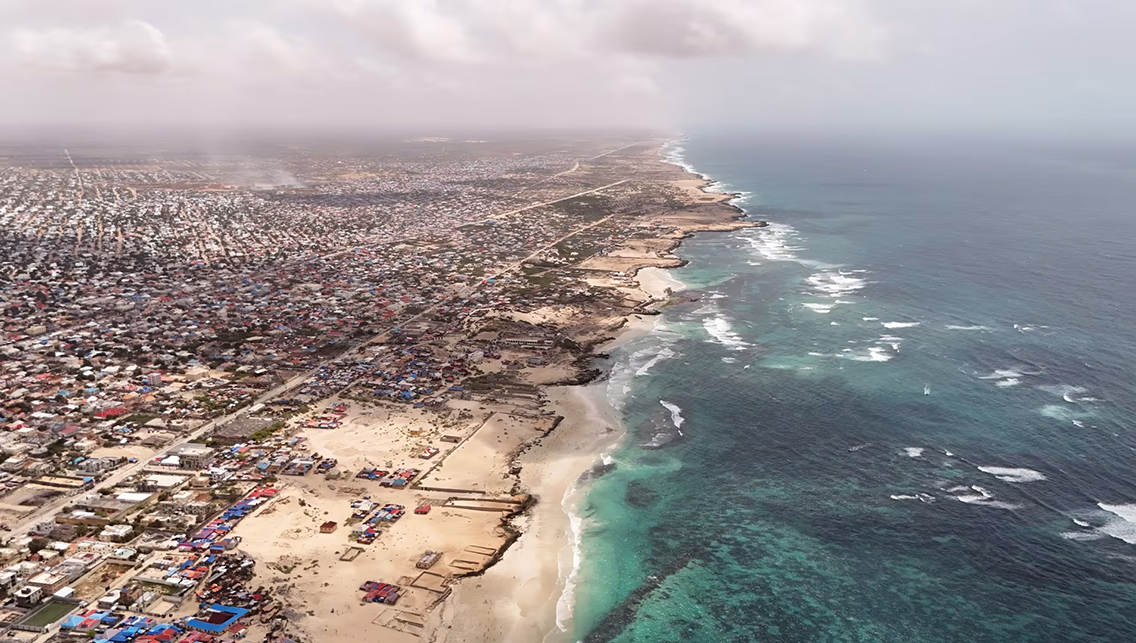
Somalia’s economic outlook has brightened after the AfDB granted it full debt relief in early December, cancelling all outstanding loans that the country owes its concessional arm, the African Development Fund (ADF), for the 2024–2039 period. This has reduced Somalia’s external debt obligations by $17.68m, freeing up public resources for urgent development needs.
The AfDB said its decision to wipe the slate clean reflects growing confidence in Somalia’s economic reform trajectory, citing the country’s completion of the Enhanced Heavily Indebted Poor Countries (HIPC) initiative in December 2023. HIPC is a debt relief framework run by the IMF and the World Bank, designed to ease the debt burdens of the world’s most distressed economies.
ADF support went beyond debt cancellation, helping Somalia rebuild debt management systems and normalise relations with creditors after decades of conflict and institutional collapse.
Countries participating in the initiative qualify for cancellation of eligible loans once they meet a set of agreed-upon reform targets, ranging from clearing arrears to strengthening macroeconomic governance and mobilising domestic revenue. Countries seeking relief are also expected to adopt measures to accelerate poverty reduction and improve basic service delivery.
Somalia’s HIPC completion triggered full debt relief from multilateral creditors, including the AfDB, the IMF and the International Development Association (IDA), which is the World Bank’s concessional window. The three have agreed to debt cancellations that will – after full delivery – collectively reduce Somalia’s external debt to about $577m from $5.2bn in 2018.
With much of its debt burden wiped away, the AfDB said that Somalia now has fiscal space to redirect resources towards essential development priorities.
The government is expected to increase funding for public services, infrastructure rehabilitation, teacher recruitment, access to clean water and health system restoration in regions battered by drought and conflict.
Turning a new page
Somalia’s civil war left the country without a functioning, internationally recognised central government between 1991 and 2012. Over this period of conflict and instability, arrears to creditors piled up while debt records were scattered or lost entirely.
When the federal government was formed in 2012, rebuilding capacity within the institutions responsible for economic governance became one of its most urgent priorities.
The Bank supported these efforts by providing both grants and technical assistance through the ADF. Support included reconstruction of Somalia’s external debt data, the setting up and initial capacity building, systems and staffing of a Debt Management Unit in the Ministry of Finance, and work on developing a strategy for arrears clearance and access to HIPC debt relief.
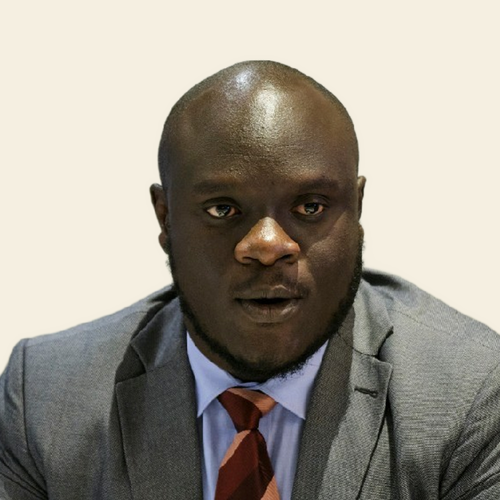
“The African Development Bank should be commended for playing a vital role in assisting the Federal Government of Somalia in navigating the process of normalising relations with international creditors so as to provide Somalia with renewed access to concessional financing required for poverty alleviation, economic recovery and development,” says Mohamed Sadaq, former head of the Debt Management Unit.
Sadaq started working with Somalia’s Ministry of Finance in 2014, where, together with consultants from the AfDB, he focused on reconstruction of Somalia’s debt database and normalisation of relations with external creditors. In 2015, he became the head of the DMU.
“We now have a staffed debt management unit and debt management system in operation and have reconstructed most of our external debt records, in large part due to the government’s commitment to normalising relations with external creditors and the African Development Bank’s technical and financial support to assist us in this process,” he adds.
The ADF provided $3.5m in grant financing to cover the full cost of the project to support the establishment of Somalia’s DMU. It also provided a $7.59m grant to support a project between 2017 and 2023 to strengthen macroeconomic management and enhance transparency and accountability in the use of public resources.
According to the World Bank, Somalia’s recent achievements send a clear signal to the world that “the country turned an important page in history.”
However, big challenges remain ahead. “Especially in fragile environments, development is not linear and can easily slide back if momentum is lost. State and institutional building needs to continue – and so does international support,” the World Bank says. It is this momentum that grants and concessional financing from the ADF and other partners have helped sustain – and must continue to sustain – to avoid any reversal of the progress achieved. The next phase of funding will be geared towards helping accelerate development and growth by supporting and crowding in private sector capital. With concessional resources constrained by global aid cuts, experts are calling for increased innovation to help the ADF leverage its balance sheet more effectively.
Diversified funding
Support is growing for proposals to amend the Fund’s charter to enable it to diversify its funding sources beyond donor contributions. The so-called ‘Market Borrowing Option’ will allow the Fund to leverage its equity to directly access capital markets. It, however, requires approval by 75% of shareholders to come into effect.
“We have an ambition to go to the capital markets and raise funding, which would help us to diversify the way that we fund ourselves…We believe that we can raise up to $5bn in every three-year cycle. But to get there, we have to actually change our charter,” said Valerie Dabady, AfDB’s head of resource mobilisation and partnerships.
These discussions come at a critical moment, when supporting the most vulnerable will require renewed solidarity and smarter, more innovative use of capital. This is not only a moral imperative, but a strategic one: without the right support and investment, many low-income countries remain more vulnerable to shocks and instability.