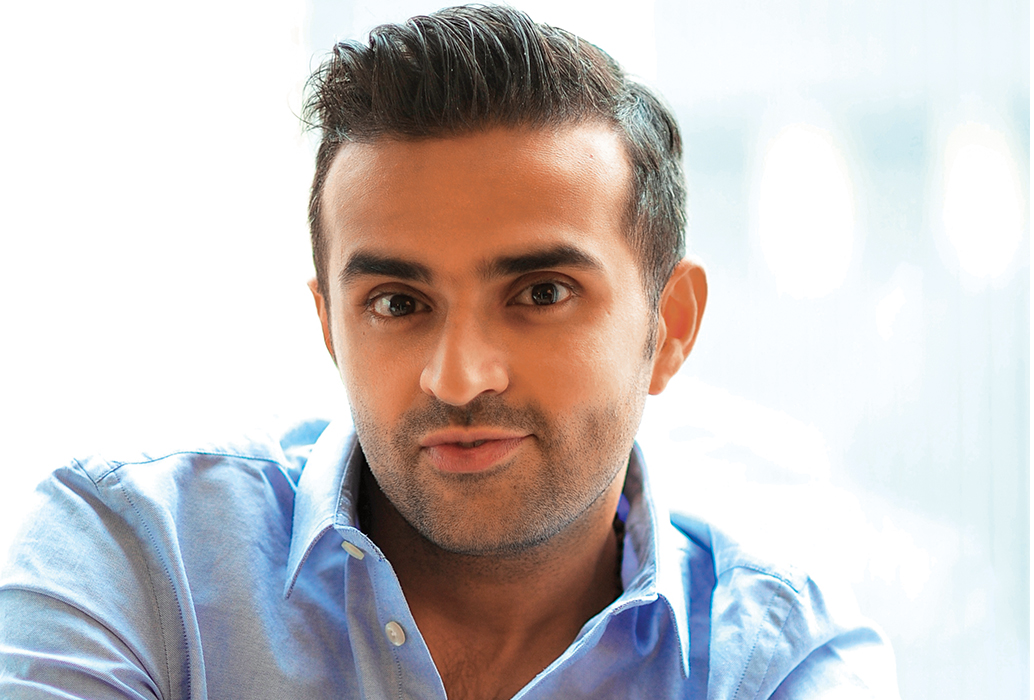
Africa is on the move. From politics to business to the arts, things are changing, being driven by innovators and visionaries, both good and bad. To reflect on a busy year for the continent, we profile the most influential Africans of 2014.
Aliko Dangote, The unstoppable spender and inevitable earner – Nigeria

It seems that nothing can stop the steady march of Aliko Dangote’s companies into new industries, new territories, and new realms of wealth. Progress on the groundbreaking $9 billion oil refinery and petrochemical plant has been made this year; Dangote Cement’s expansion across the continent continues into the likes of Cameroon, Senegal and Zambia; and Africa’s richest man is also reportedly eyeing up some of Nigeria’s gas assets.
Tidjane Thiam The Ivorian insuring the world – cÔte d’ivoire

Under Thiam’s leadership, Prudential has continued its ascent as one of the world’s largest insurers, with operating profits increasing by 17% in 2013. One of Prudential’s latest acquisitions, the Kenyan life insurance company Shield Assurance Co., is the second big move by the company in Africa, where it is looking to expand and develop. With an annual growth of 20%, the life insurance market in Kenya is booming, mirroring the country’s rapid growth and robust economy. Last year Prudential bought Ghana’s Express Life Co., signalling the start of a new venture for the company, which is hoping to match the success it has achieved in South-East Asia, in the emerging African life insurance market.
Donald Kaberuka, The finance man with a plan – Rwanda

As head of the African Development Bank since 2005, Rwanda’s Donald Kaberuka has overseen several significant changes, and this year he ushered in another development by establishing the Africa Growing Together Fund. Worth some $2 billion over ten years, and co-financed by the People’s Bank of China, the fund will be used to support much-needed development projects across the continent. When Kaberuka steps down next year, leaving behind an impressive legacy, he will be a hard act to follow.
Eleni Gabre-Madhin, The trade reformer – Ethiopia

From 2008 to 2012, Eleni Gabre-Madhin managed the Ethiopia Commodity Exchange, which she had founded to modernise the trade of agricultural products. The exchange was quickly successful as trading skyrocketed, membership grew and the prices some farmers were able to get for their harvests shot up. Now, through her new company Eleni LLC and as an advisor to various African governments that have sought her expertise, she is trying to replicate the achievements of the Ethiopia Commodity Exchange on a continental level.
Lionel Zinsou, Monsieur Africa – Benin

As a former advisor to France’s Foreign Minister Laurent Fabius, head of newly-launched Franco-African Foundation for Growth, and advisor to Benin’s president Thomas Yayi Boni, Lionel Zinsou sits right on the bridge between his adopted homeland and his continent of birth. It is for these reasons that the Beninese chair and CEO of leading French equity firm PAI Partners has been entrusted to lead France’s attempts to renew and expand its economic ties in Africa. This is a move the self-declared “Afro-optimist” is all too happy to facilitate. He has previously proclaimed that “Africa will soon be the centre of the world” and with his close contacts and rising influence, Zinsou will himself be at the centre of plenty of African business.
Mark Shuttleworth, The space tourist pushing boundaries – South Africa

Businessman Mark Shuttleworth is famous for being a key figure behind the Ubuntu operating system and the first African in space, but he also notoriously remarked that it cost him less to leave earth than to leave South Africa. In 2009, the tech entrepreneur was charged over $20 million by the South African Reserve Bank to relocate $200 million to an overseas tax haven. He fought the charge and this year won the case in a landmark ruling, which may have far-reaching effects on South Africa’s ability to manage capital flight. He donated the returned $20 million to a trust set up to help others take cases to the Constitutional Court.
Richard Attias, The man in the know – Morocco

The Moroccan executive is a global influencer with one of the most effective networks in the business. Best known today for the NY Forum, Attias made his name at the World Economic Forum where he helped turn the meeting into one the most important gatherings of world leaders. Today he is a leader in brand and reputation enhancement, championing Africa abroad and organising events for a number of African countries, this year adding the Francophonie and African Development Bank annual meetings to his widening portfolio.
Bridgette Radebe, The mining tycoon speaking out – South Africa

As head of the South African Mining Development Association, founder of Mmakau Mining, and one of Africa’s richest women, Bridgette Radebe’s opinions on mining carry quite some weight. And this year, the mining magnate has been particularly outspoken on companies being allowed to list offshore, the act of transfer pricing, and the failure of the government to meet its targets for increasing black ownership of South Africa’s mines. “We can’t continue to be sleeping on the job,” she said.
Elon Musk, Mr Future – South Africa

Elon Musk made his fortune by cofounding PayPal, but it is now spacecrafts, electric cars and solar energy that get him excited. And so they should. This year, the South African entrepreneur’s company SpaceX won a $1.6 billion contract with NASA to shuttle astronauts into space, while his electric car company Tesla Motors announced that it would relax its patents in the hope that the sharing of information could accelerate innovation. Musk is a businessman who aims for the stars, and usually reaches them.
Kwesi Botchwey, The monetary mediator returns – Ghana

For Ghana, 2014 has been a year of economic woe as the cedi has depreciated dramatically, pushing up inflation and limiting the government’s ability to narrow the budget deficit. Ghana’s currency has been the continent’s worst performer and the government has been forced to ask the International Monetary Fund for a bailout. Leading the negotiations, former minister Kwesi Botchwey managed to secure a pledge of $800 million to stabilise the cedi, but the conditionalities of any IMF programme could lead to various new hardships for ordinary Ghanaians.
Chinelo Anohu-Amazu, The pensions chief – Nigeria

As Director General of the National Pension Commission in Africa’s most populous country, Chinelo Anohu-Amazu has proven herself to be a strong overseer of the rapidly-growing pension fund. The Nigerian official was part of the committee whose work led to the Pension Reform Act of 2004 and under her management of the Commission since 2012, the pension fund has grown considerably, registered hundreds of thousands new contributors. This year she helped push through new legislation to further reform the system.
Austin Avuru & ABC Orjiako, The Nigerian oil explorers – Nigeria
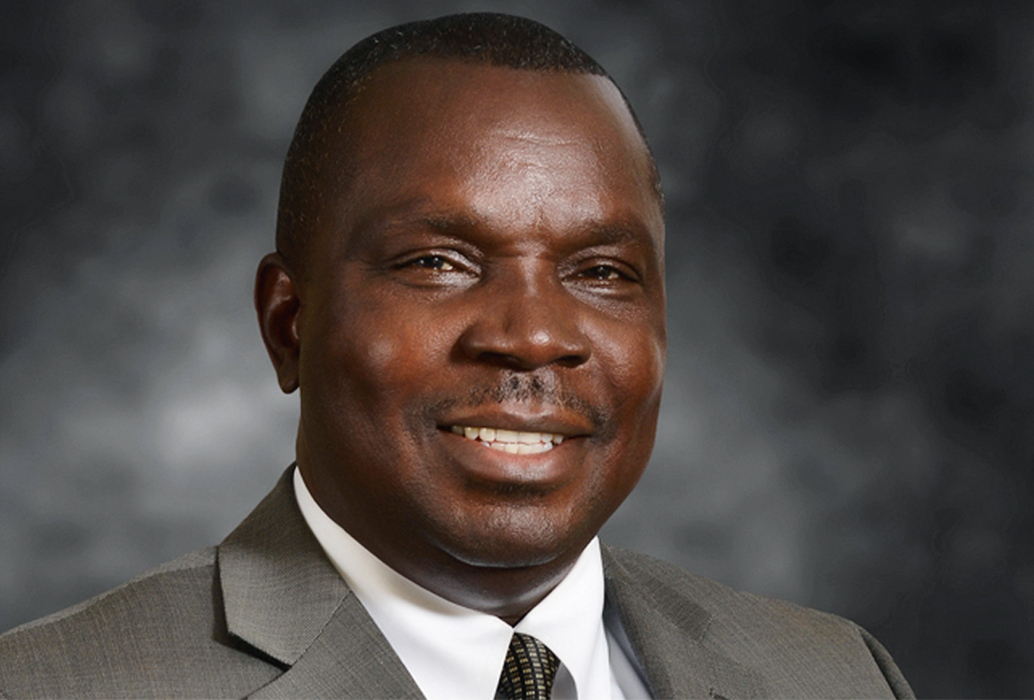

As international oil majors look at Nigeria with ever more wary eyes, it is brave Nigerian companies that stand the most to gain by exploiting the country’s oil and gas riches. Chairperson A.B.C. Orjiako and CEO Austin Avuru are demonstrating this all too clearly with Seplat, which is reportedly bidding for various oil fields and which was valued at over $1.9 billion when it became the first ever company to be listed in both London and Lagos earlier this year.
Nicky Newton-King, The steady hand at the stock exchange – South Africa

The Johannesburg Stock Exchange (JSE) was first established in 1887 following the discovery of gold, and today it is the JSE that is setting the gold standard for African exchanges. Led by Chief Executive Officer Nicky Newton-King, the JSE has continued to forge ahead as Africa’s largest stock exchange and the 19th biggest in the world, with around 400 businesses listed.
Strive Masiyiwa, The telecommunications king – Zimbabwe

It took a five-year-long legal battle for Strive Masiyiwa to get Zimbabwe to lift the state monopoly on telecommunications, but since he managed it and founded Econet, the company has not stopped growing. This year, the network has continued to diversify, deepening its involvement in services such as car tracking, advertising and mobile money transfers, while it has also bought up telecoms companies in the likes of Burundi and the Central African Republic. The more Strive strives, the more Econet grows.
Tabitha Karanja, The businesswoman tackling the brewery industry – Kenya

Tabitha Karanja is the woman who dared to take on East African Breweries – the largest and, for a long time, sole brewery in Kenya – when she founded Keroche Breweries Limited, Kenya’s first home-grown brewing company. This year, the company has continued to plan ahead as it looks to expand production ten-fold, from 60,000 bottles a day to 600,000. The future looks bright, bubbly and merry for the courageous Kenyan.
Issad Rebrab, The multi-billionaire who got his way – Algeria

The founder of Algeria’s multi-billion-dollar conglomerate Cevital may have had some downs this year – a fire destroyed much of the Samsung-Samha plant, and he courted controversy as he fell out with the Forum of Heads of Enterprise – but overall it has been a year of ups. Not only did Issad Rebrab’s conglomerate manage to acquire the French company Fagor Brandt earlier in the year, but soon after the multi-billionaire vented his anger over obstacles to his proposed plans in Algeria, he finally got permission to build what will be the country’s biggest cement plant.
Tony Elumelu, The Africapitalist – Nigeria

According to Tony Elumelu’s idea of Africapitalism, it is the private sector that will drive African development and wealth creation, and in the power sector, Elumelu wants to put his money where his mouth is. As one of Nigeria’s most prominent businessmen and chairman of Heirs Holdings, Elumelu has pledged to invest $2.5 billion in the US’s Power Africa Initiative and has stated his ambition to meet at least a quarter of Nigeria’s power needs in the next five years.
Mohamed El Kettani, The businessman dominating the banking sector – Morocco

2014 results revealed that Attijariwafa Bank has raked in almost one million new customers over the past year. As CEO of the Moroccan bank, El Kettani is at the forefront of the banking sector in the country, and perhaps soon will be in the rest of the continent. With subsidiaries in the Magrheb and beyond, and plans to expand across Francophone Africa, El Kettani is on his way to making Attijariwafa one of the fastest-growing banks on the continent.
Carlos Lopes, The transformer – Guinea-Bissau

For all the news of economic growth and soaring GDPs, what keeps Carlos Lopes up at night is not so much Africa Rising as Africa Transforming. At the Africa Development Forum this year, the Executive Director of the UN Economic Commission for Africa continued to call for reforms that will allow the continent to stem illicit financial flows and mobilise domestic resources for structural transformation. This strategic thinker is reshaping the development debate.
Bethlehem Tilahun Alemu, The manufacturing trendsetter – Ethiopia

The 34-year-old entrepreneur and self-declared lover of leather may not seem like much of a rebel, but the way in which her local company soleRebels has become Africa’s fastest-growing shoe brand and first global footwear brand is certainly out of the ordinary. Alemu, who is soon launching the Republic of Leather that will produce other goods, believes Ethiopia contains huge potential for manufacturing, and as the likes of H&M and other international investors eye up the country, it seems she is not the only one.
Jim Ovia, The pioneer – Nigeria

Nigeria’s bid to move up the value chain has been given a boost this year by news that Quantum Petrochemical, a new company set up by Jim Ovia, who founded and built Zenith Bank, is building a $1.5 billion petrochemical plant. Located in Akwa-Ibom state, in the country’s South-South region, the plant will produce polyethylene, polypropylene and methanol, substances which could in turn provide the foundation for other new manufacturing industries.
Trevor Manuel, The public figure turned private – South Africa

This year, after two decades of service, Trevor Manuel swapped public office for private as he became a global advisor and deputy chairman of Rothschild Group in South Africa. In his 13 years as South Africa’s finance minister, under Nelson Mandela, Thabo Mbeki and Kgalema Motlanthe, and 5 years as national planning minister, under Jacob Zuma, Manuel was one of the country’s most recognised and influential political figures. Manuel is touted as a future IMF chief. How long will Rothschild be able to keep their man?
Ngozi Okonjo-Iweala, The economist – Nigeria

This year, Nigeria leapfrogged South Africa overnight to become the continent’s largest economy. By rebasing its gross domestic product and taking into account industries such as telecoms, IT and Nollywood, Nigeria’s GDP was found to be nearly 90% greater than previously calculated. Heralding the dramatic announcement, Minister of Finance Ngozi Okonjo-Iweala, whose role in reforming the Nigerian economy has been widely praised, expressed her hope that the news would help to encourage foreign investors.
Ashish Thakkar, Serial entrepreneur – Uganda

Just before the start of this year, entrepreneur Ashish Thakkar partnered with former Barclays chief executive Bob Diamond to found the financial services holding company Atlas Mara. And in 2014, the company has wasted little time in tapping into Thakkar’s continental expertise to buy up stakes in banks across Africa. It made little delay in acquiring the pan-African banking group BancABC, giving it operations in at least five countries, bought up large parts of the Development Bank of Rwanda, and continues to eye up other opportunities across the continent.
Ivan Glasenberg, The adventurous acquirer – South Africa

As CEO of one of the world’s largest commodity trading and mining companies, Glencore Xstrata, Ivan Glasenberg is famed for his big and bold acquisitions – a favourite game amongst mining insiders is apparently to guess “What Ivan will buy next”. This year has been no different, though the South African billionaire hasn’t always got his way. Mining giant Rio Tinto reportedly rebuffed his takeover attempts in August, for example, while in Zambia Glencore has been embroiled in allegations of large-scale tax evasion, an accusation it denies.
Irene Charnley, Smiling all the way to the bank – South Africa

Africa is leapfrogging its technological development in a growing array of sectors, especially for example telecommunications. Under CEO Irene Charnley, Smile Telecoms, which is based in Mauritius, has been busy rolling out 4G LTE across the continent. The plucky company became the first to launch the technology in Africa in 2012 and rolled it out in Nigeria this year, with more plans in the pipeline for 2015.