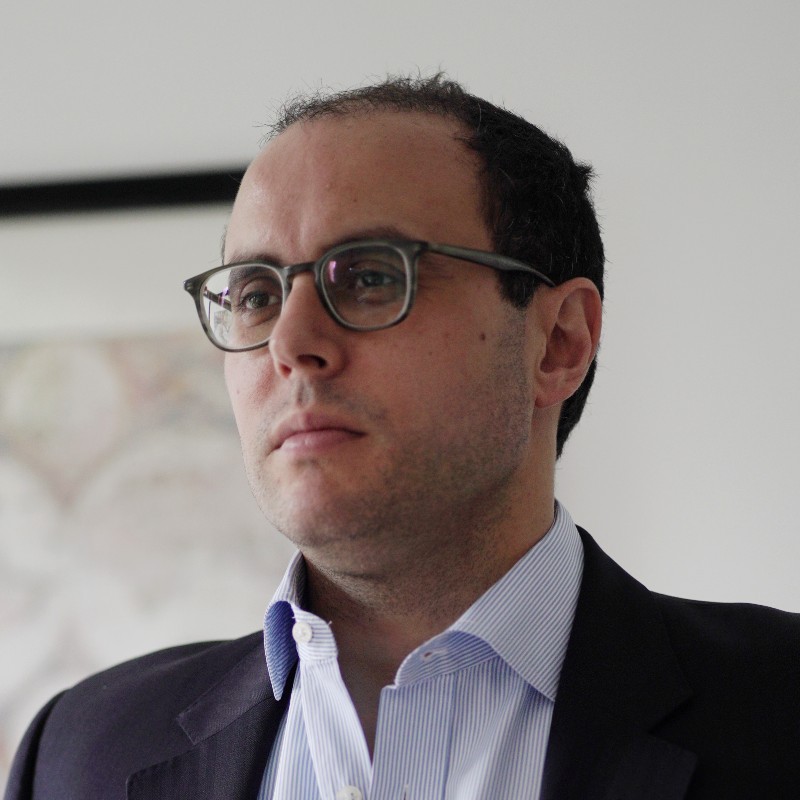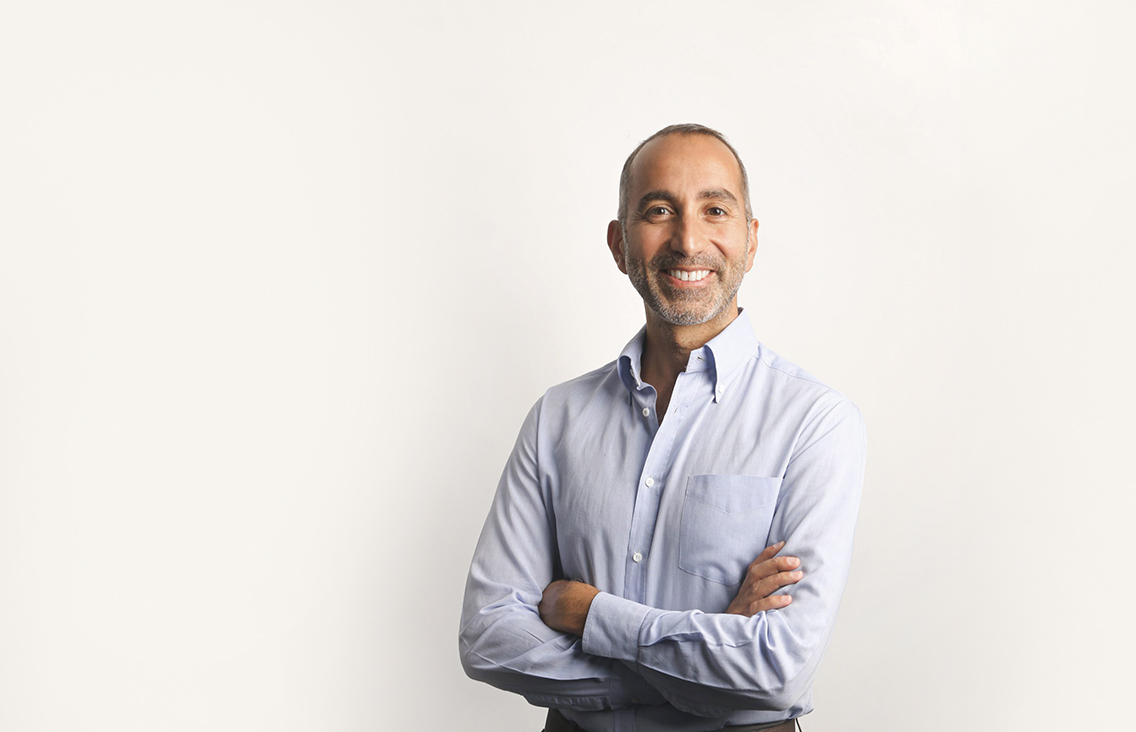
The Axian Group started as a textile company, Hirimix, owned by the Hiridjee family circa 1950. The current CEO, Hassanein Hiridjee (opposite), graduated from France’s top-ranked ESCP Business School in 1997 with visions of developing a world-class pan-African enterprise.
In 1995, Hiridjee formed the highly successful First Immo real estate company in Madagascar and later entered the energy market with Electricité de Madagascar (EDM), before acquiring a stake in one of the largest companies in Madagascar, Jovena in 2004.
That same year, the family group expanded into telecommunications by acquiring Télécom Malagasy (Telma), Madagascar’s historic operator, launching Telma Mobile in 2006, and in 2010, introduced the MVola mobile money service.
In 2014, Axian, partnering with CIEL Group, acquired 51% of Banque nationale de l’industrie, growing it to 111 branches and introducing the digital microfinance solution, Kred in 2019.
In 2016, the family group restructured to form the Axian Group.
Today, the group caters to 45m mobile customers and 18m mobile money users across Africa, having launched the continent’s first commercial 5G network and deployed 17,200km of fibre optic cable across the continent. Interestingly, Antananarivo, the Malagasy capital, has some of the continent’s best bandwidth.
Hassanein Hiridjee, the French-educated scion of the founding family, places it all in perspective: “Our three main business lines represent 12,000 people who are all focused on one thing – inclusion.” This, he explains, means empowering more people with energy, communication and financial tools to pursue their goals.
“We help people to equip themselves with infrastructure and services. This ranges from solar power plants for national grids, to financial services for rural communities through mobile banking, to access to finance, to data centres, just about everywhere in towns and villages.”
Hiridjee points out that by subscriber numbers, the group is the sixth-largest telecom operator in Africa and in terms of infrastructure, the third-largest, with about 3,500 cell towers.
That growth has come by way of strategic investments. For much of its life, Axian had been a single country operator. That changed in 2014. “We had the opportunity to go beyond our borders and acquire another asset, in this case an operator on Réunion Island and in Mayotte, in the Indian Ocean.
“The Altice group had just acquired SFR in France and the French Competition Authority had asked it to sell its assets in the Indian Ocean [Réunion and Mayotte are French outposts off the African coast]. So we started working on it and made a bid; and we were selected,” he recalls.
At the time, Hiridjee says, Malagasy banks were not permitted to fund cross-border transactions and that meant having to look to international banks and other partnerships. One of these partnerships was with Xavier Niel, the billionaire French telecom entrepreneur behind the Free brand.
“I was lucky enough to meet someone who is now more than a mentor and has become a friend. With Free, he has built something extremely strong and powerful and I wanted to talk to him about how to work with Free in Réunion and Mayotte.”
That partnership would persist over a number of deals, including a greenfield project in Comoros and an acquisition in Senegal.
More recently, Axian has taken on such transactions by itself. “We responded to the privatisation of the incumbent operator in Togo, before the Covid-19 crisis. The group did this on its own. Then, we made an acquisition (Millicom International Cellular) in Tanzania, also on our own. The same goes for another operation in Uganda.”
Access to finance
While Hiridjee may be rightfully relieved that Axian was able to grow in spite of the perennial challenge of access to finance that African businesses face, he is very much attuned to it and the chilling effect that it has on entrepreneurship and growth on the continent.
“That is the challenge we’re going to see across the continent – as long as we don’t solve the problem of access to finance – not just for companies like ours, of course, but also for SMEs.
“We say ‘where is the money?’ We know where the money is, but it’s a question of mobilising it to give everyone access to finance,” he reflects.
Still on matters of finance, Hiridjee notes that currency risks can also compromise growth. While companies typically charge for services in local currencies, they need dollars to procure the equipment and services that they need to serve their customers.
Axian’s investment strategies are informed by this risk. “That’s why we are very careful in our choices of locations. Africa is big, it’s diverse, and it has a lot of potential. We are very selective when it comes to these opportunities, favouring countries where we know we will be able to cope with any difficulties that may arise. Today, in the countries where we operate, currency fluctuations are relatively controlled. What’s more, these are countries where the ten-year history of the currency is fairly good.”
For some operators, the fiscal realities mean that they have had to sell some infrastructure, such as cell towers, as an alternative to debt. Several telecom operators in Africa have sold their cell towers to focus on core operations and raise funds for investments.
MTN sold 5,709 towers in South Africa to IHS Towers for $406.4m, leasing them back to fund spectrum purchases. Airtel Africa sold 1,400 towers in Tanzania for $175m to reduce debt and focus on core growth. Telkom also sold its Swiftnet towers for $356m to prioritise core assets, while Cell C and Vodacom previously offloaded towers to reduce costs and enhance efficiency, leasing them back for operations.
In Hiridjee’s view, this is driven by the need for companies to ease pressure on their balance sheets. “You can’t just raise debt, because you’re putting your structure at risk. And you can’t keep putting pressure on the level of debt on your balance sheet. If operators had had the choice, they would have kept their tower assets. If they sold, it was because they needed to refinance,” he notes.
Axian has not been immune to this, he concedes, explaining that the company has sold some towers in Senegal to refinance itself, even though it would have preferred to retain them.
The underlying trend, however, is that there is still room to grow as mobile operators. This is also the result of policy makers trying to open up access to more and more people, especially in rural Africa where connectivity is still poor.
“Africa still needs a huge amount of infrastructure, not only in telecoms but in energy, transport and other areas. And we need many service industries. The potential is enormous, hence the need for the funding we’ve mentioned,” he emphasises.
Hiridjee describes Axian’s telecom business as being in an active development phase, with plans for more acquisitions in each of the three pillars on which the business rests – fixed and mobile operations, digital infrastructure including towers and data centres and content.
He reveals during our conversation that the company is in fact assessing an acquisition in an African country. “We’re in tune with demand; we’re gaining a better understanding of what drives it and how it should all work. It’s a winning recipe, and we’re going to continue in the same direction, while remaining cautious about our financial ratios, debt levels and so on.”
Not bound by dogma
Despite its multiple interests in diverse locations, Hiridjee insists that Axian is not a conglomerate and is focused on its core operations of infrastructure and services. “We don’t want to spread ourselves too thin,” he says, noting the aforementioned strategy of carefully selecting the countries it chooses to enter.
“What’s more, we are attentive to the expectations of all parties, partners and regulators alike. Will we be able to be operational? You can’t arrive in a country, for example, and apply for a licence if you don’t feel able to meet the specifications, to provide the coverage that’s required within the time allowed, because you’re going to create frustration on all sides,” he says.
In addition to these considerations, Hiridjee says, there is a refusal to be bound by dogma, “You have to find the right solution in each country because Africa is diverse. Each country has its own specific characteristics, its own history, its own attachment to certain values, to certain ways of doing things, and so on. So we listen carefully and adapt.”
This is why, Hiridjee notes, he tasks his teams to be responsive, going on to detail what appears to be the very broad outlines of Axian’s social manifesto. “We’re focused on the population, and in particular on the growing number of young people. We want to give them access to financial, digital and energy tools.”
To fund these ambitions, Axian is exploring green financing but Hiridjee says the cumbersome processes can be challenging for medium-sized companies.
“They should be more flexible and pragmatic. Sometimes they ask you to produce a whole raft of reports and studies, at exorbitant cost and some companies can’t meet these demands. What’s more, I don’t think the difference in rates between green financing and traditional financing is justified, given the work involved,” he says.
Axian itself, he argues, adheres to the highest standards of environmental, social and governance principles. Among other things, the company publishes an impact report where it shows how it is meeting about 40 benchmarks (based on population inclusion, innovation, training and education) that it has set itself. African companies, he says, must focus on social impact in their investments.
Hiridjee offers Axian’s approach as a blueprint. “We are at the service of local communities. For example, we make sure that our agents who distribute our loans have access to health cover, sickness cover and pension cover. In return for a job well done, we offer additional remuneration in the form of health cover, which we have negotiated in advance, for everyone.”
To him, this is a replicable model. “This is the way things should work in Africa. We need to develop our schools, our businesses, our economies, because there is a huge need and potential.
“That said, we must always ask ourselves what is most important for our customers, for the people. What can we offer them that will enable them to consume more?
“The same applies to financial services: in some of our countries, we are committed to providing access to low-cost financing to improve financial inclusion.”
Setting the standards
Being responsible is how Hiridjee defines his approach to managing the behemoth that he is in charge of. “I’ve made commitments to my partners and I don’t want them to turn into empty promises. And I believe that if you don’t support your teams, if you don’t work alongside them to meet their commitments and deliver what you’ve undertaken to deliver, you’re not being responsible.”
In practice, that means responding to customer emails rather than setting up an ‘away’ message when you leave the office, either for the day or for a week’s holiday. Asking his team to make commitments of this nature, he says, means it is imperative for him to also apply the same standards to himself. “If I ask people to be committed, I have to be, too.”
Hiridjee says Axian has been fortunate to have the talent it needs to prosecute its agenda. “We have exceptional talent and we help new talent. We have people who share our philosophy, our entrepreneurial spirit, our modus operandi, our model. And we’re discovering new talent every day.”
For the wider economy, however, talent remains a challenge. There are questions about how suitable the current curriculum is for preparing African students for the future world of work, which is expected to be much more digital and require skills in science, technology, engineering and maths.
African tech is booming and while much of the focus has been on real and potential unicorns, Hiridjee has said that three million companies each worth $1m would be better for Africans than 3,000 companies worth a billion each, a position he was happy to defend in this conversation.
“You don’t just find 150-year-old oak trees in a forest. For a forest to develop, to be rich and to be preserved, it needs different types of species, different types of size, different types of maturity, and so on. In economics, it’s the same thing! It is essential to have large pan-African companies, development models that create impact.”
Hiridjee argues for a strong ecosystem of businesses of various sizes. What is important, he says, is to support informal businesses – the roadside vendors, for example – to become a part of the formal economy so they can not just get the benefits of being a part of the system but also contribute to it by paying their taxes. “We can’t just leave them out in the cold, especially in these times when we have digital tools at our disposal.”
The mother of invention
Hiridjee remains optimistic about the tech scene in Africa, highlighting the phenomenon of mobile money as evidence that ‘starvation management’ has helped the continent to innovate, necessity being the mother of invention.
“We didn’t have fixed lines, so we went mobile. We created applications because Africans didn’t have access to sufficiently dense banking systems in our territories. We created a system that made it possible to transfer money and to make the transfer secure and permanently accessible.”
He is quick to caution, however, that it is not the time to rest on the proverbial oar, with so many aspects of the system yet to be developed. “These are just the beginnings, and there are so many other things to do. So we obviously need to be extremely committed and responsible in these areas. We need to train our young people, we need to give them access to different types of finance to enable them to equip themselves. It’s a virtuous circle that needs to be encouraged.”
He is just as positive about Axian’s own prospects. In energy, for example, the company has just delivered a power plant in Senegal. It is also working on a hydroelectric project in Madagascar and Congo-Brazzaville and has acquired a solar energy asset in Burkina Faso as well as a solar power plant in Rwanda.
These are not only good for Axian from a business perspective, but essential for the continent’s development. Efforts such as Axian’s are critical to bringing power – essential to industrialisation, jobs and potential wealth – to the vast spots on the continent where power is unavailable or unaffordable. Out of this may even come other African powerhouses, worth a millon or perhaps a billion.