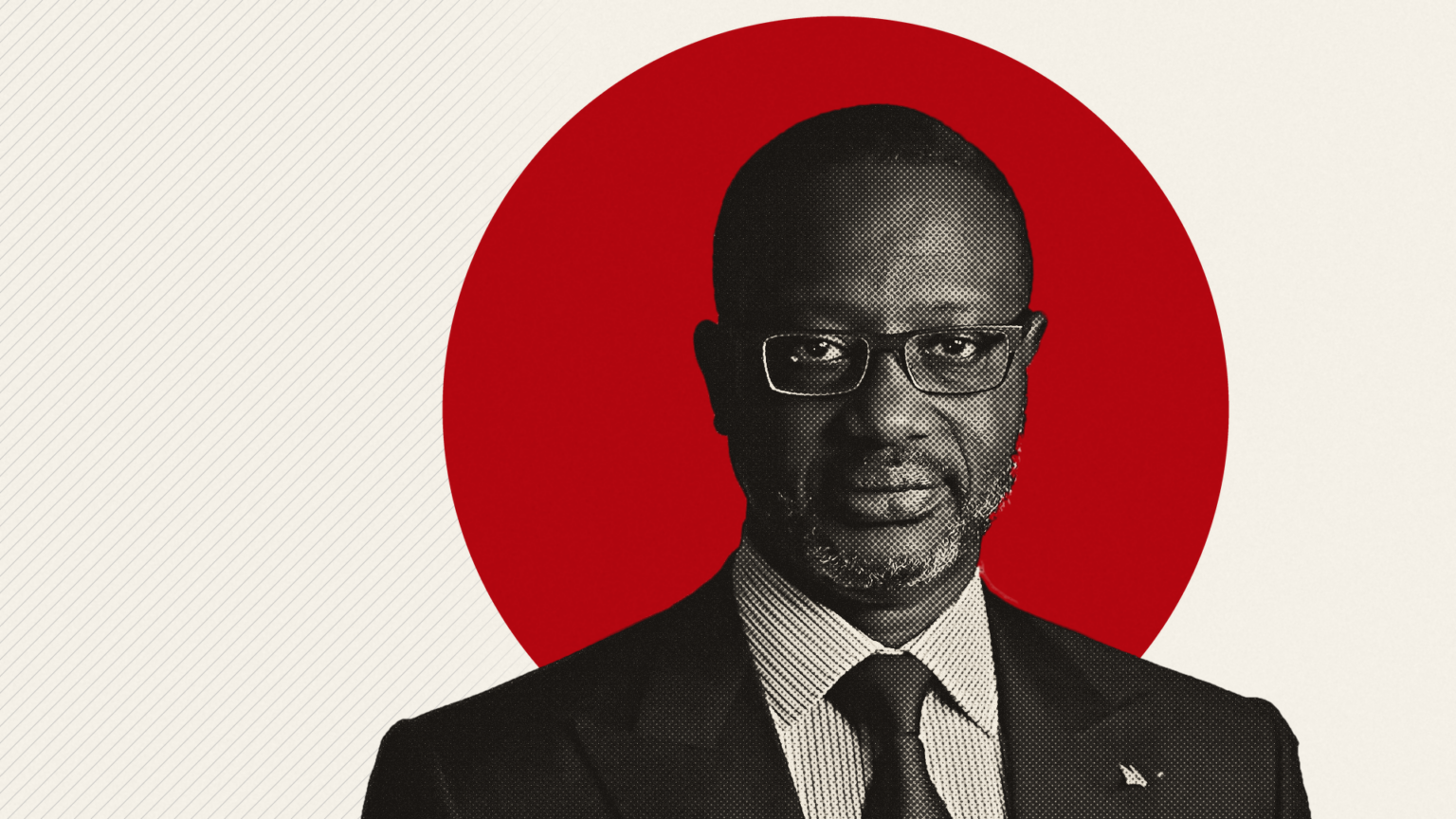
Ivorian Tidjane Thiam is one of the most extraordinary African personalities over the last two decades. He made international headlines when, in 2007, he was appointed CFO of the UK’s Prudential insurance and banking group. He quickly became the CEO. In 2015, he was headhunted to run Credit Suisse, one of the biggest and most prestigious financial institutions in the world.
Credit Suisse was in trouble and wanted Thiam to sort out the crisis and put it back on a growth path. He did so but then ran into a personality clash with a former employee of Credit Suisse who had transferred to UBS. The intrigue and battle between the two was the stuff of movies and was perfectly captured in an award-winning article by Anver Versi, then editor of African Business magazine.
Thiam, who had worked at a very high level in the Ivorian government before his move to banking, returned home to contest the 2025 Ivorian Presidential election as leader of the Democratic Party of Ivory Coast – African Democratic Rally (PDCI), but he was ruled ineligible because of his Ivorian / French dual nationality.
He renounced his French nationality, but his candidacy for the presidential election was rejected by the Constitutional Council.
His new book, ‘Beyond Africa and the World ’, was published earlier this year. He is in conversation with Hichem Ben Yaïche.
What was the aim of publishing this book?
As I approached my sixtieth birthday, a break in my career allowed me to make this project a reality and to share the lessons I’ve learnt from my experience.
I originally wrote the book in English, then translated it into French two years later. I did not want this translation to be the product of artificial intelligence. My main concern was to preserve my voice and style. That is why I devoted time to working on this translation.
This book also offers an insight into certain aspects of my life that are little known to the public. In particular, I answer questions from young people: how did I become a CEO?
How did I rise to the positions I held? Through this account, I hope to pass on an experience that may prove useful to them.
In the book, you call this epoch the ‘century of Africa’. Why?
To reflect on Africa’s future, we must first start with accurate facts. It is a vast continent, covering more than 30 million square kilometres, which is not always reflected in cartographic representations.
This vastness also requires us to consider the continent’s diversity rather than treating it as a uniform whole.
Added to this geographical dimension is the demographic factor. Africa’s population has grown significantly, largely thanks to medical advances.
However, the continent’s strengths extend beyond this single factor: its riches lie in its subsoil, its land and its rivers. It also possesses vast expanses of space, which have become a scarce resource. Whether Africans realise it or not, their continent represents a major strategic issue.
At a meeting to which he had invited me, Barack Obama himself described Africa as the most important continent of the 21st century, emphasising the attention the US was paying to its development and future.
Trade flows also serve as a measure of the importance of Africa in the world. A comparison gives an idea of the scale of the economic stakes associated with the continent.
In 2025, trade between China and Africa was $348bn while Sino-American trade was $414bn. The trade between China and Africa is growing at an annual rate of 17.7% and could exceed, within two years, that between China and the US.
To establish itself as a global player, Africa must also make its mark in production and knowledge. How is the continent currently positioned in these two areas?
Education is, in my view, the key to everything. Ever since my first trip to China in 1984, I have been convinced that the country would experience extraordinary growth.
The most pressing priority for Africa is therefore to educate its young people and equip them with the tools they need to play a full part in shaping the world of tomorrow.
We must also encourage entrepreneurship. During my campaign, I championed an idea that struck a chord: we are tired of billionaire civil servants; we want billionaire entrepreneurs.
Many African entrepreneurs are already achieving remarkable success, particularly in Nigeria, where some have set up businesses of international stature. African companies are also expanding beyond the continent and making acquisitions abroad. Unfortunately, these successes remain largely overlooked.
There is no reason why African talent should not succeed just as much as that of Malaysia or Thailand. Wherever there are skills and economic opportunities, success is possible, provided we create an environment that allows this talent to flourish.
This requires a sound economic model. A system based on rent-seeking and corruption, where profits are systematically transferred abroad, cannot lead to either prosperity or economic development.
How important is the time factor in Africa’s development process, given the continent’s urgent needs and major challenges?
First of all, we must distinguish between the realities of the different African regions. I have attended conferences on China, India or Southeast Asia, but never a conference that purports to deal with all Asian countries indiscriminately. Yet this is precisely what is constantly done with Africa.
Meaningful analysis requires a coherent scope. North, West, Central, East and Southern Africa have profoundly different historical and economic characteristics. Generalising across such a heterogeneous whole inevitably leads to errors.
Certain priorities remain common, however, starting with education, particularly for women; this is essential for controlling population growth. At comparable levels of education, the fertility patterns of African women are similar to those observed elsewhere in the world. Girls’ access to education is therefore a key driver of development.
Another priority is the accumulation of local capital. The history of Prudential, which I led in the UK, illustrates the role of savings in financing the economy. By regularly collecting small sums from households, the company helped to build up savings capable of financing, over the long term, the British railways and industry.
I therefore wish to challenge the notion that the financing of the economy relies solely on banks: insurance companies, pension funds and retirement funds play a vital role in mobilising long-term savings. In the US, for example, teachers’ and firefighters’ pension schemes feed into funds that subsequently invest in businesses and innovation.
A country’s poverty does not mean it is impossible for it to build up savings. The gradual accumulation of small sums makes it possible to mobilise patient capital, which is essential for financing development. In my view, insurance and long-term savings mechanisms are still a missing link in many African economies.
Revenues from natural resources must also be invested rather than consumed in their entirety. The rent eventually runs out. Sovereign wealth funds make it possible to transform this temporary wealth into sustainable assets, as illustrated by the strategies of Norway and several Gulf states.
I had advocated the creation of such a fund for Côte d’Ivoire, and I am delighted that this idea has been taken up.
For commodity-producing countries, this strategy must also enable them to establish a presence in processing and distribution activities. Côte d’Ivoire and Ghana, which hold a dominant position in cocoa production, would be well advised to invest in companies that process and market chocolate. They could thus benefit from the value created beyond the sale of the raw material.
This is the logic behind downstream integration: an oil producer that also owns a network of petrol stations is involved in several stages of the value chain. Similarly, a cocoa producer with a presence in the chocolate industry diversifies its sources of income and reduces its exposure to fluctuations in the price of cocoa.
The challenge, therefore, is to transform today’s revenue into sustainable income. Shareholdings in companies can generate dividends that help finance development and facilitate its planning.
The economic clout acquired by the Gulf states demonstrates the importance of this long-term investment strategy.
Can you name any country where the strategies you propose could be implemented?
Guinea, which has significant mineral resources, has set up its own sovereign wealth fund and is working on its structure. On my advice, its representatives have, in particular, studied the experience of other funds, including Norway’s.
Morocco also has an active fund, as does Nigeria. Such initiatives exist, but there are still too few of them: they need to be expanded and developed.
In the global economy, the rule is not ‘one person, one vote’ but ‘one dollar, one vote’. It is the capital that calls the shots!
A cocoa-producing country wishing to develop processing plants on its territory might seek to become a major shareholder in a group such as Nestlé, in order to influence its industrial decisions. The US and other major powers use these same levers. Political activism is not enough in economics: we must equip ourselves with the means to influence decisions.
How can African countries embark on the path you advocate, given that they do not always have the necessary tools and that this approach also depends on government policies?
First and foremost, a vision is required. The example of Japan during the Meiji Restoration is illuminating: this country, which was then predominantly agricultural and had long been closed off from the outside world, sent students to the leading universities abroad. Over several decades, it thus developed the expertise needed to shape its own development and devise appropriate solutions to its problems.
I always come back to this conviction: development begins with reflection and knowledge. You don’t need a PhD in economics to understand these principles. Leaders such as Lee Kuan Yew in Singapore championed a vision and equipped themselves with the means to bring it to fruition.
Côte d’Ivoire also followed this path under the leadership of Félix Houphouët-Boigny.
As early as 1946, he helped send more than 200 young people to continue their studies in France, by securing funding and personally taking responsibility for their upkeep. This approach was already based on a conviction: knowledge, skills and technical expertise are essential to development.
The investments made in education during the 1960s, 1970s and 1980s shaped the generations who now hold positions of responsibility in Côte d’Ivoire. Investing in skills therefore requires a long-term vision and commitment.
Despite significant progress, Côte d’Ivoire still faces numerous vulnerabilities. How can it deal with the challenges ahead?
There is no magic wand: development requires time, hard work and financial resources. Other countries are also making progress, against a backdrop of fierce international competition. The time spent tearing each other apart only serves to widen the gap.
Nevertheless, I sense a growing awareness amongst the younger generation. By hosting the Youth Olympic Games, Senegal is setting an example that inspires African pride.
I remain deeply optimistic. Given the obstacles we have faced, the progress made is encouraging. Despite setbacks and reversals, I see dynamic and innovative Africans in every sector. The boom in mobile telephony and mobile payments illustrates this ability to provide solutions that improve everyday life.
These advances do not mean that everything is going well. We must continue our efforts and keep promoting democracy.
Which financial institutions should African countries rely on to realise their ambitions?
We need institutions like Prudential in every African country. I helped develop this model in Asia, particularly in Vietnam and Indonesia, where we had 40,000 and 200,000 insurance agents, respectively.
With the support of the authorities, we encouraged household savings and reinvested the funds collected in local currency into the country’s economy, particularly in infrastructure, healthcare and privatisation initiatives.
This model relies on private institutions and a form of responsible capitalism: offering useful products, meeting people’s needs and generating profits which are then reinvested. We summed up this approach with the phrase: ‘Succeeding by doing good.’ It is this virtuous circle that we must build.
This activity is the responsibility of private operators. The state must, however, foster a climate of trust and enable them to operate without exposing them to predatory behaviour on its part.
You rub shoulders with the world’s most influential leaders and circles. What comments about Africa do you hear there that shock you or seem out of step with the continent’s realities?
The reality in Africa is better than the rest of the world perceives it to be. Markets have a long memory: even when a country’s performance improves, past difficulties continue to weigh on investor confidence.
In certain regions of Africa, coups and instability have thus had a lasting impact on the continent’s image. Investors remain cautious, and perceptions change slowly.
This mistrust also stems from a lack of understanding of the situation on the ground. Many Western decision-makers with whom I speak have never been to Africa.
My first trip to China profoundly changed my view of that country: nothing can replace first-hand experience.
But when we suffer from an image problem, it is also up to us to take action to rectify it.
Just as a company must explain its situation to its shareholders, we must reach out to investors, showcase our strengths and explain our realities. Highly qualified Africans also help to change perceptions: through their skills and career paths, they challenge preconceptions.
Economic promotion missions abroad are useful, but they should consist mainly of private-sector representatives.
I would favour a ratio of 80% private-sector representatives to 20% public-sector representatives. Investors want to meet entrepreneurs and discover real-life success stories.
The best argument for attracting capital remains the success of local entrepreneurs. If someone who knows their country, its culture and its language cannot manage to build a business there, why would a foreign investor think they could succeed?
Leaders must therefore focus on creating the conditions that enable their country’s entrepreneurs to thrive.
Aliko Dangote is a prime example of this. His international profile helps to promote Nigeria and Africa. Such success stories instil confidence and do more for the continent’s image than thousands of political speeches.
Are the dynamism and creativity of African entrepreneurs today sufficient to set the continent on this virtuous cycle?
Africa’s development will be neither uniform nor automatic. Europe itself, despite its much smaller land area, exhibits significant disparities between its countries. We cannot therefore expect the entire African continent to experience a spectacular boom simultaneously.
We need anchor points: countries that are succeeding and which, through their momentum, are pulling their neighbours up with them.
I see encouraging developments today, more so in English-speaking Africa than in French-speaking Africa, but also in certain Portuguese-speaking countries.
Angola, Zambia, Tanzania and Botswana are examples of this momentum, particularly through their efforts in the mining sector. The continent is on the move, even if progress remains uneven.
Your career path embodies the ties between France and Africa. Do you think it is possible to move beyond the current crisis to build a calm and mature relationship?
I am often indifferent to such debates. I do not believe in the victim mentality that consists of systematically attributing our difficulties to others. Africa’s destiny is shaped every day by the actions of Africans.
Relations between nations are based on interests. I would never criticise a leader, whether French or from another country, for defending the interests of their citizens and those who elected them. That is their role. It is therefore up to Africans to take their destiny into their own hands.
It is this conviction that we have placed at the heart of the PDCI’s programme, with one objective: “A Côte d’Ivoire in control of its own destiny.” This ambition entails choices and responsibilities that we must shoulder.
During a conversation, Pascal Lamy (former director-general of the WTO) told me: “The time has come for Africa to choose, rather than be chosen.” Do these words not ring truer today than ever before?
I refuse to accept that we should perpetually see ourselves as victims. The excessive attention paid to every statement or event in French political life reflects a dependence from which we must free ourselves.
We have been independent since 1960: our future cannot remain dependent on decisions taken elsewhere. People liberate themselves. Those who await their salvation from Paris, Beijing or Washington risk waiting a long time. This is not an attack on France, but a matter of responsibility and autonomy.
Freedom and democracy must be won. In 1789, the French stormed the Bastille themselves. In 1776, the Americans did not wait for London to grant them independence. It is up to peoples to take their own emancipation into their own hands.
In your analysis of Africa’s prospects, what role do you attribute to the conflicts, wars and crises that constitute major obstacles to the continent’s development?
I regard conflicts as symptoms: they are the consequences of deeper-rooted problems that need to be addressed, notably human rights abuses, democratic failings and inequality of opportunity.
When Africans would rather risk their lives crossing the Mediterranean than remain in their own countries, this reveals the extent of their despair and lack of prospects.
Peace remains an essential condition – even if it is not sufficient on its own – for all development and for human life. Indeed, whilst on the Blair Commission, I succeeded in ensuring that peace and security were given a prominent place. The rejection of violence must be non-negotiable.
However, lasting peace is difficult to build without justice. The slogan ‘No justice, no peace’, taken up by many youth movements, expresses a profound truth: injustice fuels tensions.
I therefore believe deeply in equal opportunities. On a continent as diverse as Africa, we must move beyond favouritism towards certain groups to guarantee all children the same opportunities to succeed. Whether girls or boys, whether they come from the north, south, east, west or centre of their country, everyone must have the same opportunities.
With the collaboration of Alaei Aboussikine.