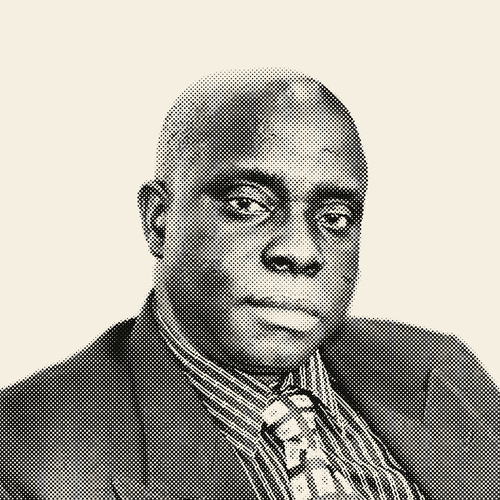
“It will be years – not in my lifetime – before a woman will become prime minister [of Britain]” – Margaret Thatcher in 1974. She became prime minister five years later!
Afehyiapa is the word in my native tongue, Akan. There is not quite an equivalent in the English language, even the English language – the borrower of all tongues! Afehyiapa, loosely translated into English, would be “Happy End of Year”; and if you happen to be around the shores of the former Gold Coast around Christmas, you will hear a lot of Afehyiapa being wished by 15 million odd souls to one another. It’s our way of saying “Merry Christmas” and “Happy New Year”.
So Afehyiapa to all our readers, advertisers, sympathisers, and even the critics and cynics! Am I nostalgic? A bit. Who wouldn’t be in this dreary weather in the UK – endless rain, sweeping winds, biting cold, and thank God there is hardly any snow in London these days. Ah, what can man do! So, as we usher in a brand new year, I thought that for the “nostalgics” like me, who would like to look back at the years long gone, the years that will never return however much we might wish for them, I would go into my scrapbook and compile some pure nuggets of British, nay Western, sagacity – made up mainly of readers’ letters from the various British newspapers published in years gone by. It is meant as a fireplace companion for those who are now experiencing the shorter days of the proverbial “bleak winter”. For those who live in the sun, you have God’s blessings! So welcome to a bit of my scrapbook: It’s Christmas, so we start with Christmas.
The Church
“For once I got a rather good shirt and tie for Christmas, so I tried them on and showed my wife. The verdict? ‘You look different when you’re clean.’ Yours dazzlingly.” – Ian Rae, Birmingham, UK. Letter to The Times, 6 Jan 1995. “If the Christian churches seriously want to claim Christmas and the millennium (Letters, 8 Dec), they will have to work a bit harder. Pagans were celebrating the mid-winter festival long before Christians decided that Jesus was born on 25 December, which happened to be the Roman holiday of the Unconquered Sun.” – N. Walter, London. Letter to The Guardian, 9 Dec 1997.
“After Peter Tatchell reminded the Archbishop of Canterbury of his Church’s discrimination against gay and lesbian people (‘Gay activists storm Carey pulpit’, 13 April), George Carey resumed his sermon saying: ‘People in Britain are forgetting their Christian past.’ Ordinances (catalogued MSeMUS 229) in the Bodleian Library, Oxford, support the fact that for 550 years, from 1000 to 1546, the Church administered London’s Bankside brothels. The Church managed its 20 or so brothels so that they filled its coffers. For example, as many nuns financed their convents by working as prostitutes, the Church’s ordinances of 1161 levied a fine of 20 shillings upon any brothel permitting a nun to work. With Christian fastidiousness, the Church also ordained that, on Holy Days, no whore should work between 6am and 11am or 1pm and 6pm. These are just a few examples of our Christian past that we must, as the Archbishop says, not forget.” – David Cayde, London, UK. Letter to The Guardian, 15 April 1998.
“Dismissive as Frederick the Great was about the German language (Letter, 3 Aug), the ultimate put-down must surely be that offered by the Emperor Charles V 200 years earlier, when he observed that to God he spoke Spanish, to women Italian, to men French, and to his horse – German.” – Kenneth Ellison Davis, Amsterdam, Netherlands. Letter to The Times, 6 Aug 1999.
Perfidious Albion
“I would like to see Arthur Speakman’s evidence that the RAF bombed the Kurds in the 1920s because ‘the country was plagued by inter-tribal raiding which it was our duty to curb’ (Letters, 10 Sept). The reality is more squalid. Britain promised the French that they could have Kurdistan, and its oil wealth at Mosul, in the Sykes Picot secret treaty of 1916. By the end of the war, however, London decided it needed the oil for itself. During the summer of 1919, British troops were struggling to put down a rising led by the Kurdish hero Sheikh Mahmud. Then in 1920 Kemal Ataturk threatened to seize the region for Turkey. To rally Kurdish opposition to this attempt, Britain promised to back an independent Kurdistan (Treaty of Sèvres, Aug 1920). The intention was to manipulate the Kurds by promising them freedom. As Colonel T. E. Lawrence (of Arabia) put it: ‘Some day … we will be able to hold Kurdistan and bore there for oil” (Sunday Times, 30 May 1920). By the end of 1921, the differences with Ataturk and with the Arabs in Baghdad had all been sorted. London tore up the Treaty of Sèvres and proceeded to deploy RAF aircraft against the Kurds in their mountain strongholds. In the Treaty of Lausanne (July 1923), the region was parcelled out between Turkey, Iran and Iraq, with no mention of the Kurds. They had been written out of history in a style Stalin would later make famous. The Kurdish oilfields were placed under Britain’s Iraqi mandate and, on 15 October 1927, oil in ‘enormous quantity’ was discovered at Baba Gurgur near Kirkuk.” – Aidan Campbell, London. Letter to The Independent, 1 Sept 1996.
“In 1834, when the [House of] Commons burned down, crowds stood on the other side of the Thames and cheered because they had lost confidence in it. If that ever happened again, the responsibility would lie with those ministers and MPs who are undermining democracy in the name of security and using fear to push it through.” – Tony Benn, former Labour Party stalwart and minister. Article for The Guardian, 22 June 2005.
Marriage
“May it please the good Air Commodore Harold Shephard (Letter, 13 Jan) to know that time has moved on. The definition of a good English husband is now frantic in the kitchen, fervent in the chapel and frugal in bed. I am the mother of four fine fellows.” – Mrs Cherida Mahon, Ipswich, UK. Letter to The Times, 14 Jan 1997. “An excess of at least 3,000 births followed the power crisis [in Britain] of 1973 that led to the curtailment of television broadcasting at 10.30pm for most of seven weeks from mid-December.” – Alan Lewis, Weybridge, UK. Letter to The Times, 23 Oct 2000.
“Annual marriage rates [in Britain] are at their lowest levels since records began 160 years ago. One in two marriages now end in divorce and 28% of children experience the divorce of their parents before they reach 16. Britain has 16.3 million families, but their breakdown now costs the state over £5bn a year. The number of single person households – there are now 6.5 million people living on their own – is three times that of 40 years ago.” Excerpt from an article in The Independent, 27 March 2000.
America
“Most of all, I dislike the idea nowadays that if you’re a black person in America, then you must be called an African-American. Listen, I’ve visited Africa, and I’ve got news for everyone: I’m not an African. The Africans know I’m not African. I’m an American. This is my country. My people helped to build it and we’ve been here for centuries. Just call me black if you want to call me anything.” – Whoopi Goldberg, Interview with The Daily Telegraph, 20 April 1998.
“I never thought of America as home. There is a huge insularity there, whereas here [in Britain] you get the complexity that layers of history bring. Americans see the world very much through American eyes. Only 14% of them have passports. I lived for some time in a small town, and there was a man just about to retire and he said to me: ‘My wife and I talk about travelling to Europe and round the world, but then we realised that the best of everything is in America so there was no point in going’.” – Susan Kraemer, the Liberal Democrats’ London mayoral candidate. Letter to The Independent, 27 March 2000.
Our people
“Let’s be honest. If we are not on TV, rapping, running for Britain, or reading the news, most country people don’t see a black face like mine from one week to the next (‘Villages bristle at accusation of rural prejudice’, 9 Oct). On the other hand, London gives me the creeps – a lot of black faces, but when the people cleaning the train, emptying the bins and mopping up spills in Paddington are always black, I’m saddened, not refreshed. When I reach my hotel, who makes the beds, cleans the loos and wipes the tables? When I get to my meeting, who guards the entrance, staffs reception, and restocks the vending machines? And in the meeting (I work in the media), what colour are the delegates I sit next to? White almost every time. In London, there are jobs for whites – and when they’ve gone, a rainbow of races can then chase after the leftovers. Without contacts, better-than-average qualifications and a lot of bottle, working-class and professional black people know instinctively they’re no better off in town or countryside. The countryside is white because racism runs rife right through our society. To call it passive apartheid is a cop-out.” – Joanna Traynor, Plymouth, UK. Letter to The Guardian, 14 Oct 2004.
So, once again, Afehyiapa to the readers of Beefs. You’ve been a great sport over the past year. And so, this is my New Year Resolution: in 2010, I will pile the Beefs high and sell them cheap! And…er…even before I pile them high, did anybody notice that our good president, Barack Hussein Obama, spent 75% of the time speaking about war when he was supposed to be receiving a “peace” prize from the Swedish Nobel Committee on 9 December? “A just war”! Did I not like that? So who decides what is “just”? Wouldn’t “the terrorists” use it as their mantra?