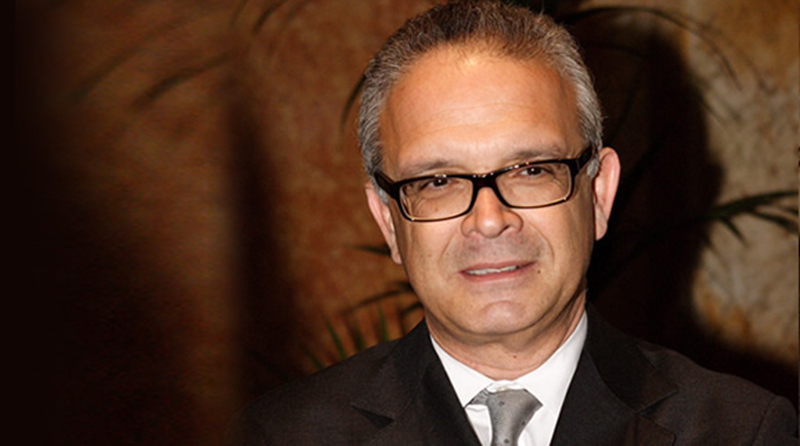
In just a few months, Tunisia is set to hold parliamentary elections. The move, it is assumed, will finally stir the country away from the transitional political phase that followed the 2011 popular uprising. But has the country’s political class learned its lesson or will it continue to neglect the reasons which had sparked the Revolution in the first place, asks Radhi Meddeb.
In no more than two months, the parliamentary elections will take place in Tunisia. These elections are meant to finally put the country out of the transitional political phase during which the demons of division and demagoguery have often resurfaced. For most Tunisians, this period has lasted far too long and has exhausted too much energy.
Any reasonable person should recognize the achievements of the Revolution in terms of freedom of expression, decrease of fear that haunted many people for decades. Nobody can deny the progress brought by the new constitution hailed as modernistic, despite a few ambiguities which make the “proof of concept” in real life a must to test the gains brought in practice by the constitution to the Tunisian society.
The political pillars of the Second Republic have finally been set-up, but in the meantime, the economic and social foundations have been largely altered.
Under such circumstances, for all local and international observers of the Tunisian scene, it is surprising that the current local political debates and media focus prioritize the presidential elections over the parliamentary ones, which will determine the major and real holder of power under the new constitution; and even the limited interest in the parliamentary elections is geared towards the selection of heads of electoral lists of different parties as opposed to the actual vision for the Tunisian society, the challenges facing the country, the economic and social issues, education, security, foreign affairs and programs, which are what really matters for the population.
Voters have just been taken hostage by the so many parties that have proliferated on the local political scene without the needed substance.The political class continues to neglect the reasons which had sparked the Revolution in the first place, and which certainly had nothing to do with religion, nationalism or politics.
It was first triggered by young people and in particular those from remote and marginalized regions, out of despair born from a total lack of perspective for their future and longtime suffering from social and economic marginalization, discrimination and nepotism of the former autocratic regime. The storm (so called Arab Spring) which has then overtaken all politicians, rulers and opposition alike, inside and outside the country, was in need of strong and appropriate responses to tackle the economic and social challenges the local population was facing; responses that never came.
On the contrary, the economic and financial situation in the country has worsened sharply; the social conditions and the purchasing power of the weak and vulnerable categories have deteriorated further. It is true that the tough international environment has contributed to this deterioration.
Nevertheless, the mismanagement of public affairs and the absence of any concrete action to turn this bad situation around have made things worse. This has created additional new challenges in areas in which Tunisia was doing well before the Revolution: infiltration of terrorism in the Tunisian daily life, structural crisis of public finances, crowding out of public investment, and an important deterioration in the environment.
The political process has taken much longer than the time needed for such a transitional process. Expensive social and often demagogic treatments geared towards the interests of prominent parties have drowned the country. The social unrest, sometimes legitimate but more often manipulated by lobbies became a mode of political expression and action.
It is urgent for a clear economic and social vision to become central in the Tunisian affairs, in order to set the pace and put the country on the path of growth, inclusion, investment, performance, sustainability and consequently stability.
It is urgent for the country to move from a situation of a provisional and short-term management of public affairs to a long term vision based on shared efforts and values, sacrifice and mobilization of all citizens for a common goal of bringing the country up and making it part of the emerging and modern countries, as it had been for ages during its long history.
It is time for all the politicians and those who are in charge of our public affairs to look to the future rather than keep on staring to the mirror and rehashing the past with bitterness or nostalgia.
Tunisia has to wake up from its nearly twenty years of lethargy and inaction which resulted in the current difficult situation. To that end, multiple, structural and deep reforms are needed:. The reforms will be neither simple nor pleasant or easy to live with.
They will shake rent situations, set stable, transparent and fair rules, and reconnect with an even stronger growth, promote the inclusion of all those previously left out of the development process, raising the level of education to make “the Social lift” function again for the marginalized parts of the society, give hope to future generations, put the entrepreneurs in a favorable context and simplify the decision making process through a decentralization of the administration to bring it closer to beneficiaries.
Regardless of the outcome of the next elections, Tunisian political and social forceshave to find the appropriate conditions for a peaceful and positiveinteraction, in which the public interest overrides individual and partisan interests in order to avoid any divisions or discord within the Tunisian society. Tunisia needs solidarity among all of its components to overcome all the challenges it is (and will be) facing with determination and consistency.
The time of weak consensus, of passiveness, and of neglect of the key problems the country is facing, is over. The long history of Tunisia has taught us that the population, which is made of a rich mixture of several cultures from the Mediterranean region and the Middle East, has always found the resources to overcome the challenges it has faced throughout the last thirty centuries.
The political leaders have no choice but to focus on preserving the achievements of the nation and on deepening the benefits to all the population without excluding any segment regardless of social condition, gender, skin, color or religion. This will require institutional stability, restoration of the state authority, a reaffirmation of the simple principle of living together while respecting each other’s differences, which in turn will require both pedagogy and the strict enforcement of the law.
The fight against terrorism is a non-negotiable requirement. It requires the mobilization of every Tunisian citizen, and the eradication of its socio-economic and cultural roots and its international ramifications should be the focus of the next government. The fight will be long and time is in favor of the enemies of peace and democracy. As the threat is global, only a global response based on a strong cooperation with Tunisia’s partners and friends will be effective.
This condition is essential to restore confidence and see national and foreign private investment increase to an acceptable level in order to generate the needed growth for employment and shared prosperity
However; this is certainly not enough and would fail to boost job creation and reverse the trend of unemployment, unless all the necessary reforms to create more inclusion, solidarity and better performance are simultaneously put in place and enforced.
For nearly four years following the Tunisian revolution, many additional weaknesses have emerged and many bad practices have become part of our daily life. The reconstruction of a new democratic Tunisia that respects human rights will necessarily involve its ability to be effective, to create wealth, to ensure its fair distribution, and to grant all Tunisians, established within its borders or abroad, the conditions of well being.
On the economic side, the reforms to be implemented should focus on tackling major macroeconomic imbalances, controlling and sharply reducing inflation and preserving the purchasing power of the middle class and of the poor and vulnerable part of the society, eradicating smuggling and tax evasion, bringing the informal economy into the formal sphere, introducing a more just and inclusive tax system and developing the social economy to complement an open economy based on entrepreneurship and the promotion of the private sector.
This will also require a reform of the administration aimed at simplifying the procedures for entrepreneurs and making it a true ally of development, restructuring and potentially privatizing the non strategic public companies to improve their performances.
It will also include reforms of the financial sector to make it the backbone of the economy and the partner of development for the private sector, and also foster financial inclusion (through micro finance) , as it is an indispensable tool for social inclusion.
It is also important to reform Pensions and Provident funds to prepare them to deal with the demographic transition, and reform the Fund for subsidies (meant to maintain the prices of a list of “essential” foods and goods at affordable levels to the population) to ensure it benefits only those who are really in need of subsidized products, to put an end to money wasting and misappropriation, while preserving the purchasing power of the weak categories and the competitiveness of our economy.
As anticipated above, the role of the private sector should be reinforced by means of a favorable business environment, promoting transparency, initiative and entrepreneurship, erecting freedom in principle and authorization in exception, replacing the essential ex-ante control rules by ex-post control principles and setting a clear legal framework that incentivizes the public-private partnerships.
This shall go through large societal reforms that will promote more participatory governance, a further opening of the country to the international environment and the adoption of best practices in terms of education, vocational training, health, culture or sport.
There are multiple sector reforms, be it in terms of tourism, as this sector has been undergoing severe complications even prior to the Revolution and its health has deteriorated further since, or in terms of environment that has not survived the administrative management that lacked vision and the support of the people concerned.
Territorial policy development will be built on powerful social inclusion and regional and territorial competitiveness tool. It should permanently involve populations in defining their future while retaining the ability to arbitrate and reassert the authority of the state in the devolution and decentralization. It must have a constant concern for interconnecting Tunisia with its immediate vicinity.
The position of Tunisia in its regional and international environment will be reaffirmed by deepening its relations with Europe and the identification of new forms of cooperation based on proximity, complementarity and solidarity.
The Maghreb and African ties of Tunisia should be reinforced with stronger investment, a more decisive presence of its companies in these promising markets and a supportive strategy clearly declined by the authorities. Tunisia will promote reconciliation with the Maghreb region reaffirming the solidarity of peoples and respect for national policies.
This is essentially the great work awaiting the political class and the next government.
After much hesitation, the government of technocrats has eventually initiated a reflection in many of these areas and outlined some of these reforms, although populist and partisan voices urged it to immobility under cover of transitional status. It is important that Tunisia builds on this work, picks up the pace and does not leave any room for corporatism or the ultimate denial that would only delay the recovery, complicate matters and increase the toll on the economy.
The floor of reforms is huge. Its implementation should not suffer further sterile discussions or negotiations. The national salvation of Tunisia depends on it; the recovery is still possible, even if its path will be long and costly. Policy makers need to recognize that and get on with the job without delay. None of them can pretend ignorance. Friends of Tunisia and especially Europe must support this major work of reform. The success of the first outbursts of the Arab spring depends on it, but also the safety and stability of the entire region.