
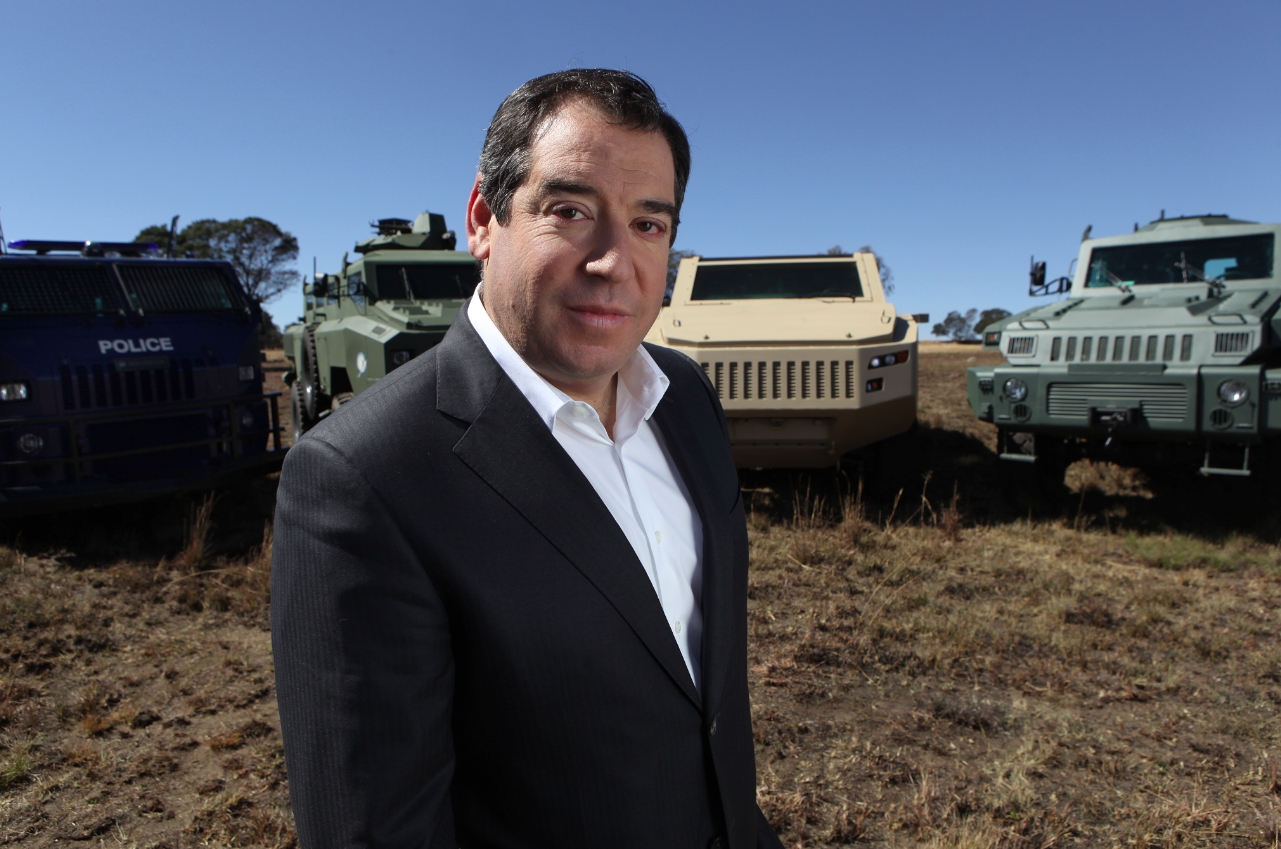
Following the Marikana mining saga in South Africa, Ivor Ichikowitz, executive chairman of Paramount Group – Africa’s largest privately owned defence and aerospace company – writes exclusively for New African on why armed intervention occurred in Marikana, reflecting on a fundamental problem in policing capability and arguing that underinvestment in African policing leaves ill-equipped forces unable to handle extreme confrontational situations, especially large crowds.
Proper law enforcement is part of the nuts and bolts of developing an economy. Infrastructure projects, for example, are exponentially more difficult without stability. The current emphasis of the African Union on a continent-wide programme to upgrade roads, rail, harbours and telecommunications will not be the boost it should be if instability intervenes.
Private investors, as much as foreign governments seeking to invest in Africa, need to continue to be reassured that no unexpected or violent shift in the peaceful nature of a country will put their financial returns in peril overnight.
The idea of putting military boots on the ground in South Africa’s troubled mining strikes reflects a fundamental problem with our policing capability. Let me be clear, the men and women of the police are not the fundamental problem. The problem is the chronic lack of modern, advanced equipment with which they can do their jobs.
Even the best officers will feel pressure when faced with events like those of the past few weeks and that pressure is greatly heightened when they know they cannot rely 100% on their outdated equipment to keep them safe.
It is a natural human reaction to want to preserve your own safety, but good training and modern equipment help reduce those emotions to a level at which they can be controlled and managed.
Better equipment means greater safety, which reduces pressure on personnel and improves the likelihood of those personnel making the right decisions. Put bluntly, the right kit saves lives.
Developments in policing equipment have accelerated dramatically over the last few years. Around the world, there is the growing adoption of more sophisticated techniques for handling crowds and increasing numbers of police forces are introducing new technology such as facial recognition software that can identify known troublemakers within seconds. Part of this technological thrust is to improve conviction rates and counter potential criticism which, in the modern world of social media, can leave ministers facing uncomfortable public questions.
But a large part of this move into greater adoption of technology reflects a shift towards intelligence-led policing where gathering and using information is key.
Many South African police vehicles are decades old and the sight of them is an unwelcome psychological link to the apartheid regime, but they are also technologically a long way behind the most modern vehicles.
The latest intelligent vehicles and electronic systems provide many better ways to solve today’s policing problems: many have cameras, integrated communications and surveillance suites which allow field commanders to assess the situation on the ground in great detail and from a protected environment, therefore helping them make better decisions.
If they need to feed real-time visual information to the highest ranks, this is possible at the flick of a switch so the entire chain of command can be kept informed. There is also a wider effect of good policing on the economy. The cost of Marikana and the associated disturbances have been estimated to run well into the billions and I believe that stability is the single most important factor in boosting an emerging economy.
Capitalism is the most powerful driving force behind Africa’s economic development and businesses must be able to be run without the fear of massive sudden disruption to their processes. African democracies have the welcome right to peaceful protest but when protests are not controlled the ramifications are felt far beyond the protest site itself.
On the unwelcome occasions that one large site is disrupted, everyone, from the enterprising small-scale entrepreneurs at the roadside stall that sells drinks, to the hard-working hauliers that bring in the raw materials, is affected and sees their incomes drop. Without adequate policing, the knock-on effects can rattle along the supply chain into communities and families far beyond that initial hotspot. Criminals in a few areas further undermine economic activity across the continent and need to be effectively countered by well-trained personnel working with equipment that can properly help them do their job.
As Africa grows, the old political elites are being threatened by a youthful, growing middle class that has extensive aspirations and demands more of its leaders. I believe it is vital that these challenges are managed democratically and without a fall into insecurity. A properly equipped police force is not only better able to do a good job but the individual officers are more likely to be proud of their role – and thus be more determined to do even better. Modern equipment reflects a government’s dedication to the maintenance of law and order. It is a visible reflection – which can be seen daily on the streets – of the esteem in which the politicians of any given country hold their policemen and women.
Tourism is bringing new revenue to dozens of African countries, whose climates, wildlife and geographies are such fascinating contrasts to the developed world of North America and Europe, and those visitors will feel properly reassured when they see polite, well-trained officers in modern equipment maintaining order.
The proof of the benefits of stability to an economy is in the figures. The countries where stability is strongest are those which have grown fastest. Ghana was the fastest growing economy in the world last year (14% GDP increase); by one measure, South African GDP now outranks that of Belgium and Sweden; Ethiopia expanded more quickly than China in the five years to 2009.
Overall, Africa’s collective GDP, at $1.6 trillion in 2008, is now roughly equal to that of Brazil or Russia.
Even in historically troubled countries like Mozambique, the green shoots of growth are emerging from the devastation of its long civil war as peace spreads and is properly policed.
We at Paramount Group have had the privilege to work with many African countries to strengthen the capabilities and capacity of their defence, police and peacekeeping forces.
We have witnessed first-hand the benefits for economic activity, inward investment, regional stability and long-term growth that maintaining peace and order can bring. Africa’s greatest asset is its unique and innovative people but people cannot thrive in fear of civil disturbance. Innovators and entrepreneurs need to be given the space to work untroubled by uncertain security.
So I call on the government to match its recent commitment to invest in South Africa’s defence industry with a pledge to boost funding for police equipment, in particular advanced technology systems – and for developing nations across Africa to follow suit.
The South African defence industry has much to offer the police in terms of innovative ways to protect personnel but sending military troops into civilian unrest situations risks only inflaming an already incendiary situation.
A properly equipped and trained police force is needed now more than ever before.








