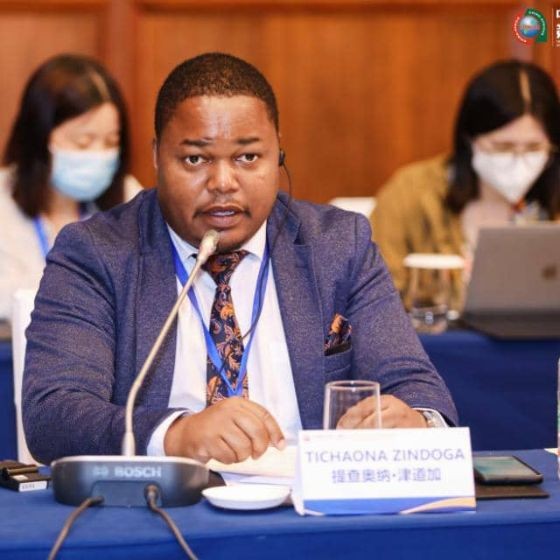
By Tichaona Zindoga*
Each historical period,” Nelson Mandela said, “defines the specific challenges of national progress and leadership; and no man is an island…And for me, personally, I belong to the generation of leaders for whom the achievement of democracy was the defining challenge… I hope that decades from now, when history is written, the role of that generation will be appreciated and that I will not be found wanting against the measure of their fortitude and vision.”
Mandela was speaking at the final sitting of South Africa’s first democratically elected Houses of Parliament in Cape Town, on 26 March 1999. Mandela’s life is still the subject of much inquiry and discussion, sometimes given to controversial interpretations. Needless to say, in academic circles in South Africa, the Mandela phenomenon is subjected to rigorous tests.
The 1999 Mandela speech is included in Dare Not Linger, a book by Mandla Langa, which outlines Mandela’s presidential years, drawing heavily on the memoir he began to write as he prepared to conclude his term of office but was unable to finish.
It is a book that Dr Siphiwe Dube, a political studies lecturer at the University of Witwatersrand in Johannesburg, recommends for a “nuanced understanding” of the former President and international icon. According to Dr Dube, such a nuanced approach will make one understand Mandela’s place in terms of his ideas and legacy to Africa; and in South Africa regarding nation-building and state institutions.
However, for Dr Ricky Mukonza, a Senior Lecturer in Public Management at Tshwane University of Technology, in Pretoria, “Mandela’s legacy is a mixed bag”.
“To some he represents the wisdom on which the nation of South Africa is built and represents reconciliation, democracy and progress. However, there are others who view Mandela’s legacy as that of an African elite leader who sacrificed the opportunity to restore the economic dignity of the black African people in exchange for political power,” says Mukonza.
He adds that there is a broad school of thought in South Africa, that blames the compromises made by the Mandela-led ANC for the troubles the country is still facing, particularly the unrelenting levels of poverty and inequality among the majority black South Africans – 100 years on from Madiba’s birth.
“The existence of poverty and inequalities has threatened the peaceful coexistence of the different races in South Africa – with the latest land redistribution issue being an example. This issue has divided the nation between the haves (mostly whites) and the have-nots (mostly blacks),” he says.
But, despite this engrained view, argues Mukonza: “Every time the name of Mandela is invoked, people across the racial divide tend to restrain themselves. Mandela is hence embraced more for his love, and building a peaceful South Africa, where if there are disagreements, everyone turns to his ethos of non-violence to resolve them.”
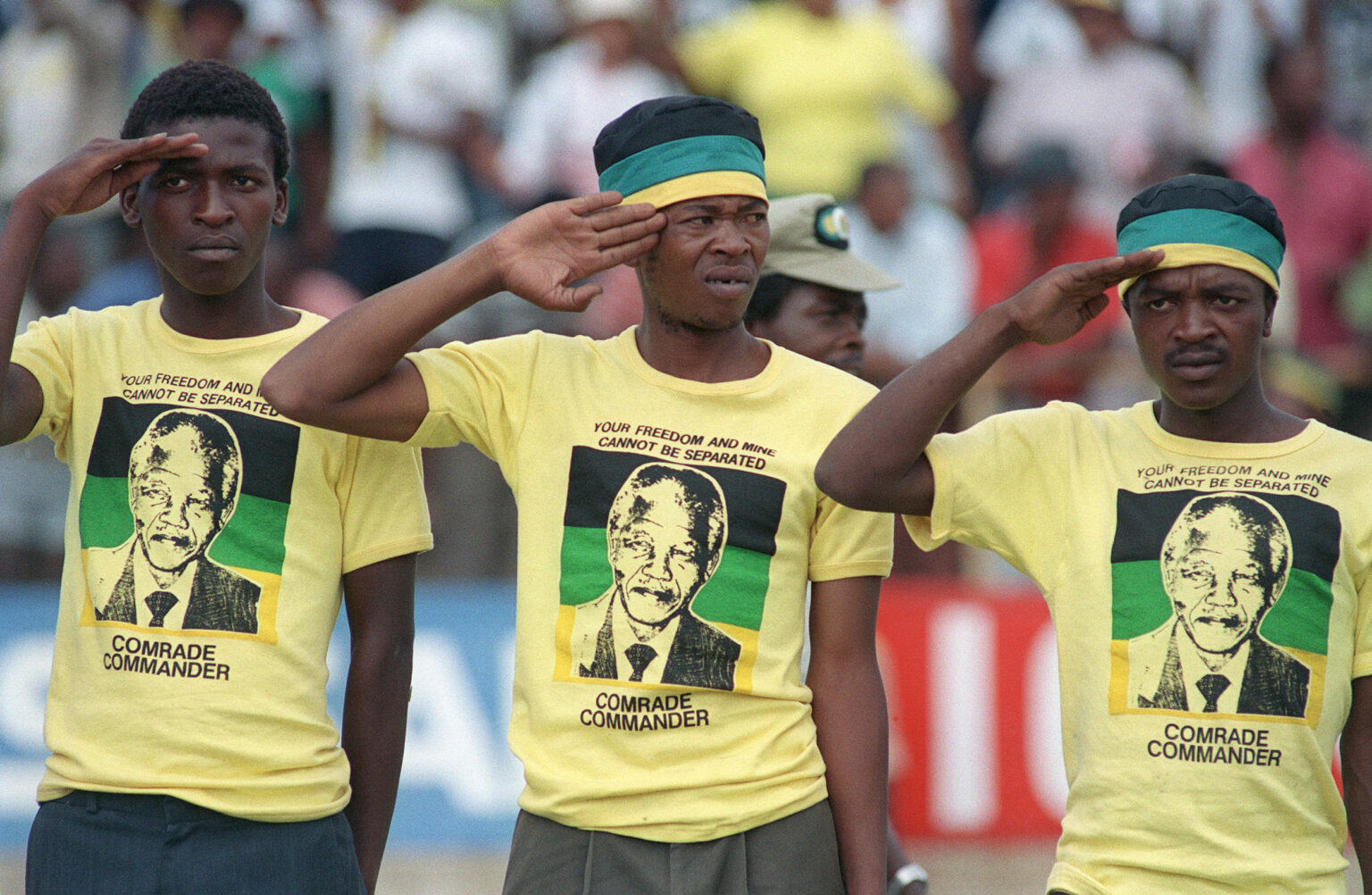
Gideon Chitanga, a fellow at the University of Johannesburg, concurs. “Mandela’s legacy symbolises progress – work towards reconciling deeply divided societies beyond the vagaries of apartheid South Africa. An icon in the struggle for democracy and ending discrimination has evolved into a unifying myth internationally.”
Poisoned chalice?
But could this international acclaim have been a poisoned chalice at the same time? Researcher and a founding member of the Africa Decolonial Research Network (ADERN), Dr William Mpofu, who is based at the University of Pretoria, proffers:
“Just like the case of [Argentinian revolutionary] Ché Guevara, who died fighting capitalism but whose face, paradoxically, is now used as a logo and a brand for goods and services in the capitalist market, colonists and racists presently use the name and Mandela’s ideals to silence protests against racial and economic domination in South Africa.
“At some point Mandela was reduced and frozen into a symbol and metaphor of reconciliation. Once he had become an idol like all other idols, he could not speak but got spoken for by many forces, including his jailers and the persecutors of his people.”
He adds: “The political idolatry of Nelson Mandela has become a political and ideological movement in South Africa that seeks to use the example and name of Mandela to bully other African leaders into emulating and imitating his debatable political example.
“Nelson Mandela the man and the idea should also benefit from being written and read about in place and in time. Mandela and all he stood for were a product of a certain history and a certain place and should be understood in that context.”
But academic discourses aside, Mandela remains an epitome of courage and leadership. In 2014, former US President Barack Obama decided to honour him by naming the Young African Leadership Initiative – a programme that has run since 2010 – after the former South African President. It is now called the Mandela Washington Fellowship.
The honour is befitting. The programme identifies young leaders from the continent and exposes them to six weeks of intensive executive leadership training, networking, and skills building. The programme is designed to give young African leaders the skills and connections they need to advance their careers, and contribute to strengthening democratic institutions, spurring economic growth, and enhancing peace and security in Africa.
“The Mandela Washington Fellowship taught me to be a courageous person and to be a leader,” says alumni Munyaradzi Samantha Nyereyemhuka, a Zimbabwean young leader living with disability who says she has caught the Mandela leadership spirit. “To me Mandela was a person who had a lot of courage and had the ability to help others and this resonates with my work as I stand alongside people with disability in my community and country.”
“Through the Mandela Washington Fellowship, I learnt to have a lot of determination in what I do; to be able to focus and not lose track in any manner despite any distractions but stand for what I believe and achieve it at the end of the day,” she adds.
She believes that one of the chief legacies of the revered statesman was setting an example of knowing when to leave power and give other leaders a chance.
“Mandela was not selfish. He believed in giving others a chance so that they could also practice their leadership. To me he is a very big role model and he will be an example even to future leaders,” concludes the aspiring leader. NA
*Tichaona Zindoga is the Political Editor of The Herald newspaper in Zimbabwe, a columnist and author of the book, ‘Death of the Commissar’ (2017). He is currently studying at the University of Witwatersrand in Johannesburg, South Africa.