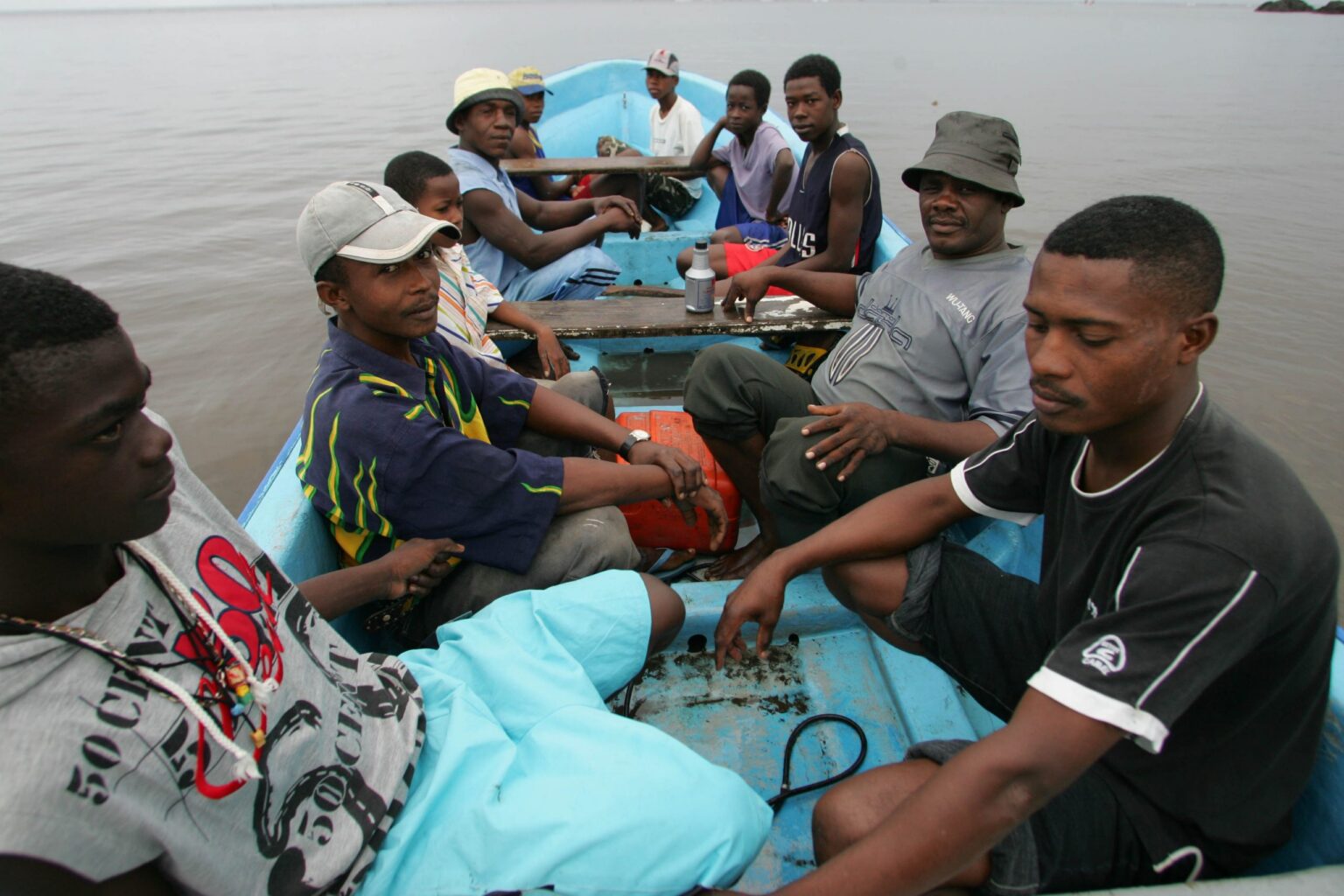
According to President Ikililou Dhoinine of the Union of Comoros, thousands of Comorian nationals have died in the last couple of years while trying to reach the disputed French “colony” island of Mayotte. Wanjohi Kabukuru looks at how the migration-driven crisis is as deep as the Indian Ocean surrounding the islands.
At last year’s UN General Assembly in New York, President Ikililou Dhoinine used his allotted speech at the plenary to lament the drowning of his citizens as a result of the risks taken in their quest to reach the French Indian Ocean island of Mayotte by all means necessary, which had resulted in what he dubbed the “world’s largest marine cemetery”.
According to Dhoinine, a French order that goes back to 1944, when Comoros was still a colony of France, explicitly demands that all Comorians wishing to travel to Mayotte must obtain a visa. This order, still in force today, is what has led to the attempts at illegal migration by Comorians seeking a better life, and the unnecessary deaths in the sometimes treacherous stretch of sea separating the isles.
“This visa, which has caused the death of more than 10,000 of my compatriots to date, makes the sea arm separating Mayotte from the other islands the largest cemetery in the world,” President Dhoinine told the assembly, revisiting the unending “Mayotte Question” that has never been resolved between Comoros and France. “Our common conscience compels us to act quickly.” He revealed that many boats sink each year between the Comoros islands and Mayotte.
For years the narrative has always been focused on the Mediterranean Sea, where immigrants have lost their lives while crossing to Europe. In the Indian Ocean the same scenario has been taking place for years without being in the international spotlight.
However, unlike in the Mediterranean, the Comorian case is littered with close blood relations and heritage ties. While the citizenry and economics may differ, every other aspect of culture, religious creed, familial ties, languages and traditions between Mayotte and its three neighbouring islands is similar. It is these binding ties that make the Mayotte issue unique and a political hot potato that is highly emotive to France and Comoros.
A majority of the Comorian immigrants pay huge sums of money to unscrupulous boat operators and human trafficking rings. They then converge in Anjouan – one of the three islands that make up the Union of Comoros – where the voyages are planned and executed. The trafficking rings promise to get the travellers into Mayotte undetected, mostly at night. Some of the suspense-filled journeys end successfully but others climax in sorrow.
According to Faiza Charif, who operates a hotel in Moutsamoudou locale, unlucky Comorians are always seeking a new life in Mayotte, which is seen as a superior alternative to Comoros. It has a more advanced education system, better quality public services and utilities, and a developed health system with myriad menial jobs available.
Houmi Ahmed-Mikidache, a Comorian political analyst who lives in Paris, France says the migration attempts happen because Comoros has had a high level of instability lasting several decades, which has led to the collapse of basic services. “Comoros is no exception to many other former French colonies in Africa, it ranks high on the list of countries that have experienced the most coups in Africa,” he says. “Considering the political instability created by the coups and the numerous vulnerabilities faced by small island states of Africa, it will take a long time before Comoros achieves the level of development needed to discourage its citizens from emigrating.”
Mayotte lies 60 kilometres away from the three main islands that make up Comoros, namely Moheli, Anjouan and Grand Comore. Even though Mayotte is an overseas department of France, Comoros considers this island as its territory and that is where the long-running political dispute begins and has lately festered into a humanitarian crisis.
To the French, Mayotte became its overseas department in 2011 thanks to the referendums of 1974 and 1976. However, Comoroians view it as a French “colony” and treat the “Mayotte Question” as unfinished sovereignty business with Paris. Comoros has vowed never to relent in its push to take the island back from the European Union.
Both Mayotte and Reunion islands are French departments in the Indian Ocean enjoying the same laws, benefits and subsidies as mainland France. There are other islands within the Indian Ocean which are French isles, such as Glorioso, Tromelin, Iles Sparses, Juan de Nova and Bassas de India. Some of these island territories are disputed by countries such as Madagascar and Mauritius.
Comoros is situated in the Mozambican channel in the Indian Ocean. Its neighbours include Tanzania, Mauritius, Madagascar, Seychelles and, of course, Reunion (France). While the image of island nations invokes sun-kissed beaches, high-priced resorts and tourism dollars, the same cannot be said of Comoros. Old, tired, smoke-sputtering jalopies are what pass for vehicles along the streets of Comoros in Grand Comore.
The majority of houses are shacks that are badly constructed and ill-planned. Poorly maintained roads, a strained water and sewerage system and an unreliable electricity supply make for everyday struggles in all three of the islands that make up the Union of Comoros. From the hardy locales of Chezani, Assimpao, Miringoni, Dindri, and Djandza among others, the images and stories show a resilient people closely knit by communal ties who could do better with a little support from government.
Away from the statistics from all the major international financial lenders, a visit to Comoros gives enough evidence of the perennial difficulties faced by locals. The country is held together not by the government per se but by strong communal ties which pull people together. It is only in the last seven years that a semblance of stability has been felt in government, as the country has had to endure close to two dozen military coups, mercenary incursions and secession threats.
Flying from Moroni’s Prince Said Ibrahim International Airport in the Comorian capital to Dzaoudzi Pamandzi Airport in Mayotte takes forty minutes. By ferry and boat it is slightly more than an hour and a half depending on sea conditions. For a Comorian to travel the 60km journey to Mayotte either by sea or air, they need the French Schengen visa which is not easily granted by the French authorities.
As a result of their desperation, many Comorians opt to use illegal night boats to migrate to Mayotte, which ends in fatalities and most often arrests and forceful return.
Is there hope?
Many hope that the Comoros economy can pick up faster, following the positive signs begun in 2011, with the gains trickling down to the people.
Within the five-country regional bloc, the Indian Ocean Commission (IOC), Comoros and Madagascar are seen as the odd nations. The paradox of the two is that they are wracked by poverty and instability, but agriculturally rich, and endowed with massive wealth in marine resources and possibly hydrocarbons, besides having immense untapped tourism opportunities.
By contrast, Seychelles, Mauritius, Reunion and Mayotte are viewed as High Income nations with services that are on a par with parts of some developed nations. “Governance has played a big role in making most Comorians look to France, which coincidentally was its colonial master,” Ahmed-Mikidache says. “But also remember that many people in Comoros see the instability in their country as being the work of the French.”
Ahmed-Mikidache’s conclusion of French interference is an open admission that one gets everywhere in Comoros. The French government has however distanced itself from the allegations.
A Working Group of the Geneva-based UN Human Rights Council visited Comoros in May this year, and their report released in August noted that the Mayotte issue remains a key concern that seems to hold back Comoros’ development.
“The question of Mayotte is today still high on the country’s political agenda. The comparatively higher standard of living enjoyed by the inhabitants of Mayotte is a factor that still influences the lives of Comorians, with many of them attempting to reach that island in the hope of a better future,” the report says.
It adds: “However, inhabitants of Comoros cannot currently travel to Mayotte without a visa, which is difficult to obtain. The Working Group was told that, as a result, large numbers regularly try to cross the sea from the neighbouring Comorian islands, in particular from the island of Anjouan. According to reports, many of them are returned forcibly or perish in the attempt.”
According to Ahmed-Mikidache, the “Mayotte Question” is at the centre of most of Comoros’ troubles, with France’s hidden hand behind mercenaries and calls for the breaking up of the nation into its constituent islands. In general terms Mayotte remains an attractive alternative to many Comorians, who are willing to risk their all for a life in the French Indian Ocean island.
This viewpoint is loudly repeated by the UN report. “The consequences of that difficult past should not be underestimated. The question of Mayotte and successive governments’ use of force and violence to seize power created an environment in Comoros that was ripe for long-term political instability. This had a profound impact on the daily lives of Comorians and created a vicious circle preventing the country’s development,” the report notes.
“Many people believe, for example, that France was involved in dispatching mercenaries such as Bob Denard to Comoros in order to overthrow successive governments, exacerbate political instability and divert attention from Mayotte. In their opinion, destabilisation was used by mercenaries to bolster the view that independence, rather than being a source of progress for Comoros, was the cause of crises and impoverishment.”
Relative stability has now settled in Comoros after the unprecedented peaceful handover of power by President Abdullah Sambi to Dhoinine in 2011, following a change in the constitution which now caters for a rotational presidency among the three islands.
Previously, the nation had to endure more than 20 coups since independence from France in 1975, and looming threats of secession by Anjouan and Moheli, which felt disenfranchised in the sharing of resources that were skewed in favour of Grande Comore. During that time, development in terms of infrastructure, health services, public transport, electricity supply and other public utilities have been undermined severely, for lack of a stable government.
The African Development Bank (AfDB) projects a 4 per cent growth in Comoros’ economy this year due to political stability, which has translated into a better performance in the agriculture, tourism, retail, banking and construction sectors. Last year the Comorian economy grew by 3.6 per cent.
Economic opportunities in the Comorian territory and exclusive economic zone have inspired emerging interest from countries such as China, Iran, Japan, the UAE and India, increasing attention in the archipelago, especially with the offshore hydrocarbons discovery in Mozambique, Tanzania and Kenya’s territorial waters.
Even with improved stability and foreign economic investments flowing in, the problem of boats capsizing off the coast of Mayotte cannot be ruled out. According to the UN body a real danger of history repeating itself exists, if the “alleged responsibility of foreign powers regarding the role of mercenaries in Comorian history” is not acknowledged. One of the key recommendations of the UN to the Comorian government is for an honest and dispassionate historical review “in order to establish a link between the past and its consequences, which are hampering national development.”