Mozambique dropped off the tourist map in the 1970s after its 20-year-long civil war broke out. Two decades on, the country is peaceful, and thanks to recent discoveries of gas and coal the country’s capital, Maputo, is also modernising at startling speed. Sherelle Jacobs paid the city a visit, and reports for New African.
Combine Maputo’s formidable arts scene, enticing seafood culture and spirited history, with people in the Mozambican capital and you have one of the most accessible and exciting emerging cities in Africa.
I had an epiphanic moment lying on a sunbed by the huge pool at the Serena Hotel in Maputo. A tall crane was puncturing my otherwise perfect view of a brooding sea, blue sky and wispy clouds. It was the same crane that had invaded the ocean view from my hotel room.
That crane sums up where Maputo is right now. Mozambique’s capital city is a natural beauty – an overlooked coastal gem on the Indian Ocean sprinkled with colonial buildings and tributes to art deco, and blessed with a flamboyant arts scene.
But Maputo is also undergoing a dramatic transformation into a more bustling, cosmopolitan place as the economy mushrooms. That made it a thrilling place to spend a few days.
Maputo is teeming with good art and architecture
I anchored my stay in Maputo at the iconic Serena Hotel. Built in the 1920s in the neo-classical style, and nestled in four acres of well-kept grounds in the centre of Maputo, Serena is a grand dame. Its conservatory is an ideal place to unwind over a Portuguese white port after a hard day’s exploring.
So is its top-notch French fine dining restaurant, Delagoa. My room was spacious and elegant with a comfortable bed.
A good night’s sleep and downtime at the end of the day was crucial for exploring Maputo. The city does not get that many travellers, but the small number of tours that are on offer are quirky and high quality.
Maputo is teeming with good art and architecture, and the best guide for any English-speaking traveller is Jane Flood, a British expat and art enthusiast who has lived in the country for many years. She has an encyclopaedic knowledge of Maputo’s artists and buildings.
During my afternoon Art Safari with Jane, a small group of us traced Maputo’s hidden art deco buildings. Some are very hidden – nestled in the shadows of the impossibly tall skyscrapers that are springing up everywhere downtown.
Highlights in Maputo include an art deco outdoor swimming pool and the still functioning art deco lift in Casa Rubi, which used to be the city’s tallest building. Other architectural treats include Maputo’s railway station, designed by Gustav Eiffel and proclaimed by many to be one of the most beautiful in the world.
The station also features a jazz nightclub in what was probably a colonial-era first class waiting room.
Art is everywhere in Maputo. It is difficult to peel your eyes away from the organic, modernist Smiling Lion building in the old Bairro Militar, designed by the renowned Portuguese architect Pancho Guedes.
Spotting the hallucinatory murals by the legendary Mozambican artist Malangatana located across the city became a bit of a game – including one in a telecommunications company’s office and another outside the natural history museum. A trip inside the latter is recommended if only for its intriguing collection of elephant foetuses.
Painters and sculptors
The last stop on my Art Safari tour was a visit to a local artist’s workshop. Accomplished painters and sculptors like Goncalo Mabunda, Reinata Sadimba and Victor Sousa regularly open their doors on Jane’s tours.
I was lucky enough to meet the latter in his studio – a converted garage next to his house that was a treasure trove of half-completed canvases, brushes, bric-a-brac, carvings, masks and a treasured photograph of Bob Marley. Tina Turner was booming in the background as Victor, clad in a red vest and check shorts, explained his very instinctive attitude to creating art.
“I don’t have a particular plan or follow any real theme. I just start painting and see where it takes me,” he mused, leaning casually on one of his rickety wooden worktops.
Mafalala’s history
For an insight into Mozambique’s anti-colonial struggle and a flavour of how many urban Mozambicans really live, I also spent one morning doing a two-hour walk around the informal settlement of Mafalala in central Maputo through Iverca Tours.
My guide Nery Pires Cossa, an energetic recent school-leaver who is also a native of Mafalala himself, recounted its history as a kernel of resistance during the liberation struggle.
We lingered outside the house of the famous poet Noémia de Sousa, trying to get a glimpse over the tall walls surrounding it, as Nery explained how the mixed race Mozambican, born in 1927, wrote poems attacking Portuguese rule.
De Sousa held secret meetings with the equally anti-colonial José Craveirinha in Mafalala. Craveirinha, who lived in the settlement too, is considered the most talented Mozambican poet of all time.
We similarly stopped outside the mint-green house made of zinc sheets where the nurse Samora Michel treated patients. He was to become the country’s first president on independence.
During the civil war Frelimo held covert meetings in the same house, apparently stashing guns under the floorboards.
Mafalala today is a rugged district. We ambled through tangled, narrow alleys with shacks made from rusting corrugated zinc.
The neighbourhood is poor, but it is safe: Children interrupted their games to ask if we would take their picture. Adults acknowledged us with reticent politeness, going about their business.
We walked through one of Mafalala’s schools, and passed its main market, the crumbling trestle tables heaving with everything from carvings to traditional medicines.
The climax of the tour was a performance of the Macua “rope” dance by local ladies, originally from Nampula province in the north. They dressed in blue traditional print, and had carefully decorated their faces with dots of white cream.
The dance, powered by beating drums and the women’s own voices, which involved skipping over a rope at one point, is said to be a tribute to ancient seafaring traditions in Mozambique as well as a commentary on modern life in Mafalala.
Prawns as big as bananas
I decided to tackle Maputo’s culinary scene without a guide. Mozambique has little to no reputation in the food stakes – but that is a huge oversight. It is a coastal city and the quality of the seafood reflects this. Even in the capital city you can expect prawns as big as bananas and large, fresh flavoursome lobster.
Anticipating dirt-cheap “African” prices will lead to disappointment, but seafood is still noticeably cheaper than in Western restaurants and the portions more generous.
One of the best seafood treats in Maputo is MarNaBrasa, a restaurant on Avenida da Marginal that has a local reputation for its excellent and affordable seafood platters piled high enough to share. The red and white decor might be a bit flashy and the muted televisions on the walls, which are often showing premiership football, are a bit odd.
But this melted into insignificance, however, when the waiters presented myself and my fellow diners with two sharing plates of langoustine, calamari, prawns and lobster piled into elegant mountains.
Their pitchers of passion fruit caipirinhas (a sugar spirit or rum cocktail) also went down well on my table. The Portuguese influence on Mozambican cuisine is strong. Restaurante Taverna on Avenida Julius Nyerere is a cosy rustic taverna serving high-quality Portuguese dishes, including a mean bacalau (a salt cod speciality).
Maputo’s food scene is becoming increasingly cosmopolitan however, and Asian restaurants in particular are booming. Head to the InterThai restaurant downtown on Rua Mateus Muthemba to taste Mozambican seafood infused with Eastern flavours – in the form of pad thai, otherwise known as kway teow pad thai, (stir-fried rice noodles), or mixed tempura (battered and deep fried delicacies), for example.
At ASKA Japanese restaurant on Avenida 25 de Setembro, they offer local langoustine sashimi (sliced, fresh, raw fish) served in the shell.
Maputo’s bar and club scene is also gaining momentum as youthful Mozambique gets richer. The club “Coconuts” on Avenida da Marginal is legendary. It has a chill- out lounge, the music is predominantly hip-hop and on a busy night the queue to get in goes all the way up the road.
On the same strip, the waterside late-night bar at Dock’s is also popular with well-heeled locals – especially for “prawns and jazz” night on Thursday. A tamer evening can be enjoyed at the Associação de Músicos, which has concerts by local artists on its patio in the back.
Weekend getaway
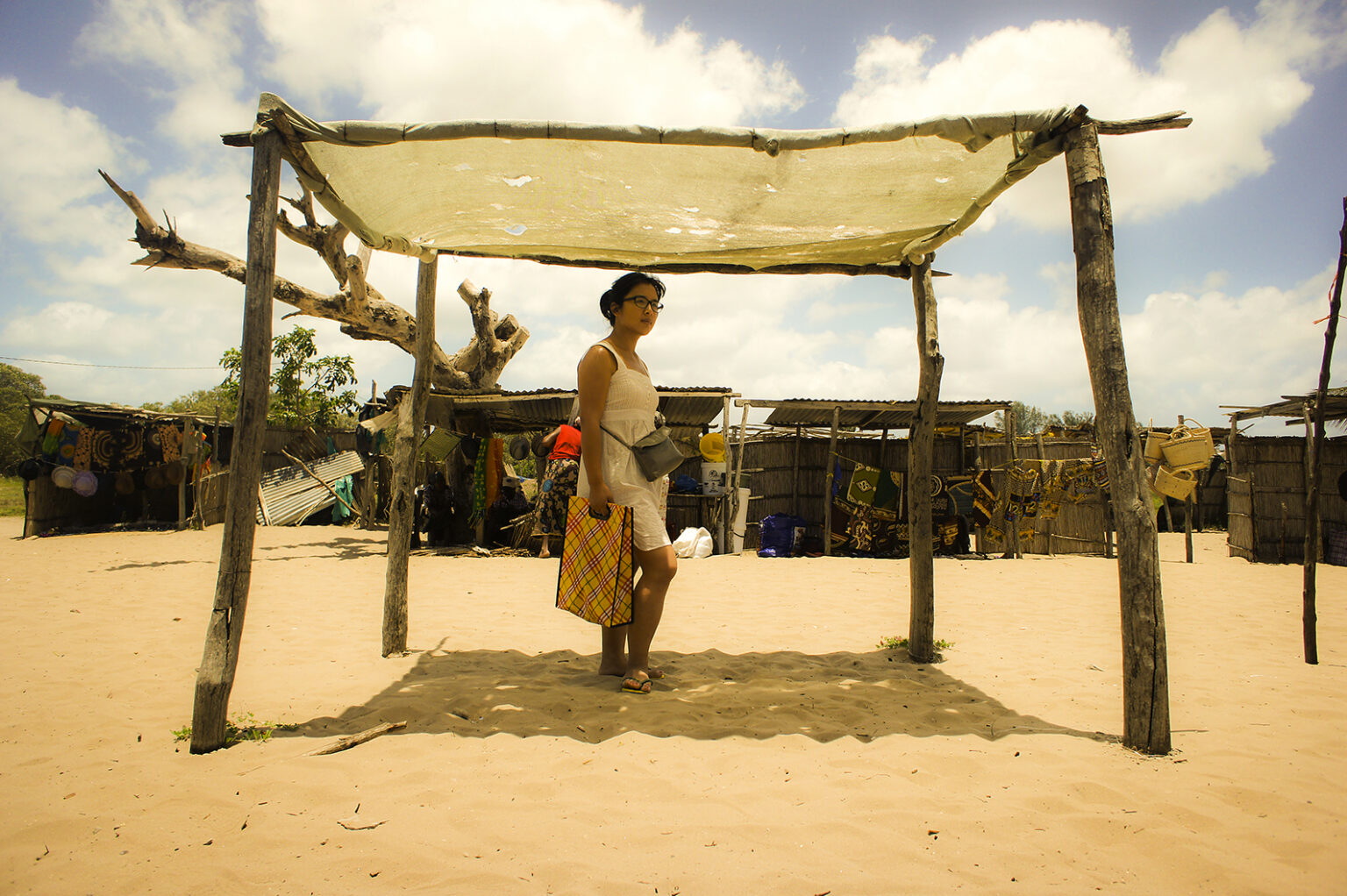
A popular and easy weekend getaway for visitors to Maputo is the island of Inhaca. It is a two-hour ferry ride from Maputo. Inhaca is underdeveloped as a beach resort – a general reflection of Mozambique’s embryonic tourist industry.
Although the beaches are clean with yellow sand and a turquoise sea, the island has a ramshackle wildness; there are bubbling patches of swamp and sprawling marula trees off the pathways as you walk inland. Strolling across the island I passed less than half a dozen people.
Inhaca’s one hotel, Hotel Pestana, is a rustic outfit with clean rooms in cute huts and a popular swimming pool. Watersports, including snorkeling, parasailing and waterskiing, as well as scuba diving and big game fishing, are all possible on the island.
Inhaca has cheap, good seafood in abundance. I dined on lobster and calamari at Erca Bar, a basic but clean establishment often overlooked by tourists who tend to go for the pricier Café Lucas restaurant just opposite. I went back for a late breakfast the next day and ordered the same!