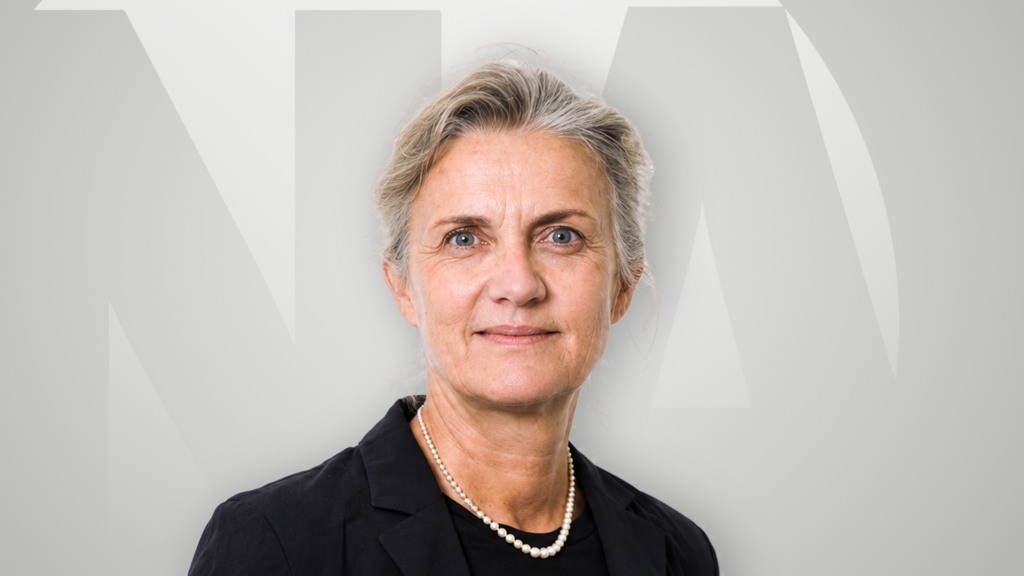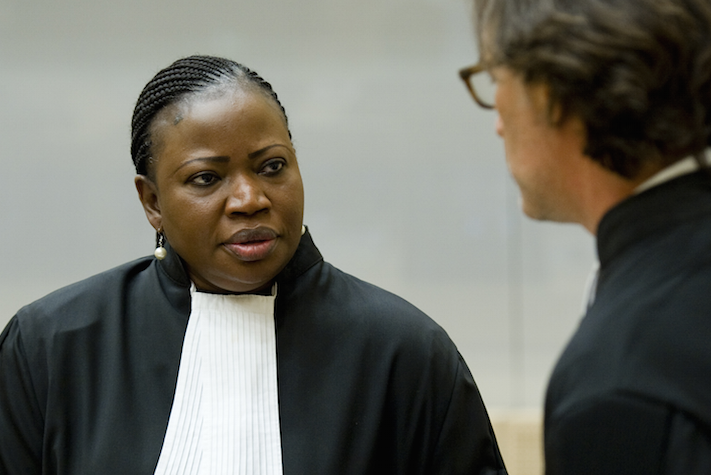
Criticism of the International Criminal Court continues to grow in Africa, but chief prosecutor Fatou Bensouda is adamant that the court has a role to play in ensuring justice for the continent’s people.
In the first of a two-part interview in Dakar, Sheriff Bojang Jnr asks Ms Bensouda about the reputation of the court, its achievements to date and the collapse of the case against Uhuru Kenyatta.
NA: Mrs Bensouda, thank you for this interview. To start with, your coming to Dakar coincides with the opening of the Hissène Habré trial. What does this mean for African justice?
Fatou Bensouda: I would like to emphasise that my being in Dakar is to attend a conference that has been organised by the Minister of Justice and Garde des Sceaux, Mr Sidi Kikaba, in his capacity as President of the State Parties of the International Criminal Court. But it coincides with the start of the trial of Hissène Habré, which I believe is a very significant step by the AU and Senegal towards ending impunity in the country.
The trial also shows that Africa is ready and able to try its leaders or those who perpetrate these very serious crimes against innocent victims [Habré is accused of crimes against humanity, war crimes and torture]. The crimes that took place in this case were before the ICC was established so we do not have jurisdiction but I think that we should respect the issue of complementarity [whereby the AU has become involved]. So for me this is not only significant for Africa but also the world over, showing those who perpetrate these crimes that it is not a matter of whether, it is actually a matter of when they will be brought to trial.
Q: So it is a wake-up call to any African leader?
In fact it is a message to everyone who would perpetrate these serious crimes, war crimes, crimes against humanity and genocides. That the age of impunity is over, the age of committing these crimes and going free, having golden exiles, is over.
Q: To what extent does the Hissène Habré case pose a threat to the ICC’s ability to try African leaders at The Hague?
Firstly, I would like to emphasise the complementarity principle and also to stress that the ICC was not established to replace national jurisdictions. It was actually established to complement national jurisdictions. Which means that if the domestic jurisdictions are taking up their responsibilities, then the ICC would not get involved. So this has to be clear: we are not jumping in to take over cases. There is a system that has been put in place for the ICC and for member states who have signed and ratified the Rome Statute that means they have to take this responsibility seriously. If they are able and willing to do so, the ICC will not become involved and that’s how the system is meant to work. We need to take that into account.
Q: The Extraordinary African Chambers here in Dakar not only seeks to serve justice for the alleged victims of Hissène Habré but also recommends some strong reforms in Chad for the future. Is this something that the ICC might want to emulate?
I just want to make one clarification – that it’s not a question of the ICC emulating. It is actually what the ICC system is all about. Firstly, these crimes – war crimes, crimes against humanity, genocide – are considered by the international community to be crimes that shock the conscience of humanity. It’s not a question of emulating what the AU has done with Chad, it’s already the ICC system and if this is understood, you will see that we are intervening only where a jurisdiction has been met and nothing has been done to take up that responsibility.
Q: And Mrs Bensouda, let’s take a trip down memory lane. Coincidentally, the ICC is 13 years old [the Rome Statute entered into force on 1 July 2002]. What can Africa look back on over the last 13 years, saying thank God for the ICC?
I believe that we have taken our responsibility towards Africa as a continent, and to the individual countries that have looked to the ICC to investigate these crimes, very seriously. The reason behind the establishment of the ICC, first and foremost, apart from ending impunity for these crimes, was also to give the ability to states to be able to refer [cases]. If you look at our cases now, people just talk about the ICC being in Africa, but they don’t bother to know how the ICC has [come to be] in Africa. That is because African states have actually requested the ICC come. I always say that as this is the case, Africa has again been taking leadership in International Criminal Justice.
So all these cases that have been referred from Africa, I’m not saying that the ICC wouldn’t have worked if we did not have such referrals, but definitely it has made an impact, it has shown that the ICC is ready, it is willing to take up the responsibility, it is willing to work with African states and it is willing to address the issue of impunity in the continent as it would elsewhere.
Q: Would you say that Africa is a better place today when it comes to impunity and all such matters, because of the role of the ICC?
As I said, I believe that the African countries have taken that responsibility quite seriously. Even where they have not referred the situation to the ICC themselves, we have African countries sitting at the UN Security Council and supporting its referrals to the ICC. What this demonstrates to me is that instead of taking to the gun we are looking to the Rule of Law to address these crimes that are going on in our respective territories. I think there is a lesson that other states, not only in Africa, but that are part of the ICC elsewhere, should look at this responsibility that African states are taking by coming to us, and requesting the intervention of the ICC.
Q: It’s good that you mentioned not only Africa, but other places in other parts of the world. African leaders and the AU in particular often accuse the ICC of a certain amount of racism, referring to the ICC as a tool of Western colonialism because they say it only targets Africans. The last time I interviewed you and raised this issue with you, you were unapologetic. But let’s face it, your predecessor Luis Moreno Ocampo had focused on all these cases on the African continent regardless of their undisputed gravity. Can we expect you, Fatou Bensouda, to mostly democratise the dock by looking elsewhere for serious crimes?
I think, Sheriff, we really need to be very serious when we are talking about these issues. We need to look into why the ICC is intervening. We need to remind ourselves of the resolve of the international community, [and that] of states which are part of the ICC, of the need to have justice, of the need to end impunity. We need to remind ourselves that this is not about geographical considerations, or about geographical balance. This is about doing what the law says.
So, this idea of saying that because you have these cases here therefore you must have these cases [over] there, really it’s – if I may say so – it is even irresponsible on our part. We cannot disregard the fact that before we intervene in any situation – and here I am referring to examples such as the UN Security Council referrals of Sudan and Libya – we make our independent assessments as we always do before the ICC intervenes. This criticism, that this is a white court, well, first you have to see who the members of the ICC are – they come from across the world but in Africa, you have 34 countries that are part of the ICC. How can that be a court that Africa is not a part of? I think they should be commended for this instead of being [implicitly] criticised by those who say the ICC is only targeting Africa.
Q: Are these criticisms not gaining momentum on the continent? We’ve seen the collapse of the case against President Uhuru Kenyatta and then the ICC’s quest for South Africa to get Sudan’s President al-Bashir arrested at the last AU Summit fail. Are you concerned that some of the African member states, or at least,
the majority of them, will turn their back on the ICC and opt out?
This relates to the issue of the future of the ICC and I want to emphasise that the future of the ICC is not only in Africa because while 123 states are part of the ICC, 34 of those are African and the rest are from elsewhere. Sometimes as a prosecutor I have to take tough legal decisions. In the case of Mr Kenyatta, it was about taking a decision like a responsible prosecutor would do. I go to court, and I take cases to court based on evidence. If that evidence is no longer available, if that evidence has been eroded, it would not be responsible to say that the case should continue.
And I think I have been quite vocal in giving the reasons why the evidence that we relied on, to even confirm the charges, became so eroded. We experienced an unprecedented level of witness intimidation and witness interference in the case, and also we’ve seen the level of cooporation that the ICC needs to be able to put these cases forward. If my office is able to get evidence in the same form or in a different form, there is nothing to stop the case from being brought before the judges again.
With respect to South Africa, again we did what we are supposed to do. Member states of the ICC have a responsibility, a legal responsibility, to arrest, to support the court, to cooperate with the court including to arrest fugitives who happen to find themselves in their territories. So that responsibility is really South Africa’s in this case.
Part two will be published online on Thursday 10 September