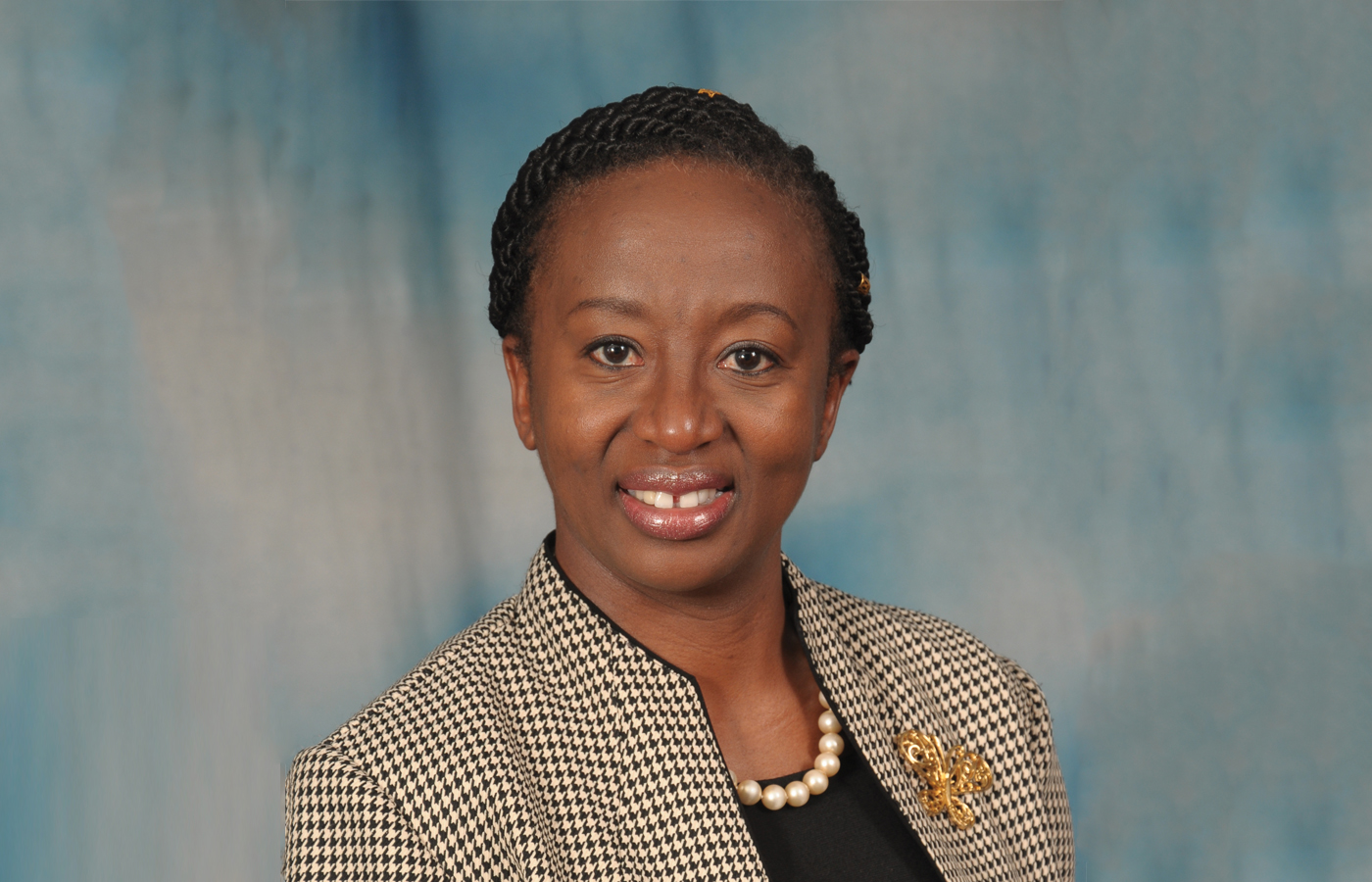
On a normal Monday evening in Nairobi, when close of business is approaching, the average office employee is most likely clock-watching, waiting for the working day to finally come to an end. But when you are one of Africa’s most successful woman entrepreneurs, there is little time for being lethargic. JP O’Malley speaks to Kenya’s Eva Muraya
Eva is getting ready to leave her office when we begin our chat. She is in high spirits and full of optimism.
“It is a beautiful time for me to be alive and well in Kenya,” says the woman who is Group CEO of Nairobi-based Brand Strategy and Design (BSD), and is a founding partner of Colour Creations Africa, whose board she is a member of.
“Color Creations is the more mature business that I have been involved in. We produce branded merchandise that we embroider and screen print. Our client base varies: it includes the UN, other not-for-profit organisations, the government of Kenya, and the private sector,” Muraya explains. Last year Color Creations Africa Ltd had an annual turnover of $1.5 million.
“Four years ago I decided that I was looking for a new challenge, so I diversified into a more strategic level of brand building. This is how I incorporated Brand Strategy And Design (EA). This company essentially focuses on governing insights around brands. We ask questions like: what is it that keeps brands ahead of their competitors? And how can they develop where there are opportunities? So once you figure out where your brand is at, our job is to figure out where your brand could be, based on our research.”
Eva believes that the new constitution in Kenya is finally recognising that women hitherto have been disenfranchised and also that a seismic shift is currently taking place in African politics.
“In the post-colonial era, Africa has not had excellence in demonstrating sovereign leadership. While that much is clear, I also know that in Africa, historically, we have developed leaders who were about their people, and serving leadership. I do also think we
need to currently fix the model of leadership within many countries in Africa. But this is already beginning to change across the continent. True leadership is driven by the needs of the people, as opposed to the needs of the leader.”
She adds: “When we are talking about leadership in this context, we’re not necessarily talking about a president or a prime minister, for example. It could be something as simple as: what are you doing in your family situation to bring about a transformation? So then you begin to ask: what are you doing in your immediate community? What are you doing in your neighbourhood? As one begins to break down the components of leadership opportunities, you see that it’s service that is the driving force behind this. It is not rulership, which sounds archaic, dictatorial, negative, and autocratic.”
While Eva’s optimistic nature with regards to Kenyan, and African politics, should certainly be commended, the tone she begins to apply to the conversation diverges into the world of marketing speak. “When I talk about politics, I often refer to it as brand building. So for you to successfully build a brand, you must be in a position to respond to the intrinsic needs of what your consumer is looking for. When you make your consumer direct to you, then you are most likely going to be more successful because you are meeting an explicit need.”
This sort of talk isn’t surprising given Eva’s profession. She confesses that she “caught the marketing bug” while working for BAT (British American Tobacco) in the 1990s. It was here that she learned the ropes in the “science of brand building”. She then worked for eight years at FedEx, where she helped grow the brand throughout East Africa. She then built brand profiles for The Standard Group, Block Hotels, and Xerox before starting her own company. Following the merger with Taurus Afrika, which she co-founded in 2001, she was appointed CEO of Color Creations Ltd in 2002. Eva says that there is often a misconception portrayed around people who start their own business – an idea that a CEO does nothing but delegate work in a company.
“Many people think that when you become an entrepreneur you are in a swivel chair, simply calling the shots in the business. The stark reality is quite different: you need to work in a very smart capacity because the odds – especially in an African business environment – are against you.” When Eva started out as an independent businesswoman back in 2001, the Kenyan economy was not very conducive for an ambitious entrepreneur, she says. The chalhalf lenges were enormous, but she learned how to deal with them on a daily basis. This initial struggle may have added to the strong sense of business acumen that she possesses.
“When I began my business it was very difficult for an entrepreneur like me to access credit, technical support, or market information, in a convenient way. But in Kenya today, thankfully, that situation is now changing. There is currently a lot of support available to assist entrepreneurs. We are still not in an ideal situation, but the support is there, at least. “In terms of policies, the current environment has significantly embraced the value of what the SME (Small Medium Enterprises) can do to accelerate economic progress. I am also hopeful that the new government is only going to improve on the economic environment that has been built up in the last ten years.”
Last February, Muraya was given the privilege of delivering the opening keynote address at the 15th Annual African Business Conference, which was held at Harvard University in the United States. In her speech she declared that: “Investing in women has become smart economics, but investing in girls, and catching them upstream is even better, and smarter economics.” Muraya maintains that if adequate resources can be invested in educating girls, across Africa, from primary level onwards, the continent will be laying a solid foundation for future generations. Taken to its logical conclusion, she says, this tactic will be a massive wealth creator.
“The reality of the demographics of Africa is that 27% of our citizenry across the continent are young. For us to target that potential, we must invest in them now. We need to nurture young girls to become the scientists, strategists, lobbyists, or economists,
that they have the potential of being.”
“If we tap into this potential, it will ultimately benefit all of Africa. The reality is that up until now there have been unfortunate prejudices that have kept these girls from thinking they are inferior. I think African women can dream to have whatever job they wish for, without necessarily giving up the role they play as nurturer or mother.” Muraya has certainly put her money where her mouth is on this issue. She currently chairs the board for the Zawadi African Education Fund. Her role is to drive the organisation in helping to develop young African girls into leaders. She also co-founded the Kenya Association of Women Business
Owners (KAWBO), where she currently serves as a chairperson. It was set up to create a forum where women-owned businesses in Kenya can discuss their businesses and swap ideas. Eva describes herself as a “glass half-full kind of person”. She hopes for the
sake of Africa, that members of the diaspora can share her enthusiasm, and return to the continent to contribute to the changing social, economic, and political environment.
“In Africa now the tide is turning, and there are many emerging opportunities. We need some of the best talent, and much of that resides in the diaspora. I am advocating that more Africans in the diaspora consider coming back to see how they can best fit into the opportunities that are currently available.
“But we need to have the guts to believe that we are as good as we truly are, and to completely reinvent the way that we think about ourselves. We can contribute just as much to the world, as the world can contribute to us. We really must not be casual, and we must believe in the potential there is for this beautiful continent once again.”
She concludes: “We are very talented people. We now have an excellent opportunity to flag our authority and skills to the rest of the world. We need to realise, as African people, that we can fix some of the situations on this continent. But the solutions
must come from us.”