Many African countries are still mired in old economic systems based on commodities instead of planning for a rapidly changing continent. Desmond Davies reviews a new book that provides an analysis of the region’s economic fault lines and how to address them.
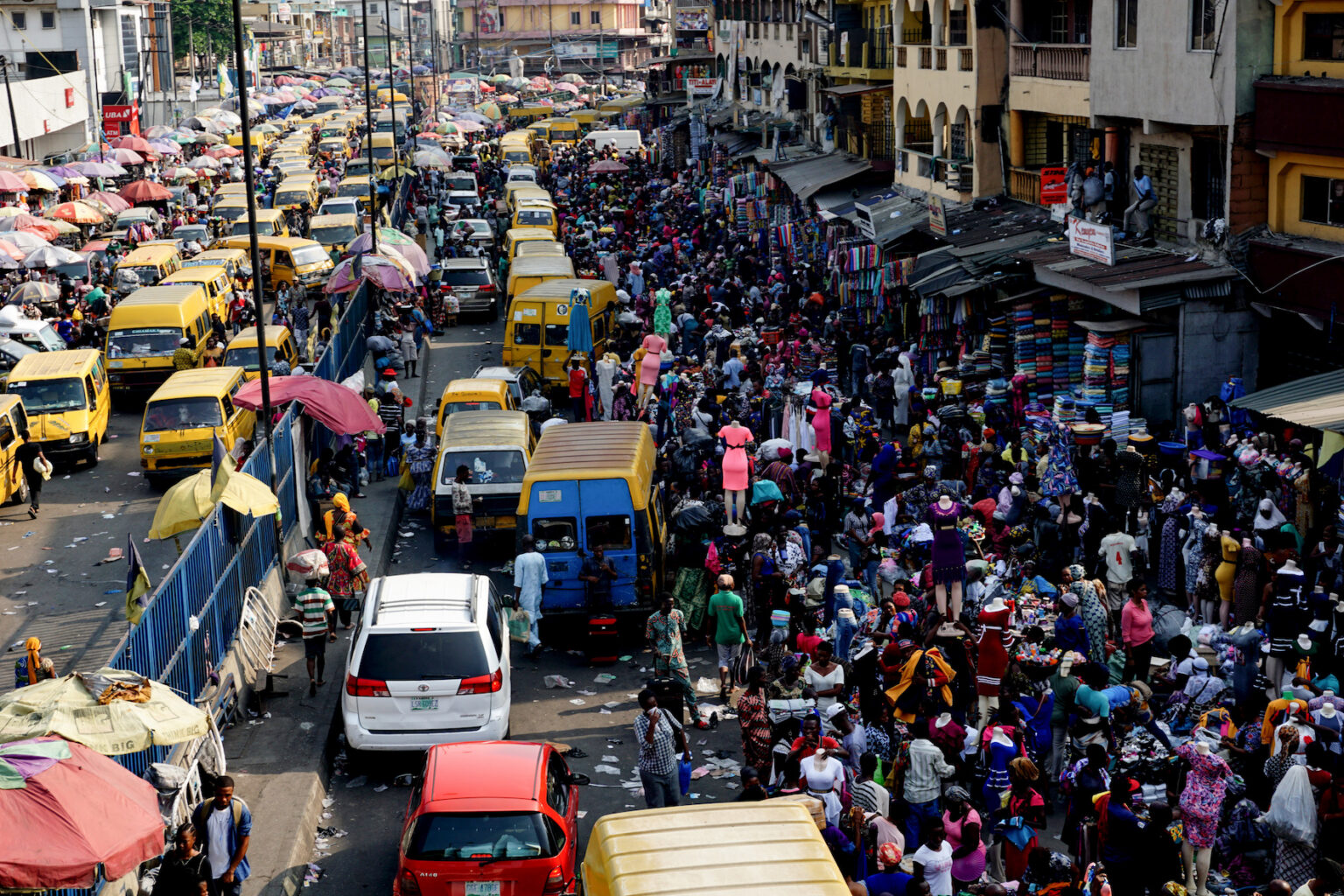
It is not going to be business as usual, they warn, if leaders fail to grasp the magnitude of three major challenges that Africa will face by 2045: a doubling of its population to two billion; rapid urbanisation, with more than half of this figure living in cities; and young people under the age of 25 making up the bulk of this burgeoning urban population.
The authors of Making Africa Work – Greg Mills, Jeffrey Herbst, Olusegun Obasanjo (former President of Nigeria) and Dickie Davis, all experts in their own right – believe that if African leaders plan properly for these momentous changes, they could positively alter the socio-economic climate in their countries. But if they cannot provide economic growth and jobs, the social and political repercussions will be catastrophic. So, if these leaders want to stay in power, the authors say, they will have to find a more dynamic means of promoting growth.
Making Africa Work, to a large extent, provides solid examples of how African leaders should go about changing the face of their countries. This handbook does not contain abstract ideas; it is replete with practical examples of how other countries have extricated themselves from socio-economic poverty. Take, for example, the city of Medellin in Colombia. It once had the highest rates of violent crime in the world, with nearly 7,000 murders a year when drug baron Pablo Escobar was operating in the early 1990s.
When President Alvaro Uribe came to power in 2002, he introduced innovative security arrangements that reduced violent crime, while at the same time introducing a massive urbanisation programme that changed the face of the city.
The authors note: “Medellin was, not too long ago, synonymous with a level of anarchy that even the most challenged African cities have yet to achieve. However, a dedicated government with a comprehensive security, economic and infrastructure plan was able to turn around a situation that many had deemed hopeless. The critical ingredients are the recognition [of] the severity of the situation and the leadership taking responsibility for both the problem and the solution.
“The positive lesson for African leaders from Medellin is that change can happen and even extraordinarily difficult situations can be addressed in a relatively short period of time.
“Positive change in an urban environment affects proportionately greater numbers of people than in the rural areas, and in so doing releases considerable entrepreneurial dynamism and economic growth.” This is obvious.
Are African leaders up to the job?
Take African leadership itself, which the book looks at in detail. Are African leaders really up to the job of running their countries? Are they ready to ‘use democracy to instil a disciplined nationalism [to explain] the country’s development path’? Are they ready to pay attention ‘to the details of governance’? Crucially, as the authors ask, are ‘strong leaders ready to delegate authority’?
Again, the solutions and examples proffered by the authors are plentiful and obvious. So, one wonders why African leaders have not picked up on these positive changes. Many of them think that getting to power is the end of their political quest, rather than the start.
By 2045, Nigeria’s population is expected to reach 450m, with 80% living in cities. Lagos takes in 86 citizens from other parts of the country every hour; and each year the birth rate is increasing the population by 1.5m. This is the expected trend in other parts of Africa and by the middle of this century, African cities will be centres of immense competition for jobs and housing.
How do you create jobs when governments do not provide the right environment for attracting foreign direct investment? The authors contend that Africa, with its low costs, is ripe for FDI. “Governments should tackle bureaucratic delays and reduce opportunities for corruption, as these are essential elements of setting the business environment for success,” the authors note.
But then there is the small matter of infrastructural development. Electricity capacity in general is low in Africa, with over 600m people lacking access to power. African countries are putting the cart before the horse.
Year in, year out they send trade delegations abroad to tout for investments. But the return has been low. The initial excitement of higher than average return on investment is quickly dampened when discussions turn to electricity. The situation does not augur well for businesses that must spend a huge amount of money every year on generators to provide power to run the enterprises.
This is an added financial burden that foreign investors are at times reluctant to take on – thus inhibiting economic growth in Africa and stunting its development. Not surprising, FDI in Africa fell 3% in 2016, to $59bn.
Agriculture, too, is another neglected sector in Africa. The continent has 874m hectares of arable farmland, 60% of the world’s total. It uses only 43% of this with rain-fed potential while only 4% of an estimated 39m hectares of suitable agricultural land is currently irrigated. Not surprisingly, sub-Saharan Africa imports $68bn worth of food each year.
In Europe and later Asia, an agricultural revolution was followed by development. There is a lesson here for Africa, which could turn things round by focusing on the growing food market on the continent. The African Green Revolution Forum’s report released last month suggests that by 2030, this market could be worth over $1 trillion each year – more than minerals – and that this could restart the continent’s economic growth.
Avoiding tried and tested models
The million-dollar question is: why are African leaders not trying the tried and tested models of socio-economic development that abound in Making Africa Work? Kenyan politician Raila Odinga explains in the book: “As Prime Minister, I took a study trip to Singapore with six Ministers. That was the latest in many trips taken by the Kenyan government, about which no report was ever written, and where the participants kept everything to themselves.
“I said that this trip had to be different, that we had to translate our findings into actions. On our return, I asked for a plan of action from each minister on the basis of what they had learnt from Singapore, since there was no point in reinventing the wheel.” But by the time Odinga left power in 2013, “nothing further happened”.
This is a very comprehensible book, with best practices from Latin America, Asia and the more successful African countries such as Botswana that could be tweaked here and there for adoption in any country on the continent. It should be made widely available to the current generation, which will have to deal with failures among the present crop of leaders.
The message from the authors is stark: reform or perish. “Given Africa’s rising population and growing cities, inaction will ultimately end badly for all, even the elites. Africa’s leaders do not enjoy the goodwill that their predecessors from the fight for independence did: they will be judged solely on what they have delivered to their constituencies,” the authors warn.