
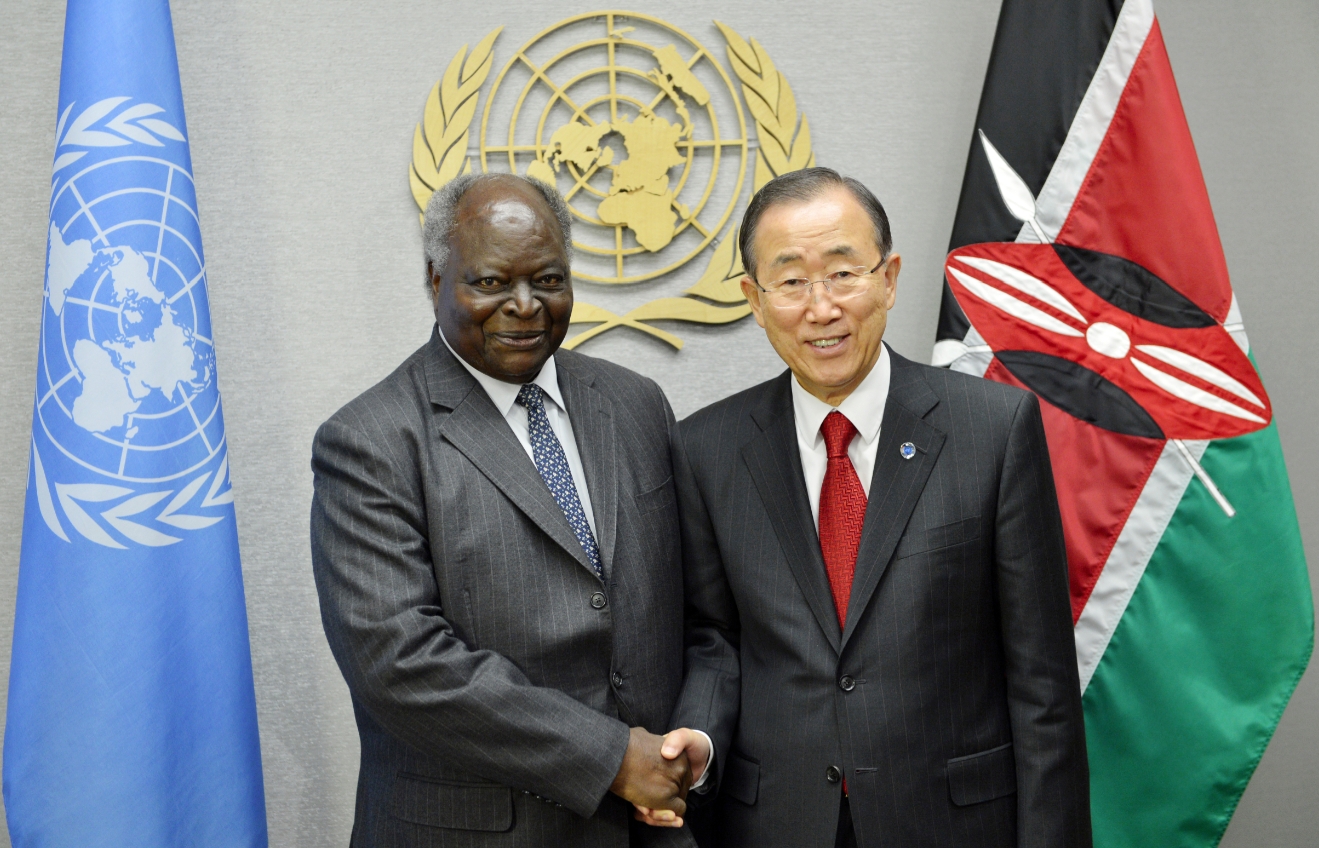
Macharia Kamau is a Kenyan representative at the UN headquarters in New York. Here he writes in a personal capacity about President Mwai Kibaki’s legacy, after the head of state gave his final speech as president to the UN General Assembly last month. Mwai Kibaki steps down after Kenya’s March elections.
President Mwai Kibaki led Kenya through a tumultuous 10 years that have left the country permanently transformed. Today’s Kenya is unrecognisable from the Kenya of his predecessor, former President Daniel Arap Moi’s pre-2002 era.
What is Kibaki’s legacy? While it is difficult to find anything positive to say about Arap Moi’s 24-year reign, most people are effusive about Kibaki’s legacy, one that he has had to earn through painful personal challenges and tragedies.
At the onset of his presidency, he suffered a life-threatening accident that led to repeated health and physical problems. He endured, as did the country, a fractious first-term cabinet, corruption scandals, a series of deaths and tragic accidents among close confidants, as well as cabinet and political allies. Most famously, he weathered the near-terminal events to his rule in 2007-08 during the post-election violence.
Many technocrats point to Kibaki’s record of skillful macroeconomic management and his prudent oversight of fiscal and monetary affairs that restored the nation’s image with the international community. The greatest legacy he left to Kenya was that he unleashed a multitude of entrepreneurial, innovative and investment spirits unseen before in the country. This, in turn, led to sustained economic growth and a quadrupling of government revenues and the gross domestic product.
Civil society groups, international humanitarian and development agencies speak highly of Kibaki’s early achievement in opening up Kenya’s schools to over 1.2m children, who had been kept from education by bad governance and punitive school fees. Equally important, during the past 10 years, Kenya’s life expectancy has increased by five to seven years as HIV/Aids, among other diseases, have been beaten down and access to healthcare, treatment and drugs has improved.
Most Kenyans will also point to the transformative infrastructure projects of roads, energy, electricity networks and fibre-optic cables that now crisscross the length and breadth of the country; an enormous boon to economic growth and the better integration of the nation.
Yet others are more enamoured by his persistent push for the opening up of Kenya’s northern frontier corridor, with a $37bn multi-project road, rail, oil pipeline, air and sea ports mega-programme that will give South Sudan, Ethiopia and northern Kenya easier access to the world markets via the Indian Ocean through Lamu-Manda Bay.
During Kibaki’s tenure the entire population has witnessed a sea-change in their lives with the explosion of mobile telephony and the ubiquitous world-leading M-pesa mobile banking system. Financial services now transverse the country and Kenya’s small and medium-size banking has become a world-beater.
The national electricity grid has now been extended right across the country and millions more now have access to power. In turn the diaspora has gained such confidence in Kenya’s fortunes that they have become the number one foreign-exchange earner for the nation as remittances beat the revenues from coffee, tea or tourism.
Kibaki’s personal involvement and leadership in the drive to adopt Kenya’s libertarian constitution would indeed have been legacy enough, but his dedication to regional peace and security in Africa and the fight against terrorism and hatred also scores highly. In South Sudan and Somalia his contribution has not gone unnoticed. Without a doubt all these successes scored by Kenya over the past 10 years will count towards Kibaki’s enduring legacy. For me his greatest achievement will always be his oversight over the entrenchment of democracy and open government, greater personal freedoms, the securing of human rights and civil liberties and promotion of women’s rights and press freedom.
Kenyans have found their voice, cast away their fear and reignited their spirit to innovate, create, write, critique and be freely entrepreneurial.
Long after the new bridges, roads and power networks have decayed and been replaced, Kenyans will still have their freedoms and liberties and their voice and will still be able to innovate, be entrepreneurial and to prosper. At any other time in history, in any other country, Kibaki’s achievements would have been immortalised for posterity.








