
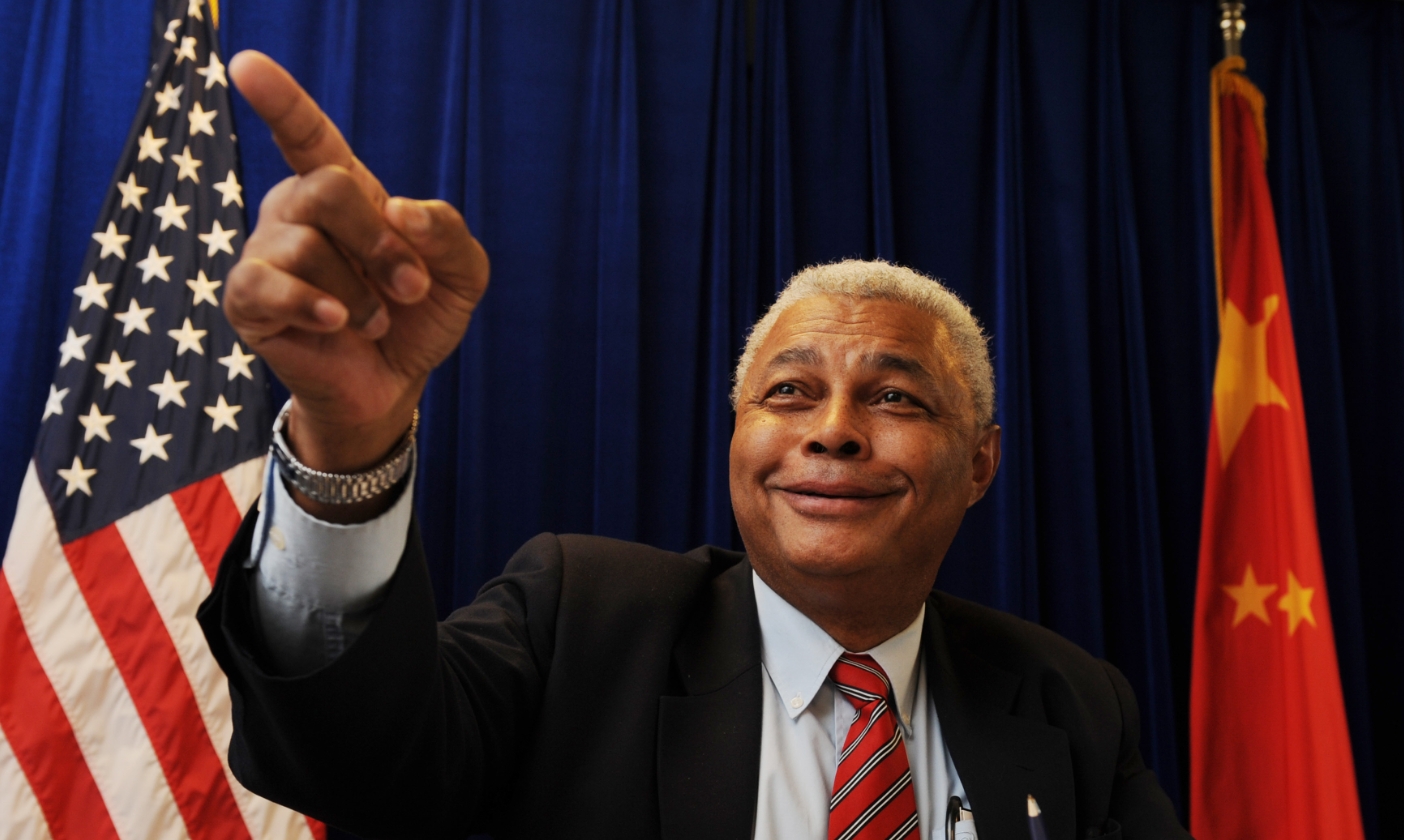
The US ambassador to Zimbabwe, Charles Ray has ended his tour of duty after three years in the country. Speaking to youth groups as part of his winding-up programme, he said he remained “cautiously optimistic” about Zimbabwe. “The long-term future for this country is bright…”, he added.
The outgoing US ambassador to Zimbabwe, Charles Ray, says the country’s cultural environment is fraught with artificial divisions and a pre-occupation with politics, which the youth would do well to avoid if they are to build a better nation.
“Put your focus on the things that really matter,” Ambassador Ray said during a discussion with youth groups as he prepared to return home after a tumultuous tour of duty.
Ray’s tenure, like his predecessors since 2000, has been fraught with tensions with President Robert Mugabe’s government. “I have noticed over the past three years that politics dominates every conversation,” Ray told the youths. “It’s as if nothing else matters.”
He added: “I know that political decisions can affect our lives – bad economic decisions can raise prices, drive away investment, cost jobs – but, it’s really the day-to-day personal decisions we all make that truly determine our lives.
“I’m not saying you should ignore politics, but put it in its proper place – somewhere out there – and use more of your energy in building a better local environment,” Ambassador Ray said. The host of the discussion, Andile Maposa, and about 80 young people took turns to ask the ambassador questions about diplomatic relations between the US and Zimbabwe, his perception of the political and economic environment in Zimbabwe, as well as his personal life.
“Learn, learn, learn, and question everything. Don’t take everything at face value, but prove it before you buy into it and reach out to the broader world,” said the ambassador. “The things that I find most disturbing,” Ray continued, “are all the artificial divisions that have been created between and among people, the born-frees versus the born-befores … the Matabeleland residents versus the Harares… it’s these meaningless divisions that have been created that keep people apart, that have built automatic intolerance, that make it difficult for people to reach out to people they don’t know or trust.” Ray, 30 years as a diplomat, served for 20 years in the US military.
“I was in the military during the height of the Cold War and I was trained that if it was communist it was bad,” he confessed. “I was trained not to trust Russians and not to trust Chinese. I had never met one but I just knew in my heart that they couldn’t be trusted. I left the army and I became a diplomat and guess where they sent me for my first tour? Mainland China – where I had to deal with all these communists!”
“About three or four weeks into my tour, as I got to know and talk to people, I realised that the main difference was that that guy carried a card (saying) that he was a communist and I carried a (different) card.
“But when we sat down and talked together, we found out that we had a lot in common. We all wanted the same things. This intolerant attitude of deciding that you trust someone because of their label does not make sense.”
Asked about his mission in Zimbabwe, Ray said he had sought to “change the nature of the conversation between the US and Zimbabwe.”
“I think I have been successful in getting that started. For 10 years, we were just yelling and hurling insults at each other, and we never really had a substantive conversation about anything,” Ray confessed. “We were complaining about some misbehavior, and they were calling us regime change neo-imperialists.”
Since his arrival towards the end of 2009, Ambassador Ray has spearheaded several youth engagement programmes.During his first year in Zimbabwe, he wrote a book, “Where you come from matters less than where you’re going” that is used by several youth groups in the country.
“Reflecting on my nearly three years in Zimbabwe,” Ray told the youths, “I remain cautiously optimistic. The long-term future for this country is bright, and that is due in large part to the overwhelmingly energetic, dedicated, and intelligent young people – people who make up the majority of Zimbabwe’s population.”








