Located deep in the Indian Ocean, the small island nation of Seychelles has built itself into an African success story. Its president, James Michel, has told New African how they did it:“We accepted our own mistakes, abandoned what was not working, and embraced reform by putting the interests of the country first above any political considerations. This way we gave hope to the people that they can enjoy a more prosperous future.” Wanjohi Kabukuru reports from the Seychelles capital, Victoria.
President James Michel of the Seychelles is not a gambler. But when it mattered most, he took one of the most daring political gambles in his life, ignoring warnings from his closest political aides and friends.
It all began in 2008. This was when Michel initiated a wide raft of economic reforms in the Indian Ocean island nation. The economic ideals that Michel adopted took the country on the most difficult path it had ever taken since independence in 1976. This is because Seychelles’ economic model, which it adopted when Michel’s predecessor, France Albert Rene, overthrew James Mancham in 1976, was characterised by heavy state intervention in the economy and a well-spread welfare system unmatched in Africa and rivalling European welfare platforms.
Michel decided to take the unsavoury path and alter the country’s socialist-leaning economic direction when it became clear that Seychelles was on the verge of economic difficulties as it was overburdened by debt and imbalance in international repayments.
The president overhauled the country’s fiscal policies and liberalised the economy by reducing state monopolies and controls. The floatation of the Seychelles Rupee (SCR) and opening up of state enterprises for privatisation, together with civil service reforms, were the other measures that completely redefined the economy.
On the economic front, these decisions looked good but politically they were a hot potato. As he launched the economic transformation that included redundancies in the civil service, financial analysts predicted a tough time for Seychelles and a longer period of recovery. The IMF adjusted its predictions by forecasting a slow economic growth, pegging it to grow by 4% in 2010.
Politically Michel was billed to lose the 2011 general election simply because of the economic model he was introducing. The opposition picked up on this as the implementation of the reforms began to bite.
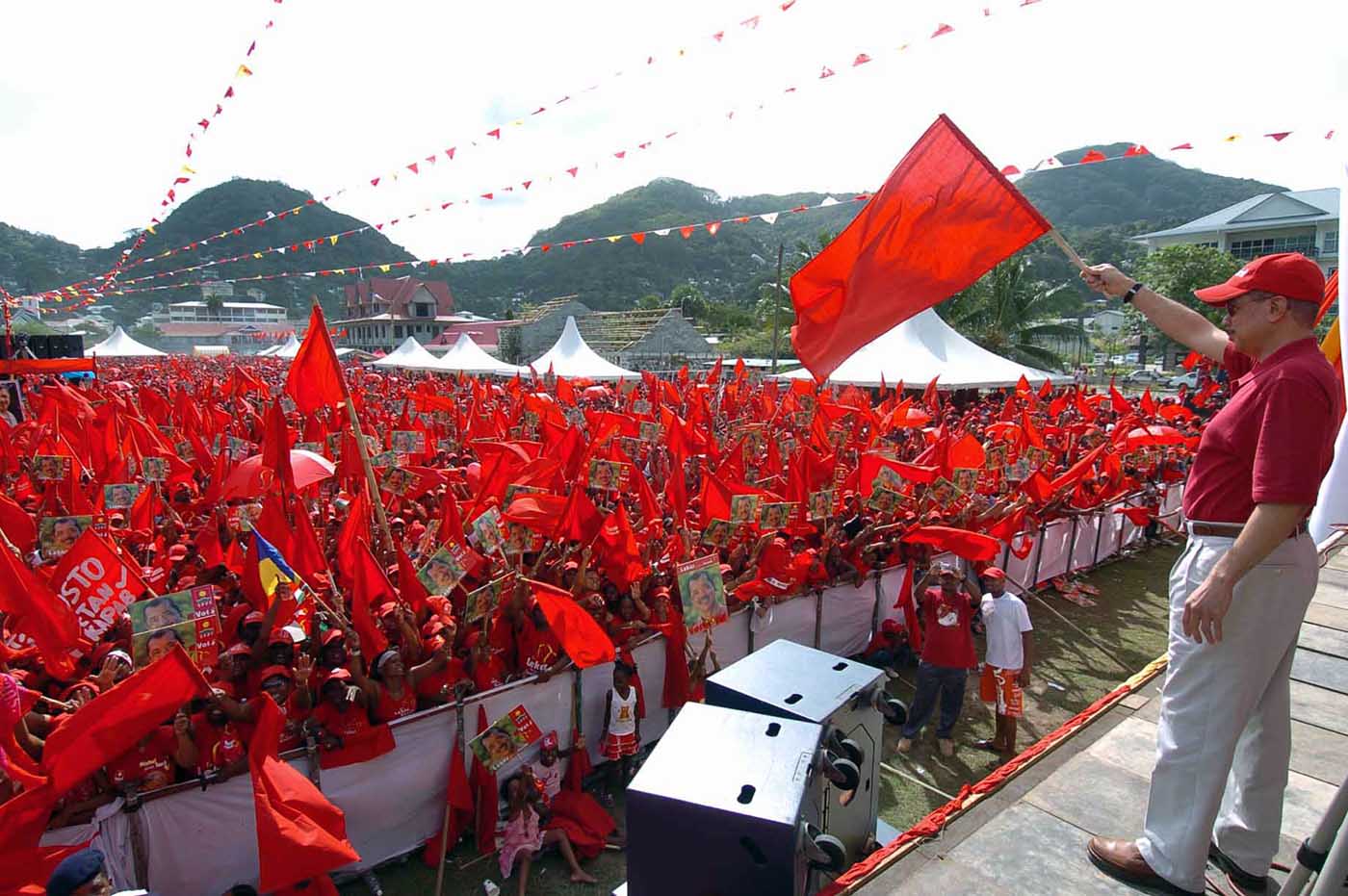
In the 2011 election, the opposition led by Wavel Ramkalawan’s Seychelles National Party (SNP), had a field day. It harped on the relatively tough times and used it to settle political scores with Michel’s ruling Peoples’ Party. This worried Michel’s closest advisors who wanted the economic changes to be cut short so as to give him a fighting chance politically.
But to the utter surprise of his aides, Michel pegged his political life to the reform process and disregarded their vehement protestations. Knowing very well that the economic reforms were a bitter political and social tool, Michel refused to budge and ignored their analysis. Instead, he instructed his campaign managers to tell his countrymen the truth about the economic reforms.
IMF wrong
In 2010, Seychelles’ economy defied IMF projections and grew by 6.2%. This was positive campaign silage for Michel to use in his re-election campaign and a sure sign that the reforms were bearing fruit in record time, disproving critics. With the optimistic signs of an economic turnaround, Michel went ahead and structured his entire political platform and campaign message on the economic reforms he was overseeing.
“We stayed on course and did not waver, not even when confronted by the exigencies of politics,” the president recalls. “In 2011, before the presidential election, given what was at stake I was strongly advised to defer further movement on the programme. I refused, stating that I would stand firm and that the reforms would continue in spite of everything. In fact I insisted that I would use the reform programme as my re-election platform.”
Michel’s sincerity shocked his advisers. While visiting districts and faced by tough questions from voters, he stuck to his belief of seeking to win over voters by convincing them that the world had moved on from the realities of the 1970s and 80s.
“I personally led town hall meetings in the districts when we launched the economic reform agenda,” he says. “We had to explain to people the changes that were coming. It was not easy as in some places people disagreed. But I never took offence, it was a price we had to pay to win their hearts.
He continues: “The feedback I got from the public meetings was good as it helped us put in place necessary changes that were needed. I knew that the people of Seychelles needed a major change in mindset, to move away from a cycle of economic dependency and reliance on government social services to a new attitude of ‘get up and do something for yourself’, leve dobrouye, as we say in Creole.”
Michel’s deputy, vice- president Danny Faure, agrees “This rare act led by our president was the touch that made all the difference when it mattered most. The voters believed us.”
When the votes were finally counted, Michel’s gamble had paid off. 31,966 voters (55.46%) voted for Michel while his closest rival, Ramkalawan, settled for 23,878 ballots. The voters trusted Michel’s sincerity and voted him back in, even though he was largely seen as an underdog.
Today, he says: “My re-election with close to 56% of the vote demonstrated clearly the trust of the people in my political and economic direction and their support for the programme. Events and developments were to prove me right.”
Revamping Seychelles’ economy was risky not just for the political fortunes of President Michel but for the entire People’s Party and the “second republic” foundation it had put in place within 30 years. To this day it is not clear why the opposition saw Michel as a weakling and in the presence of his towering predecessor Albert Rene, underrated him. This is in spite of the fact that Michel had continuously served as a minister in the government since 1977.
Though Michel is Seychelles’ president, he is actually considered favourably as the leader of the Small Island Developing States (SIDS), for championing his two pet ideas, the “blue economy” and climate change. In another body representing island nations, the Alliance of Small Island States (AOSIS), which has 44-member countries, Michel has cut his own niche as his two perennial messages are issues pertinent to all small island nations.
He has ensured that the blue economy, which he defines as “sustainable usage of oceans, better prices for fisheries, safer maritime trade routes and equitable wealth sharing from marine resources and ocean-related economic ventures”, get due respect on the world stage. After all, as Michel argues, “70% of our planet is covered by oceans and 90% of the world’s trade is conducted by sea.”
He says in closing: “Yes, I still recall the biggest gamble in my life and today we are a parable of success. We accepted our own mistakes, abandoned what was not working, and embraced reform by putting the interests of the country first above any political considerations.
“This way we gave hope to the people that they can enjoy a more prosperous future. Our doors are open for anyone wishing to learn something from our experience.”