The year 1985 was one of sombre realism for the OAU at its 20th summit. Delegates arrived at an airport full of relief planes bearing food for the starving and this was a constant reminder of the fundamental problems facing the continent as a whole. This report by Richard Hall, filed from Addis Ababa, was first published by New African in January 1986.
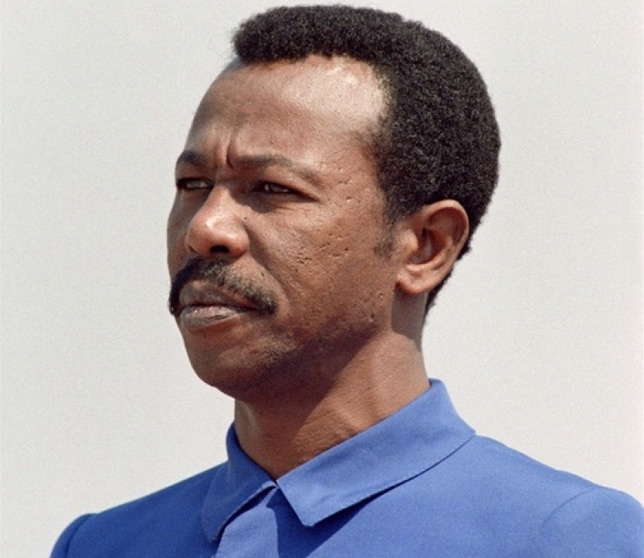
The 20th summit marked a break with the past because the OAU has now recognised that black Africa is too weak to go picking a fight with the white supremacists in Pretoria. The real issue was: “How can we escape the poverty trap?” Colonel Mengistu Haile Mariam, the outgoing chairman, painted a grim economic picture in his farewell speech. He said that Africa was looking “extremely pathetic” because of its headlong decline. “After bitter experience,” he said, “we have come to realise that political freedom devoid of economic independence is far from complete.”
The theme of black dependence on the goodwill of outsiders echoed around the Summit. Addis was an apt place for the message to be absorbed, because the heads of government arrived at an airport crammed with relief planes from a dozen European countries.
Superficially, the Ethiopian capital looked in good shape for the summit (a strict cordon had been thrown around it to prevent any disruptive infiltration by guerrillas or the starving). There was food in plenty for the delegates staying at the Hilton and other tourist hotels. But everyone knew that the OAU actors were performing against a backdrop of desperate misery.
President Julius Nyerere, taking over the chairmanship, was so moved by Ethiopia’s suffering that he gave a large cheque for relief work. But nobody could forget that Tanzania is a pauper too.
Over the next 12 months, Nyerere will need all his persuasive charm to keep the OAU itself in operation. Only a third of subscriptions from member-states have been received since 1980; the debts of the OAU Secretariat are now creeping towards $50m.
As Mengistu put it: “The organisation’s financial constraints, which have so far defied solution, are so acute that the effectiveness of the Secretariat is often impaired.” The effectiveness was certainly being impaired when I called and had to wait around for a document while a staff member searched through several adjoining offices for a stapling machine. “We cannot afford to buy such things now,” she said.
Perhaps the attitude to the OAU will perk up, now that the Polisario issue – an unparalleled conference-wrecker – has been disposed of. Certainly, I was assured by an economist in the headquarters of the Economic Commission for Africa that member-states are far more willing to pay their dues to the technical and scientific bodies: “They can see they get some reward for the outlay.”
It was the Nigerians who broke the Polisario deadlock, by announcing their recognition of the Sahrawi Arab Democratic Republic. The King of Morocco was enraged, but forecasts that the Organisation would be hurt by his delegation’s welldrilled walkout seemed wrong. As if to celebrate their success, the Nigerians stumped up the whole of their payment for 1984-85, and invited the laggards to copy them. Acting secretary-general Peter Onu told the delegates that the arrears constantly “stared them in the face”. (The Ethiopians have a subjective desire to see the OAU solvent, because it provides – as do the plethora of UN agencies and nearly 80 embassies – a flow of hard currency into Addis.) It was another Nigerian who set out the facts about black Africa’s economic catastrophe and accelerating debts – now put at $150 billion. Adebaye Adedeji, executive of the Economic Commission for Africa, circulated a booklet containing two of his most recent speeches. One ended with a rhetorical flourish: “Will Africa itself, its leaders and people, resign themselves to being, in perpetuity, the economic underdog of the international community. Or is Africa still capable of pulling itself up by its own bootstraps…?”
Adedeji admitted that the Monrovia Strategy and the Lagos Plan of Action had both failed to achieve much. He laid part of the blame on the drought, but did not allow the leaders to call their plight an act of God. In the throes of such gloomy analysis, the usual calls for the ending of apartheid sounded somewhat thin and hollow. President Samora Machel turned up, still a popular figure despite the Nkomati Accord, and was greeted with sympathy.
The line now being taken on South Africa was formulated at the Socialist International meeting in September: the frontline states are destabilised and intimidated by Pretoria (backed up by Washington), so their capacity for taking the offensive is limited. It is now the moral duty of the developed world to exert greater pressure to destroy apartheid.
So it was a defensive Summit, but allin-all much more a success than might have been expected. After a rough start, it ended in a sombre mood of unity. Almost all the leaders expected to turn up did so – one surprise absentee was President arap Moi of neighbouring Kenya, but 26 heads of state did attend – and all got back safely.
Some cynical journalists were forecasting that there would be at least one African coup in the course of the coup. They were proved wrong. But such likely “fall guys” as General Commander Samuel Doe of Liberia had cautiously chosen to stay at home.