
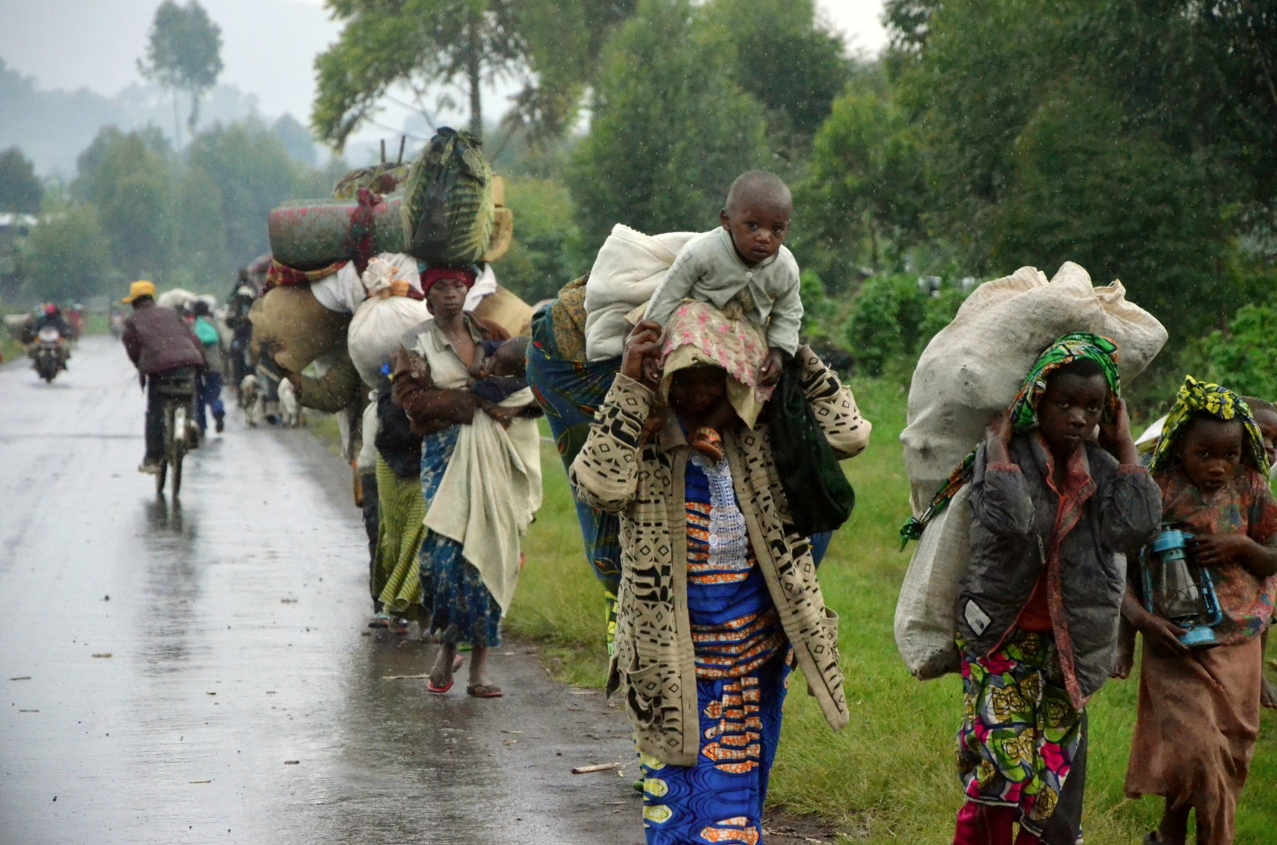
How else would one explain why DRCongo, whose conflicts have seen deaths estimated by the UN at 5.5 million to 6 million since 1996, would be such a low priority for the “international community”?
It is vast, fertile, diverse, and mineral rich; a country at the heart of Africa. DRCongo is Africa’s second largest country (2.3 million sq km) with over 200 ethnic groups. With just over 70 million people, Congo has the second largest Christian population in Africa. With such gifts and resources, why would it not be the new destination of choice for tourists and foreign direct investment? Well, not yet. In the late 1990s, it was home to “Africa’s first world war” that drew in 9 countries and 20 warring factions. The UN estimates that the country has the worst rape and sexual violence statistics in the world. Two tiny neighbours Uganda and Rwanda, are viewed as contemporary headaches for the giant country. Rwanda, just under 27,000 sq km, has a population of 11 million. But a recent UN report is definitive that Rwanda and Uganda are backing a predominantly Tutsi rebellion in Congo to the full.
So when news broke on 20 November 2012 that the Eastern Congolese town of Goma had been overrun by M23 “rebels”, it was sad news but one not completely unexpected. On 23 March 2009, President Joseph Kabila’s government in Kinshasa had signed a pact with a rebel group calling itself by the nice name, “National Congress for the Defence of the People”. Somehow, the M23 became an offshoot of this group, and the pact they now claim has been breached by Kabila’s government.
But fast backwards. In what the British daily, The Guardian, called “the most important assassination of the 20th century”, the founding father of independent Congo, Patrice Lumumba was killed on 17 January 1961, hardly 7 months after coming into office, in an operation backed by Belgium and tacitly supported by the USA. In the wings was Joseph Desire Mobutu who would soon assume office and rule Congo (renamed Zaire) like a personal estate kept for himself and his Western backers.
Dumped as they all are at some stage, Mobutu was pushed out when the West no longer had any need for him. In came Laurent Desire Kabila as the new kid in town, backed by the same Western countries that had thrown out Mobutu. Kabila was also supported by some local African fronts and genuine well-wishers. He ruled Congo (which he renamed Democratic Republic of Congo) from 17 May 1997 to 18 January 2001 when he too was assassinated. Lumumba was killed on 17 January – a coincidence?
Kabila’s son, Joseph, took over 8 days later and has been in charge ever since. Who governs DRCongo would not matter, but surely, Africans should never succumb when leaders emerge through the gun, or Washington-backed assassinations, or palace coups followed by father-son successions or the new-found formula, rigged elections.
Mobutu’s theft of this vast, wealthy country was atrocious. Yet when Kabila Senior refused to behave, he was sorted out by the powers that be. Since then, we have had a succession of warlords troubling Congo with impunity. They continue from where the killers of Lumumba left off. The powers behind their so-called rebellions never care which black (African) face they put forward to mask their predatory enterprise in that benighted country.
How else would one explain why Congo, whose conflicts have seen deaths estimated by the UN at 5.5 million to 6 million since 1997, would be such a low priority for the so-called “international community” and their mainstream media when these figures dwarf any other casualty figure since the Second World War?
Yet, in DRCongo, anyone with a semblance of conscience could not fail to breathe heavy for the multitude of helpless, fatigued, scared, yet innocent Congolese men, women and children – trekking to nowhere with the little they could pick or, perhaps, their only world treasures – beamed live to our television screens, fleeing the town of Sake, west of Goma. The message appears to be that those who cooperate are rewarded and have impunity. Charles Taylor must hate hindsight. Poor him.








