
The kidnapping, torture and murder of a young woman has focused the spotlight on the conduct of the Ugandan police. It is the latest in a series of unsolved murders, leading to allegations that the police are not only incompetent, but may be in cahoots with criminals. Huck Stevo reports from Kampala.
The three-week ordeal of 28-year-old Susan Magara in the hands of her kidnappers and eventual killers, has stunned and left Ugandans gripped with fear. The police and other security agencies did nothing to rescue Magara, the granddaughter of Henry Kajura, a wealthy politician.
The kidnapping and murder of Susan Magara is not an isolated incident but many such instances have gone unreported. Before she was killed, Magara’s kidnappers tortured her to coerce her parents to accept their demand for millions of dollars in ransom. They even chopped off two of her fingers and sent them to her parents to show them their merciless intentions.
After haggling with her abductors, Magara’s parents hurriedly delivered Ush700m (approximately $2m) of the Ush3bn (approximately $9m) they had and begged the kidnappers to free their daughter. But a few days later, the kidnappers called the parents to inform them to pick up her body from a bush outside Kampala city.
This was not the first time the police had shown ineptitude in handling a murder case. Records show that last year, 23 young women were murdered by serial killers in Wakiso district, on the outskirts of Kampala city, and to date, no arrests of the perpetrators have been made. The killers waylaid their victims in the evening as they returned home from work.
In the south-western districts of Masaka, Rakai, Lwengo and Bukomansimbi, gangs wielding machetes and pangas have been on the rampage. Before they attack their victims, the gangsters have the audacity to distribute written notes, indicating the day and time of the planned attacks.
The residents of those districts wonder why the police are unable or unwilling to confront the attackers. They suspect the police are complicit in the crime, where valuables such as electric gadgets are stolen from people. Those who resist are hacked with the sharp weapons.
Magara’s murder has exposed the true shortcomings of the police. Their records show that out of the estimated 4,000 cases of murder in the country over the last four years, only 100 have been investigated and the instigators charged in court. The rest of the cases are either pending or have been dismissed by courts for lack of evidence. The opposition has accused the police of concentrating on suppressing the opposition rather than fighting crime.
“President Yoweri Museveni appoints police chiefs and he gives them instructions to clamp down on the opposition rather than fight crime,” says Kampala Lord Mayor Erias Lukwago, a fierce critic of the president. The most damning allegation about the police is that some collude with them to commit crime. If they do not hire out guns to the criminals, they accompany or protect them. This revelation was made by the police chief Muhammad Kirumira.
Kirumira drew fury from his bosses, who locked him up to face charges of damaging the ‘good name of the police’. The charges collapsed amidst public outrage and he was freed. The kidnap and murder of Magara has opened a can of worms on police operations in Uganda. The social media is awash with information linking her murder to an alleged notorious gang within the police. Reliable sources in the Chieftaincy of Military Intelligence (CMI), the intelligence arm of the Uganda Defence Forces, which has taken over investigation of the Magara murder, told New African that preliminary findings point an accusing finger “at elements within the police force”.
According to the victim’s parents, information about their contacts with the police quickly ended up in the kidnappers’ hands. This has left no doubt that someone within the police was in involved.Upsurge in grisly murders
The upsurge in grisly murders has been an embarrassment to the President, who has for long won the hearts and minds of Ugandans for disciplining security forces hitherto notorious for turning guns on the people they were meant to protect.
As a military man, Museveni believes that only military officers have the right expertise to deal with crime. During his 32-year rule, the police force has largely been headed by army generals, such as Katumba Wamala and Kale Kayihura.
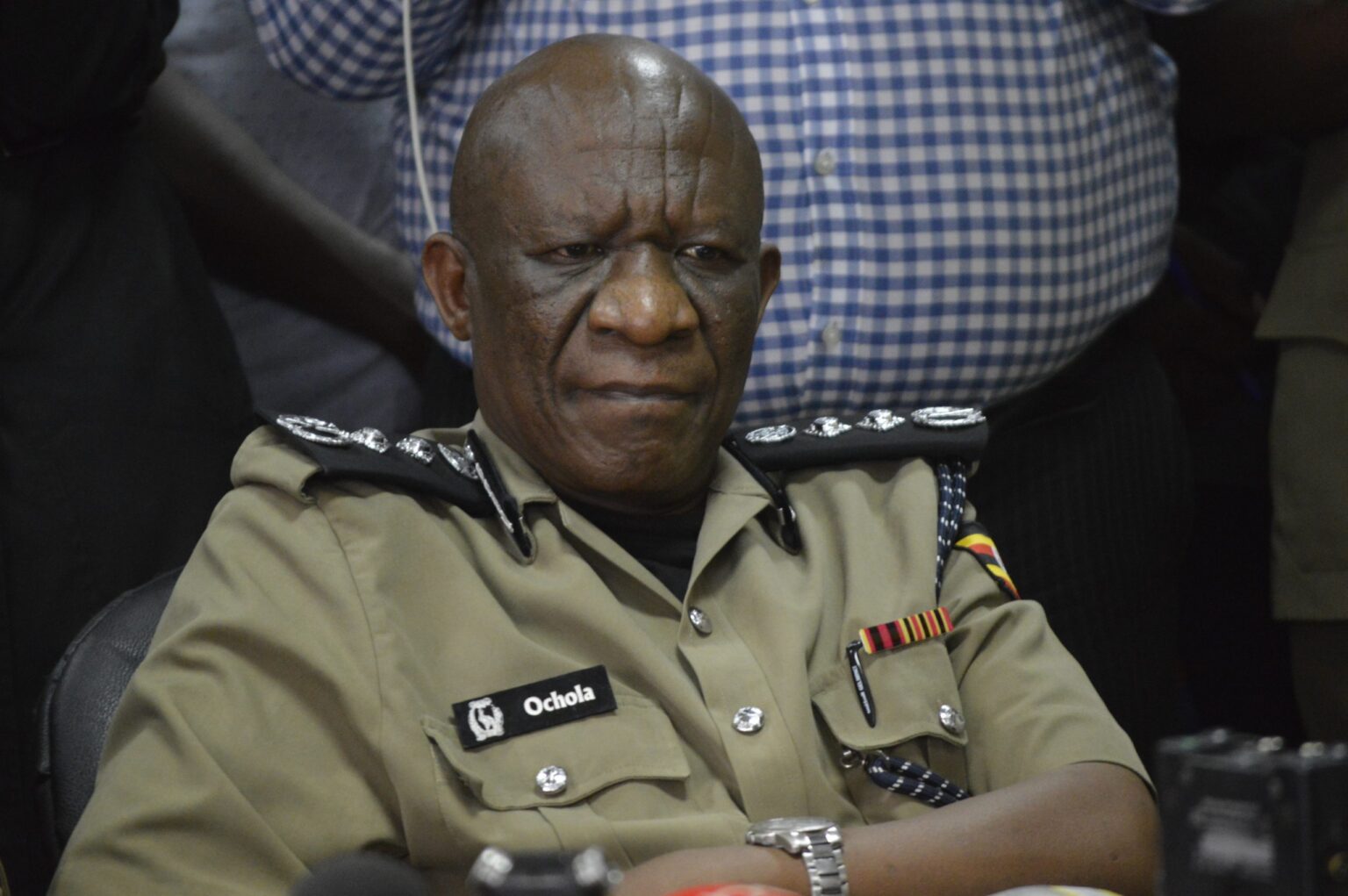
Despite the failures of the two generals, Museveni’s obsession with army officers being at the helm has not abated. Although he has now named a career police officer, Okoth Ochola, the former deputy police chief, to take charge, he has appointed a soldier, Brigadier Sabiiti Muzeyi, as deputy police chief.
The plan is that when the 59- year-old Okoth Ochola, renowned for being upright and incorruptible, retires, the 45-year-old brigadier will take over to fulfill Museveni’s focus on having a soldier in the top job. For now, Museveni’s critics allege, suppressing the opposition is Brig. Sabiiti Muzeyi’s immediate task.
The Magara murder has put the police under even closer scrutiny. The Inspector General of Government (UGG), Irene Mulyagonja, says the police comprise the most corrupt public institution in Uganda and are a major contributor to the country’s ranking as one of the most corrupt in the world, according to Transparency International. A corrupt institution cannot fight crime, says Mulyagonja.
The issue of corruption and abuse of office by police officers led to the establishment of a commission of inquiry as far back as 1999, headed by High Court Judge Julia Sebutinde, which recommended sweeping changes in the force.
Among the recommendations was that the police should be made more professional, after evidence emerged that the appointments and promotion of police officers was based on political patronage, nepotism and tribalism. The commission also recommended that the Inspector General of Police be given a three-year two-term contract. The recommendations were not implemented. Instead, the President has repeatedly appointed his National Resistance Movement party cadres and army generals, whose loyalty is beyond question, into the force’s top positions.
Kirumira’s allegations and the corruption reports by the IGG and Transparency International are supported by evidence of massive wealth being held by some senior police officers. The former Assistant Inspector General of Police, Andrew Felix Kaweesi, for example, who was gunned down last year in March by unknown assailants, left behind property worth millions of dollars.
In spite of the storm raised by the Magara murder, there is no doubt that like others before, it will be forgotten before the tears of her loved ones dry out. NA








