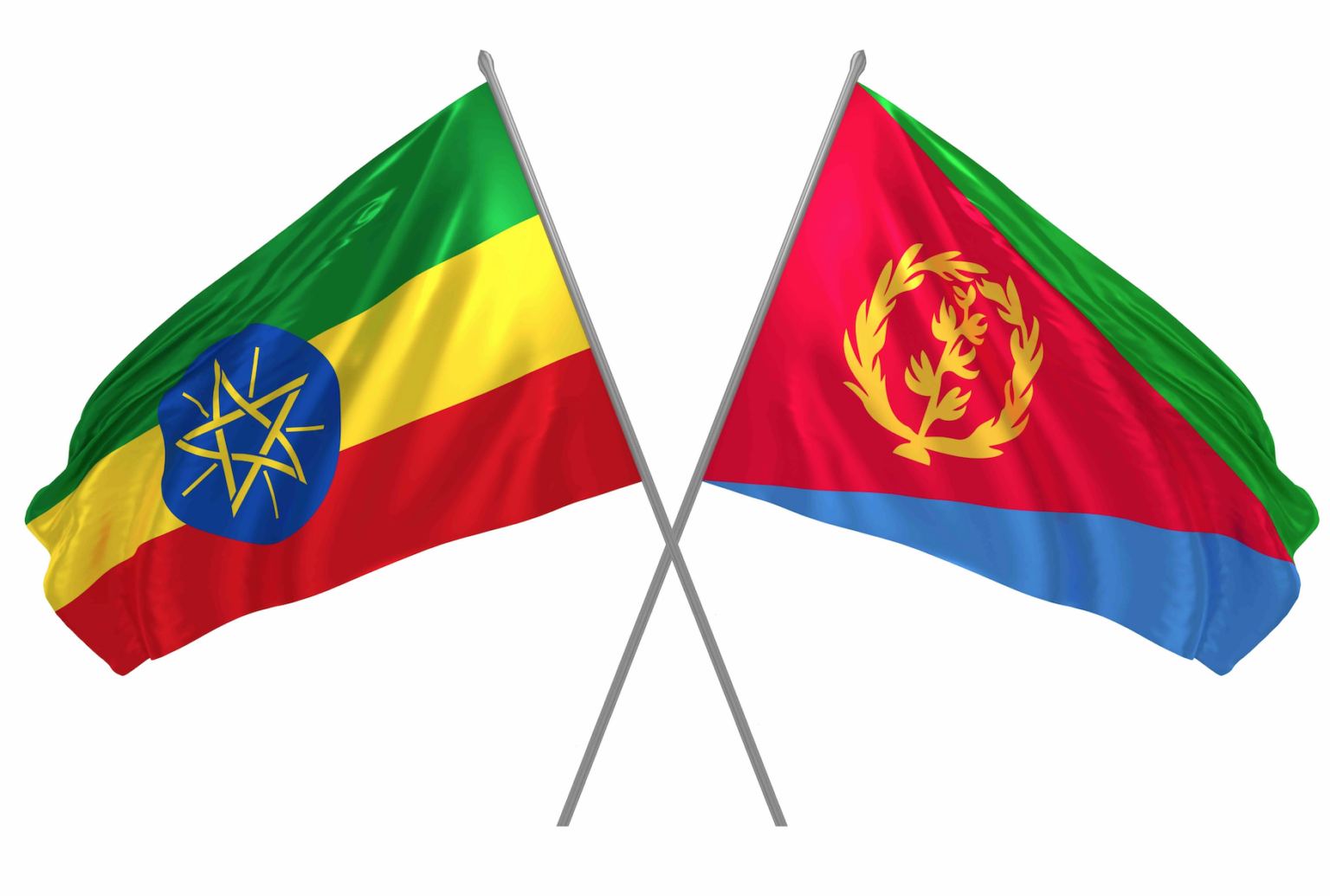
One time bitter foes, Eritrea and Ethiopia have signed a “Joint Declaration of Peace and Friendship” proclaiming an end to decades long of strife and at times bloody conflict, in what the Ethiopian Prime Minister Ayib Ahmed termed a new era of building a “bridge of love”. Reports reGina Jane Jere
In a statement broadcast on Ethiopian television (FANA TV) following his historic visit to Eritrea on Sunday, Abiy Ahmed the Prime Minister of Ethiopia declared it was time to mend the fractured relations between the two countries and take them “to greater heights.”
“To all Ethiopians and Eritreans, congratulations. There is no border between Ethiopia and Eritrea. instead we have built a bridge of love…Moving forward, war is not needed between Ethiopia and Eritrea. What we need is to work hard and for peace to rapidly transform and repay the debt of the 20 years and transform the relations of the two countries to greater heights,” the new reform-minded 42-year old Ethiopian leader said in the broadcast on FANA TV.
The news also means better economic ties between the two countries including Ethiopia having access to Eritrea’s ports to which the country has had no access to, for over two decades. The two countries have already re-established diplomatic relations.

Later on Monday morning, Yemane Meskel – Eritrea’s Minister of Information confirmed the news in a series of tweets one of which read: “Eritrea and Ethiopia have signed a Joint Declaration of Peace and Friendship today. The Agreement, which specifies five pillars, was signed this morning at State House by President Isaias Afwerki and Prime Minister Abiy Ahmed
He added: Joint Declaration states, inter alia, i) State of war that existed between the two countries has come to an end. A new era of peace & friendship has been ushered; ii) Both countries will work to promote close cooperation in political, economic, social, cultural & security areas.”

Eritrea and Ethiopia fought a devastating border war from 1998 to 2000, a conflict that killed close to 75,000 people on both sides.
Although a peace accord – The Algiers Agreement- ostensibly ended the border war in December 2000, tensions between the two countries have always simmered.
In May this year, Ethiopia announced that it would implement the Algiers agreement and accept the decision of the International Boundary Commission including conceding to Eritrea, the border town of Badme – one of the main contentions that precipitated the long conflict.
The peace agreement was brokered and guaranteed by the UN and the African Union. It called for the formation of three neutral commissions – a boundary commission, a compensation commission and a commission to study the root causes of the war.
The Algiers Agreement enjoined the boundary commission “to delimit and demarcate the colonial treaty border [between the two countries] based on pertinent colonial treaties (1900, 1902 and 1908) and applicable international law”. The two countries agreed that the decision of the commission “shall be final and binding”.
But in October 2014, Ethiopia under the late Prime Minister Meles Zenawi, declared the commission’s decision null and void, forcing the commission to postpone indefinitely the physical demarcation of the new border. Tension and threat of another war have lingered since then.
“Enough of war and news of imminent war. I congratulate the people of Eritrea and Ethiopia as we embark on a promising chapter of peace and stability by bringing to an end the phase of no war, no peace,” declared the Ethiopian Prime Minister earlier at a State dinner hosted in his honour in the Eritrean capita Asmara.