
The rise to power of Ethiopia’s new Prime Minister, Dr Abiy Ahmed is historic not only because of his ethnicity, but also because it is a manifestation of people power. But he inherits a huge backlog of problems. What should his priorities be? By Alula Iyasu
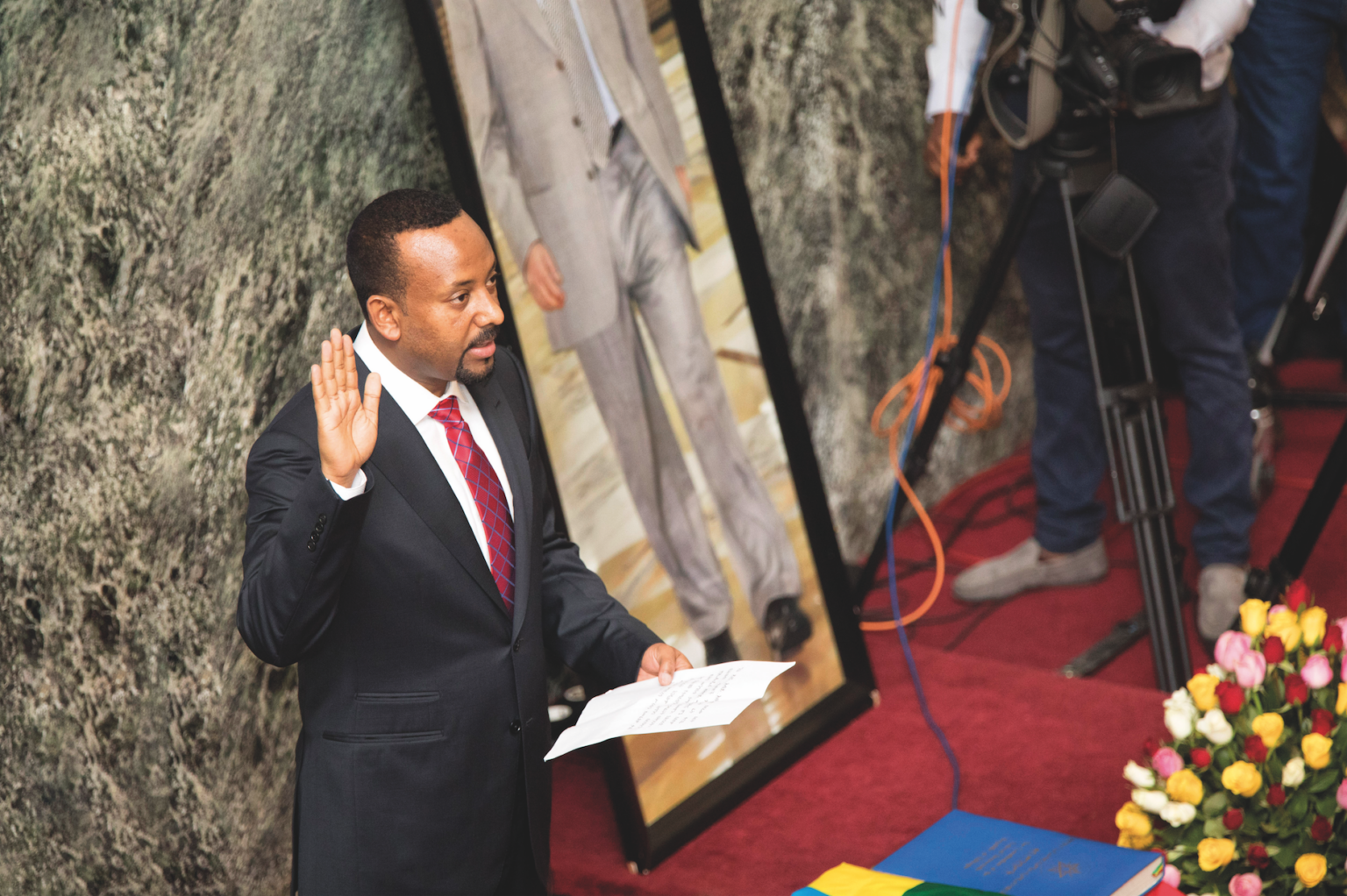
On 2 April 2018, in a peaceful transfer of power, Dr Abiy Ahmed was sworn in as the next Prime Minister of the Federal Democratic Republic of Ethiopia.
The nationally televised event was not only the first of its kind for the country, but came at a critical juncture in the political, social and economic upheaval that has rocked the nation for over a year.
Dr Abiy’s ascension to the premiership of Ethiopia is a historic milestone for the country, not least because of his ethnicity. He is an Oromo, a majority ethnic group historically marginalised from the corridors of power. But more significantly, it is historic because his election is the direct result of people power.
For over a year, the people of Ethiopia, led primarily by a sustained protest in the Oromia region, have withstood police brutality and imprisonment over challenges to the ruling party’s political, economic and social policies that have stymied political dissent, marginalised millions from economic empowerment and fractured the nation along ethnic lines. Dr Abiy’s election, therefore, is a vindication for millions of people who had simply had enough and wanted real change.
The challenges for the new premier are immense. He inherits a nation under a state of emergency, a stagnant economy, a skewed wealth distribution favouring the ruling party’s ethnic base, ethnic tensions, ineffective and highly bureaucratic institutions, rampant corruption, a frustrated population, including the private sector, high unemployment of youth and regional demands (spear-headed by the Oromia Regional State) that demand readjustment of the delegation of political and economic powers and rights between the federal government and states.
If the protracted election process and the strong resistance to Dr Abiy’s election within the ruling party is any indication, energetic opposition to his initiatives may be expected in an effort to undermine his leadership and effectiveness until the 2020 election. That said, concrete policy reforms are
like steering a large cargo ship – slow, meticulous and time-consuming – time that Dr Abiy may not have.
Where to begin?
I believe the first business of the new Premier should be lifting the state of emergency (SOE). The SOE, for starters, is a legacy of the previous government. Period. This reason alone should sufficefor lifting it.
The SOE, notwithstanding the justifications provided by the previous government, is also the result of a decades-long systematic dismantling of dissent and civil society groups, effectively cutting off the means of communication between the ruler and the ruled. How else then could millions of law-abiding citizens, whose lives have been politically and economically marginalised, voice their frustration?
Hand in hand with the lifting of the SOE must come political reforms that recognise the value of a vibrant political discourse, be it through opposition political parties, civil society groups or the media. The nation needs to decide, once and for all, whether it is truly democratic or not. The invitation of opposition parties to the official swearing-in ceremony of Dr Abiy, as well as his acceptance speech, are an indication that his administration has true political reform in mind.
The legacy of the previous government has also weakened the cohesion of the nation’s ethnic diversity. At the core of such ethnic tensions are economic and political questions. True economic reform needs to accompany political reforms. The country’s institutions, tasked with creating a vibrant, competitive and fair business environment are broken.
Arbitrary and archaic policies are stifling and frustrating the business environment. Protracted, redundant and in most cases opaque administrative, legal and regulatory processes and procedural requirements, affecting small and large enterprises alike, have increased the cost and time of transactions and hampered the private sector in its effort to produce capital.
Capital, argues the economist Hernando de Soto, in his ground- breaking book, The Mystery of Capital: Why Capitalism Triumphs in the West and Fails Everywhere, “is the force that raises the productivity of labor and creates the wealth of nations. It is the lifeblood of the capitalist system, the foundation of progress, and the one thing that the poor countries of the world cannot seem to produce for themselves, no matter how eagerly their people engage in all the other activities that characterise a capitalist economy.”
Dichotomy between vision and reality
One such mystery, as pointed out by the author, is the dichotomy between the vision of growth as put forth by the government, versus the myriad of archaic administrative, legal and regulatory processes and procedures businesses have to go through in their effort to do their work.
Ethiopia’s Growth and Transformation Plan aims for the country to reach a middle income status by 2025. Meanwhile, the country ranks at the bottom of all indicators for doing business. As the 2017 World Bank’s Ease of Doing Business report shows, Ethiopia ranks 161 out of 187 countries in all 11 indicators such as starting a business, obtaining permits, getting credit, getting electricity and even paying taxes!
The new administration needs to confront this challenge head on. Start by replacing the old guard with merit-based appointments from a large pool of young, vibrant and educated group of Ethiopians. There are many! Embrace the younger generation’s thirst for change, their impatience for inefficiency, their common-sense approach to problem solving, and eagerness to be part of the legacy of change in the country.
It should institute a merit-based appointment system of the kind used by China’s Organisation Department, a powerful political institution that functions like a giant human resource engine and provides highly competitive career paths for civil servants in the political, social and economic spheres – with upward mobility based on outstanding performance and key deliverables.
Not only would such moves ensure efficiency within the institutions, it would also bring respectability and professionalism to career civil servants.
Dr Abiy’s election is the beginning of a long process of reform the country desperately needs, but cannot do alone. The nation needs to come together to support the new government.
And to the new Prime Minister, I would say: This nation, particularly the young generation, has carried you on their backs to the halls of power with the hope of bringing meaningful change to their lives. Embrace them. Listen to them and most importantly, work with them.
They will make you proud Godspeed.
Alula Iyasu is Managing Director, Bridge International, an international investment advisory firm based in Addis Ababa, Ethiopia








