
Africa is on the move. From politics to business to the arts, things are changing, being driven by innovators and visionaries, both good and bad. To reflect on a busy year for the continent, we profile the most influential Africans of 2014.
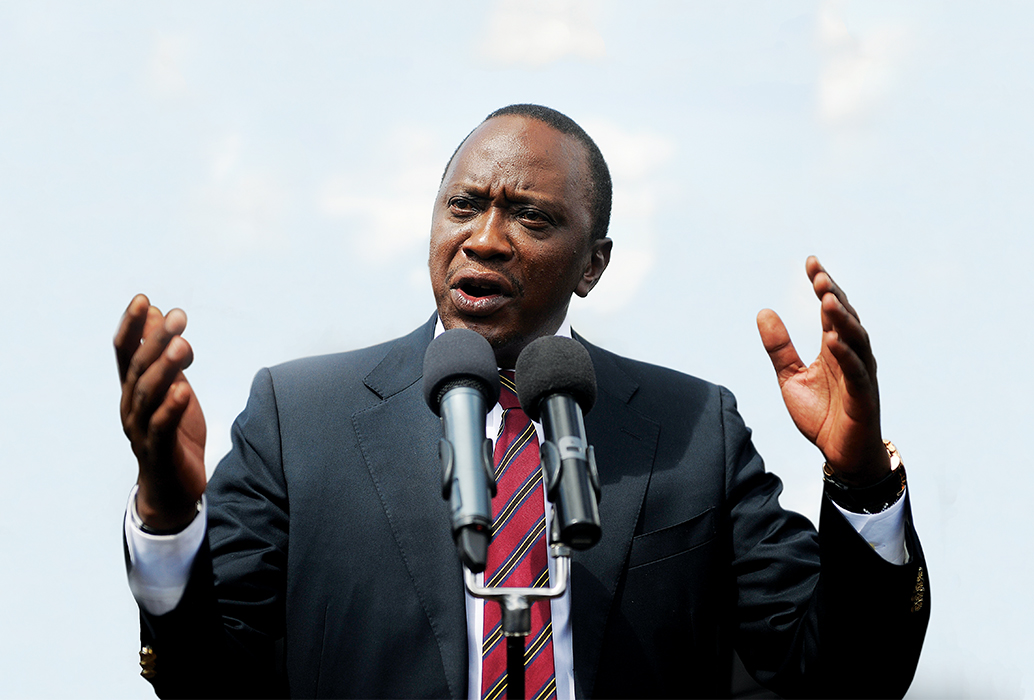
Uhuru Kenyatta, The scourge of the ICC – Kenya

The son of Kenya’s first president has had a remarkable year. He started it under threat of trial for alleged crimes against humanity at the International Criminal Court (ICC) in The Hague. He ends it all but guaranteed not to face trial while in office and with the real possibility that his case will be thrown out altogether. While the Office of the Prosecutor alleges witness tampering and non-cooperation by the Kenyan government, it is really Kenyatta’s shrewd politics that have undermined the court. He rallied allied African leaders to unite many African Union members in opposition to the ICC. He reframed his case as being about the dignity and sovereignty of Kenya and more broadly Africa, rather than about the political violence following the disputed 2007 election. The struggle with the court has been the making of Uhuru. He now seems a savvy and dominant figure in African politics, a million miles from the unsure and unsuccessful presidential candidate in 2002 or the young man who failed to win his father’s former constituency nearly 20 years ago. His country faces many challenges but is full of opportunity. How will he use his newfound stature in 2015?
Fatou Bensouda, The frustrated prosecutor – Gambia

It has been a difficult year for the Chief Prosecutor of the ICC. Not only has her institution been labelled anti-African, but her flagship case – against Uhuru Kenyatta – will not come to trial in the near future. The ICC remains a powerful force on the continent and Bensouda’s influence shouldn’t be underestimated, but it will be an uphill struggle to improve African perceptions of the court’s legitimacy.
Salva Kiir and Riek Machar, Rival politicians tearing their country apart – South Sudan

President Salva Kiir and his former Vice President Riek Machar have had great influence in their country this year – but not of the positive kind. Their rivalry has done much to smash the hope invested in their new state at independence in 2011. Their political dispute has developed into an ethnicised conflict, mainly between the Dinka and the Nuer. 1.5 million South Sudanese are internally displaced and thousands have been killed. As their representatives engage in on-off negotiations in regional capitals, the pair’s inability to put their country’s interests ahead of their own is not only causing damage today, but makes the task of building a sustainable state and society for the future more difficult. The two men hold enough power to end the conflict. If only they would choose to exert it.
Cyril Ramaphosa, The troubleshooter – South Africa

Cyril Ramaphosa has consolidated his position as the front-runner to succeed his embattled boss, Jacob Zuma. Although he only returned to politics last year, after nearly two highly successful decades in business, he has become the ANC government’s chief troubleshooter. He acts as a negotiator in South Sudan’s civil war, played a similar and successful role in Lesotho’s political crisis, attempted unsuccessfully to calm tensions in Cosatu (the ANC-aligned trade union federation), is the chair of the crucial National Planning Commission, and the Leader of Government Business in the National Assembly. The contradictions he represents have been brought to the fore this year, especially during his appearance before the Farlam Commission of Inquiry into the Marikana mine massacre. In 2015, he will have to balance the tensions of being a former leader of the National Union of Mineworkers and having been a mining sector shareholder, including at the Lonmin-owned Marikana mine. If he can, he could very well emerge as the ANC’s leader.
Thabo Mbeki, Continental statesman and negotiator – South Africa

It’s been six years since Thabo Mbeki stepped down as South Africa’s president, but his retirement has been far from uneventful. The champion of an African Renaissance continues to play a leading role in events and issues across the continent, including as a crucial negotiator between the long-standing antagonists of Sudan and South Sudan. This already challenging task has been made all the more difficult by the ongoing civil war and political instability in the South this year, but Mbeki will be hoping that his unique experience of mediating in seemingly intractable conflicts in the past will serve him well once again.
Julius Malema, The economic freedom fighter – South Africa

Julius Malema has completed the transition from being ready to “die for Zuma” to being his most vociferous critic. If his opponents thought that Malema’s expulsion from the ANC and legal difficulties with the taxman would finish him off, 2014 will have disappointed them. Malema’s new political party, the Economic Freedom Fighters (EFF) won a respectable 25 seats in this year’s general election and has since caused waves in parliament. The EFF has highlighted how removed the political debate is from much of the population by wearing bright red workers’ clothes and by breaking with parliamentary procedure by shouting down President Zuma with calls to “pay back the money” for his Nkandla homestead (see Thuli Madonsela entry below). This brand of populist politics divides opinion nationally but attracts big crowds wherever Malema goes. Despite his personal legal troubles, he may have spawned an organisation that, perhaps along with the National Union of Metalworkers of South Africa, which was expelled from Cosatu in November, can provide serious opposition to the ANC from the left, as the Democratic Alliance does from the liberal right.
Thuli Madonsela, The Public Protector – South Africa

South Africa’s constitution created the so-called chapter nine institutions to guard democracy, which sit outside of government. One of these, the Public Protector, is headed by Thuli Madonsela, who has used her office to investigate the Nkandlagate scandal, in which $20 million of public money was spent upgrading Jacob Zuma’s personal home in Nkandla, KwaZulu-Natal. Her report into the matter made uncomfortable reading for the government, leading to calls from across the spectrum (but most loudly from Malema’s EFF) for Zuma to personally repay the state. Unsurprisingly, she has found herself under attack from Zuma’s allies, but she has not flinched. Her robust defence of the institution, both in principle and in practice, has ensured its independence, making clear that in South Africa, nobody should feel above the law.
Moïse Katumbi, The reluctant ruler – Democratic Republic of Congo

They say that those who want to rule are the least suited to do it, and if that’s true, it could explain Moïse Katumbi’s success. Since becoming governor of the DRC’s Katanga Province in 2007, access to running water has risen from 3% to 67%, school attendance has increased from 600,000 to 3 million, and revenues have risen dramatically. Yet Katumbi says he’d happily give it up to focus on his businesses and beloved TP Mazembe football club.
Grace Mugabe, Comrade in waiting? – Zimbabwe

Grace Mugabe hit the headlines this year, even outshining her husband. She used her nationwide publicity tour to attack VP Joice Mujuru, seen as a possible successor to Robert Mugabe. At this month’s Zanu-PF conference, Grace is likely to join the politburo. In 2015, she is likely to be touted as a potential successor to her husband.
Akinwumi Adesina, The farmer reformer – Nigeria

With a population of 170 million people, 70% employed in farming, the job of reforming Nigeria’s agricultural sector is not one for the faint-hearted. Fortunately, Akinwumi Adesina, Nigeria’s Agriculture Minister, is not easily scared by big numbers. And this year he has some to bandy around himself: cocoa exports are up 45% on 2012; the share of bank lending to the sector has more than quintupled since 2011; and Nigeria’s food import bill has dropped to $4.3 billion, down from $7 billion in 2009.
Nkosozana Dlamini-Zuma, Africa’s problem-solver – South Africa

It has been another tough year for the chairperson of the African Union. The organisation has been criticised for its slow response to the Ebola crisis, AU peacekeepers were accused of human rights abuses in the Central African Republic, and progress in resolving the conflict in South Sudan has been haltingly slow. Despite these difficulties, Dlamini-Zuma has the continental respect and influence to fight for African solutions to these African problems.
Thokozile Masipa, Judging Oscar – South Africa

In January a few would have recognised her, but as the year drew to a close, she became one of the most recognisable faces on the continent, if not globally, thrust into the limelight as presiding judge in the global phenomenon that was the Oscar Pistorius trial. But aside from the famous trial and the opinion-dividing sentence she gave the athlete for shooting dead Reeva Steenkamp, Masipa is only the second black woman to be appointed to the South African high court in its history.
Kenneth Kaunda, The elder statesman – Zambia

It’s been nearly twenty-five years since Zambia’s first president stepped away from power, but the man popularly known as KK remains a national, regional and continental figure, mainly operating behind the scenes. With the recent death of Michael Sata igniting succession issues (see pages 62-4), many believe peace-loving KK will use his voice of reason to quell political fires.
Navi Pillay, Human rights defender – South Africa

As her six years as the United Nations High Commissioner for Human Rights came to a close this August, Navi Pillay, South Africa’s first non-white female judge, did not let up one bit in fearlessly challenging heavyweights on their human rights records. In her last few months in the job, she warned of mass surveillance violating privacy rights, and condemned the UN Security Council’s repeated failures to prevent conflict. The daughter of a Tamil bus driver leaves behind some huge boots to fill.
Babacar Gaye, The general in the UN’s CAR driving seat – Senegal

Lieutenant-General Babacar Gaye leads the UN peacekeeping mission in the Central African Republic. He has previously served in senior roles for his native Senegal and in the UN system but is now in the midst of his most difficult job yet. He is charged with keeping a fragile peace between the opposing Séléka and anti-balaka forces, in the hope of finding a lasting one.
Abubakar Shekau, The maniacal grin of terror – Nigeria

Although the Nigerian military frequently claim that he is dead, Shekau’s deadly and malicious influence only continues to grow. Boko Haram stepped up its campaign of violence even further this year, unleashing bombs in the capital Abuja, terrorising towns and villages in the country’s north-east, and, of course, kidnapping the Chibok girls. Shekau’s horrific violence has had a huge impact on Nigeria. 2015 is a big year for the country, with highly competitive elections scheduled for February. Sadly, Shekau and his band of killers will significantly affect proceedings unless he is stopped.
Muhammadu Buhari and Bola Tinubu, The new friends – Nigeria

In 2013, former military head of state Muhammadu Buhari and former Lagos governor Bola Tinubu united their opposition parties to form the All Progressives Congress (APC). This big-tent party is the first to present a genuine challenge to the ruling People’s Democratic Party (PDP) since the return to electoral rule in 1999. Despite some defections, the APC has solidified in 2014; around half of the country’s governors and members of the national assembly fly APC colours. Whether the APC maintains unity will much depend on the relationship between the two old men of Nigeria’s opposition politics. If they succeed, Aso Rock may house an APC president come this time next year.
Ayman al-Zawahiri, Al-Qaeda’s emir – Egypt

The so-called Islamic State has eclipsed Al-Qaeda in the jihadi firmament this year. However, Al-Qaeda’s reach still sadly matters on the continent, with allied groups in Mali, Algeria, Libya, Somalia and Kenya. With these groups still wreaking havoc in parts of Africa, Bin Laden’s former number two, al-Zawahiri, still holds considerable malign influence.
Yoweri Museveni, The wily old master – Uganda

Yoweri Museveni has been in the spotlight this year again as he’s dealt with a potential rival from his own inner circle, continued to criticise the International Criminal Court for being an “instrument of post-colonial hegemony”, faced Western flak for passing the Anti-Homosexuality Act, and played a prominent regional military role with troops deployed in South Sudan, the Central African Republic and Somalia. Uganda’s president has remained able to stay one step ahead of the game proving that, after all these years, he is still a political maestro.
Abdel Fatah al-Sisim, The pharaoh – Egypt

Three years since the overthrow of Hosni Mubarak, it seems that Egypt’s revolutionary experiment is over. And what better way to express that sentiment than with a low-turnout election in which 96.9% voted for a hard-nosed, old-style military man? Abdel Fatah al-Sisi has enjoyed cult-like popularity since ousting the Muslim Brotherhood in 2013, but it remains to be seen how long this will last now that he officially presides over the world’s most populous Arab nation.
Idriss Déby, Central Africa’s military strongman – Chad

Chad’s long-serving president has had an up and down year. In April, he withdrew the Chadian contingent from the AU forces in the Central African Republic following accusations that they were siding with the Séléka rebels and led a lethal unprovoked attack on a market in Bangui. But Déby did not allow this to set back his regional security pointman ambitions for long, stepping up counter-terrorism cooperation with France and the US as well as playing a prominent military and mediating role in the Boko Haram conflict.

You, The People, The real power – Africa
The sight of Burkina Faso’s long-serving strongman, Blaise Compaoré, fleeing the country following a popular uprising against his continued rule, demonstrates how influential ordinary Africans can be. While the future of Burkina Faso is uncertain and events could develop positively or negatively, the Burkinabé have demonstrated that Africa’s young populations have the power to forge their own destinies. Africans, the future is in your hands.








