Following last month’s high court ruling, elections could be held in March next year and as New African’s Tichaona Zindoga writes from Harare, although three parties in the “inclusive” government say they are ready, a referendum on a new constitution which will outline the framework and reforms for the elections could be the litmus test of things to come.
Making a new constitution was one of the deliverables of the September 2008 Global Political Agreement that created the “inclusive” Government of Zanu-PF and the two MDC formations.
Article VI of the Agreement says, “it is a fundamental right and duty of Zimbabwean people to make a constitution by themselves and for themselves in an inclusive and democratic manner”.
The parliamentary select committee on the Constitution, Copac, produced the final draft in July. The Second All Stakeholders Conference was scheduled for last month (October), and a referendum ideally tipped for this month but it is likely to be held next January.
Jessie Majome, Chairperson of the Information and Publicity subcommittee of Copac, confirmed all was on course barring hiccups.
“The outcome is process-driven and already we are behind schedule,” she told New African.
“Presently we are to have the Second All Stakeholders Conference scheduled for 21-23 October and after that we are going to report to parliament. Parliament will debate the draft for a month and the draft will be published in the Government gazette for a month, and a referendum can be held thereafter,” she added.
She said further, if Zimbabweans vote “Yes” for the new constitution it will be adopted while a rejection of the document means the continuance of the current charter. The current 1979 Lancaster House constitution has been amended 19 times.
The two MDC formations have already been campaigning for a “Yes” vote on the new constitution, while Zanu-PF is not too happy with the draft.
Zanu-PF argues the draft, inter alia, allows homosexuality, dual citizenship, devolution of central government powers, the provision for presidential running mates, and the sharing of presidential powers which may have to repose with parliament and commissions.
“The constitution is dumb on country’s liberation struggle and does not acknowledge the ‘Supremacy of God’,” says Zanu-PF.
The party is “happy with 90 per cent” of the draft, though. Analysts and politicians in Zimbabwe have pointed out that the document may need to be negotiated over for the parties to iron out any differences.The conclusion of the constitution-making process will pave the way for elections.
The ruling by the High Court in Harare in October extending the dates for by-elections in three vacant Matabeleland House of Assembly constituencies to March next year spelt out what political observers believe is the timeframe of when elections could be held.
End of GPA
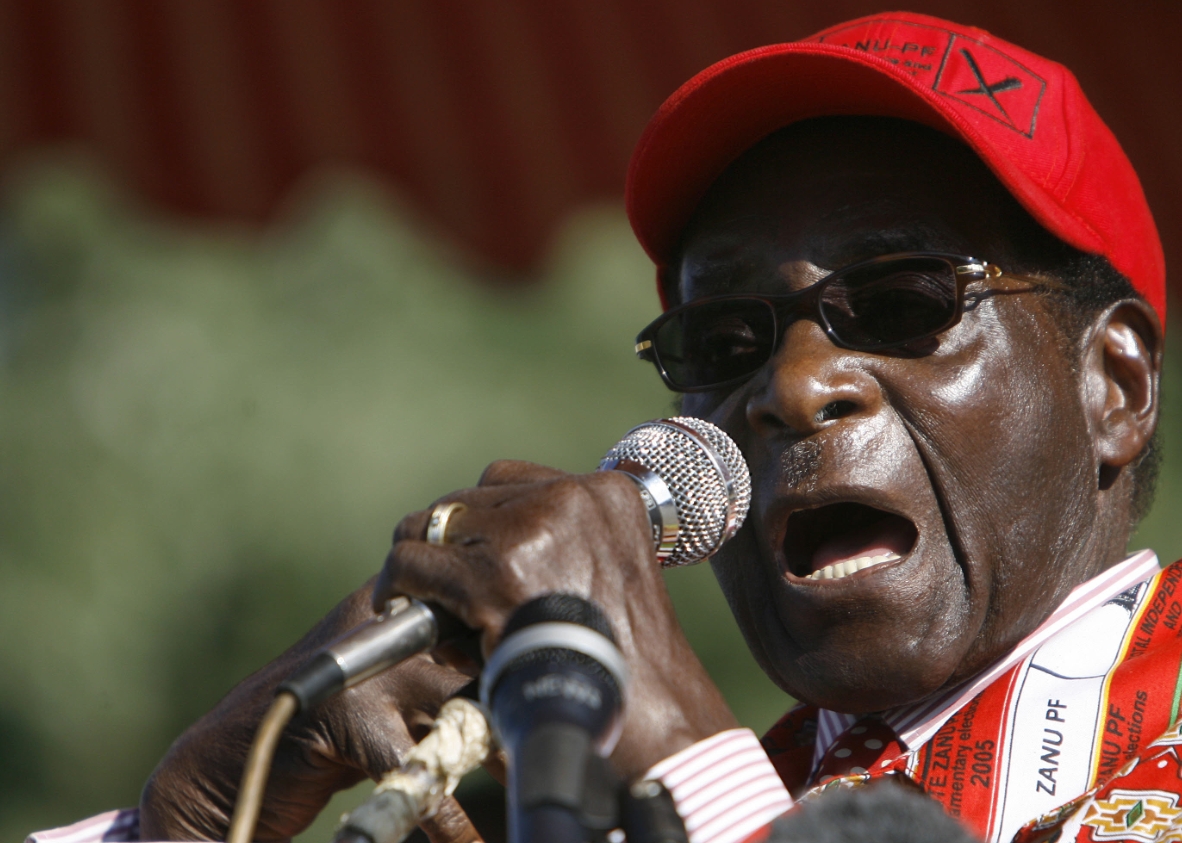
The 2013 poll will end the Global Political Agreement, and the shaky inclusive Government. In the “harmonised” elections, earmarked for March 2013, once again, President Robert Mugabe’s Zanu-PF and the two MDC formations led by Prime Minister Morgan Tsvangirai and Industry Minister Professor Welshman Ncube will be the three biggest players; the polls will also see new Members of Parliament and local government officials elected.
It is, however, likely to be a twohorse race between Mugabe and Tsvangirai, and Ncube may play kingmaker in case of a hung result.
But Ncube has on several recent occasions and interviews including BBC’s Hard Talk and Zimbabwe’s top talk station Star FM, ruled out a reunion with MDC-T, saying the parties differed fundamentally. President Mugabe and his party marginally lost the last elections in 2008 to Tsvangirai and his MDC party.
Tsvangirai, winner of the first-round presidential poll with 47 per cent, did not garner the 51-plus required for him to form a government. The other MDC formation, then led by Professor Arthur Mutambara, came a distant third with just under 10% of the stakes.
The forthcoming elections will, typically, be closely fought. Already political temperatures are building. Zanu-PF is likely to be selling its indigenisation and economic empowerment gospel – whose rallying call is giving ordinary Zimbabweans majority control of the economy, by providing stakes in all companies.
Tsvangirai’s MDC has mooted a counterplan dubbed “JUICE”, standing for Jobs, Upliftment, Investment, Capital and Environment.
“Zimbabwe is sitting on 80 per cent unemployment and we have to find a solution to that so that young people go to work,” MDC-T spokesperson Douglas Mwonzora told New African.
“We will attract investment and make policies that make investment ideal…Zimbabwe has good attributes such as manpower, infrastructure, skills, good work ethics and good climate,” he adds. The MDC-T says it will also ensure food security, and ensure a “return to the rule of law and equal application of the law.”
Said Mwonzora: “We want a Zimbabwe that is prosperous, integrated in the world economy and founded on the fundamental principles of respect for human rights, rule of law and free enterprise.”
Ironically, the party failed to launch the JUICE blueprint in September and Mwonzora says the launch will be held soon, but gave no date.
Ncube is banking “devolution of power” in which he is advocating for the decentralisation of the government to give power to the provinces. He argues that once power is devolved, there will be no marginalisation and under-development of areas away from the capital Harare – an argument that has been met with cynicism while other critics see him as lacking national appeal. Ncube’s call of “Devolution by Ginya” (devolution by all means) during rallies across the country, has also received a fair share of criticism amid accusations that he is trying to create a niche in his native Matabeleland region, by ramping up the talk of under-development. Ncube denies the charge.
His party’s deputy spokesperson Kuraone Chihwai says MDC Green, as the party is increasingly becoming known because of its colours and symbols, seeks “just and fair” Zimbabwe.
He said: “We want restoration of respect for people regardless of tribe and race. We also believe the people of Zimbabwe should elect people on the basis of their capacity to deliver. They should stop voting for liars, documented failures and those that have failed to provide water, electricity and social services. Elections should be based on merit and people must not vote for people with a history of corruption and violence.”
“MDC Green”, says Chihwai, is for a Zimbabwe that has a “high level of tolerance, observes the rule of law and guarantees property and human rights.”
Former Finance Minister Simba Makoni, Mavambo Kusile Dawn party leader, who in 2008 led a coalition of smaller parties and independents, buoyed by Mutambara’s MDC, will also seek a say in the race. In the likely absence of any miracle between now and March 2013, he is likely to be an outsider. There is even Dumiso Dabengwa, a one-time Zanu-PF bigwig and Home Affairs minister whose political fortunes in his Zapu do not count much beyond the Matabeleland region, where there is already stiff competition from the two MDCs.
There are also a number of very small-time players who will make the numbers up.
Election fever could not be higher in Zimbabwe as March fast approaches.
The Zimbabwe Electoral Commission (ZEC), the body mandated to conduct elections and referenda, says it is technically ready for elections but would want $104 million for the holding of the referendum and $160 million for the holding of harmonised elections, as well as to have enough time to prepare for the poll.
Joyce Kazembe, ZEC acting chairperson, says the body has already applied for the money from the Treasury. No foreign funding of elections will be allowed.
Spotlight on Tsvangirai
But as the elections fever grows, Prime Minister Tsvangirai is in trouble and his leadership qualities have again come under the spotlight – all due to shenanigans in his personal life.
September was a particularly bad month. He was due to hold a civil union with Elizabeth Macheka, a daughter of a Zanu-PF member, on 15 September but the attempt hit a snag as the courts ruled that he was customarily already married to Locardia Karimatsenga Tembo, for whom he had traditionally paid dowry (bride price) last year. Tsvangirai had tried to divorce her through a press statement after just 12 days of the marriage.
He further claimed he had paid “damages” for making Tembo pregnant. The Zimbabwean law permits polygamy under customary law but someone in such a union cannot wed another in a civil union.
But this was not all!
On the eve of his marriage to Macheka, a South African woman, Nosipho Regina Shilubane ghosted in and said Tsvangirai had promised to marry her early this year. Shilubane, with whom Tsvangirai had connected via a Zimbabwean pastor in South Africa, went on to reveal racy details of sexual escapades with Tsvangirai in resorts including the Seychelles.
Tsvangirai, claimed Shilubane, refused to use protection during sex and urged the woman to use birth control instead. She applied to have the Tsvangirai-Macheka’s wedding licence revoked, but her suit was thrown out by the court.
It was all a bit embarrassing for Zimbabwe’s second most powerful politician. Both party officials and ordinary supporters were also discomfited. A UK-based MDC-T activist, Suzeet Kwenda, even wrote a letter to the party leader asking him to step down. And on his party’s 13th anniversary celebrations in Bulawayo on 28 September, where a women’s group had demonstrated against him Tsvangirai made a feeble attempt to apologise for the scandal.
He said the road to finding his “real choice” Elizabeth Macheka, whom he introduced at the anniversary, had “been filled with all sorts of troubles, but…I had no intention of hurting anyone.”
Not that this has convinced anybody much and hard questions continue to be asked of his leadership qualities, judgement and aptitude for the highest office in the land.
Naturally, Tsvangirai’s opponents took relish over his personal woes, and Tsvangirai and his party wove conspiracy theories including that President Mugabe and the Central Intelligence Organisation had set aside $100 million for campaigns aimed at tarnishing Tsvangarai’s image. But the imbroglio has once again raised debate about Tsvangirai’s judgement.
Tsvangirai has previously been savaged, not least, according to cables released by Wikileaks, as a weak and indecisive leader who is not open to advice. Roy Benett, a top financier and former commercial farmer, has been quoted as projecting Tsvangirai as someone who listens to the advice of the person who he last speaks to.
All these issues may come in to play in the forthcoming elections.
Opinion polls
In September, three opinion polls gave a glimpse of how political parties are likely to fare in the forthcoming elections.
A poll by Freedom House, a US think-tank, showed Zanu-PF’s popularity increasing while MDC-T’s support sagged.
The poll, titled “Change and ‘New’ Politics in Zimbabwe”, conducted by South African political analyst Susan Booysen and the Mass Public Opinion Institute in Harare, showed that when asked who they would vote for if parliamentary elections were held tomorrow, of the 53% who declared their voting preference, 20% said they would support MDC-T (down from 38% in 2010) and 31% Zanu-PF (up from 17% in 2010).
It stated that “trust in MDC-T, in particular, dropped from 66% to 39%, while trust in ZANU-PF rose from 36% to 52%.”
There is increasing confidence the elections will be fair and according to the survey, a total of 35% respondents (compared with 16% in 2010) now believe that the next round of elections will be free and fair.
On the other hand, ratings for the inclusive Government were “substantially less positive than in 2010.”
The other political players were not highlighted.
The poll has given the bragging rights to Zanu-PF, whose spokesperson Rugare Gumbo was quoted as saying, “We have strong revolutionary ideas, unlike these fly-by-night political parties that have nothing tangible to give to the people.”
MDC-T dismisses the report
The MDC said in a statement: “The party respects the right of individuals and institutions to carry out opinion surveys on the views of the people of Zimbabwe from time to time. However, we note that surveys carried out under current conditions are difficult to rely on due to the fact that they are held under conditions of major fluidity.”
The party faulted the survey, saying it relied “on information that may have been gathered in predominantly Zanu-PF areas to gauge the support of other political parties.”
It also highlighted the “margin of error” as 47% of respondents had refused to declare their voting intentions.
However, in September, another think-tank, Afrobarometer, reported that of the 2400 Zimbabwean respondents, 32% said they would vote for President Mugabe and 31% Tsvangirai, if elections had been called in July. One per cent would have preferred Ncube.
Compared to a 2008 survey, the MDC-T’s supported plunged from 57%, while Zanu-PF’s increased significantly from 10% to 31%. It predicted a run-off between the two top candidates.
The UK-based MDC-T-aligned pressure group, Zim Vigil, reported in early September that, “Our monthly action forum, held at the famous India Club down the road from the Embassy, concluded almost unanimously that the MDC was unlikely to be in charge after the next election.” The group stated that the MDC had “lost the trust of many people whose support it had taken for granted – partly because its leaders were tainted by corruption.”
However, University of Zimbabwe lecturer Professor Lovemore Madhuku says the opinions “do not mean anything” and an election day might give a different picture. “We have never used opinion polls as the basis for determining who wins an election,” he told New African.
“In America and Europe they will have an effect but not here. We do not have a culture of expressing freely our opinions and people do not respect such polls.
“All that is needed are free and fair elections and the people will express themselves,” said Prof Madhuku.
President Mugabe has been calling for non-violence and respect for the vote, even if someone were to choose to cast their vote “into the river”.