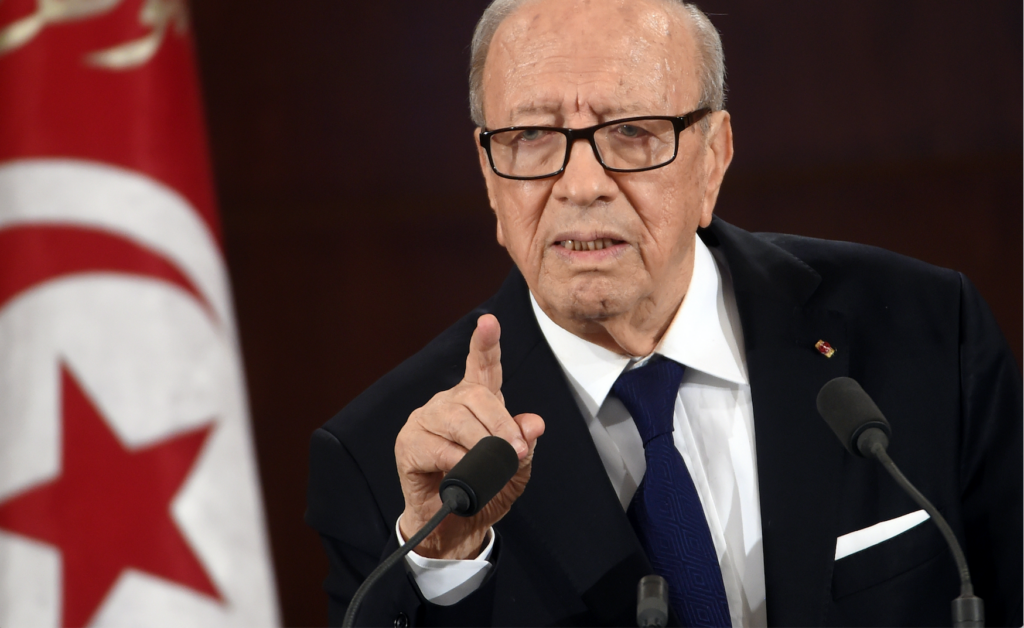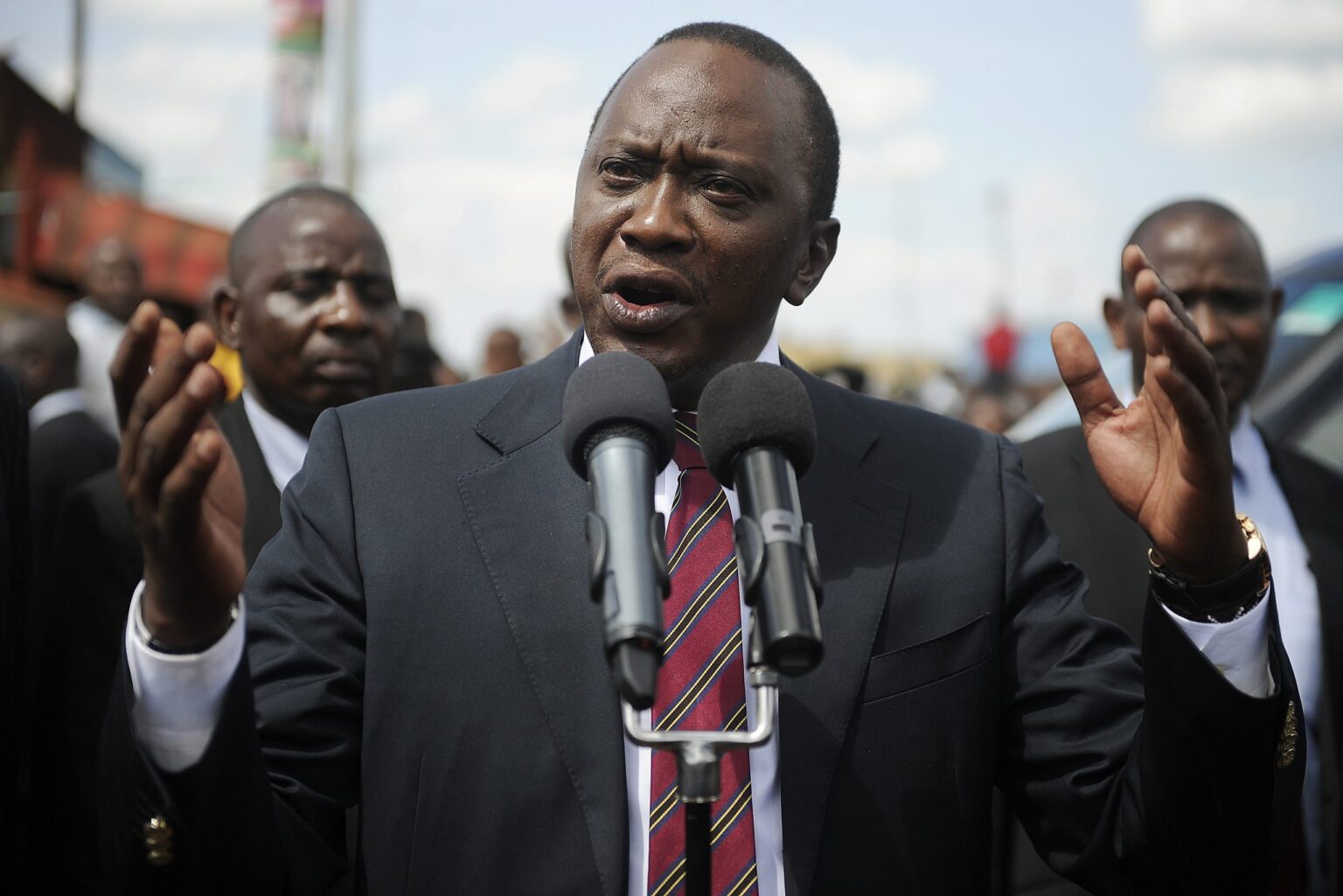
When Kenya’s historic “Battle of the Sons” ended on 4 March, the son of the nation’s founding president Jomo Kenyatta had trounced the son of the former vice president Jaramogi Oginga Odinga. Uhuru Kenyatta’s victory sent pollsters and Western diplomats in Nairobi scurrying for cover, for none had given him a dog’s chance to win, let alone in the first round. Was it why his opponent, Raila Odinga, chose the legal route to overturn the result via the Supreme Court? Our Kenyan correspondent, Wanhoji Kabukuru, looks at all the dynamics.
The opinion pollsters had had their day in the sun, as were angry diplomats. Human rights and the civil society fraternity had exhausted their legal challenges. Now it was the turn of voters to make their voice heard. And so, on the 4 March 2013 long queues marked Kenya’s historic general election – the first one under a new constitution promulgated in 2010. The last general election in December 2007 ended in shame, and the once-proud Eastern African nation was caught up in inter-ethnic violence. Aware that a repeat of the madness would pile up more shame and ridicule on them, Kenyans approached this election differently.
But voter apathy and a renewed bout of violence were expected. Dozens of foreign journalists trooped to Nairobi in readiness to record the unraveling of the nation. Political commentators had in fact predicted the same. One such analyst was Joel Barkan, professor emeritus of political science at the University of Iowa, USA, who in a paper titled “Electoral Violence in Kenya”, presented before the influential Council on Foreign Relations (CFR) in January, warned: “Kenya is at risk of repeating the violence that marred its 2007 presidential election, during which 1133 died and nearly 600,000 were displaced from their homes.”
But Prof. Barkan was wrong. This was a complex election. A total of 14.3 million Kenyans had registered for this exercise. By the time the election was over, 12.3 million (a hefty 86%) had turned out to vote, and elected a new president and deputy president on one ballot. This was followed by five other ballots, electing 47 governors, 47 senators, and 47 women representatives representing Kenya’s new administrative structure. And that was not all: They also voted for 290 legislators and 1,450 county assembly representatives.
The elections, conducted by the Independent Electoral and Boundaries Commission (IEBC), were expected to be reported in real-time to save time and hasten the tallying process. But the kits of the much-publicised Biometric Voter Registration (BVR), an electronic voter identification system, failed – though it worked at some polling centres but failed in many others.
Apparently aware of the dangers, the IEBC had rolled out a manual voting system to act as a backup just in case the BVR failed. Thus, when the BVR failed, the IEBC went back to the manual backup, after initially downplaying the BVR failure as a “minor glitch”. This kept Kenya’s normally active social media scene abuzz with conspiracy theories, alleging foul play in the form of hacking by interested foreign governments.
On Saturday, 9 March, after five days of patiently waiting for manual tallying to be completed, Uhuru Kenyatta and his running mate William Ruto were declared president and deputy president respectively, after receiving 6,173, 433 votes out of 12,330,028 votes cast. In constitutional parlance, Kenyatta’s win met the two main criteria of the new constitution which requires the presidential winner to satisfy the threshold of 50%+1 of total votes cast, and 25% of votes in half of the country’s 47 counties. In the event, Kenyatta got 50.07% of the national tally and secured 25% in 32 of 47 counties. His main challenger, Raila Odinga, clinched 5,340,546 votes representing 43.28% of the total votes. Odinga refused to concede defeat, claiming that there had been electoral malpractices, and a week after the IEBC announced the official result, filed a case at the Supreme Court to challenge it.
The suit accuses the IEBC of using “a poorly selected, and designed electronic equipment” to transmit results, as well as tampering with the electoral register and thus undermining the authenticity of the poll. Because of these “irregularities”, Odinga’s Coalition for Reforms and Democracy (CORD) is asking the Supreme Court “to set aside the result of the presidential election as announced on 9 March and the declaration of Uhuru Kenyatta as president-elect … and declare null and void the whole electoral process.” The court has 14 days to rule on the case. The IEBC, its chairman Isaac Hassan, and the president and deputy president-elect (Kenyatta and William Ruto) are the joint respondents.
Odinga goes to court
The win by Kenyatta, if it stands the Odinga court challenge, will represent a new constitutional paradigm for Kenya. Kenyatta’s Jubilee Coalition now controls both the lower house of Parliament and the Senate, having won 159 seats – and is seeking to boost its numbers with the Amani Coalition’s 20 seats aided by nomination slots. Odinga’s CORD has 139 seats.
Observers and election monitors broadly agreed that the polls were free, fair and credible. Two years before the election, Ababu Namwamba, a lawyer and one of Odinga’s key strategists, had said that “the new constitution has fundamentally altered the chessboard for all future presidential races and positively so. The requirement for a broad spread majority to clinch victory has confined to the dustbin of history that dangerous tendency to balkanise the country into ethnic blocks as exclusive fiefdoms of narrow-minded, xenophobic chieftains masquerading as presidential candidates. Now every presidential wannabe must come out of their regional cocoon and engage the Kenya voter across the length and breadth of the country.”
And this appears to be what exactly happened, judging from the voting figures and patterns. It was a victory over ethnicity, race, religion, age, and creed. This was clearly manifested when three members of the minority Kenyan-Asian community were elected to Parliament. Shakeel Shabir, Irshad Sumra, and Rahim Dawood were elected as legislators in different counties, beating their opponents who came from numerically strong communities. On top of this, in the gubernatorial poll, Kenyans went for quality leadership and elected result-oriented individuals and non-politicians who had distinguished themselves in the private and public sectors. These were not the only surprises that Kenyans held in store for the world with their unprecedented voter turnout. They also defied what Western ambassadors accredited to Kenya wanted, and left pollsters embarrassed.
According to Patrick Githae, a senior political journalist of The People Daily: “The pollsters in Kenya have lost face. They were clueless as to what was happening on the ground. Odinga’s reform message was tired and worn-out. There are many factors that worked against Odinga. He had promised many things in the run-up to the last elections in 2007. But when he became prime minister, his office lost so much credibility as his aides were mentioned in several scandals. The appointment of his relatives to various public positions also did not help his chances.”
In the run-up to the 2013 elections, European Union and US envoys in Nairobi had called on Kenyans not to vote for a candidate indicted by the International Criminal Court (ICC). Both Kenyatta and Ruto face charges at the ICC for their alleged roles in the 2007-2008 post-election violence. Secondly, all pollsters in Kenya had overruled an outright win for Kenyatta. In their February polls, the three main polling agencies in the country – Infotrak, Consumer Insight, and Strategic Africa – gave Odinga the lead, and in the worst case scenario projected a run-off. Thirdly, human rights NGOs, mostly funded by the US and the EU, had sought to stop the candidacies of both Kenyatta and Ruto. One month to the polls, the courts threw out this case saying the matter rested with the Kenyan people.
Overt international diplomacy politics was played out in Nairobi, revealing polar divides influenced mostly by economic interests. On one side were EU and US diplomats acting in concert with human rights NGOs and using the ICC case to stop the Kenyatta-Ruto duo from winning. Their preference was Odinga’s CORD. On the other side were the East African Community (EAC) and Common Market for Eastern and Southern Africa (COMESA) blocs supported by the BRICS (Brazil, Russia, India, China, and South Africa) who openly rooted for Kenyatta’s Jubilee Coalition. Fully aware of the pulling and shoving behind the scenes, Kenyans ignored the Western ambassadors and voted for Kenyatta and Ruto. “The foreign envoys should have known better,” said communications lecturer, Kipkirui Kaptelwa. “Kenyans are very proud of their heritage and do not take kindly to what they perceive as imperialism. That is a historical fact which worked against Odinga, who was seen as advancing Western interests and ideologies.”
According to Kaptelwa
“Kenyatta and Ruto were on message. Their message offering new leadership branded as ‘team digital’ and painting their opponents as ‘analogue’ resonated very well with voters who liked the ‘transformational leadership’ mantra that Jubilee offered.”
On the other hand, Kaptelwa says, CORD lacked a clear and concise strategy to win this election. “Odinga’s clarion call of ‘jobs, jobs, jobs’ never registered as a catch-phrase. And when he changed tact and talked about reforms he lost again. His advisers also misled him on the land issue, which scared the business community. All these issues are addressed by the national constitution and as such on many occasions the CORD team found itself on the defensive on issues that it had raised itself. Odinga was supposed to be the trend setter in this campaign, but he was always trailing.”
Patrick Githae of The People Daily agrees: “There is no denying that Jubilee were better packaged. As compared to CORD, Jubilee came out as fresh, authentic, and capable of taking the country to the next level.” Githae explains. “The body language also mattered in this election. Uhuru and Ruto, who were wrapped up as Uhuruto, connected very well with the populace. This was not the same for the Odinga-Kalonzo team. They never gelled and most often they appeared as if it was a one-man campaign thing.”
What then happened to the fancied Odinga who had led in the opinion polls for years? Githae explains: “Jubilee’s adverts were strong and showcased team dynamics bringing in former ministers Charity Ngilu and Najib Balala. Secondly, Jubilee’s core message of ‘transformational leadership’ resonated with the youth and working class. I am afraid CORD did not have an answer for this and they never recovered.”
‘We have the numbers’
Insider information now reveals that Odinga’s strategists did not take seriously constitutional provisions on the election and ignored the changed political reality sweeping the country. A month before voter registration kicked off, Ruto had publicly acknowledged why his party, the United Republican Party (URP), was going to work with The National Alliance (TNA), led by Kenyatta. “If TNA and URP work together, we will form the government in the first round,” Ruto said at the time. “The objective is to bring Kenyans together so that never again will Kenyans fight over political competition.”
Observers now say that Odinga’s strategists did not take Ruto’s sentiments seriously, and ignored the import of what he said, which was basically that the two ethnic groups that fought pitched battles against one another in the 2007-08 post-election violence had now buried the hatchet and were keen to work together and reap any peace dividends thereof. Two weeks after stating this, Ruto expounded further why his party was going to work with TNA: “Lone rangers will not form the next government given the strict deadlines of the new constitution,” he said.
While the CORD alliance stuck to believing their lead in the opinion polls, and the support foreign envoys threatening sanctions were indirectly giving them, it was not business-as-usual for the UhuRuto candidacy. The day after the IEBC completed its voter registration, Ruto told a campaign rally in Isiolo County that “we have the numbers, we have the formula, and we have the agenda to form the next government.”
This sentiment remained Ruto’s mantra. It had in fact come from a Jubilee strategy document titled “A Report on the Analysis of the Registered Voters and the Predictions Thereof”. While CORD assumed that Odinga’s highly publicised mobilisation skills would carry the day, Jubilee strategists had gone back to basics. They resorted to science to craft their campaign strategy. A key person in this strategy was the little-known 28-year-old actuarial scientist and statistician, Johnson Sakaja, plucked from the Kibaki 2007 re-election campaign. Sakaja who had earlier drawn up the formula for Kenya’s current electoral boundaries, was assisted by a core group that crunched the numbers and publicly declared that Jubilee was going to win the election by slightly over 6 million votes.
It is this science that informed Ruto’s famous statement of “we have the numbers” which was later picked up by political analyst Mutahi Ngunyi who derisively changed it into “tyranny of numbers.” It is now emerging that Sakaja’s team had burnt the midnight oil cross-referencing Kenya’s voting trends going back 20 years. After analysing the numbers and compared them with historical voter trends, Sakaja’s team advised their candidates to ignore the opinion pollsters. Jubilee’s British spindoctors, BTP Advisers, together with several local communication mavens (including prominent bloggers) were then tasked to design messages to win the election.
On 11 February, the business analyst, Aly Khan Satchu, confirmed the Jubilee arithmetic. “Commentary from the West has actually snatched votes for Kenyatta and Ruto, and my analysis now shows they have a [good chance of] taking the election lock, stock and barrel in the first round.” The CORD coalition, bringing together Odinga’s Orange Democratic Movement (ODM), Moses Wetangula’s Ford-Kenya, and Kalonzo Musyoka’s Wiper Democratic Party (WDP), was simply no match for the Jubilee alliance.
For now, it appears the main narrative from Nairobi is how President Kibaki handed over power to his godson Kenyatta, and how the defiant Kenyan voters trounced the Western envoys in Nairobi.