Tichaona Zindoga ponders what the year 2013 holds for Zimbabwe as he looks back at the year 2012. Some political leaders say 2012 was good for the country, others think not.
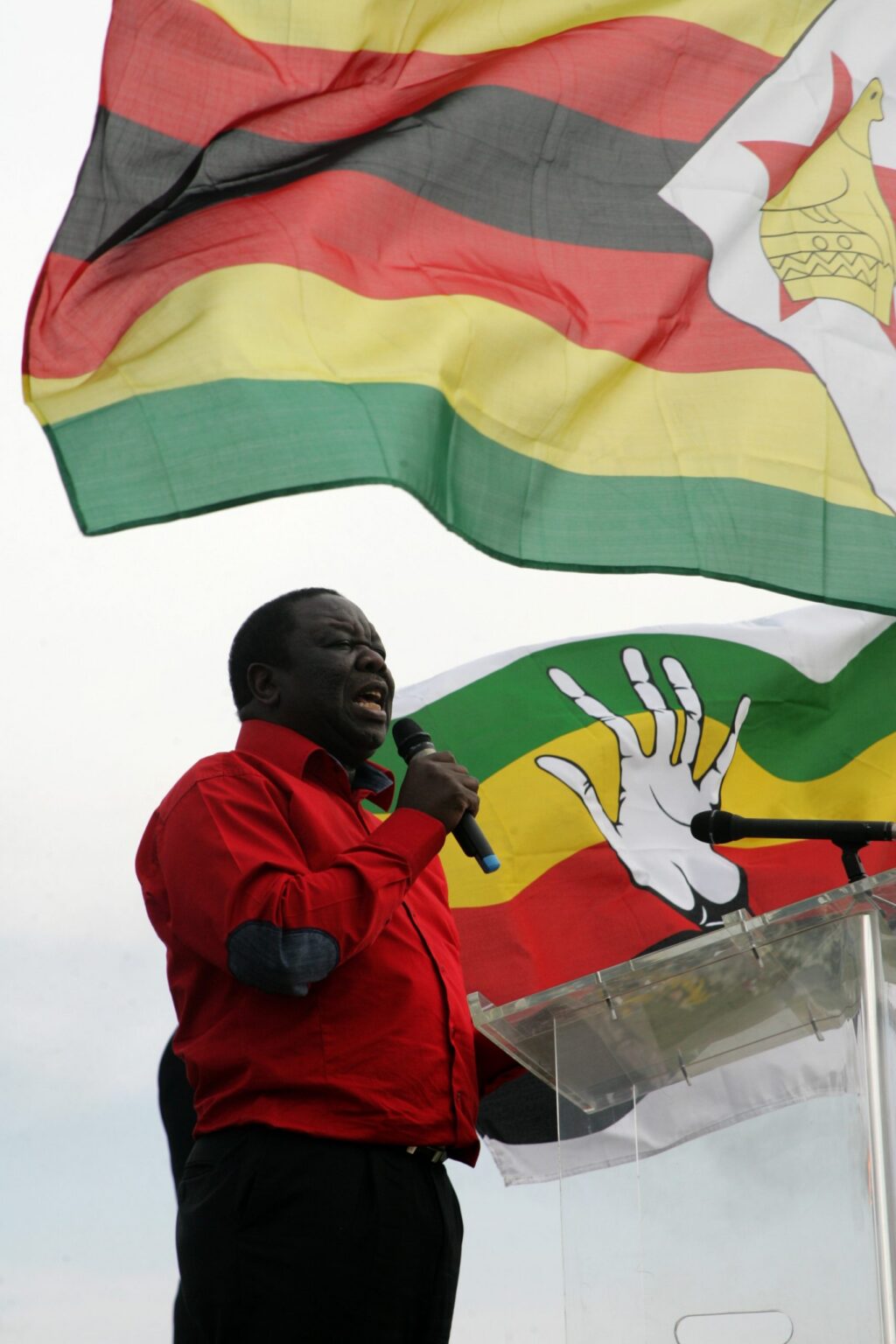
Could 2013 be Morgan Tsvangirai’s lucky year? Can President Robert Mugabe’s long-time rival, who has led the Movement for Democratic Change party since 1999, be third time lucky and unseat the veteran leader after failing to win two presidential elections in 2002 and 2008?
What will happen if the 61-year-old Tsvangirai loses again? These are niggling questions as 2013 opens, with “elections” being the buzzword for a year that will see Zimbabwe inevitably going to the polls after four years of a coalition government. Tsvangirai has been increasingly foreboding about 2013 and during rallies at the close of 2012 he made his feelings – and fears – known.
“We have one chance left – 2013 – to prove that this party is ready to govern,” he told supporters in November, and then added in Shona, the main language of the country, that if the MDC failed again “some of us will go back to the villages to herd cattle”.
At a rally in the country’s third city of Gweru in early December, Tsvangirai told supporters that if the party lost it would be “difficult” and that he would resign as party leader. He, however, retracted this statement, telling the Daily News newspaper that it was a “joke”.
“I’m a messenger of hope and cannot be a carrier of bad news,” he was quoted as saying. “…I cannot be discouraging my own supporters or threatening them. We will win the next elections.”
Politicians, commentators and analysts are agreed that because of the elections, 2013 will be a crucial year. The elections are expected in the mid-year after the conclusion of the constitution-making process, and the institution of necessary reforms.
The government has set aside $50m for the constitutional referendum and the elections. The Zimbabwe Electoral Commission says it is ready for the two processes and will need about $300m.
“The most important thing about 2013 is that there will be elections,” says Professor Welshman Ncube, leader of the smaller MDC splinter party, now called MDC-Green because of the party’s livery. “The election will define where the country goes, and it has to be an election that is regarded by Zimbabweans, Africans and the international community as legitimate, free and fair, and reflects the will of the people… We owe it to ourselves and future generations that we have credible polls regardless of who wins them.”
While the MDC-Green leader believes that 2013 is a year that Zimbabwe will see a “rebirth”, the vice-chairman of the main MDC party (now called MDC-T), Morgan Komichi, says 2013 will be a “watershed” year, almost like the country’s independence year, 1980.
“We are all fed up with this Inclusive Government as it has not produced any results because of the competing interests,” he told New African.
“We want the people to elect a party that will be people-oriented and institute programmes and policies on its own,” Komichi said, adding: “The elections should be issues-based and parties must desist from violence.”
Zanu-PF held its annual conference in Gweru between December 4 and 9, and overwhelmingly confirmed President Robert Mugabe as the party’s candidate for 2013. He will be 89 years old by then.
Zanu-PF also resolved, inter alia, “to direct all structures of the party to earnestly and immediately prepare for a resounding victory in the forthcoming elections…”
The party has adopted the slogan, “bhora mugedhi” (in Shona) or “Ibhola Egedhini” (in Ndebele) for the elections. In English, it means “[foot]ball in the net”. This is in response to the stance adopted by some Zanu-PF members in the 2008 elections who deliberately caused the party candidate, Mugabe, to lose by playing the “ball into the woods”.
Professor Lovemore Madhuku, a political commentator and University of Zimbabwe law lecturer, is one of those who are not quite so enthusiastic about the 2013 elections. “It will be more of the same,” he says.
“In the coming elections,” he argues, “if Zanu-PF wins, there is nothing new that will come up as the same people will be ruling the country as they have done for over 30 years. If MDC-T wins it will not change anything much either. There is a need for a third force but that is not possible now. Maybe in 2014 or 2015,” he said.
Leaders of the smaller parties in the country, Zapu and Mavambo Kusile Dawn, have ruled out joining forces with MDC-T to try and unseat Mugabe, as has Ncube who split with Tsvangirai in 2005.
According to Madhuku, 2012 was a “disastrous” year for Zimbabwe as a country. “It was a year when there was no development and the Inclusive Government wasted time and lied to the people,” he said.
“At the beginning of the year, they promised that there would be a new constitution but there has been none. The parties wasted time trying to score political points against each other rather than making developments,” Madhuku added, attributing this to the “dysfunctionality” of coalition governments. “These experiments of coalition governments do not work,” he explained.
Madhuku, who has been linked to a political career possibly in MDC-T, may be so unsparing of mainstream politicians, but he is not wrong. In 2012, a new constitution was expected, which it was hoped would pave the way for crucial electoral reforms. But that did not materialise although last year saw some key milestones such as the final draft of the constitution and the Second All Stakeholders Conference in late October. However, the MDC-T is not dissatisfied with 2012. Komichi said the party was happy with the progress of the constitution-making process, although it had faced numerous constraints. He was also happy with what MDC-T had done on the ground, ahead of elections next year.
“We have been doing serious work on the ground as we have been setting structures and doing training programmes on organising, elections, information dissemination, and conflict management, Komichi revealed. “All our programmes were to empower our cadres to be highly trained. The party is ready for elections as long as there are necessary reforms in the media and the constitution.”
But opinion polls published in the middle of 2012 pointed to the MDC-T’s declining support. Komichi acknowledges this fact. “We are a party that listens,” he says. “We have responded positively and we have done a lot. We are not going to argue with the findings: it might be a blessing in disguise. Where people say we are not doing enough we improve. These polls actually help us.”
For his part, Ncube, the leader of MDC-Green, thinks 2012 was a “good year” for the party. “We spent time in the villages and cities across the country interacting and mobilising support, and as a result the party witnessed phenomenal growth,” he claimed, disclosing that as many as 120,000 joined the party in 2012.
It was the year that the party rebranded to its “Green” livery, which are the colours of its regalia and symbols, and even bicycles that the party has been distributing to Ncube’s supporters. “It all went exceedingly well,” he said, “despite some challenges from those who want to destroy our party and those who wanted to challenge our leadership in the courts even though the old leadership had been removed at the congress in 2011.”
The former leader of MDC-Green, Deputy Prime Minister Professor Arthur Mutambara spent a good part of 2012 contesting the leadership of Prof Ncube in the courts. Ncube said he was happy 2012 saw the proclamation of a human rights law and the licensing of two new radio stations in Zimbabwe. He wants the licensing of an independent TV station to be implemented soon. Ncube, who is also the industry and commerce minister, said Zimbabwe had “not done so well” on the election roadmap, leading to foreign investors adopting a “wait and see” attitude, uncertain about Zimbabwe’s elections and future.
However, in November, the country scored a major coup when it held the inaugural Zimbabwe Diamond Conference, which brought together stakeholders from across the globe, including Gillian Milovanovic, the outgoing head of the Kimberly Process and Certification Scheme (KPCS) who comes from the US. The US, Canada, and other Western countries, had opposed the sale of Zimbabwe diamonds, alleging they were “blood-diamonds”. However, the country has been certified as fully-compliant with the KPCS procedures and is now free to sell its diamonds, after years of constraints and the monitoring of sales.