Political parties have long used PR agencies to help them win elections in other parts of the world and this is becoming increasingly common in Africa.
However, putting Western agencies at the heart of African election campaigns seems to be a more recent phenomenon. In the past, it made sense to employ local agencies with local staff, who had an excellent understanding of local issues, so that they could tailor their campaigns and political messages to the electorate concerned.
However, the advent of digital data harvesting has made the new generation of high-profile Western agencies very attractive to ambitious African politicians.
Reams and reams have been written on the involvement of Cambridge Analytica in recent very high-profile US and UK votes but the company is so crucial to this story that it is worth mentioning here. It was set up as the US offshoot of British strategic communications and behavioural change firm SCL as recently as 2013 but has already been credited with helping to secure Donald Trump the US presidency and aiding the UK’s exit from the European Union.
Cambridge Analytica and companies like it use online data and psychometric profiles in order to design bespoke messages aimed at the individual. It is a little like the way in which political parties used to target swing voters in marginal constituencies, but much more sophisticated, probably a lot more effective, and more difficult to ignore.
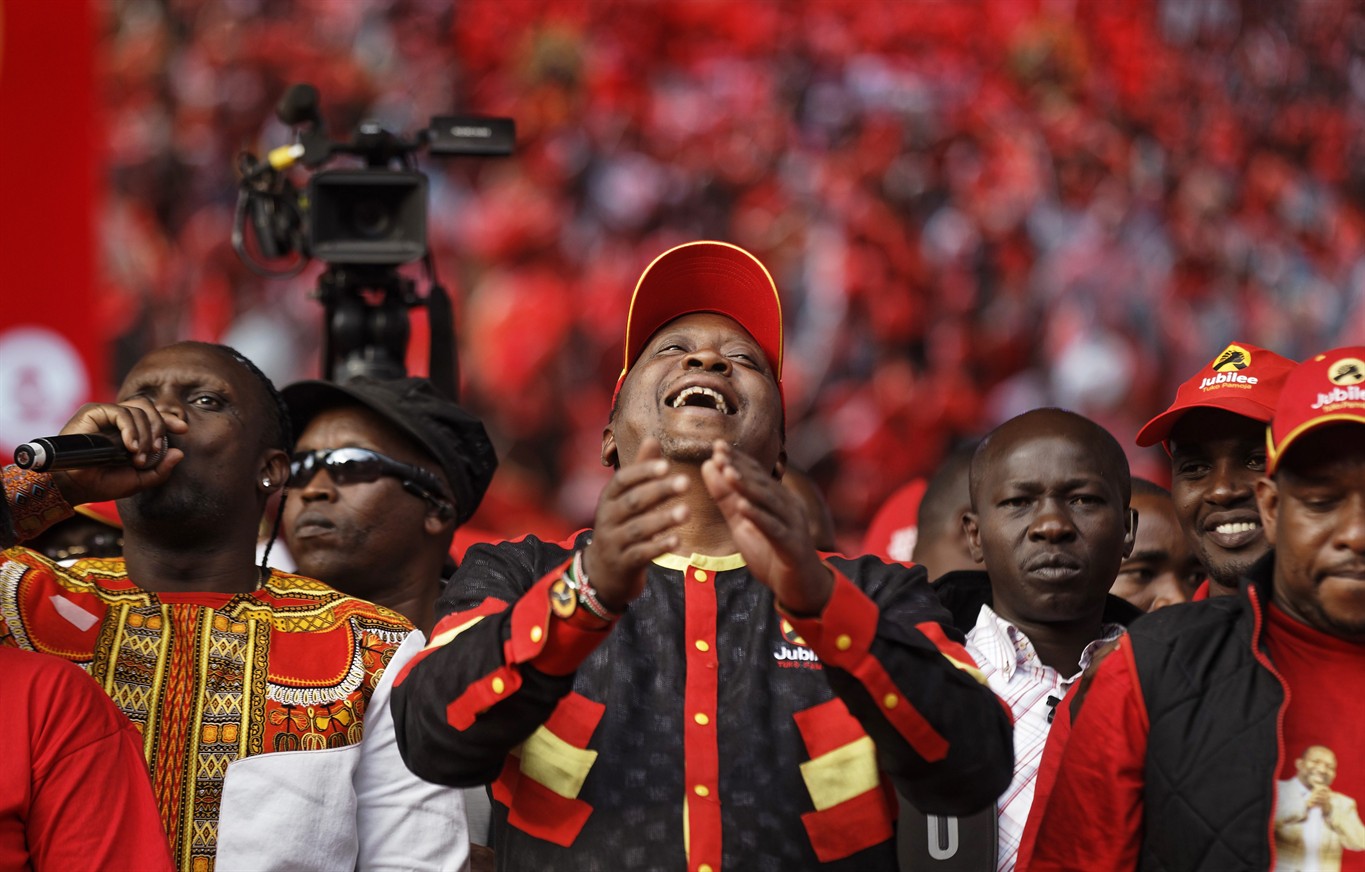
It was Cambridge Analytica’s ability to identify “persuadable” voters and help tailor political messages to them that appears to have attracted the attention of Kenyan President Uhuru Kenyatta’s campaign team in the run-up to this August’s election.
BTP Advisors
Even before it contracted Cambridge Analytica, the Jubilee Party had already employed another British firm, BTP Advisors, to work on its campaign, just as it had in the previous presidential campaign in 2013. The chairman of The National Alliance, Johnson Sakaja, said of the 2013 presidential race: “As polling day neared, and emotions ran high, BTP’s consultants made sure the ship was kept steady and our message resonated with voters.”
Kenyatta won the presidential poll, just as his Jubilee Party won the legislative election. However, the leader of the opposition National Super Alliance (NASA), Raila Odinga, challenged the results and alleged that “a computer-generated leadership” had been created. The Kenyan Supreme Court unexpectedly annulled the results of the vote at the start of September, requiring the Electoral Commission to hold a new vote within two months.
Odinga announced his withdrawal from the election, arguing that only electoral reform could create the conditions for a free election. For the purposes of this story, the important development took place days before Odinga’s withdrawal, when it was revealed that NASA had secured the services of its own election PR company, US firm Aristotle International. Aristotle’s own strapline is: “We Power Democracy. Providing technology,
data, and strategy for your campaign and public affairs needs.”
Founded in 1983, it is an older company than Cambridge Analytica. The firm will carry NASA’s message to Washington: that Kenya needs a more open and fair election process. Other Western PR companies have been employed by the Kenyan government in recent years, while UK firm Grayling is currently advising the Kenya Tourism Board, so the use of foreign PR agencies in this year’s elections is hardly exceptional.
It may be easier to interfere in African elections than in those elsewhere, as some have claimed, because there can be fewer checks and balances.
However, this is probably not the case in Kenya. Hillary Clinton argues that the Kenyan Supreme Court’s decision to overturn the result of the presidential election would not have occurred in the US in the same situation. In an interview about her defeat in the 2016 US presidential election on US radio, Clinton referred to concerns over the role of Cambridge Analytica in the Kenyan polls.
Kenya has plenty of PR agencies of its own, including Glass House PR, which says: “We do not throw stones; we use them to build strong brands through cutting edge PR solutions.” Nevertheless, the government has consistently turned to international firms, which must surely be more expensive, in the expectation that they can bring something else to the table to compensate for their lack of local experience.