
Thursday 26 November 2026

JUST IN

A complex network: Trump’s ‘Third Country’ Deportations deals with African countries. Part 1Hassan Hajjaj takes his ‘Rock Stars’ to ParisDevelopment projects should deliver safety, not just infrastructureThe Serengeti at 75: What are the limits of safari tourism?Senegal are AFCON champions. Again. For now.A complex network: Trump’s ‘Third Country’ Deportations deals with African countries. Part 1Hassan Hajjaj takes his ‘Rock Stars’ to ParisDevelopment projects should deliver safety, not just infrastructureThe Serengeti at 75: What are the limits of safari tourism?Senegal are AFCON champions. Again. For now.
New African
Support Us
Opinion
  • African Voices
  • From the Globe
  • Our Columnists
Politics
  • Africa in the World
  • Elections
  • Inside Africa
Interviews
Economy
  • Industrialisation
  • Integration
  • Sovereignty
Society
  • Education
  • Health
  • Portraits
  • The Future of Work
Culture
  • Arts
  • Books
  • Cinema
  • Fashion
  • History
  • Music
Innovation
  • Digital
  • Science
  • Tech
Sports
  • Athletics
  • Football
Videos
Special Dossiers
  • Cotton to Cloth
  • 60th Anniversary
The Mag
  • Current Issue
  • Digital Archive
  • Lists

Trending

FashionCreative EconomySovereigntyIndustrialisation
Newsletter
  • Opinion
    • From the Globe
    • African Voices
    • Our Columnists
  • Politics
    • Africa in the World
    • Elections
    • Inside Africa
  • Interviews
  • Economy
    • Industrialisation
    • Integration
    • Sovereignty
  • Society
    • Education
    • Health
    • Portraits
    • The Future of Work
  • Culture
    • Arts
    • Books
    • Cinema
    • Fashion
    • History
    • Music
  • Innovation
    • Digital
    • Science
    • Tech
  • Sports
    • Football
  • Videos
The Mag
  • Current Issue
  • Digital Archive
  • Lists
Special Dossier
  • Cotton to Cloth
  • 60th Anniversary
Donate
X
HomeAfrican VoicesWithout flexibility, Africa’s energy revolution will not take place

African Voices

Without flexibility, Africa’s energy revolution will not take place

The speed of the energy transition will impose additional criteria in investment choices to ensure the sustainability and the best economic profitability of a country's energy mix.

By Ville RimaliMarch 31, 2022 · 3 min read
ShareX

The speed of the energy transition will impose additional criteria in investment choices to ensure the sustainability and the best economic profitability of a country’s energy mix, writes Ville Rimali.

The energy transition integrating renewable energies into the grid is a reality that is unfolding globally. This can be observed at different rates and scales according to the countries, but the constant increase in demand and the continuous drop in the prices of these technologies implies that renewable energies will constitute the basis of the power supply to the electrical networks in the future.

It is, in fact, more of a revolution than a transition, given the rapidity with which the share of renewable energy is growing today, and the fall already noted in the prices of the renewable kWh produced. The same goes for Africa, and in particular North and West Africa, where Egypt, Morocco and Senegal have already embarked on the introduction of solar energy and wind turbines.

However, since renewable energies are intermittent by nature, they generate instability on electricity networks, posing enormous difficulties for operators, and potentially for consumers as a result.

Non-flexible production capacities, typically coal-fired, will therefore have to be replaced by much more flexible means of production. We will have to rely on a mix of energy storage solutions and engine-based technologies, which provide the best response times, to effectively adapt to sudden excess or shortfall in renewable production.

Interestingly, the Covid-19 crisis and its confinement phases give us a taste of what awaits us in 2030 in Africa. We observe in real time a full-scale simulation of the effects of a majority of renewables in the energy production mix. As demand for electricity in Europe has fallen due to lockdown measures, the generation of renewable energy continues to be produced at full speed.

As a result, energy sources such as coal have become the adjustment variable and are stopped whenever possible, which very significantly increases the relative importance of renewable energies in the mix.

For example, in the United Kingdom, over the March 23-May 24 2020 period, the share of renewables reached 41% of production, while during the same period in 2019, the figure was 30%. At the same time, the share of electricity produced by coal-fired power plants fell by 46%. Since April 10, all the coal plants have been shut down.

In Germany, over the same period, the share of renewable energy reached 60%, up 12%, while the share of electricity produced by coal-fired power plants fell by 52%. At the end of April, the share of renewables reached almost 80% several days in a row, when at the same time the weather was nice and windy. For 3 days, Germany even had to pay to massively export its excess electricity, unable to adjust its “inflexible” production tool.

Finding equilibrium

The main lesson to learn? The speed of the energy transition imposes additional criteria in investment choices to ensure the sustainability and the best economic profitability of a country’s energy mix.

The equilibrium between the types of technologies in the energy mix, the production costs and consumption has changed radically with the massive introduction of renewable energies. The production price of a kWh is only optimised by cleverly combining the different technologies for the best performance, the least risk of interruption, whatever the development consumption.

Forecasts show that by 2050, solar PV would represent over 50% of total electricity production in Africa. Renewable energies are – and will remain – affordable and reliable; they will be combined with flexible quick-start energy generation resources such as engines, which allow them to operate to meet peaks in demand, and to compensate for intermittence.

These engines also provide additional security, because they can work just as well on gas as on fuel in the event of a gas supply shortage, but also ultimately on bio-and synthetic fuels when these become economically competitive and widely available.

Introducing a large part of flexibility in our electricity production is not an option: without flexibility, the energy revolution will not take place.

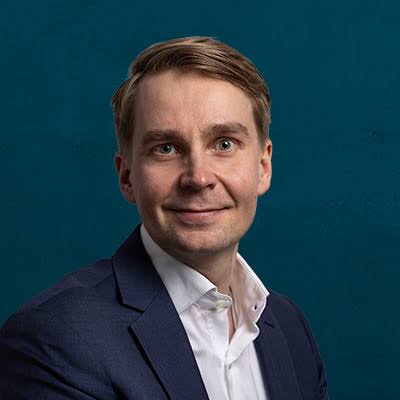
Ville Rimali is director, growth and development, at Wärtsilä.
Filed Under

African Voices
Ville Rimali

About the Author

Ville Rimali

An energy transition expert specialising in energy storage, currently Investment Director for Energy Storage at Taaleri Energia, with extensive experience in power systems and decarbonisation.

Subscribe to the Newsletter

Africa on its own terms, in your inbox every week.

Top 10 Trending

  1. 1CANEX WKND 2026 opens in Lagos
  2. 2Nairobi auction sets new benchmarks for East African art
  3. 3Adesokan’s ‘South Side’ wins Parrésia Press the CANEX prize for publishing 2026
  4. 4For Lagos Fashion Week, The Future is Craftsmanship
  5. 5CANEX WKND is a chance to turn Africa’s cultural power into economic wealth
  6. 6Africa’s trade corridors should be about value, not extraction
  7. 7Dangote’s IPO is rewiring intra-African investment
  8. 8CANEX WKND 2026: What Lagos can learn from Algiers
  9. 9Naira devaluation made Nigeria poor, Obasanjo says
  10. 10Why Ghana wants to join BRICS

More in African Voices

African Voices

The work behind a nation’s reputation

By Gina Din and Maurice Makoloo

African Voices

Africa exports oil, cocoa, and athletes. Only two of those have a plan

By Nicolas Pompigne-Mognard

African Voices

The humiliation of bending the knee for a pittance

By Baffour Ankomah

African Voices

Africa’s trade corridors should be about value, not extraction

By Dr Kandeh K. Yumkella

Featured

Special Series

Special Dossier

Cotton to Cloth

60th Anniversary

Celebrating 60 Years of New African

The Mag

UN General Assembly 2026

Most Influential Africans

The Most Influential Africans 2025

Africa's Premier Pan-African Magazine since 1966.

FacebookXInstagramYouTube

Subscribe to the newsletter

Sections

  • Opinion
  • Politics
  • Interviews
  • Economy
  • Society
  • Culture
  • Innovation
  • Sports

Explore More

  • Videos
  • The Mag
  • Special Dossiers
  • Digital Archive

Engage With Us

  • Advertise with us
  • Partner with us
  • Support us

Our Network

  • IC Publications
  • African Business
  • African Banker
  • New African Magazine de l'Afrique
  • IC Events
  • AB Intelligence
Why Support New African
Support Us
About Us·Contact Us·Privacy Policy·Cookie Policy·

© 2026 IC Publications Ltd. All Rights Reserved.

DashboardEdit







