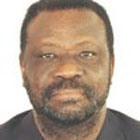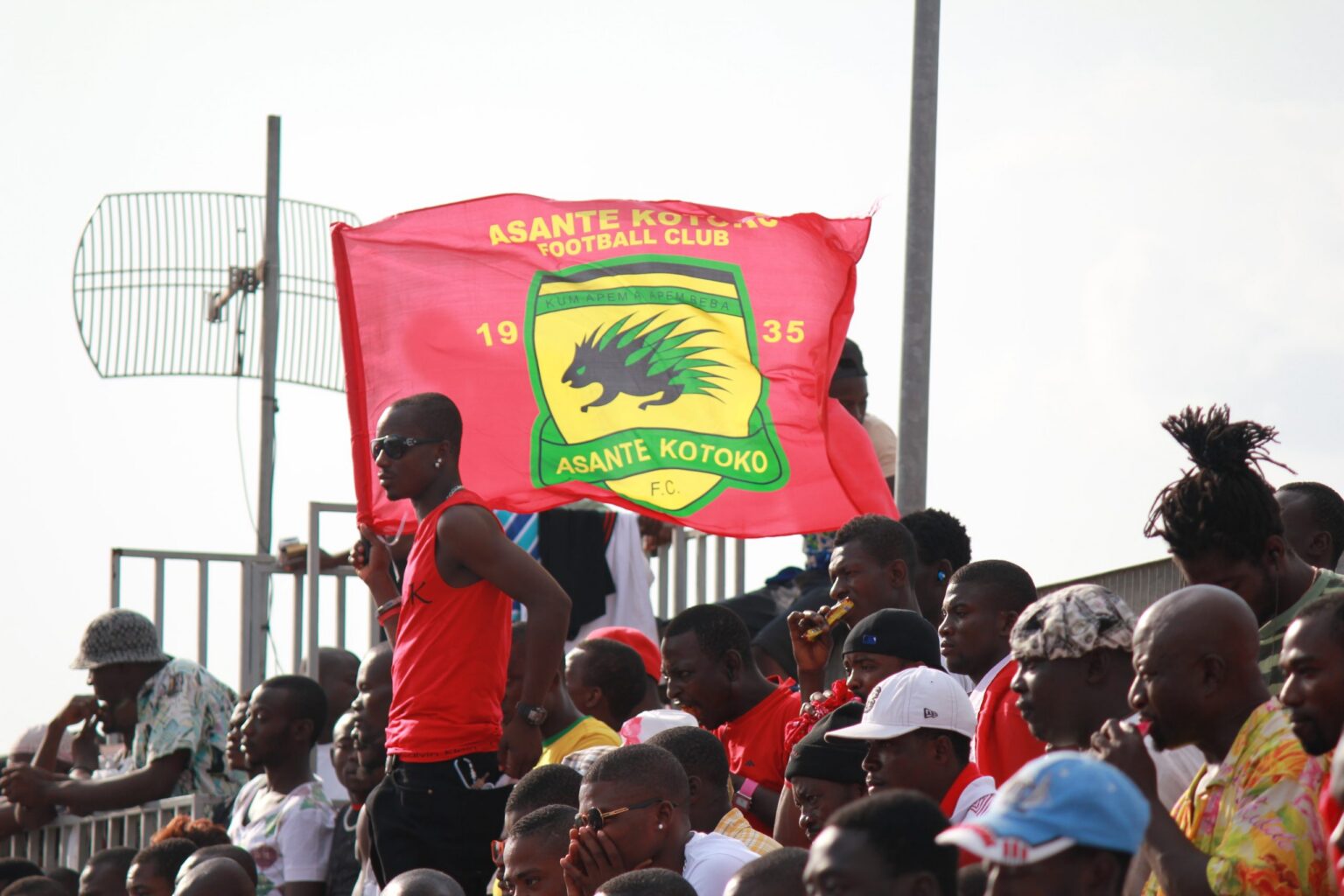
Forty years after his brutal murder, Robert Mensah, the Ghanaian goalkeeper is still fondly missed and remembered for his mesmerising vitality and incredible bravery on the pitch.
Robert Mensah, ace goalkeeper of Ghana’s famous Kumasi Asante Kotoko Football Club, posed a great problem to me as a football fan. Normally, I do not like to support any local football club, as my job requires that I write about all of the clubs without showing any bias towards one of them. But Kotoko was shoved into my face every day, because one of my sons was infatuated with its goalkeeper, Robert Mensah.
Mensah was a tall, stylish fellow who always wore a black-and-white checked cap – even when he was keeping goal. And his pictures were on the walls above the bed of my son, Kofi Amoako Duodu, then aged nine, the age at which heroes are captured and never allowed to escape.
And then, Robert Mensah died. He didn’t just die – he was killed in a most tragic manner – stabbed to death with a broken bottle in a pub brawl at Tema, near Accra, on 30 October 1971.
His assailant was an electrician called Melfah, and the brawl took place at an akpeteshie (illicit gin) joint called “Credo”, at Tema’s Community 7. The rumour was that the fight was over a woman (what else!). But details were sketchy. However, the killing happened just before a crucial African Cup of Champions Clubs match was coming up between Asante Kotoko and Great Olympics, raising unsubstantiated speculation that the stabing could have been “Olympics-inspired assassination”, a truly unlikely scenario because the truth was that the akpeteshie just made people go mad.
The burning question was however: Would Robert survive the emergency surgical operation that had been performed on him? No-one knew. But rumours flew: he’d died; no, he’d only gone into a coma but was still breathing; yes, the Kotoko management was thinking of flying him abroad for treatment; no, that couldn’t be, because his condition was too delicate to enable him to fly safely.
It was awful to witness the depression that had settled on my son and his Kotoko-supporting friends as each of these rumours was dissected and discarded. Fortunately, I was the first to hear when Robert had passed away on 2 November 1971. As soon as Kofi woke up, I went to his room. I didn’t want to shock him with the news, and so tried to prepare him for it. The method I adopted to lessen his distress, was to be as calmly clinical about Robert’s condition as possible. I talked to him as if he was a grown-up man with experience of the world.
After my guarded explanation, Kofi asked, with his eyes full of tears: “So you’re saying, Daddy, that he might die?” I was happy that he’d brought that up directly. I replied calmly, “Yes, he might not make it. But we don’t know for sure. It is a matter of luck.”
One hour later, just before he went to school, I told him that Robert was gone. He took it extremely well. But we drove to school in complete silence, each lost in his own thoughts. Truly, it was unbelievable that Robert Mensah was dead.
For his whole reputation had been built around the fact that he exuded vitality and incredible bravery. If his team-mates disputed with the referee over a penalty awarded against them, it was not beyond Robert to go and disperse the players, take the ball, place it on the spot, and walk laconically back to stand between the posts. He would then dare the opposing side to shoot the penalty. Invariably, he unnerved them and they either shot wide, or kicked the ball feebly enough for him to be able to catch it.
The most famous occasion on which he did this was in Kinshasa, in the former Zaire, where Asante Kotoko had gone to play an African Cup of Champions Clubs final against Englebert in 1970. A biased referee awarded a last-minute penalty against Kotoko, who were leading by 2 goals to 1. Fed up with the referee’s partiality, officials of Kotoko and some of the players decided to boycott the rest of the match. But feeling slighted at the idea that the officials wanted to “run away” from a penalty when he, Robert Mensah, was in the goal, he went and talked to them. He then took the ball and walked with it to the penalty spot, before going to the middle of the goal and waiting.
There is a story, which I haven’t been able to verify, that Robert took off his checked black-and-white cap, which he always wore, and tapped the crossbar as well as the two posts with it. The Congolese went ballistic at this. They suspected that Robert had put juju in the cap and that once he had the cap on his head, they would not be able to score the penalty. The Zairians demanded that Robert take off the cap, but he refused. There was another deadlock.
But then a Kotoko elder came and in his turn, repeated the very words Robert had used earlier back to him: “Asante Kotoko – yenim ko oo, yennim adwanier oo!” (Asante Kotoko: we only know how to fight, not how to run away!) Robert was moved by this. He took the cap off his head and threw it on the grass. A Zairian soldier picked it up and tore its lining open with the bayonet of his rifle. He looked in it for the juju he believed Robert had hidden inside it. He found nothing.
Peace restored, the ball was placed on the spot. The Englebert penalty specialist, Kagogo, came and stood behind the ball. Robert looked him up and down. Then Kagogo kicked the ball. The ball sailed miles over the bar! Kotoko had won.
Another story has it that the Congolese ruler, Mobutu Sese Seko, was furious. Anyway, Kotoko brought the cup home to Ghana. And Robert Mensah’s stature grew bigger than anything imaginable.
When I picked Kofi up from school at lunchtime that sad day, my wife and I tried our best to lift his spirits by taking him and his younger brother, Akwasi, to the Star Hotel, where we treated them to a special lunch. Kofi has written about all of this, and I shall now let him take over the story.
Kofi Amoako Duodu writes: Those were our days of legendary glories, when my team, Kumasi Asante Kotoko, trod the “streets of Utopia”; when the soccer being played was at an unattainable level, when scripts were written by the special grace of God Almighty Himself. And yet in spite of all this, when my father asked me: ‘’Kofi, what will you be when you grow up?’’, I would reply: “I will be a ‘gow-kipper’ ”, and he would say “goal-keeper not gow-kipper”!
Yes, the aura of Robert Mensah was of divine proportions and had infected me. People actually went to the stadium purposely to watch Bob. I finally got to watch Bob live myself in 1971, in a game with Great Olympics, who were league champs. So it was that it was right in front of me that Robert took Jones’s shot on his belly, as though it was nothing, and the whole stadium burst out laughing.
Unfortunately for me, my man was not put to any real test. But I was there and experienced the real meaning of “red-red”, the Kotoko colours. This was the only time I watched “Uncle Bob” in living colour.
Later on, it was my birthday, and my step-mum threw a party and little did we know the bombshell she had in store for us 60s kids. How she got it I know not, but a carpet was spread on our garage floor and with the white wall making a perfect screen, a projector was switched on from a table behind us. And what did we see? The whole 90-minute reel of Asante Kotoko vs. Englebert in Kinshasa! I mean, my step-mum “murdered” me for eternity!
Robert Mensah was born in 1939. When he died on 2 November 1971, he was 32 years old. But 40 years on, he is still fondly remembered in the hearts of many a middle-aged man, who was a mere youngster at the time of the tragedy. Of how many people can that be said in an age when a short attention span is guaranteed among young and old alike? Sleep peacefully, Robert Mensah, Heroic Goalkeeper of Ghana.