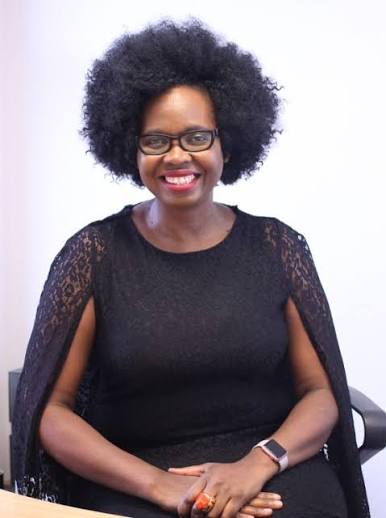
Dr Geraldine Fraser-Moleketi was appointed Chancellor of the Nelson Mandela University on 1 April 2018. She was one of the youngest members of Nelson Mandela’s first Cabinet and Minister of Welfare. She also served as a member of the South African Parliament between 1994 and 2008, and in a number of developmental organisations, including as Special Envoy on Gender/ Vice-President at the African Development Bank. Interview by reGina Jane Jere.
Madiba’s passion for education is legendary; would he be disappointed with the state of education in Africa today? The answer is yes, he would.
But Madiba was never a pessimist and he would not have expected everything to change and improve immediately. His vision and perspective on transformation in education and in any other field, was not a one-shot-in-the-arm approach.
His view was that education is generational. Bear in mind that the world is changing fast. The way we saw education 10-15 years ago is different from the way we may have viewed it 30 years ago and how we will look at it in 30 years’ time.
For example, there has been a lot of talk about the 4th Industrial Revolution, but just as some of us are coming to grips with that, there is already this growing discussion about the 5th Industrial Revolution!
Africa’s demographics make it the youngest continent in the world but we also have some of the highest levels of unskilled and under-skilled young people.
We therefore have a big challenge to ensure that we keep up with the education curve and even strive to be ahead of the curve, because we have this youth resource.
So the issue should be, what changes have been seen in Africa’s education in the 100 years since Madiba was born? The straight answer is that of course we have seen some changes. But Africa needs to do something so exceptional, that it will lead to the end of inequality in our societies.
Exceptional change needed
Madiba would have expected that and more, because he always spoke about the ability and need to take risks in order to achieve change. He always pushed people to do more and better themselves.
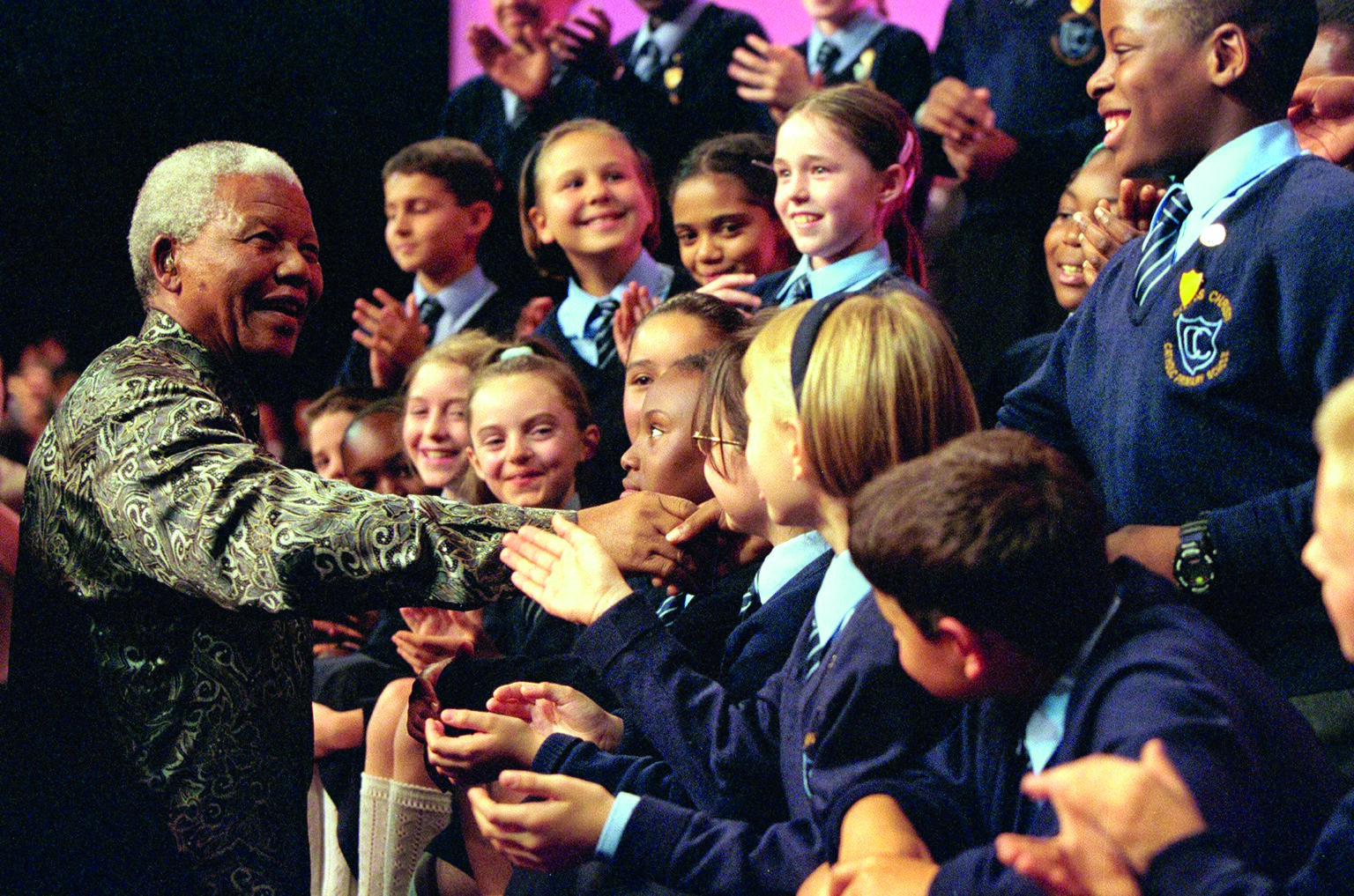
When he formed his first Cabinet, I was one of the youngest ministers, in charge of welfare and population development. Madiba loved children, and as we all know, during his incarceration for 27 years, his access to children, including his own, was very limited, at times zero.
Because of that, he was absolutely committed to making a difference for children – and he channelled that into education. Hence the concept of having children’s parties on all his birthdays was very fundamental and special to him.
Before his passion for education even went global, it started with himself and those close to him. I remember how he would discuss with me his concern, when he was released from prison, on finding that his late son Magkhato had not completed his education. He insisted that he must go back to school and to university. And Magkhato did do so, graduating later with a degree in law.
He also pushed me personally to complete my Masters in Public Administration whilst serving in his government. He would always say to me, “Gerry, how is that going? You’d better complete it.” He said it in such a way, that you felt compelled to do it well.
He saw potential in everyone. That is why he always said passionately in that now popular quote: “It always seems impossible until it is done.”
Nelson Mandela University
I am incredibly humbled and proud that I am now Chancellor of the Nelson Mandela University (NMU).
The Nelson Mandela University is quite unique on many levels – for example, focusing on sciences in Ocean Economy, or the ‘blue economy’. The NMU is going to be the African university offering students a curriculum to study this science.
Our continent is surrounded by the ocean and even for landlocked countries, we know water is quite an issue – so this is one of the areas where we feel we can train students, and create jobs in this incredible sector and transform the continent. The NMU has also looked deeper into the issue of renewables and recent discoveries in the areas of palaeontology.
The Vice Chancellor, Professor Sibongile Muthwa, is also currently pushing our trans-disciplinary approach to education, to remove silos whereby sciences are on one side, the humanities are on another, and the arts are on another too.
If we really want to transform Africa, we have to think in a trans-
disciplinary way. This is not unusual for Africa; one of the oldest universities in the world, Sankoré University in Mali, was trans-disciplinary in outlook, with scholars like Dr Ahmed Baba, who studied across disciplines – from mathematics to religion and so on.
This approach to education will not only make us relevant in this century, but ably take us into the 22nd century, and what greater tribute to Madiba than ensuring that the NMU initiates trans-disciplinary institutions throughout Africa and embedding this as part of our DNA.
During this year’s Madiba centenary celebrations – which are also that of an equally iconic liberation hero, Albertina Sisulu – the NMU will hold several events that will not be one-offs but contribute to larger processes around scholarships.
The university is also looking at the issue of leadership being central to everything we do. We cannot talk about transformation in Africa if we don’t build future leaders who are taught the values of good and ethical governance. This should be a crucial component in academia.
Also, the NMU sees itself as potentially becoming a Pan-African hub of knowledge. We are going to make linkages, for a start, with universities in the 16 countries that Madiba went to when he was garnering support for South Africa’s liberation.
We are reaching out to these countries because we believe there is a huge knowledge base and there is a lot we can learn and share. We truly believe that we will become a centre of excellence, with African scholars right here at home.
In the spirit of Madiba and other founding heroes of the freedom struggle, Africa now more than ever, needs people who are bold like Madiba was; who have courage like Madiba had; have the ability to navigate choppy waters and say at the end of the day, it is not about me, but it is about our people.
It is about realising an Africa where no woman must die giving birth, an Africa where there are no child marriages and brides; where there is no violence of any sort; where property and land rights are a reality for all Africans; and where access to quality education is just normal. That would be a true realisation of the Madiba magic. n
Madiba’s passion for education is legendary; would he be disappointed with the state of education in Africa today? The answer is yes, he would.
But Madiba was never a pessimist and he would not have expected everything to change and improve immediately. His vision and perspective on transformation in education and in any other field, was not a one-shot-in-the-arm approach.
His view was that education is generational. Bear in mind that the world is changing fast. The way we saw education 10-15 years ago is different from the way we may have viewed it 30 years ago and how we will look at it in 30 years’ time.
For example, there has been a lot of talk about the 4th Industrial Revolution, but just as some of us are coming to grips with that, there is already this growing discussion about the 5th Industrial Revolution!
Africa’s demographics make it the youngest continent in the world but we also have some of the highest levels of unskilled and under-skilled young people.
We therefore have a big challenge to ensure that we keep up with the education curve and even strive to be ahead of the curve, because we have this youth resource.
So the issue should be, what changes have been seen in Africa’s education in the 100 years since Madiba was born? The straight answer is that of course we have seen some changes. But Africa needs to do something so exceptional, that it will lead to the end of inequality in our societies.
Exceptional change needed
Madiba would have expected that and more, because he always spoke about the ability and need to take risks in order to achieve change. He always pushed people to do more and better themselves.
When he formed his first Cabinet, I was one of the youngest ministers, in charge of welfare and population development. Madiba loved children, and as we all know, during his incarceration for 27 years, his access to children, including his own, was very limited, at times zero.
Because of that, he was absolutely committed to making a difference for children – and he channelled that into education. Hence the concept of having children’s parties on all his birthdays was very fundamental and special to him.
Before his passion for education even went global, it started with himself and those close to him. I remember how he would discuss with me his concern, when he was released from prison, on finding that his late son Magkhato had not completed his education. He insisted that he must go back to school and to university. And Magkhato did do so, graduating later with a degree in law.
He also pushed me personally to complete my Masters in Public Administration whilst serving in his government. He would always say to me, “Gerry, how is that going? You’d better complete it.” He said it in such a way, that you felt compelled to do it well.
He saw potential in everyone. That is why he always said passionately in that now popular quote: “It always seems impossible until it is done.”
Nelson Mandela University
I am incredibly humbled and proud that I am now Chancellor of the Nelson Mandela University (NMU).
The Nelson Mandela University is quite unique on many levels – for example, focusing on sciences in Ocean Economy, or the ‘blue economy’. The NMU is going to be the African university offering students a curriculum to study this science.
Our continent is surrounded by the ocean and even for landlocked countries, we know water is quite an issue – so this is one of the areas where we feel we can train students, and create jobs in this incredible sector and transform the continent. The NMU has also looked deeper into the issue of renewables and recent discoveries in the areas of palaeontology.
The Vice Chancellor, Professor Sibongile Muthwa, is also currently pushing our trans-disciplinary approach to education, to remove silos whereby sciences are on one side, the humanities are on another, and the arts are on another too.
If we really want to transform Africa, we have to think in a trans-
disciplinary way. This is not unusual for Africa; one of the oldest universities in the world, Sankoré University in Mali, was trans-disciplinary in outlook, with scholars like Dr Ahmed Baba, who studied across disciplines – from mathematics to religion and so
on.
This approach to education will not only make us relevant in this century, but ably take us into the 22nd century, and what greater tribute to Madiba than ensuring that the NMU initiates trans-disciplinary institutions throughout Africa and embedding this as part of our DNA.
During this year’s Madiba centenary celebrations – which are also that of an equally iconic liberation hero, Albertina Sisulu – the NMU will hold several events that will not be one-offs but contribute to larger processes around scholarships.
The university is also looking at the issue of leadership being central to everything we do. We cannot talk about transformation in Africa if we don’t build future leaders who are taught the values of good and ethical governance. This should be a crucial component in academia.
Also, the NMU sees itself as potentially becoming a Pan-African hub of knowledge. We are going to make linkages, for a start, with universities in the 16 countries that Madiba went to when he was garnering support for South Africa’s liberation.
We are reaching out to these countries because we believe there is a huge knowledge base and there is a lot we can learn and share. We truly believe that we will become a centre of excellence, with African scholars right here at home.
In the spirit of Madiba and other founding heroes of the freedom struggle, Africa now more than ever, needs people who are bold like Madiba was; who have courage like Madiba had; have the ability to navigate choppy waters and say at the end of the day, it is not about me, but it is about our people.
It is about realising an Africa where no woman must die giving birth, an Africa where there are no child marriages and brides; where there is no violence of any sort; where property and land rights are a reality for all Africans; and where access to quality education is just normal. That would be a true realisation of the Madiba magic. NA