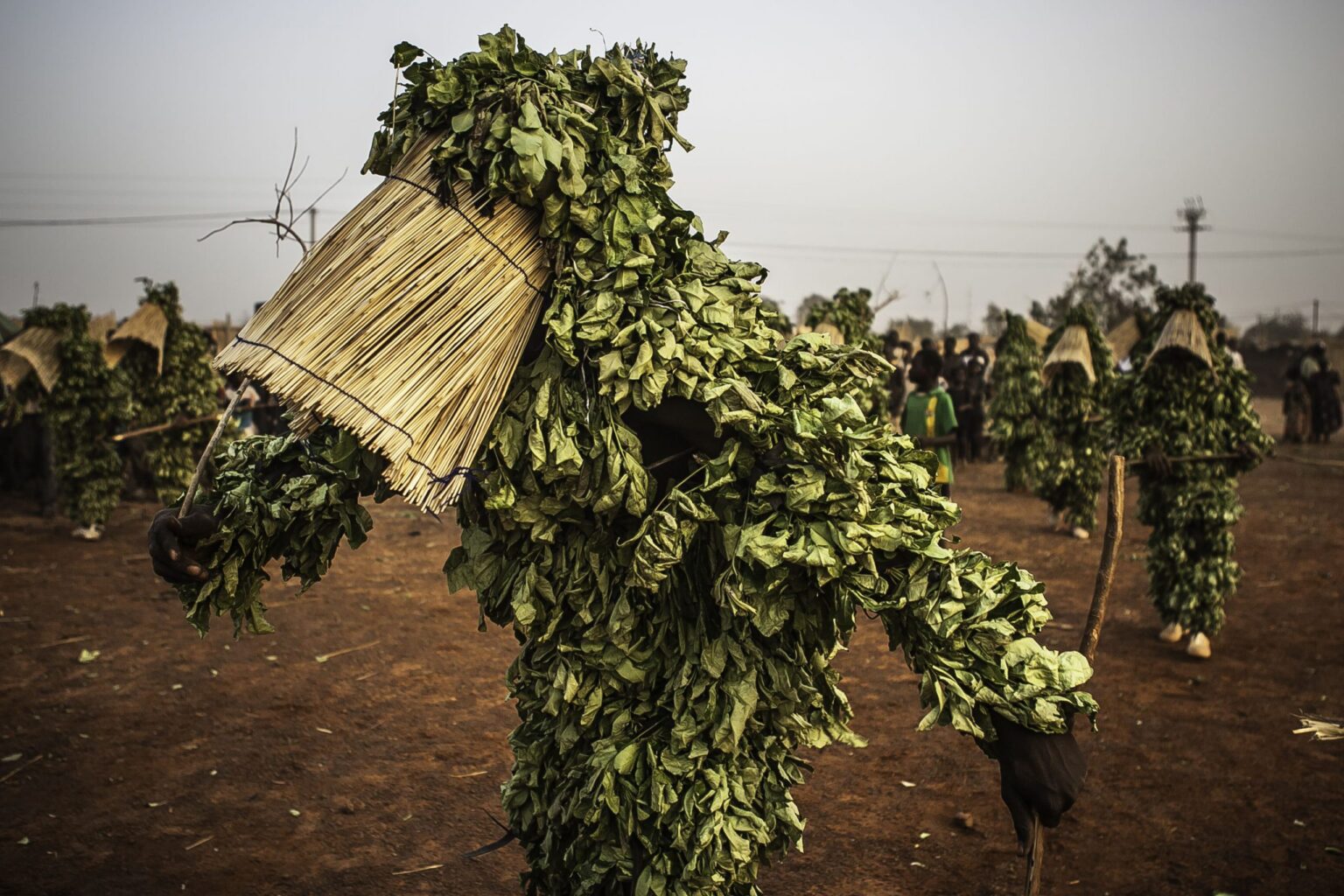
Africa’s extraordinary cultural diversity, the richest in the world, is steadily vanishing as modern life inexorably encroaches on its living traditions and customs. But the latest book by Carol Beckwith and Angela Fisher captures the glory of African creativity even as it slips into the sands of time. By Anver Versi.
I met Carol Beckwith and Angela Fisher many, many moons ago during the launch of an extraordinary book on Africa at the October Gallery in London.
I remember being stunned by the photographs on display. They not only showed a totally new, unexpected and thrilling aspect of Africa, the composition and execution of the photographs was of the highest global standards; the characters in the pictures seemed to come to life and to dominate the space around them.
Somehow, each picture told a story of unique individuals and groups in unique settings. I was a serious, if somewhat amateurish photographer in my spare time myself and I was well aware of the enormous difficulty of being able to capture a slice of life on film that brought out all the colour, the vibrancy, the personality and the vigour of the moment that was frozen for all time on film (this was before the digital age for most of us).
I eagerly sought out the duo and in time became good friends with them, particularly Carol Beckwith. I learnt from her that these wonderful pictures were not just the result of being in the right place at the right time (which of course is crucial) but also took a great deal of hard work both technically, as well as and more importantly, being accepted and welcomed among the people who were the subjects.
This could not be done without a deep understanding, respect and love for the people one was photographing and in effect, preserving for posterity.
We were allowed to use some of their best shots in our new colour magazine at the time, New African Life. Compliments for the picture spreads came from everywhere, within and outside Africa.
I was to see these spreads, removed carefully from the magazine, pasted on walls or framed and hung in private homes, restaurants and meeting places in Nigeria, Ghana, Mali, Mauritania, Somalia, Kenya, Tanzania, Botswana and elsewhere.
When I asked what these pictures meant to the people who had thus preserved them, the inevitable answer was that they “make us proud. This is what we really are.”
Whenever I have travelled around Africa, I have always tried to take time off and visit outlying areas – villages, remote places where the deadening hand of ubiquitous urbanisation and ‘modernity’ has not yet hammered Africa’s extraordinary culture, its customs and rituals into the ground and often buried it.
But over the years, Africa’s glorious traditions – in effect its living history – have become as endangered as its once teeming wildlife. Colonisation, with its intolerance of anything ‘native’, did its best to kill African tradition and replace it with European ones but it endured and after independence, thrived in some places.
But with the pace of modern life, with an ever-shrinking rural and traditional world and ever- encroaching global standardisation of all aspects of life, Africa’s unique and vibrant culture is being slowly subsumed. In places it has either completely died out, or it is hanging on by a thread in isolated pockets.
Many African writers and philosophers, like Achebe, Ngũgi and Soyinka have lamented this passing. I can recall Carol Beckwith being concerned about this erosion from past conversations with her.
Over the last few years, Carol and Angela have devoted much of their lives to documenting aspects of vanishing Africa – from rites of passage to belief in the afterlife.
Wondrous world of African culture
I was therefore delighted to learn that with their latest creation, African Twilight, we can again be transported into the wondrous world of African tradition and marvel at Africa’s vast cultural diversity and its beautiful creativity.
In the authors’ own words: “On a continent where urban city dwellers live within a few hundred miles of tribal hunter-gatherers, it is no wonder that Africa remains one of the world’s richest melting pots of art, culture and spirituality, producing artists, musicians and dancers that continue to inspire the rest of the world.
“For the last 15 years we have continued our 40-year journey across Africa, seeking out remote communities, crossing thousands of miles through often extremely inhospitable terrain to record the sacred ceremonies, powerful art forms and boundless creativity of the people living there today.
“We have been granted rare access to record ceremonies usually closed to outsiders, including the Royal Igue Ceremony in the Palace of Benin, the Royal masquerade dances for the Kuba King of DR Congo, the Famidhana, the biannual rewrapping of the dead in Madagascar, and the secret inner rites of the voodoo sects of the Yoruba diaspora in Cuba.
“Our recordings range from fireside rituals around the grass huts of the Bushmen in the Kalahari Desert, to Sufi moulid ceremonies in the neon-lit night time streets of Cairo, from young boys’ initiations into warrior-hood in the forests of DR Congo, to the spectacular mask dancing festivals of Burkina Faso that draw crowds from all over West Africa, from the Maasai tradition of lion-hunting as a boy’s rite of passage into manhood, to the Maasai Olympics which maintains these values by replacing the hunting of lions with the competition for athletic trophies.
“Africa is changing at a dramatic pace. Over 40% of what we have recorded no longer exists.”
This is a labour of love that can never be replicated because, sadly, much of the glory of cultural Africa is vanishing. But thankfully, these doughty daughters of Africa – for they are no less – have made sure that Africa’s unique creative genius can never be forgotten. NA
The book launch for African Twilight: The vanishing rituals and ceremonies of the African continent takes place at the October Gallery, London on 28 November.