“Every life is determined and evaluated by the inner form of love. Tell me what you love, and I will tell you who you are” – Pope John Paul II.
On 12 April 1999, President Bill Clinton and his wife and members of the US Congress gathered in the East Room of the White House to listen to Elie Wiesel, the Romanian-born Jewish-American journalist, professor, writer, political activist, Nobel Laureate, and chairman of the US Holocaust Memorial Council, speak on the 20th century’s calamities, as part of a Millennium Series of talks. Wiesel titled his speech, “The perils of indifference”.
“Of course, indifference can be tempting – more than that, seductive,” Wiesel told his august audience. “It is so much easier to look away from victims… It is, after all, awkward, troublesome, to be involved in another person’s pain and despair. Yet, for the person who is indifferent, his or her neighbours are of no consequence. And, therefore, their lives are meaningless. Their hidden or even visible anguish is of no interest. Indifference reduces the other to an abstraction.”
Wiesel recounted the depressing tale of the German liner, St Louis, carrying 1,000 Jewish refugees, which, in 1939, after the Nazi-sponsored pogrom against the Jews which came to be called Kristallnacht, was denied entry to Cuba, then the USA, and then Canada. The refugees were finally allowed into Britain, France, Belgium and the Netherlands.
Wiesel then asked: “And that ship, which was already off the shores of the United States, was sent back. I don’t understand. Roosevelt was a good man, with a heart. He understood those who needed help. Why didn’t he allow these refugees to disembark? A thousand people – in America, the great country, the greatest democracy, the most generous of all new nations in modern history. What happened? I don’t understand. Why the indifference, of the highest level, to the suffering of the victims?”
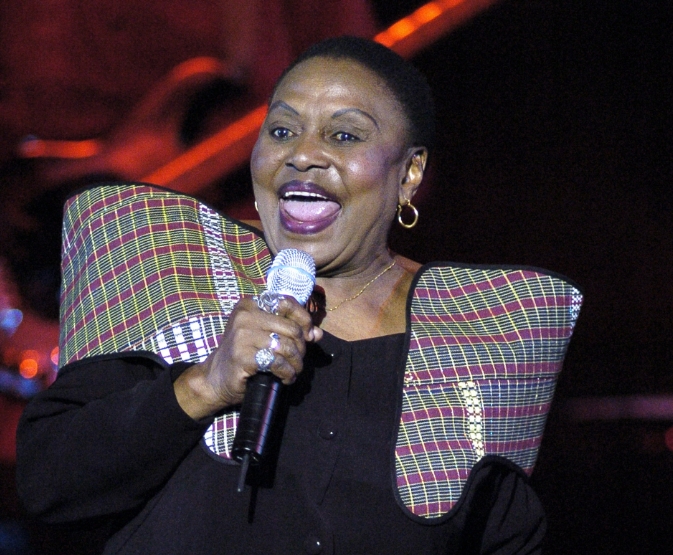
Well… Two things happened in late July that profoundly affected my worldview. I watched a moving documentary on Miriam Makeba, on BBC4, and I was transfixed in front of the TV. Her struggles on behalf of South Africa under apartheid rule, and the sacrifices she had to make when she was banned by the apartheid government, leading to her exile for 27 years in various foreign lands, all this shown in a combination of black-and-white and colour images, did affect me deeply. For a while after the documentary ended, I still sat transfixed in front of the TV, thinking.
In 1968, the great woman, who was nicknamed Mama Africa, had made a pointed comment in a TV interview in the USA. When asked why her record deals and tours in the USA had been cancelled, and her albums removed from American shops because of her marriage to the African-American civil rights activist Stokeley Carmichael (later called Kwame Ture), Mariam smiled, and then said: “There is a thin line between America and South Africa; but the South Africans have the good grace to acknowledge what they are.”
Sweet, wasn’t it? And she said that with a smile!
The very next day after Miriam Makeba’s documentary, the news broke that our president, of the Motherland, Prof John Evans Atta Mills, had suddenly died. May his soul rest in peace. I liked President Mills for the quiet dignity and tenacity he exuded.
He may have been colourless or lacked charisma even, but the man had some inner quality that most leaders don’t have these days. For three-and-a-half years as president, his former boss and mentor, ex-President Jerry Rawlings and his wife snapped at him at the least opportunity, but not once did President Mills publicly respond to the man under whom he served two terms as vice president.
He refused to be pushed around by Rawlings. Once he was elected in his own right as president, he wanted to be his own man, and that is exactly what he did. In the process, he delivered a stable country at peace with itself. Thank you, Mr President. May the ancestors welcome you warmly. You showed that there is more to leadership than bluster and vindictiveness.
It is to the credit of the government he led and the democratic credentials of Ghana as a nation that a mere six hours after his death on 24 July, Vice President John Mahama was sworn in as the new president. That was in sharp contrast to someplace I know, where, when the president died, his wife and her allies would not even allow anybody to announce the death or see the body or swear in the vice president to take his place – for months! Perhaps Ghana may have to export its constitution across its eastern border.
Now let me get on with my main topic. Three weeks before Miriam Makeba’s documentary, I had read Martin Plaut and Paul Holden’s brilliant new book, Who Rules South Africa, and learned how the state, since the fall of apartheid, had deliberately cultivated what was thought to be a “patriotic bourgeoisie”, otherwise known as the “BEE moguls” (BEE standing for Black Economic Empowerment), who were expected to be the bedrock of the black people’s plan to lift themselves from poverty.
President Thabo Mbeki had so much hope in this plan that, in 1999, speaking to the Black Management Forum, he stuck his neck out and urged the ANC and its Alliance partners to drop any sense of shame in the creation of the black middle class.
“Ours is a capitalist society,” Mbeki argued. “It is therefore inevitable that, in part – and I repeat, in part – we must address this goal of deracialisation within the context of the property relations characteristic of a capitalist economy. As part of the realisation of the aim to eradicate racism in our country, we must strive to create and strengthen a black capitalist class. Because we come from the black oppressed, many among us feel embarrassed to state this goal as nakedly as we should.
“All this frightens and embarrasses all those of us who are black and might be part of the new rich. Accordingly, we walk as far and as fast as we can from the notion that the struggle against racism in our country must include the objective of creating a black bourgeoisie. As part of our continuing struggle to wipe out the legacy of racism, we must work to ensure that there emerges a black bourgeoisie whose presence within our economy and society will be part of the process of the deracialisation of the economy and society.”
And so, the state, the ruling party, and the top brass put their shoulders to the wheel and made BEE produce black moguls who, because of community bonds, were supposed to help the eradication of poverty. In fact, in 1995, Saki Macozoma – one of the BEE moguls – told Time magazine: “You need the same kind of person who was the bedrock of the ANC to be [the] bedrock of a society that is based on a middle class. There is no way I would support a free enterprise system that tolerates poverty. But with five or six of us spread out through the economy, that can make a difference in a very fundamental way.”
But did it? In fact not all the BEE moguls were thinking like Macozoma. Soon, those who exhibited the crasser side of the betrayal of the people began saying things like “I didn’t join the struggle to be poor.”
Another said: “We are here to run a business. I’m not for any of this brotherhood stuff.” One of these nouveau riche, who was taken to task for his ostentatious show of wealth, responded arrogantly, telling his critic to “go hang or go to hell”. And to pay for the critic’s passage to hell, the BEE mogul added for good measure: “[I want] to correct [the] misapprehension that my party cost R700,000. It cost more.” And that was only for a party to open his nightclub!
You can tell the deep feeling of betrayal that descended on the likes of Mbeki & Co, who had supported the BEE idea. Speaking in 2006, a hugely disappointed Mbeki let out his anguish thus: “The capitalist market destroys relations of kinship, neighbourhood, profession, and creed [and makes people] atomistic and individualistic. Thus, every day, and during every hour of our time beyond sleep, the demons embedded in our society, that stalk us at every minute, seem always to beckon each one of us towards a realisable dream and nightmare. With every passing second, they advise, with rhythmic and hypnotic regularity – get rich! get rich! get rich!
“And thus it has come about that many of us accept that our common natural instinct to escape from poverty is but the other side of the same coin on whose side are written the words – at all costs, get rich! In these circumstances, personal wealth, and the public communication of the message that we are people of wealth, becomes, at the same time, the means by which we communicate the message that we are worthy citizens of our community, the very exemplars of what defines the product of a liberated South Africa.
“This peculiar striving produces the particular result that manifestations of wealth, defined in specific ways, determine the individuality of each one of us who seeks to achieve happiness and self-fulfilment, given the liberty that the revolution of 1994 brought to all of us. In these circumstances, the meaning of freedom has come to be defined not by the seemingly ethereal and therefore intangible gift of liberty, but by the designer labels on the clothes we wear, the cars we drive, the spaciousness of our houses and our yards, their geographic location, the company we keep, and what we do as part of that company.”
And this in a country where some people, the same ones that the “black bourgeoisie” was to help were given toilets without enclosures by both the ANC and the City of Cape Town (run by the opposition Democratic Alliance); so the toilets sat in the open where their poor owners used them in full view of the public. What did we do wrong as a people to have such a destiny?
I shall continue next month.