
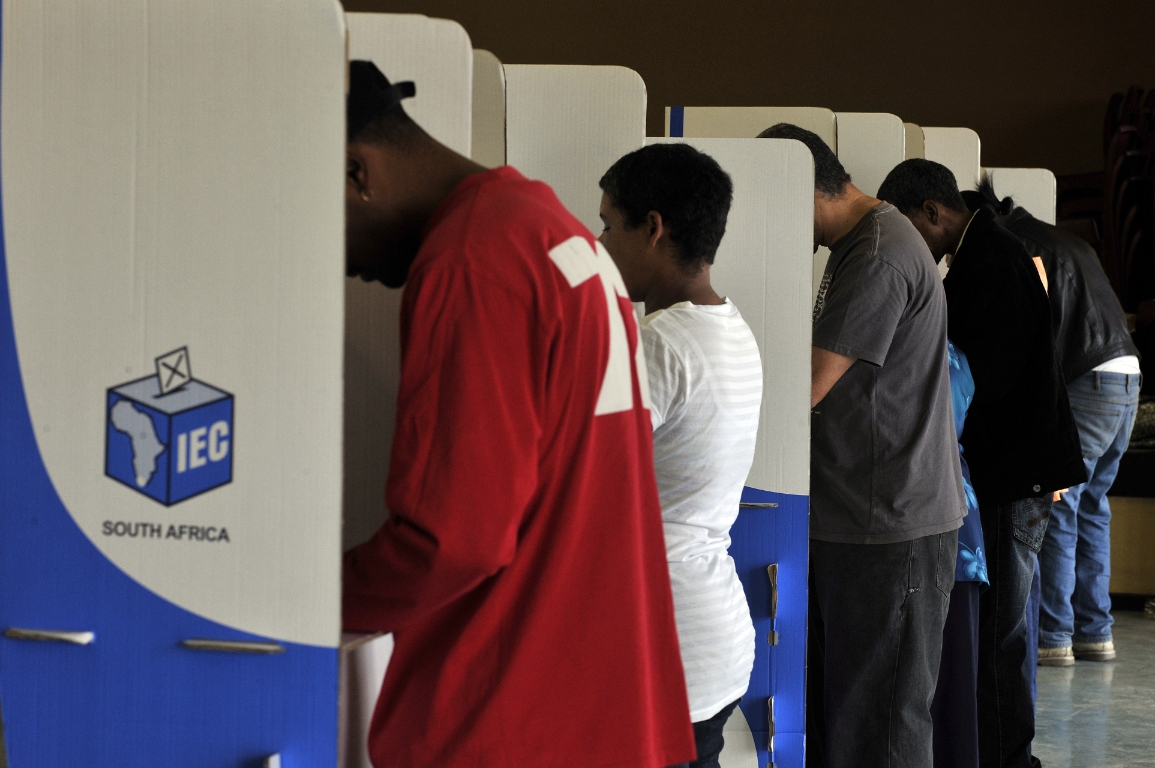
If a truly free, prosperous, democratic and equal South Africa is to be realised, the smaller parties in the country must have a say, Joseph Ochieno tells New African.
South Africans head to the polls on 5 May 2014 for the fifth time since the emergence of majority rule in 1994 when Nelson Mandela was elected the first black president of a democratic South Africa. Mandela, who was to become the undisputed, most popular global political leader and icon this century, died on 5 December 2013, aged 95. As it happens, this will be the first democratic election without the revered “Father of the Nation”.
For a country whose African majority were exploited, abused and humiliated for generations under apartheid, and whose wealth is yet to be equitably redistributed, the election will almost certainly be fought on “real issues”.
Thanks to a strong constitution among other factors, the pillars on which this relatively young democratic nation is built upon can only be strengthened around political, economic and civic institutions. For these to be developed, there must be leadership that is willing to look beyond self, party, and dogma, and resolve that the South African nation that most Africans look up to, is one that sets an example for Africa in every sphere of society.
The ANC, the “natural” leaders of the country, have a huge but not insurmountable task. In the run-up to the last election in 2009, grievances around leadership, service delivery, and corruption (perceived or real), saw an emergent political party (most of whose members were ANC) Congress of the People (COPE), pick up over 7% of the national vote. They denied the ruling party its previous two-thirds majority in parliament, “stealing” 30 seats.
This time around, COPE is riddled with its own internal problems and it will be interesting to see how they perform. But as it happens, a new kid on the block has arrived in the name of Julius Malema, a former ANC Youth League leader sacked by the party. Malema has formed the Economic Freedom Fighters (EFF) party with populist slogans, seeking nationalisation of key sectors of the economy and comprehensive land reform, akin to that of Zimbabwe. Call him any names you like but his message is popular amongst the majority of South Africans.
It is easy to see why the young Malema’s message is tempting. South Africa’s economy is the largest in Africa, representing over 24% of the continent’s GDP. Since 1996 when economic sanctions were lifted, the nation’s GDP has tripled, the country has moved to an upper middle income status and its foreign exchange reserves have shot from a bare $3 billion to over $50 billion today.
Yet with all this relatively impressive growth and without reference to specific but patchy improvements in social sectors and infrastructure – like schools, health care, water, housing and roads – inequality remains the biggest challenge. Over 80% of the nation’s wealth remains in the hands of the white minority. While there has been substantial growth in the size of the African middle class, unemployment and poverty are widest amongst the majority victims of apartheid.
Whereas unemployment among whites is an impressive 4% only, it is 11% for the so-called “coloureds” or mixed race inhabitants and 29% for Asians. When it comes to blacks, the figure is shamefully high at 62%.
Whichever way these figures are explained, it is unacceptable that in a country that gave the world one of the best constitutions, the best (peace) negotiating team, the most exemplary reconciliation team (arguably) and most popular world leader, the indigenous people should be the least favoured at the national high table.
Whatever the wishes of some, the ANC will win the forthcoming elections – the only question is by what margin. Regardless of the outcome, the post-election government in Pretoria must comb the small print of the manifestos of fringe parties. In some of them lies the true challenges that must be confronted with all zeal if a truly free, prosperous, democratic and equal South Africa is to be realised. It is possible.








