
Even the most fervent and optimistic pan-Africanist cannot help but be despondent at the state of affairs in Africa today. The continent cannot continue to rely on its historic oppressors to right the wrongs besieging Africa today, writes Femi Akomolafe, arguing that Africa needs to find unorthodox solutions to its current predicament.
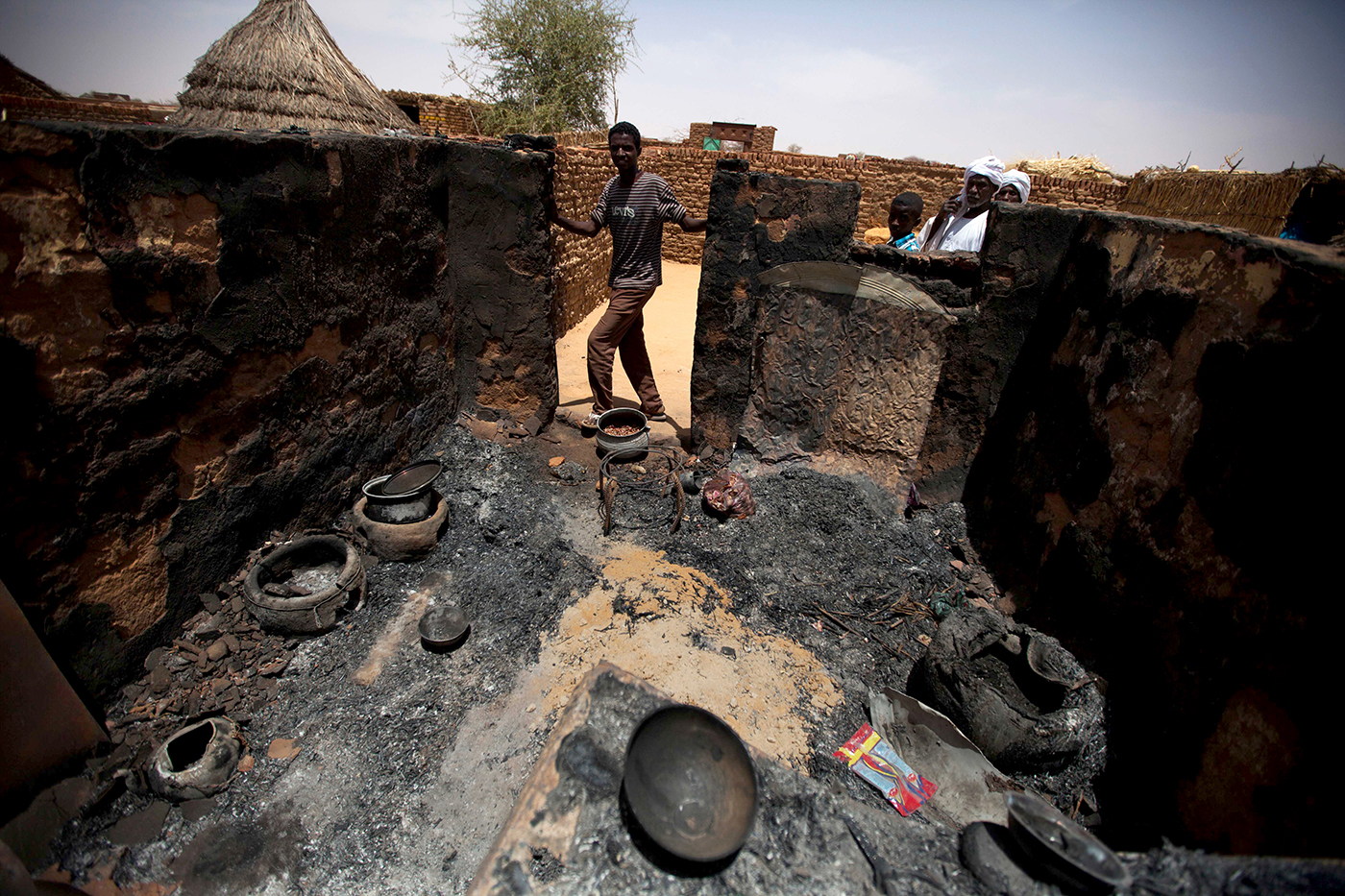
While the horrendous wars in Liberia and Sierra Leone have been doused, more such conflicts have been ignited with a vengeance in several parts of the continent. Nigeria is menaced by the scourge of Boko Haram. Christians and Muslims are murdering each other with Old Testament fury in the Central African Republic. Newly-minted South Sudan is engulfed in mindless internecine civil war.
DRCongo is yet to overcome almost five decades of civil strife, and al-Shaabab is wreaking havoc in East Africa. In the meantime, there are more foreign troops rampaging around Africa today than at any time since the ostensible end of colonialism in the 1960s.
And while the elites and their supporters/sponsors in the West continue to tout self-generated impressive macro-economics statistics that purport to show how good things are, the reality on the ground, at the micro-economic levels, is still the abysmal and shocking poverty in which citizens are forced to live.
Sadly, many Africans still live in conditions that would be unacceptable in some countries. This is despite the fact that almost every corner of the continent drips with one natural resource or another.
On the economic front, the elite have imposed brutal Jurassic, dog eat dog, man eat “dirt” economic systems, which has resulted in a yawning gap between the haves and the have-nots, with frightening social implosion implications. The neo-liberal economic policies have largely negated Africa’s traditional value systems, resulting in an abandonment of the age-old communitarianism that meant people care for one another.
Ghana’s share in the oil deals with foreign firms is a paltry 10%. The arrangement is for 20 years
While today African rulers and the elite continue to enjoy the best times, few ordinary citizens can remember when things were this bad.
Let us consider the example of Ghana, the birthplace of the doyen of Pan-Africanism, Kwame Nkrumah, which, unfortunately, has become the stalwart of Global Imperialism Puppetry.
Ghana joined the list of oil-rich nations about four years ago to loud applause and great expectations.
Today, Ghanaians are gnashing their teeth as the prices they pay for their petroleum products keep rising monthly, thanks to what officials call the “automatic price adjustment mechanism”.
Here is the saddest part of this huge paradox: For reasons best known to them, Ghanaian officials signed agreements with foreign oil firms whereby the companies will ship the oil out in its crude form. Ghana’s share in the deal is a paltry (make that insulting) 10% royalty. The agreement is for 20 years.
In the meantime, Ghana’s own oil refinery at Tema lies moribund, and is starved of crude oil to refine. This is the absurd situation Ghana, like many African countries, finds itself in.
Ostensibly independent, these states continue to function like colonial outposts with local compradors ruling in the interests of the metropolitan powers. This is the sad reality of Africa today, where citizens continue to live wretched lives in their own land, while foreigners enjoy the best things in life. And it is this unholy situation that gets huge praise from the West and its corporate media. Many Africans also glorify it.
Ghana is touted as an example of the good African country on the move. The Star Pupil and the Gateway to Africa. Where Ghana is moving to is never told. As citizens struggle to eke out a miserable existence and face every manner of taxation and bills, the presidential cavalcade gets longer. But no matter how long it was kept away, the truth has a way of emerging.
The bubble has burst and the pretensions can no longer be maintained that Ghana’s economy is buoyant, and that it is a pertinent lesson for Africa to observe.
The admission by Ghana’s finance minister that the economy is in bad shape and might require “help” from the IMF cannot but be the cause of distress to patriotic Africans.
It should, however, not come as a complete surprise to any close observer. As our elders say: “Houses built with spittle will be felled by dew.”
What is baffling to many is that it is to the IMF that the Ghanaian government turns for help. It looks like we refused to learn anything from the lessons of history.
A few years ago, the IMF admitted the serious mistake it made by imposing structural adjustment policies on Africa in the 1980s and 1990s.
It was a mistake that cost Africa dearly, resulting in worthless currencies; wiping out our middle classes (the most productive in any economy); causing cuts in social services such as health and education; and denying Africans a decent education.
Yet, a decade or so later, our officials are getting themselves ready to re-launch the assault on us! Are we ever going to learn in Africa?
It is indeed sad that after years of telling us the lies that our buoyant economies were booming, and that everything was under control, our officials are rushing to the IMF for succour.
This is particularly distressing because the warning signals were there for all to see, and there were ample warnings from patriotic citizens (including lectures by Dr Bawumia of the opposition NPP) which were ridiculed and brushed aside by government and ruling-party hacks, who think that any contrary suggestion is tantamount to sedition and high treason.
It is sad that our rulers in Africa refuse to be guided by the lessons of history. They continue to apply the same tried and tired ideas to age-old problems.
Rather than continue to apply textbook solutions to economic problems, a better approach would be for Africa to study and use unorthodox methods that other people have utilised when confronted with a similar problem in the past.
Africa should follow Zimbabwe’s lead, becoming a shareholder in any firm that operates in any extractive business
This means a total overhaul of our thinking. It requires comprehensive adjustments of our mindsets, and to be prepared to do away with every orthodoxy.
Nothing short of radical thinking will solve the huge problems that beset our continent.
We must start with some very basic assumptions. Principal among these is that no society was ever developed by charity or by the benevolence of foreigners. It is time we learnt and applied this lesson in Africa and began to do things for ourselves.
Another thing we need to constantly remember is that no one came into this world with a single cent. It follows then that everyone has to create his or her own wealth.
We must also remember that no nation began life as a rich, developed country. Every single nation called developed today built its wealth, literally and figuratively, from scratch.
Another assumption we have to make is that economics is not a science. As the eminent economist, John Kenneth Galbraith put it: “In economics, hope and faith coexist with great scientific pretension and also a deep desire for respectability.”
Or, as H. G. Wells wrote in A Modern Utopia: “The science hangs like a gathering fog in a valley, a fog which begins nowhere and goes nowhere, an incidental, unmeaning inconvenience to passers-by.”
Whatever the pretensions, economics is an art, and as we all know, every form of art involves some sort of gimmickry. It is time we stopped regarding economic law as some infallible scientific theorem. It is time to start to employ the same gimmicks that other nations used to build their economies and guarantee their people a decent standard of living.
We can borrow ideas from other nations. It is ironic that the most instructive ones are taught by the US, most especially by US President Franklin D. Roosevelt, who could be credited with building modern America.
After the Great Depression, when money was scarce and Americans were committing suicide in large numbers, the 32nd president of the US introduced several programmes to put Americans to work and rebuild the economy.
The new president, taking office at the height of the economic crisis, assured troubled Americans that “the only thing we have to fear is fear itself.” He acted quickly during the so-called “Hundred Days” to rush through the US Congress a flood of fiscal and social reform measures aimed at reviving the economy through the huge expenditure of public funds.
He set up many new agencies, including the National Recovery Administration and the Public Works Administration, to reorganise industry and agriculture under government regulation. These programmes and social reforms, such as the introduction of Social Security, became known as the New Deal.
Roosevelt recognised that his country was in a dire economic emergency; he took emergency measures to solve it. It is time we in Africa woke up and recognised the dire economic straits we find ourselves in.
We can also cite post-war Europe as another example of economies that were grown in the exact opposite way to what the Bretton Woods institutions preached to us.
The first lesson we can learn is that deregulation (removing government from economic activities) is a fiction never practised by anyone. No single economy has been grown in the world without strong government interventions and regulations. No economy anywhere has been developed by the fiction called “market forces”. It is time we in Africa put our heads together and came up with ideas to move our continent forward.
I offer the following as ideas we can collectively consider, debate and adopt:
A new political system
We were told the lie that adopting a Western-style political system was the panacea to all our problems. But five decades of experimentation have not yielded the desired result.
Most Africans are yet to benefit from the expected dividends of democracy; and they are unlikely to do so in the near future.
This should not come as a surprise as most citizens in the West have come to the painful realisation that their much-praised political system is a huge joke and a con-trick.
Fewer and fewer people bother to turn up to vote in elections in both Europe and the USA. We should, as a matter of urgency, try to adopt a National Emergency Government System, and try it for at least 20 years.
Space seriously constrains debating the merits and de-merits of democracy. What is not in doubt is that most Africans are disillusioned with ritualistic voting for uncaring, over-compensated rulers who continue to rule on behalf of foreign interests.
To its advocates, Western-styled democratic systems are the best forms of government ever invented. It is not clear if those who maintain that belief ever studied the African traditional systems of governance.
Without going into the pros and cons of this imposed, so democratic system, it is beyond doubt or debate that it has been a very expensive undertaking for Africa.
Not only are elections expensive and difficult to organise, but the tensions they generate are quite onerous and detrimental to the national interest. The problem becomes compounded in the fragile countries we have in Africa where tribal antagonism and religious extremism often combine with partisan politics to heat things up uncontrollably.
A good example is the last election held in Ghana in 2012. For the good eight months it took the Supreme Court to adjudge a petition about the result, the country virtually ground to a halt.
What is suggested here is that African countries should consider forming National Emergency Governments. Political parties that win 10% or more of popular votes should automatically be included in the government, with smaller parties forming the opposition. The arrangement could be for 10 to 20 years. The presidency could rotate among the coalition parties, with cabinet positions shared proportionally to votes obtained.
The present system is too cumbersome and it puts unbearable economic, financial, psychological, political, social and emotional pressures on the people and the countries concerned. Many of these countries find themselves in the ridiculous position of depending on donor support to organise elections to choose leaders.
As the adage goes: “He who pays the piper, calls the tune.” The main remit of these governments would be to embark on five-, 10-, 15- and 20-year Economic Development Plans. What history has taught is that nations should put their economic house in order before they worry themselves about political and human rights niceties.
The examples the West likes to throw in Africa’s face – Malaysia, Singapore and South Korea – were all developed under autocratic strong leaders.
Even the West that lectures loudly today did not practise democracy until it put its economic house in order. Should it succeed, India would become the first democracy to develop an economy.
What we need to do in Africa is recognise that we are in an emergency, and then adopt emergencies measures to redeem ourselves like other people did.
With the worries, time and resources wasted in holding quadrennial elections out of the way, we can then embark on the total mobilisation of our peoples and resources for economic development.
What this means is that for the duration of the term, a country would forget all about politics and concentrate its entire energies on rebuilding the economy.
Linked to the idea of a National Emergency Government is the adoption of part-time legislature. The most ridiculous thing in Africa today is where we have people elected to National Legislatures who do very little but feel entitled to a large chunk of the national budget.
While China, with its mammoth economy (a GDP of $3 trillion and some $13 trillion in reserves), makes do with a part-time legislative system, African states (many depending on donor support for upwards of 40% of their budget), opt for full-time legislature. Some of them, Nigeria included, even have bi-cameral houses.
It would not be problematic were these legislators seen to be doing something useful, but citizens question the necessity of maintaining a full-time legislature who they see do very little apart from ratifying loan agreements. Citizens see these houses of legislature as big drains on the national budget.
The only time they see these men and women do anything is for all the wrong reasons of salary increments and how much of the national resources to allocate for their comfort.
In the Chinese system, the law-makers, all of whom have their own professions, assemble once a year to tackle the business of law-making. After their three-month stints as law-makers, they revert to their professions. They are paid a sitting allowance. This is eminently sensible, and it should be adopted without delay in Africa.
We need less professional politicians who have no other profession, but live parasitical lives.
Cutting down on government expenditure
The adoption of National Emergency Governments should be accompanied by drastic cuts in the size of governments. Let’s again cite Ghana as an example. Currently the country has three ministers at the ministry of agriculture. But Ghana continues to spend a big chunk of its income on food imports.
The president recently lamented that the country’s rice bill is $600m a year. In contrast, the Netherlands has only one minister in its agriculture ministry; yet agriculture earns the Dutch about $36bn annually.
Another thing that needs to be tackled is the tendency for loud ostentatious lifestyles by African leaders. African rulers wallowing in decadent opulence is one of the most sickening and unconscionable spectacles imaginable.
Shame alone dictates that these rulers should drastically cut back on their over-grandiose lifestyles. How do leaders like Goodluck Jonathan justify a 10-plane Presidential Fleet when Nigeria lacks a national airline? How does the president of Ghana rationalise his two jets when Ghana’s national carrier was allowed to collapse?
I have seen heads of state in Western Europe, and their modesty is something we can recommend to African rulers.
Few African countries have the capacity to manufacture bicycle spokes, yet African leaders ride the best and most technologically advanced cars around. Africa will not make headway until we compel our elite to stop their propensity for material aggrandisements.
Inter-African trading
For any thinking African, the craziest thing in the current set-up is how Africans have wilfully walled themselves behind the colonial creations they call countries. It matters little to the rulers of these enclaves that only a few of them are viable economically or, as the raging wars across the continent suggest, militarily.
Sundering our societies into unviable entities made eminent imperial logic, but it is absolutely senseless that African leaders continue to keep their own peoples apart, in the name of the fictions of nations the colonialists created.
What is equally incongruous is the inability of these rulers to make it possible for their own people to trade easily among themselves.
I interviewed a Ghanaian entrepreneur who told me the unbelievable story that his cargo to Liberia is routed through Spain. This means that Spain makes money whenever he trades with his Liberian counterpart. Of course, ordinary Africans are ultimately made to pay for this madness.
Equally perplexing is the inability to forge a common currency even in the regional economic blocs. A Togolese citizen wishing to buy a Nigerian product must first look for dollars or euros. What this means is that each and every time Africans trade among themselves, foreigners make a cut without doing anything.
And we say that we are independent! Even the developed economies of the EU countries, with few exceptions, have opted for a single currency. Africa, especially at the regional level, needs a common currency and we need it now.
It galls when we read such abysmal statistics that only 10% of African trade is between African nations. This is in contrast to what obtains in the other regions of the world.
For Africa to make progress, the emotional apron-string with the West must be broken. It is painful when a child has to leave its parents, but it must be done if such a child is to become an adult. Instead of the fixation on Europe, Africans and African nations must trade in goods and services among themselves. ECOWAS alone boasts some 300 million people – the same as the EU, much beloved by our rulers.
Our great empires – Ghana, Mali and Songhai – were built when our people had unfettered access to trade between themselves. It should not be beyond the competence of our intellectuals to come up with creative ways we can trade among ourselves without enriching foreigners.
Resource control
I don’t know how the rulers in Africa believe that they can develop their countries when the control of their resources is in the hands of foreigners.
How do our leaders in Africa expect to get out of the current state of underdevelopment, when they content themselves with remaining beggars?
We should be bold enough to demand to know what manner of market forces made it possible for foreigners to own our mines and oil wells and pay us only 3 to 10%. And in order to attract them, our governments continue to give them five-year tax holidays. After four and a half years, the crafty investor declares bankruptcy and moves out.
Their partners in crime are already waiting to move in, and we gleefully sign the same odious contract with them and the fleecing of Africans goes on and on.
Africa should follow the lead initiated by Zimbabwe’s President Robert Mugabe and become a shareholder in every single firm that operates in any extractive business on the continent. We can settle for the same 51/49% that is required in Zimbabwe.
In all honesty, it is more than curious that a self-respecting African will stoop so low to sign a contract that allows foreigners to take 99% of the profits of an enterprise.
Security
For a continent with over a billion people, the spate of security challenges posed by every description of rag-tag armies on the continent is simply untenable. It is not like we were not warned about what to expect when the conservative forces,
shot down Nkrumah’s idea to set up an African High Command (AHC).The imperialists who told their minions in Africa that an AHC was a bad idea, today safely protect themselves with NATO, which guarantees their own safety.
Without delay, Africa should revisit the AHC project. Africans should easily be able to field a five million army – a million each based in the West, East, North, Southern and Central Regions. Military science academies and advanced weapons industries should, as a matter of priority, be established across the continent.
As the only continent to have suffered the twin evils of slavery and colonialism, our defence and security should be an overriding concern. The current situation, whereby African police officers use colonial laws to arrest and prosecute African gunsmiths, is simply foolish. They should rather be aided to help in building up our indigenous arms industries. We cannot continue to rely on our historic oppressors for our security.
I debated the issue during my interview with Ghana’s Minister for Foreign Affairs, who raised questions about funding. If we admit that the spate of insurgencies and wars is creating a huge financial burden for our continent, we should be creative enough to think about how to raise the money to defend ourselves and our interests.
Taxes could be levied on every business that operates on the continent, to be allocated to defence and security.








