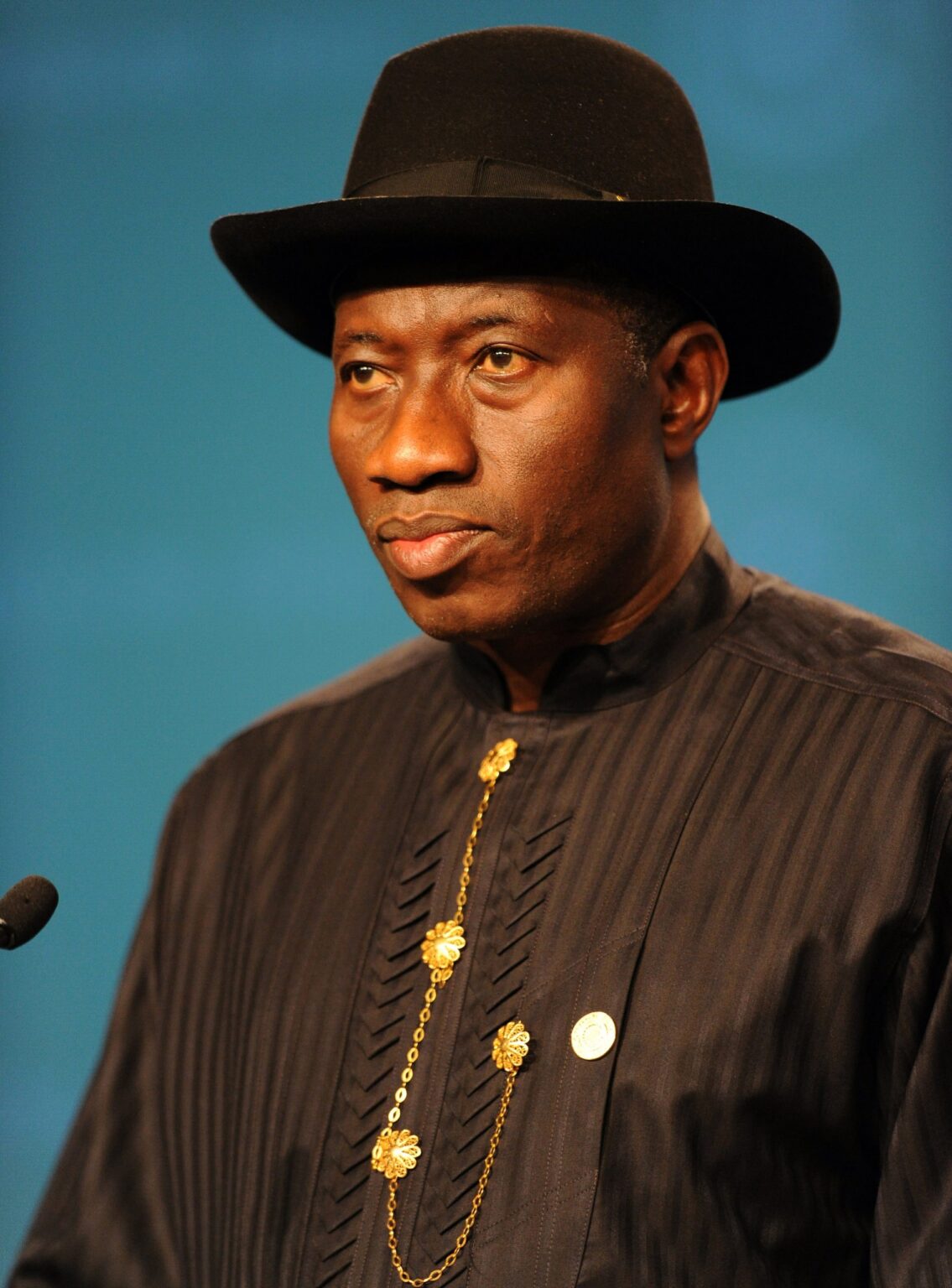
Raymond Eyo wants President Goodluck Jonathan to be more alive to his responsibilities by pushing Shell to do the decent thing in the Niger Delta: clean up the oil mess.
President Goodluck Jonathan’s very poor, almost negligent response to the recently published damning UNEP report on the massive Shell oil spills inOgoniland, (which was the basis of NA’s cover story in January) as well as his handling of the very recent Shell spills in Bonga validate my long-held opinion that Nigeria needs a leader who can confront the West in the face of bad deals, especially with oil majors.
If President Jonathan can show just a pinch of the passion he showed in opposing Côte d’Ivoire’s Laurent Gbagbo or better still, in his obviously mistaken removal of fuel subsidy in January this year which attracted widespread popular opposition, he would go a long way to beating the hell out of Shell and finding a sustainable solution to the problem.
As the NA January cover story explains, a “demonstrable political will on the part of the federal government to force the hand of Shell and other oil companies operating in the region to change their ways, is vital.”
Such political will involves decisively combating corruption, which is majorly responsible for the lack of proper government oversight on the oil companies. Jonathan needs to prosecute such cases, else he would lend credence to the Wikileaks disclosure that Shell has influential elements in the government safeguarding its interests.
For her relative inactivity in pursuing the much-needed Petroleum Industry Bill (PIB) and the very fact of her being a former Shell executive, Nigeria’s oil minister, Diezani Allison-Madueke, appears sadly to be an oil executive, and her passionate support for the unpopular removal of the petrol subsidy has only fuelled this suspicion more.
Jonathan should muster the resolve shown by the authorities in Brazil, who fined oil giant Chevron upwards of $28m (a further amount has not yet been confirmed) for an oil spill off the Rio de Janeiro coast in November 2011; which a Brazilian government official said could complicate Chevron’s hopes of gaining access to new offshore exploration.
Indeed, Jonathan’s admiration for Obama should make him appreciate the latter’s action that pressurised BP to expedite the 2010 Gulf of Mexico oil clean-up. In fact, in December, it was reported that US prosecutors were readying charges against BP over that spill. Such is the bold action expected from the Nigerian government given the obviously worse spill scenario it is faced with.
Thankfully, it helps that Shell admitted its mistakes over its Niger Delta activities in October 2011 at a Rotterdam conference in which the Dutch MP, Sharon Gesthuizen, berated the Dutch government for not ensuring that Shell met global standards in Nigeria. “Shell is a Dutch company. So the government cannot remain aloof when it is involved in corruption and breaching environmental standards in another country,” Gesthuizen said.
More importantly, Jonathan would have ready legislative support if he embarked on such a course, as on 3 January the Senate deferred on giving Shell a clean bill of health over its faulty containment of the Bonga spill and on 5 January the House of Representatives threatened to sanction Shell over the spill.
President Jonathan cannot afford to delay direct and decisive government action on this matter any further, as that would only worsen the plight of the Ogoni people in particular and the Niger Delta in general.
Creating a committee to review the already comprehensive UNEP report as he has done, which is reportedly yet to even meet, is only another wasteful bureaucratic step in the wrong direction.
Beyond that, perhaps the PIB is the missing link in this whole saga and it doesn’t help knowing that it has faced heavy opposition from the oil majors like Shell, whose lobbying may have compromised some of its innovative aspects.
Clearly, Jonathan and his oil minister must work towards getting this all-important legislation passed because until that happens, several prospective multi-billion dollar investments will remain frozen for the lack of an appropriate regulatory environment.