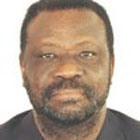
A great footballer died in poverty on 5 October 2011; but during his heyday 50 years ago, Edward Acquah was dynamite!
A whole half a century has passed, but I remember it like yesterday. I had just been promoted to the role of news editor at the Ghana Broadcasting Corporation, and was fully in charge of the news to be broadcast at 6pm that Sunday. Normally a senior editor or even the head of news would take a look at the bulletin before it went on air, but it being a Sunday, none of them was around and the baby was entirely in my hands. As it happened, Ghana’s national football team, the Black Stars, were playing against Blackpool, a Division One club from Britain and one which had been made famous the world over by the exploits of its star winger, Stanley Matthews, arguably the best dribbler the game has ever seen – bettered only, perhaps, by George Best. And only Best at Best’s best, at that.
Matthews had himself visited Ghana a short time earlier, and had played some matches with his hosts, Accra Hearts of Oak. This venerable Ghanaian team, known to its admirers as “The Phobians”, because they said Hearts’ boys were “so good” that they suffused their rivals with “Heartsophobia”, were, in those days, very glamorous, and enjoyed the patronage of a British expatriate businessman called Ken Harrison. Anyway, Blackpool was a name held in awe by all Ghanaian football lovers, and when they came to play the Black Stars, everyone’s heart was in his mouth. All the sportswriters were certain that Blackpool, judging from their record, would beat the Black Stars; the only question was – by how many goals?
I was exasperated that the duty roster had put me on duty for that afternoon. Why not in the morning so that I could knock off by 2pm and go straight to the stadium to watch the match? Well, you can’t argue with the duty roster, so there I was, reduced to imagining how the match was going, as described by the radio commentators.
Most Ghanaians were doing the same, as there was no TV at the time, so it wasn’t too bad, but … you know something? I wanted to be physically there. If you love football, you will understand how badly I wished I could be there – joining the crowd to cheer in glee, or to sigh in disappointment; perhaps even singing with the crowd when the state of play demanded it!
The match got under way. Ghanaians realised something strange was happening when the Black Stars scored the first goal. It was clobbered by centre-forward Edward Acquah. I say “clobbered” because Acquah was so clumsy on his feet that he hardly ever scored without first fighting the ball – with his feet. You see, he stood at six foot two inches tall and was very powerfully-built – I would say 180-200 pounds in weight. I suspected he wore size 13 to 14 boots, but I never dared to ask him.
He had in fact started his football career as a goalkeeper before becoming a centre-forward. The story was that in a match for his side, Sekondi Eleven Wise, the team manager could not quite make up the numbers: he was one man short because a forward had absconded at the last minute to go and play in a “shabo-shabo” match somewhere else.
In those days, football players were not paid well at all, but mostly played for the love of the game. Even the very little they were paid was often paid very late. “Football contractors” knew that footballers were always broke, and they found it easy to arrange secret, unofficial matches on obscure grounds like Old Tafo or Jackson’s Park, Koforidua, in which they would feature one or two star players from the recognised first-rate clubs. These were put at the head of hastily-recruited players from wherever: there were always players available whose ambitions were larger than their skills, and all a contractor needed was to have “contacts” who would know which club had passable players who had been “left over” because they could not make the first eleven.
“Shabo-shabo” was a corruption of “sharpo-sharpo” – which denoted the sharpish manner in which the secret negotiations were conducted. Mum was the word, for if a player was discovered to be about to break the rules, he would be warned, and if he disobeyed, he would be out on his ear. However, if he was clever enough to present his club bosses with a fait accompli, he could always argue that he went to play in order not to get “rusty” on the sidelines. If the feedback from the smuggled match to the bosses showed that he had “regained his form”, it might even speed up his return to the first eleven.
So everything about shabo-shabo needed to be smart: the players were paid in cash sharply – half the amount upfront, and the rest immediately after the match, sometimes even before they left the pitch. Stories abound of the unsavoury events that surrounded many matches arranged this way; stories of fisticuffs occurring when the promised cash was not forthcoming, on the excuse that low attendance had affected the take at the gate; or that the gatekeeper had run off with the cash; that the rather “partial referee” had taken the bottom off the betting pot; or that the jujuman who had been paid an exorbitant fee to ensure a victory had turned out to be a quack.
Very often, then, shabo-shabo acquired a new synonym: teary-teary! Those, dear reader, are only a few of the secrets that lie in the underbelly of Ghanaian football but are unknown except to a few insiders.
Well, as I was saying, Acquah was told on the day his fate in football was to change forever, that he wasn’t going to be a goalkeeper for that match, but a centre-forward. And he acquitted himself well, scoring two goals. Because he was used to standing in a stationary position for long periods between the goalposts, his feet were not used to the nimble steps by which a centre-forward acquired the ball, slipped it past the defenders of the opposing team, and then shot at goal. But once he steadied himself, he would shoot, and because, as a goalkeeper, he was used to kicking
the ball straight to a targeted player, and with all his strength, his shots were absolutely unstoppable.
So, the Eleven Wise manager stuck to his word and turned Acquah from a Number One into a Number Nine player. Acquah did so well in his new position that when the national director of sports, Ohene-Djan, was raiding the clubs and picking the best players for his newly-formed Real Republicans (otherwise known by the grand name, “Osagyefo’s Own Club” meaning the president, Kwame Nkrumah), he enticed Acquah to join.
Real Republicans was, in reality, a stand-in Black Stars team, to be cleverly sprinkled with a few stars from other clubs, when it came to international matches. That was how Acquah was in the Real Republicans but playing for the Black Stars against Blackpool that Sunday afternoon. After he had scored the first goal, he scored a second. Then a third! And – a fourth! Blackpool were not able to respond with a single goal
The whole of Ghana went crazy that day. Inside the newsroom, the radio box turned my brain into a veritable jelly of euphoria. We normally put football stories at the end of the bulletin. But I made it the lead story! Not only that – I headlined it: “Ghana Black Stars beat Blackpool of England at the Accra Sports Stadium this afternoon.” And there was a secondary headline: “Centre-forward Edward Acquah scored all four goals.”
Now, the six o’clock news was huge: it was really only big world and local news that ever led it. So I had broken all precedents and was expecting the telephone to ring as soon as the first headline was read. But the telephone did not ring. For what had happened was great news! And I had recognised it. No one could argue with that. Precedent my foot! Every single tongue in Ghana was glorifying the name, “Edward Acquah!”
Acquah was also instrumental in the Real Republicans drawing 3-3 against Real Madrid at the Accra Sports Stadium, scoring two of the goals. That match enabled Ghanaians to see two of the greatest players that Real Madrid have ever produced – Alfredo Di Stefano and Ferenc Puskás. And, of course, Acquah was in the Black Stars team that won the African Nations Cup twice back-to-back (in Accra in 1963 and in Tunis in 1965).
Acquah’s nicknames were many: “Sputnik” (after the first Soviet satellite to go into orbit) and “Acquah a otete net!” (Acquah the netbuster!), were just two of them.
Acquah died on 5 October 2011. He was 76. I believe he was impoverished when he died. Which didn’t surprise me, knowing how Ghana refuses to recognise its national treasures, let alone look after them. But Acquah wouldn’t care what the authorities did or didn’t do. He knew his countrymen and women – the common folk – loved him. Deeply. No one – but no one – can take that away from him, as he makes his lonely way to join the ancestors.